Ukraine trilateral talks October 2026
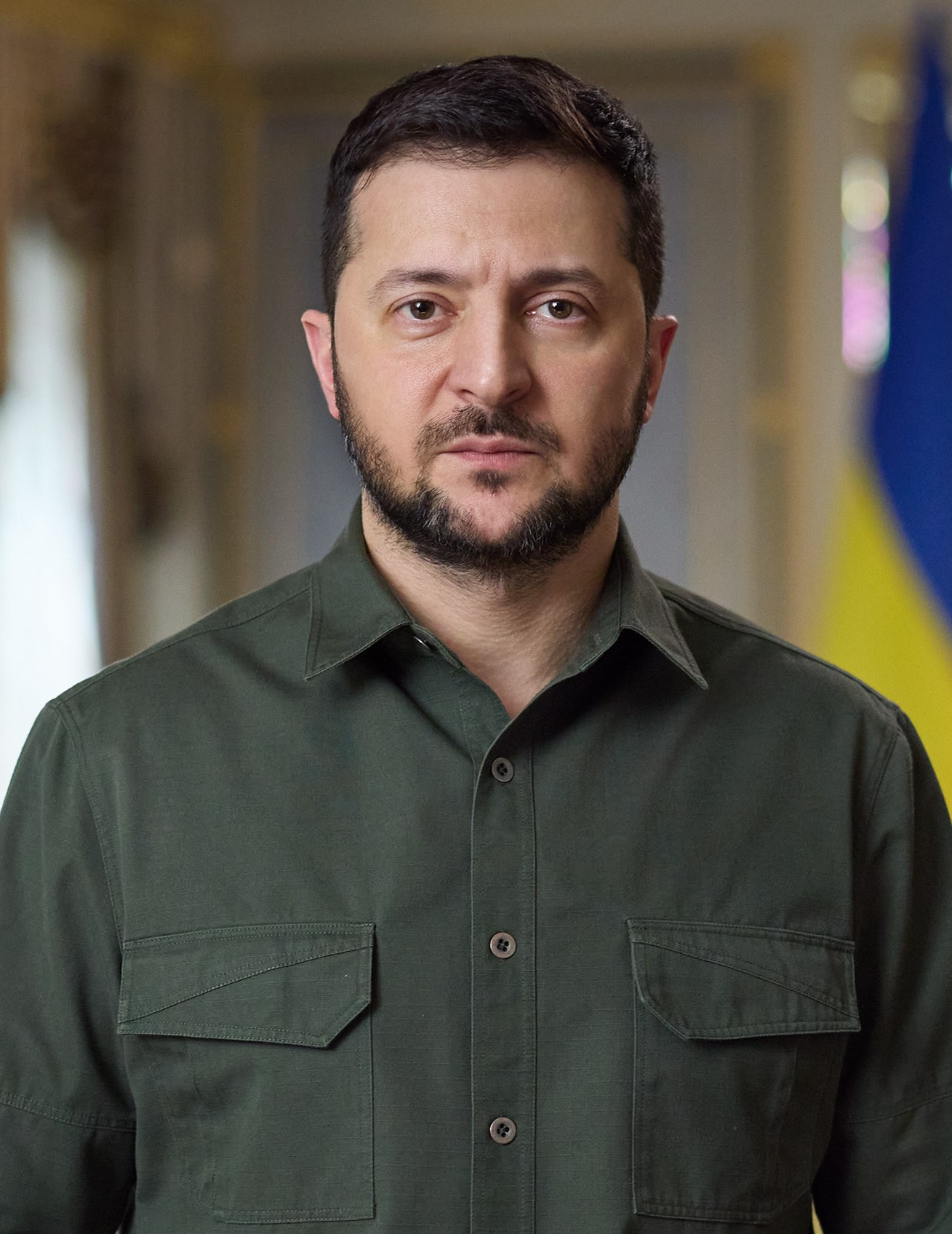
What was actually announced in Kyiv.
The announcement came Sunday, October 4, 2026, at a joint news conference with Merz in the Ukrainian capital. Zelenskyy said Kyiv supports Washington's push for a trilateral, technical-level meeting before the month is out. The likely venue: the United Arab Emirates, which has hosted previous rounds, or "another country proposed by the American side." Washington, he added, has been in direct touch with Moscow about the plan — and the Kremlin said last month that it did not rule out three-way talks this month. That is not an agreement to talk. But it is the closest thing to one in months.
UAE trilateral meeting Ukraine: why the technical level matters
The distinction matters: "technical-level" is diplomatic shorthand for negotiators rather than leaders — the people who can work through prisoner swaps, de-escalation zones, and the mechanics of a ceasefire without the cameras of a summit. Breakthroughs at summits are theater; the technical level is where ceasefires get drafted. The fact that the timeline is now public — and that Kyiv has formally endorsed it — turns October into a test with a deadline.

Why this matters.
This is the first concrete movement since Washington's ceasefire brokerage went quiet when the United States launched its war on Iran, which froze the American diplomatic machine's attention and bandwidth. For months, the war in Ukraine has been fought on a battlefield without a negotiating calendar — a recipe for escalation, because when nobody expects talks, nobody has reason to hold back. A publicly endorsed end-of-October timeline changes the incentive structure: both capitals now act under the gaze of a deadline. Zelenskyy's announcement is Kyiv's signal that it intends to walk into any room Washington sets up — and to arrive with leverage.
How we got here.
The last three-sided meeting of this kind was in Geneva in February 2026. Since then: Washington paused its brokerage as the Iran war consumed American foreign policy; September brought the first revival signals — a US proposal for a UAE-hosted trilateral meeting, and on September 12, Zelenskyy's chief of staff Kyrylo Budanov telling reporters, "We are getting ready. In October."
Witkoff Kushner Ukraine talks: the shuttle resumes
Then came the shuttle: US envoys Steve Witkoff and Jared Kushner visited Moscow and Kyiv in recent weeks — their first such visits since February — laying the groundwork for exactly the kind of meeting Zelenskyy has now endorsed. The Kremlin, for its part, said last month it did not rule out three-way talks this month — non-committal, but not a no. Sunday's press conference converts months of signaling into a public, dated commitment from one of the three parties.
India's bid to be the broker.
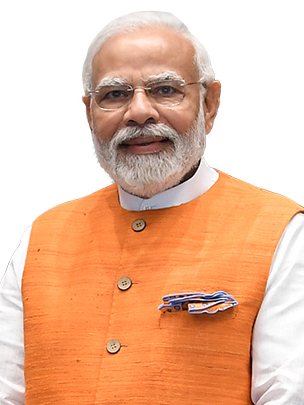
The second announcement of the day came from New Delhi. India said Sunday it aims to step up its efforts to play a larger role in mediating an end to the conflict.
India Ukraine mediation: the Global South stakes
Read the subtext: India buys Russian oil at a discount, courts Washington as a strategic partner, and speaks for a Global South that has paid the price of this war in food and fuel costs. New Delhi wants the status of a peacemaker and the leverage that comes with it — a seat at the table where European security gets decided, in a century when Asia insists it will not be a bystander. Whether Moscow or Kyiv accepts an Indian mediator is an open question; that India chose this day to announce its ambitions is itself a signal that the October timeline is being taken seriously in capitals far from the front lines.
The escalation running in parallel.
Diplomacy never happens in a vacuum, and Sunday proved it. Russia's Defence Ministry said it will intensify strikes on Kyiv and other parts of Ukraine in response to Zelenskyy's pledge to keep hitting Russian refineries. Zelenskyy, in turn, accused Moscow of targeting civilian infrastructure — including data centres and mobile network facilities — saying he was "amazed" by Russia's "savage desire to escalate the situation every day." This is the oldest pattern in negotiations: escalate to improve your bargaining position before the talks begin. Moscow's strikes are leverage; so, on the other side of the ledger, is Ukraine's "Vivaldi" counteroffensive, which Zelenskyy says has recaptured about 140 square kilometres in the Donbas and is still advancing. Both sides are arriving at October with the best hand they can assemble — and the worst headlines they can inflict.
The one obstacle that swallows the rest.
Strip away the choreography and one demand dominates: Moscow wants full control of the Donbas as a condition of any peace deal. Kyiv, having just spent blood to retake 140 square kilometres of it, is in no position to hand the region over on paper. This is the paradox of the October timeline — the talks are most likely to happen exactly when the core issue is least resolvable. Technical-level talks can still bank real things — prisoner exchanges, energy-infrastructure truces, de-escalation zones — even if the territorial question stalls. Veterans of this process will tell you that after four and a half years of war, progress usually looks like that: unglamorous, partial, and measured in megawatts and exchanged names rather than treaties.
Who benefits, who loses, what the sceptics say.
Kyiv wants a ceasefire before winter, when energy infrastructure becomes a matter of survival — last winter's blackouts are the precedent nobody in the capital has forgotten. Moscow wants the Donbas recognized on paper, converting battlefield occupation into diplomatic fact. Washington wants a result it can point to — a demonstration that American diplomacy still moves events. New Delhi wants the prestige and leverage of the broker's chair. Berlin, via Merz's very presence in Kyiv, wants Europe's stake in the room protected. The sceptics have the strongest single argument: talks without a ceasefire have been failing for four and a half years, and a "technical-level meeting" can easily become process without product — a calendar entry that lets everyone say they tried. They are not wrong. But a failed round in October still leaves behind working groups, contact lists, and a precedent of sitting down — and in this war, the infrastructure of diplomacy has proven as hard to build as it is easy to lose.
What happens next — three scenarios.
Scenario one: the talks happen and bank the achievable — prisoner swaps, limited de-escalation, an energy truce for the winter months — while Donbas waits. Scenario two: the Donbas precondition detonates the process before it starts, and October produces a blame game instead of a meeting. Scenario three: the calendar slips — Moscow's formal reply never quite arrives, the date drifts into November, and "end of October" becomes one more aspirational deadline in a war full of them. What to watch this week: whether Washington names a date and a venue, whether Moscow gives a formal reply beyond last month's non-denial, and — the most honest indicator of all — whether the strikes on Kyiv pause or intensify. The missiles will tell you what the communiqués won't.
What a serious technical agenda would look like.
A credible agenda should be narrow enough to execute and specific enough to verify. Prisoner exchanges are the most obvious starting point because both sides already understand the machinery: verified lists, transfer points, medical exceptions and a timetable. A second track could define protected energy and communications facilities, with coordinates shared through intermediaries and an agreed process for examining alleged violations. A third could establish local de-escalation zones where commanders receive the same written rules and where an incident hotline can operate around the clock. None of those steps decides sovereignty. Each, however, would reduce the chance that a tactical event destroys the political channel.
The sequencing will be decisive. Kyiv will resist any formula in which it first recognizes territorial loss and receives only a promise of quieter fighting later. Moscow will resist a formula that freezes the front while leaving its territorial demands permanently unresolved. One bridge is simultaneity: limited, reversible measures by both sides, measured over days rather than years. If attacks on listed energy sites stop as a prisoner exchange begins, negotiators gain evidence that commitments can be kept. If either side violates the arrangement, the cost and the remedy are defined before the next round.
The numbers behind the winter calculation.
Four and a half years of war have made fatigue itself a strategic factor, but fatigue does not produce the same incentives on both sides. Ukraine's reported recovery of roughly 140 square kilometres in Donbas is small beside the entire contested region, yet it challenges the assumption that every additional month automatically improves Russia's bargaining position. For Moscow, the value of an October negotiation depends on whether the Kremlin believes its strike campaign can extract more before winter. For Kyiv, the value depends on whether a pause can protect power, heating and communications without locking in a political loss.
The humanitarian stakes are measurable in systems, not slogans. A damaged substation can interrupt heat to thousands of apartments. A strike on a data centre or mobile facility can disrupt payments, emergency warnings and family contact at once. Last winter's blackouts during temperatures near minus 20 degrees Celsius are the precedent Ukrainian officials want the talks to prevent. An energy understanding therefore needs a public definition of what is covered, not a vague promise to avoid “civilian infrastructure.” Power plants, transmission nodes, fuel depots serving civilian systems, data centres and telecommunications exchanges should be named or the parties will argue over every target after it is hit.
How to judge success without mistaking process for peace.
The first test is whether Washington issues a specific invitation rather than another expression of intent. The second is whether Moscow names delegates with authority to negotiate and not merely to restate conditions. The third is whether the parties publish even a short joint record of what was discussed. A meeting that produces working groups, deadlines and a follow-up date is limited progress; a meeting that produces only separate press conferences is not.
There is also a diplomatic test for India. If New Delhi can carry proposals between capitals, host a difficult session or help guarantee a narrow agreement, its mediation bid has substance. If it confines itself to broad calls for peace, the announcement will add prestige but not leverage. The same standard applies to every participant: practical commitments must matter more than who receives credit.
The essential uncertainty remains whether escalation is a prelude to bargaining or a substitute for it. Russia's promised strike intensification and Ukraine's refinery campaign can be read as efforts to strengthen negotiating positions. They can also generate casualties and retaliation that make the October calendar politically impossible. That is why the next shift in the strike pattern may be more revealing than another optimistic statement. A short, observable restraint before delegates meet would not prove trust, but it would show that leaders are willing to create room for diplomacy.
Sources
- Al Jazeera, October 4, 2026: Ukraine ready for US-backed talks with Russia: Zelenskyy
- Reuters-syndicated: U.S. peace envoys are trying to organize a trilateral, technical-level meeting by the end of October
- Wire text: India mediation bid
- Reuters: US proposes a UAE trilateral meeting, September 25, 2026
- Reuters: Kyiv preparing for talks to resume in October, September 12, 2026
- Reuters: Russia to intensify strikes on Ukraine, October 4, 2026