Abraham Accords meeting 2026
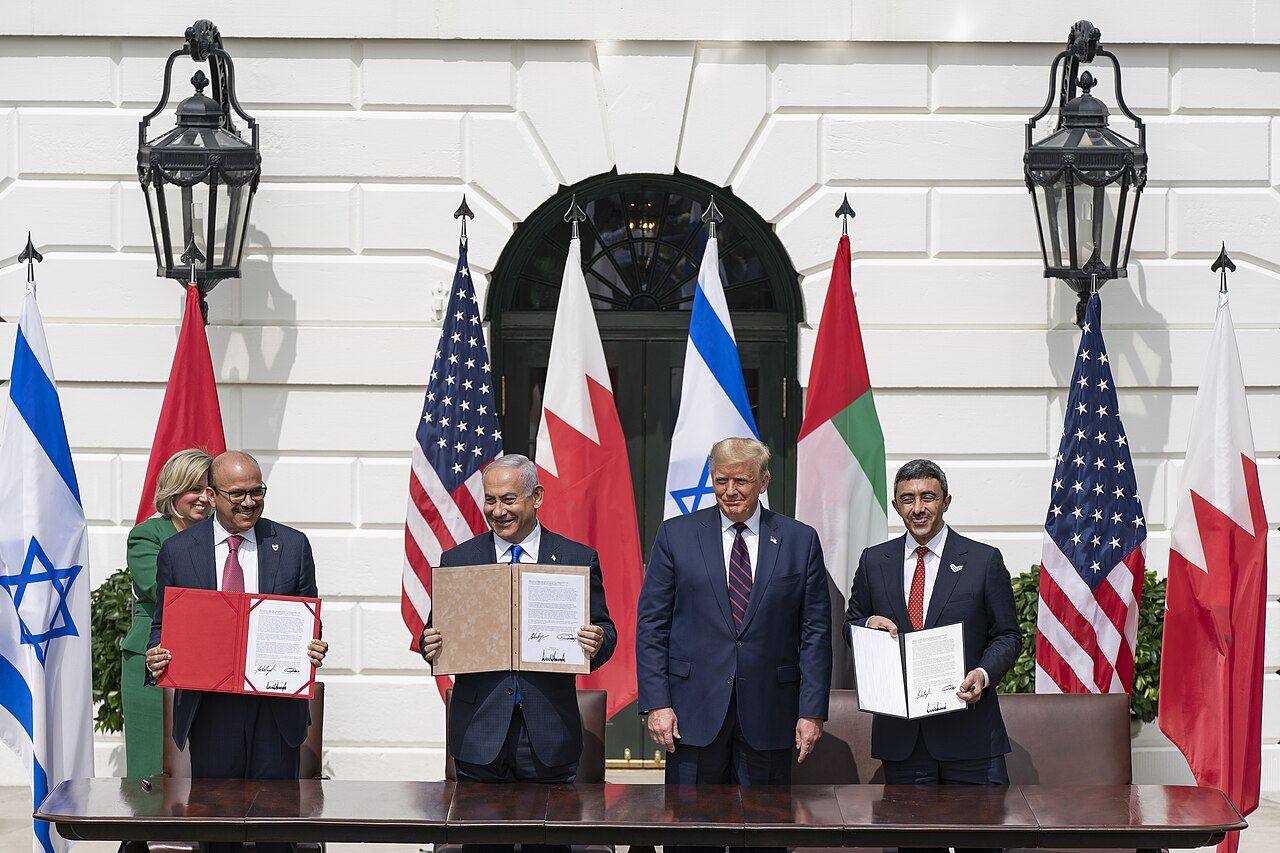
Abraham Accords meeting 2026 — for three years and eight months, the most ambitious diplomatic project in the modern Middle East sat frozen. The Abraham Accords — the U.S.-brokered normalization agreements between Israel and Arab states — survived the October 7, 2023 attacks and the Gaza war that followed, but only as embassies kept open and trade quietly continuing. The official table never met. On Wednesday, September 24, 2026, it finally did.
Senior officials from the United States, Israel, the United Arab Emirates, Bahrain, Morocco and Kazakhstan gathered in New York, convened by the N7 Foundation and led by Under Secretary of State Allison Hooker. It was the first official meeting of Abraham Accords countries since January 2023 — and the first since the October 7 attacks. Reporting dates the news to September 25, via Newsmax reporting CBS News and an N7 Foundation release, with the gathering following the UN General Assembly week.
What happened in New York on Sept. 24
The details, as reported: six delegations, one table, discussions covering regional cooperation and the future of the Middle East. The convening by the N7 Foundation — the nonprofit built to advance the Accords’ people-to-people and policy agenda — rather than by a foreign ministry is itself a signal: this was a deliberate, stage-managed resumption, not a spontaneous summit.
Leading the U.S. delegation was Under Secretary of State Allison Hooker, which tells you how the administration ranks the file: an under secretary, not a special envoy or a junior official, carrying the American chair. The timing — the week of the UN General Assembly, when every foreign ministry’s senior leadership is in New York anyway — minimized the logistical and political cost of attendance. Nobody had to make a special trip; nobody had to explain one.
That choreography matters because the politics of appearing at an Israel-normalization table are still delicate. For the UAE, Bahrain and Morocco, the Gaza war made public embraces of Israel domestically costly. Meeting on the margins of UNGA, in a multilateral format, with Kazakhstan present, diffuses the spotlight. It is normalization by stages — and Wednesday was stage one.
Kazakhstan: the Accords’ newest member and its meaning
The headline within the headline: this was the first official Accords engagement including Kazakhstan, which has joined the Accords framework. That sentence deserves unpacking, because it points to where the project goes next.
Kazakhstan is not an Arab state and not a Middle Eastern state. It is a Central Asian, Muslim-majority country with a long border with Russia, deep economic ties to China, and a foreign policy built on multi-vector balancing. Its entry into the Accords framework does two things at once: it geographically expands normalization beyond the Middle East, and it gives Astana a Western-facing diplomatic credential at a moment when Central Asian states are being courted by every great power.
For the Accords’ architects, Kazakhstan is proof of concept that the framework can scale — that “Abraham Accords” can become a brand for Muslim-majority-state engagement with Israel rather than a fixed 2020 membership list. For skeptics, it raises the question of depth: is Kazakhstan’s participation substantive cooperation, or diplomatic portfolio diversification? The answer will be measured in trade figures, direct flights and security cooperation, not communiqués.
The road since January 2023: how the Accords survived the war
To grasp the significance of Wednesday’s meeting, rewind. The last official Accords-country meeting was in January 2023 — nine months before October 7. Then came the Hamas attacks, Israel’s Gaza campaign, and a regional war that many analysts assumed would kill normalization outright.
It did not. The UAE kept its embassy in Tel Aviv open. Bahrain maintained relations. Morocco’s ties held. Trade between Israel and the Accords states continued — in some categories it grew. The Abraham Accords turned out to have a durability that the skeptics of 2020 did not predict: the agreements were transactional enough (trade, technology, security cooperation against Iran) to survive a political storm that would have sunk a purely symbolic pact.
But survival is not the same as momentum, and momentum is what died on October 7. The Saudi normalization track — the great prize, a deal that would have dwarfed the 2020 agreements — froze. Public Arab-Israeli diplomacy became toxic. Wednesday’s meeting is the first official evidence that the freeze is thawing: not a new signing, not a Saudi breakthrough, but the original signatories sitting down together and saying, in effect, the project continues.
Why this matters: normalization is a U.S. priority again
The meeting’s deepest significance is as a statement of American intent. Convening the table, sending an under secretary, and doing it during UNGA week is the administration declaring that Middle East normalization is back on the priority list — alongside, and partly in tension with, the administration’s Iran confrontation.
There is a strategic logic binding the two. The Accords were always, in part, an anti-Iran coalition in diplomatic dress: shared missile-defense data, intelligence cooperation, and the political message that the region’s weight was shifting against Tehran. Resuming the Accords table while pressuring Iran — the context in which regional reporting places this meeting — is the two-track strategy made visible.
It also matters for the “day after” question in Gaza. Whatever the end state of the war, the region’s reconstruction and governance will require Arab states willing to work with Israel. A functioning Accords table is the institutional home for that cooperation. Wednesday did not answer the day-after question, but it reopened the room where the answer will be negotiated.
Winners and losers
Winners: the normalization camp — the UAE, Bahrain and Morocco, whose 2020 bet is validated by the table’s resumption; Israel’s regional-integration narrative, which gains its first official multilateral stage since the war; Kazakhstan, which parlays Accords membership into Western diplomatic capital; and the N7 Foundation, which positioned itself as the indispensable convenor.
Losers, or at least the sidelined: Iran-aligned actors and anyone invested in the Accords’ permanent freeze — the meeting is evidence the freeze failed. Saudi Arabia watches from outside the framework; Riyadh’s absence from the table is a reminder that the biggest normalization prize remains unclaimed, and that the kingdom’s price — widely understood to involve a Palestinian political horizon — has not been met.
The data: first official meeting in 3 years and 8 months; six delegations; one new member in Kazakhstan.
What we don’t know: what was actually agreed
Honesty requires the caveat: the public record of Wednesday’s meeting is thin. We know who convened it, who led the U.S. delegation, and the agenda’s broad themes — regional cooperation, the Middle East’s future. We do not know what commitments, if any, were made; whether working groups were established; or whether a follow-up meeting was scheduled. The N7 release and the CBS-via-Newsmax reporting describe a convening, not an outcome.
That thinness is normal for a first meeting after a long freeze — the achievement is the table itself. But readers should distinguish the signal (normalization diplomacy is resuming) from the substance (unknown). The test will be what happens in the next 90 days: working-level meetings, announced initiatives, trade data. A second meeting would confirm the thaw; silence would suggest Wednesday was theater.
Three scenarios for normalization’s next chapter
Scenario one — the thaw becomes a trend. Working groups spin up; trade and tech cooperation announcements follow; Kazakhstan’s membership is joined by feelers from other Muslim-majority states. Within a year, the conversation turns to whether Saudi Arabia can be brought in — and at what price. The Accords become, as their architects always claimed, the foundation of a new regional order.
Scenario two — managed stasis. The table meets periodically, statements are issued, embassies stay open — but Gaza’s unresolved aftermath keeps anything ambitious off the agenda. Normalization survives but does not advance, and the Accords remain what the war made them: durable, transactional, and politically capped. This is the most likely near-term outcome, because the constraint — Arab public opinion after Gaza — has not changed.
Scenario three — the table fractures. A new escalation — in Gaza, Lebanon or with Iran — makes even multilateral attendance politically impossible for one or more members. The freeze returns, this time with the added bitterness of a failed resumption. The Accords’ demonstrated durability argues against this, but durability is not immunity.
For now, the table exists again. After three years and eight months, that is the news.
Sources
- Newsmax (reporting CBS News), “Abraham Accords Countries Hold First Official Meeting Since Oct. 7 Attacks” (Sept. 25, 2026) — six delegations, N7 Foundation convening, first meeting since January 2023
- N7 Foundation release (mirrored), “N7 Foundation Convenes Senior Officials from Abraham Accords Countries to Discuss Regional Cooperation and the Future of the Middle East and Beyond” (Sept. 25, 2026) — Under Secretary Allison Hooker leading, Kazakhstan’s first official engagement