World — A drone strike sank the Comoros-flagged cargo ship Khoryv in the Black Sea off Romania on Friday, October 23, 2026, killing one sailor and leaving three missing from a crew of 13, the Romanian Naval Authority said. President Nicușor Dan accused Russia of escalating its attacks on NATO’s eastern flank — the seventh commercial ship hit off the Romanian and Bulgarian coasts in two weeks, in a surge that has left some 30 sailors dead or missing.
Track it live: Ukraine war map, live — Signal Post News tracker · Live war tracker — Signal Post News
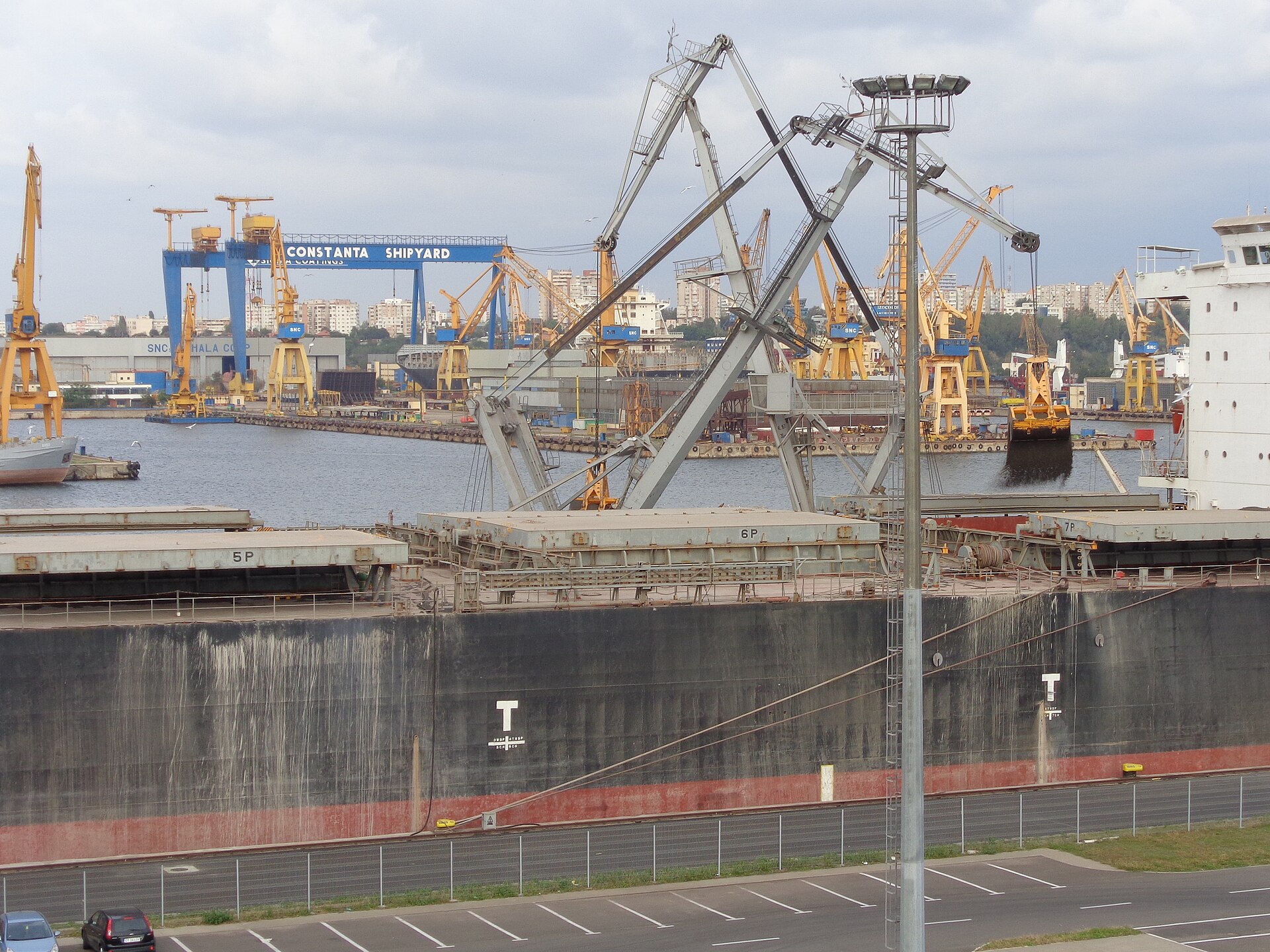
CONSTANȚA, Romania — Romanian President Nicușor Dan accused Russia of escalating its attacks on NATO’s eastern flank on Friday after a drone strike sank a cargo ship off the Romanian Black Sea coast, killing at least one sailor with three still missing, Reuters reported. Video released by Romanian authorities showed only a small part of the capsized vessel’s hull still visible above the waves as it sank, while emergency vessels searched the surrounding waters for survivors in choppy seas and high wind.
The Romanian Naval Authority said the Comoros-flagged Khoryv, crewed by 13 Ukrainian and Azerbaijani sailors, sent a distress signal 13 nautical miles off Romania’s port of Constanța, just beyond Romanian territorial waters. Nine sailors were rescued from the water, three were missing and one body was recovered. Euronews, reporting the same Naval Authority statement, said the vessel was reported to have been struck by drones, that it had sunk, and that adverse weather and reduced visibility prevented a helicopter from joining the rescue. The maritime safety outlet SAFETY4SEA, citing the Naval Authority and Romania’s Interior Ministry, put the alert at about 10:00 a.m. local time, said the crew comprised 10 Ukrainians and three Azerbaijanis, and said the rescue vessel SAR Artemis was dispatched from Constanța at about 10:15 a.m. after the Maritime Rescue Coordination Centre’s request; a nearby commercial vessel recovered the 10 crew members who were found, nine of them alive.
“It is part of Russia’s escalation process in its war in Ukraine,” President Dan told reporters, later saying the ship had been hit by a drone. That attribution is Romania’s, stated by its president on the day of the sinking; no Russian response to the Khoryv sinking had been reported in the wire and broadcast reporting available on Friday, and this article records the accusation as an accusation — while noting that the underlying facts of the sinking, the distress call, the rescue and the toll are confirmed by Romania’s own naval and interior authorities across multiple independent reports.
The Rescue, Hour by Hour
The confirmed sequence is stark. At about 10:00 a.m. local time on Friday, the Maritime Rescue Coordination Centre in Constanța received the Khoryv’s alert from a position roughly 13 nautical miles east of the port — outside Romania’s 12-mile territorial sea, but inside the maritime zone Romania polices and in the middle of the western Black Sea’s busiest commercial corridor. The ship had sustained extensive damage, caught fire and capsized, the Interior Ministry said, with an imminent risk of sinking that the video released later in the day showed being realised: a hull rolling over, only a small section still above the surface.
Rescue vessels from the Romanian Agency for Saving Human Life at Sea (ARSVOM) and the Interior Ministry went out into choppy water and high wind. A nearby commercial ship reached the survivors first and pulled 10 people from the sea — nine alive and one dead. The weather then shaped everything that followed: poor visibility and heavy conditions kept a rescue helicopter on the ground, complicating the search for the three crew members still missing as the day wore on. Of the 13 men aboard, the arithmetic at Friday’s end was nine rescued, one confirmed dead, three unaccounted for — and a search still running in the kind of autumn Black Sea weather that shortens survival time in the water with every hour.
Why This Matters
A single sinking would be a tragedy. Seven ships in two weeks is a campaign-shaped pattern, and that is the frame Romania, Bulgaria and Ukraine are now asking NATO to answer. Reuters counted at least seven cargo ships hit off the Romanian and Bulgarian coasts in the past two weeks, with some 30 sailors reported dead or missing — a toll drawn from merchant crews, most of them citizens of countries that are not belligerents in this war, sailing commercial routes in and near the waters of two NATO member states. The Khoryv is the latest hull in that sequence, not the first: this site has covered the sinking of the Royad Mammadov, the attacks on ships off Bulgaria, and Romania’s scrambling of F-16s to shoot down drones over its own waters, each step tightening the same ratchet.
The geography is the strategy, whichever side’s account is weighed. The ships struck lately have either been anchored near, or heading towards, the Sulina Canal, which links the Danube River to the Black Sea. Since Russia’s attacks on Ukraine’s own Black Sea ports degraded Odesa’s terminals, the Danube route — Ukrainian river ports such as Izmail and Reni, exiting past Romania’s coast through Sulina — has become Ukraine’s primary maritime export artery for grain and food oil, the cargoes on which Ukraine’s wartime economy and a large share of global food supply both depend. A drone that sinks a ship 13 miles off Constanța does not need to close that artery outright to damage it: it raises insurance premia, frightens crews and shipowners, slows sailings, and forces every transit to be priced as a war risk. Romania’s reading is that this is deliberate escalation against NATO’s flank. The observable effect, without needing to settle intent, is the same: the safe-water assumption on which the Danube export corridor was rebuilt is being dismantled in public, one hull at a time.
There is also a threshold question NATO has been circling for two years, and Friday pushed it closer. The Khoryv sank just beyond territorial waters. Romanian jets, by contrast, shot down two of the latest generation of Russian drones over Romanian territorial waters on Saturday, as we reported in our coverage of Romania’s F-16 interceptions over the Black Sea. The alliance’s collective-defence clause is written around armed attack on a member’s territory; a campaign against third-country merchantmen in international and exclusive-economic-zone waters off a member’s coast sits deliberately below that line. That is precisely why Bucharest frames it as escalation-by-design: each incident is too small to trigger the alliance’s machinery and too deadly to ignore, and the cumulative demand — more patrol aircraft, more radar, more drones, an escorted corridor in all but name — grows with every sinking.
Context: The Black Sea Shipping War
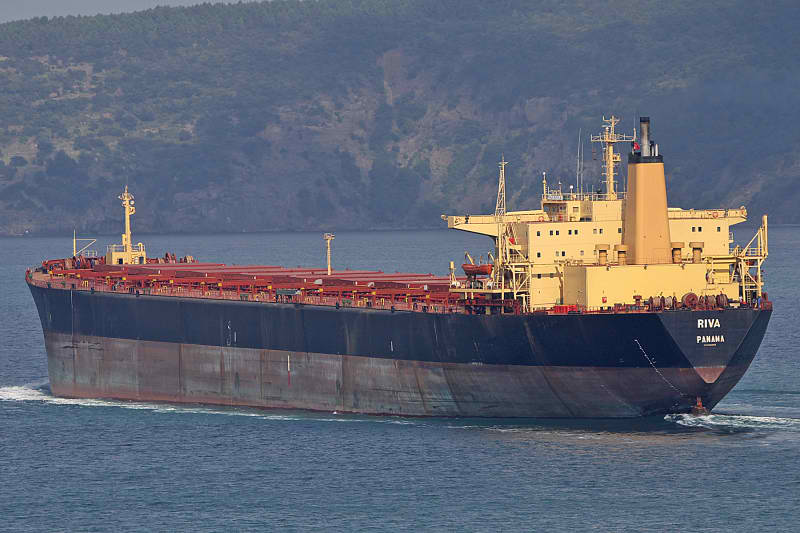
The Black Sea has been a contested trade space since the first week of the full-scale invasion. Ukraine’s deep-water ports were blockaded and then struck; the UN- and Turkey-brokered grain initiative carried exports for a year before collapsing in 2023; Ukraine answered by carving out a unilateral coastal corridor hugging Romanian and Bulgarian waters, and by striking Russia’s Black Sea Fleet hard enough to push much of it east from Sevastopol. The Danube ports, once a backwater, became the corridor’s load-bearing wall — which is why they, and the ships feeding them, have drawn escalating Russian attention: drone and missile strikes on Izmail and Reni, drifting mines, and, through this autumn, direct attacks on merchant hulls in Romanian and Bulgarian maritime zones.
Friday’s sinking follows the pattern this site documented on October 5, when the Turkish-owned, Comoros-linked grain trade lost the Royad Mammadov in Romanian waters with two sailors dead — see our report on the Royad Mammadov drone attack — and the parallel strikes off Bulgaria that left ships sunk and crews missing, covered in Bulgaria’s push for a NATO anti-drone initiative. What has changed in October is tempo and proximity: from strikes on Ukrainian port infrastructure to repeated sinkings of foreign-flagged ships within sight, almost, of NATO ports. NATO said on Tuesday it would send more maritime patrol aircraft, radar systems and drones to the Black Sea, without specifying the capabilities. Ukraine, Romania and Bulgaria have called on the alliance to do more to protect commercial shipping. Friday’s hull on the seabed off Constanța is now the exhibit those three governments will put in front of every ally who argued Tuesday’s package was enough.
What the Numbers Say
Keep Friday’s figures exact, because the argument will be fought over them. One ship: the Khoryv, Comoros-flagged, an ore-and-oil carrier by registry listings cited in Romanian reporting. Thirteen crew: 10 Ukrainians and three Azerbaijanis. One distress call at about 10:00 a.m. local time, from 13 nautical miles off Constanța. Nine men rescued alive, one body recovered, three missing. One rescue ship, SAR Artemis, dispatched within about 15 minutes; zero helicopters able to fly, because of the weather. Set against the fortnight: at least seven ships hit, some 30 sailors dead or missing — a casualty rate, hull for hull, that now rivals the most dangerous weeks of the Red Sea crisis, on a route that carries the grain exports of one of the world’s largest food exporters through the waters of two NATO states. And set against the alliance’s response: one Tuesday pledge of patrol aircraft, radar and drones, unspecified in number, undelivered in any form Friday’s reporting could point to. The gap between the tempo of the attacks (a ship every two days, on the fortnight’s average) and the tempo of the response is, in measurable terms, the story.
What Happens Next
Three tests follow from Friday. The first is humanitarian and immediate: whether the three missing sailors are found, and whether the search — weather-bound, helicopter-less on Friday — is still running at full strength through the weekend. The second is evidentiary: Romania says a drone did this, and its president says Russia sent it. The wreck, the survivors’ testimony, radar tracks and any recovered fragments will either harden that attribution into the kind of dossier Bucharest can lay before NATO, or leave it as a presidential accusation Moscow can simply ignore, as it has ignored or denied earlier attributions in this campaign; no Russian statement on the Khoryv had been reported by Friday’s wires. The third test is the alliance’s. Tuesday’s pledge — patrol aircraft, radar, drones — now has to become hulls and airframes on station, and the Romanian, Bulgarian and Ukrainian demand behind it has escalated from protection-in-principle to something closer to convoy logic for the Sulina approaches. If the next fortnight produces an eighth ship, the argument that this is a series of incidents will be unsustainable even for the allies most determined to sustain it. The Black Sea’s western corridor was built, at enormous effort, to prove that Ukraine’s trade could not be strangled from the air. Friday’s sinking is the strongest evidence yet of how seriously that proof is now being contested.
The Associated Press added the crew’s nationalities: the Khoryv’s 13 crew were 10 Ukrainian citizens and three Azerbaijanis, nine of whom were rescued, and the ship caught fire and sank about 13 nautical miles east of Constanța. MarineTraffic data cited by AP showed the vessel had departed Turkey on October 21 bound for Romania’s Sulina port. “This attack is a new example of the tragic consequences of Russia’s aggression against Ukraine,” President Nicușor Dan said, via AP. “It is time for Russia to take peace initiatives of the United States and Europe seriously, accept the ceasefire proposals and end the war.” AP counted at least seven other cargo vessels attacked this month off Romania and Bulgaria, with two dead and 25 missing — a tally kept separate from Reuters’ two-week count. Russia has not publicly responded to the sinking.
Sources: Reuters (Oct 23, 2026); Euronews (Oct 23, 2026); SAFETY4SEA reporting the Romanian Naval Authority and Interior Ministry statements (Oct 23, 2026). The sinking, the distress position, the crew composition and the toll (nine rescued, one dead, three missing) are Romanian Naval Authority / Interior Ministry facts carried by all three reports. The attribution to Russia is Romanian President Nicușor Dan’s accusation, reported by Reuters and stated as his in this article; no Russian response to the Khoryv sinking had been reported at the time of publication.