Khartoum airport drone strikes
War / Sudan / Africa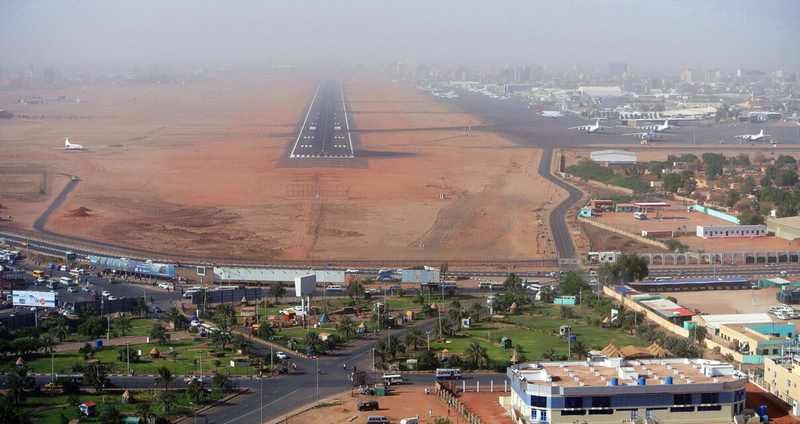
KHARTOUM — The Khartoum airport drone strikes that lit up the Sudanese capital’s skies this week did more than rattle windows. On Tuesday, five suicide drones slammed into Khartoum International Airport, damaging a civil defence facility and a passenger terminal. On Wednesday, six more came for the airport’s vicinity and were intercepted by ground defences. And with them went Sudan’s most potent symbol of recovery: the airport’s first commercial flight since the civil war began in April 2023 — cancelled before it ever left the ground.
Sudan’s Civil Aviation Authority had announced on Monday that the airport would resume operations on Wednesday. Badr Airlines, the local carrier, was to operate the first flight. Instead, the airline cancelled it, suspended all scheduled flights for Thursday, Friday and Saturday, and pushed its booking system reopening to October 26. A source at the airport told Xinhua that “the continued targeting of the airport for a second consecutive day prompted a thorough security review, which led to the decision to suspend flight operations until further notice.”
What happened: two days of strikes
Tuesday’s strike: five drones hit the airport
On Tuesday, Khartoum Airport was hit by five suicide drones, which caused minor damage to a civil defence facility within the airport and a passenger terminal, an airport source told Xinhua. The strike was the second consecutive day of targeting, and it landed just as the airport was being prepared for its ceremonial return to service.
Wednesday’s interception — and the RSF claim
On Wednesday, six suicide drones targeted the vicinity of Khartoum Airport, but ground defences intercepted and shot them down, a military source told Xinhua, adding that the attack did not cause significant damage. The paramilitary Rapid Support Forces claimed responsibility for Wednesday’s attack. RSF field commander Colonel Othman Jaafar said in a post on X that his forces had “carried out a precise special operation in which drones successfully targeted sites and gatherings inside the perimeter of the General Command in Khartoum,” adding that the strike “neutralised a number of officers present at the headquarters.” The army has not confirmed any such losses, and the claim could not be independently verified.
The Al-Salha base and the dam strikes
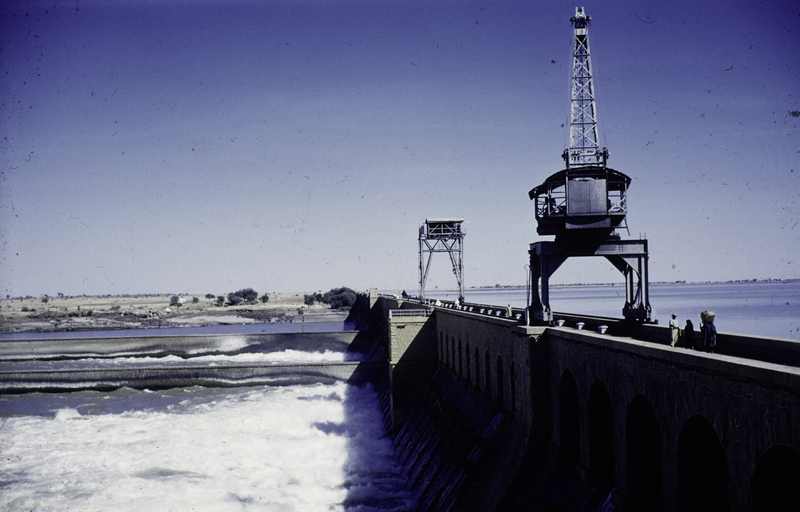
The airport was not the only target. In western Omdurman, north of Khartoum, an eyewitness reported that drones struck a military base in the Al-Salha area early Wednesday. “At six o’clock in the morning, we heard the sound of drones in the area, followed by loud explosions and flames rising near the military base,” the witness said. And on Tuesday night, drone attacks hit Sinnar and Blue Nile states: multiple sources confirmed explosions near the Sennar Dam and its hydropower station, while eyewitnesses reported a powerful blast near the Al-Roseires Dam — causing power outages lasting several hours across much of central and southern Sudan.
Why this matters
Airports are how wars announce whether they are ending. When the Sudanese army recaptured Khartoum earlier this year, it made renovating and restarting the airport one of its top priorities — a deliberate signal that normal life was returning to territory under its control. More than a million people have returned to the capital, according to the International Organization for Migration, after millions fled under RSF occupation. The first commercial flight was supposed to be the proof.
The RSF understood exactly what that proof was worth, which is why it keeps destroying it. This is not the first time: a wave of drones tore into the airport in early May 2026, and a similar reopening attempt was disrupted by strikes in October 2025. Each time the army declares the capital safe enough for civilian aviation, the RSF answers with a demonstration that it is not — and each demonstration costs the army credibility it cannot easily rebuild. An airport that cannot stay open for a single ceremonial flight is not an airport; it is a billboard for the limits of the army’s control.
A brief history of the airport at war
Khartoum International Airport was among the very first casualties of the war. Targeted at the start of fighting between the Sudanese Armed Forces and the RSF in April 2023, it suffered extensive damage and an immediate halt to flights. When the army recaptured the capital in March 2025, clearing the last RSF strongholds, the airport — which includes an air force base — became the centerpiece of the government’s return-to-normalcy campaign.
But the RSF, pushed out of the capital, learned to reach back into it. The May 2026 drone wave hit the airport alongside the Signal Corps base in Khartoum North and the Al-Markhiyat camp in Omdurman. Sudan accused Ethiopia and the UAE of involvement and recalled its ambassador to Addis Ababa. The pattern since is unmistakable: the RSF cannot hold Khartoum, but with long-range drones it can deny the army the peace dividend of holding it.
Who gains, who loses
The RSF’s logic: denial as strategy
From the RSF’s perspective, the airport is a legitimate military target: it houses an air force base, and the paramilitary’s leader has vowed to strike airports used in the army’s war effort. Wednesday’s claim — framed as a “precise special operation” against the General Command — is designed to project reach and precision even as the group loses ground elsewhere. Notably, the RSF claimed the General Command strike, not the airport terminal damage — a careful distinction that lets it argue it hits military targets while the army absorbs the political cost of a closed civilian airport.
The army’s dilemma: security versus symbolism
From the army’s perspective, the strikes are an attack on Sudan’s recovery itself. The government had completed the technical and operational arrangements for resumption; the Civil Aviation Authority’s Monday announcement was meant to be a victory lap. Instead, the army must now explain why its air defences — which did intercept Wednesday’s six drones — could not prevent Tuesday’s five from damaging the terminal. Interception is not prevention, and the public arithmetic is brutal: two days of attacks, zero flights.
The civilians in the middle
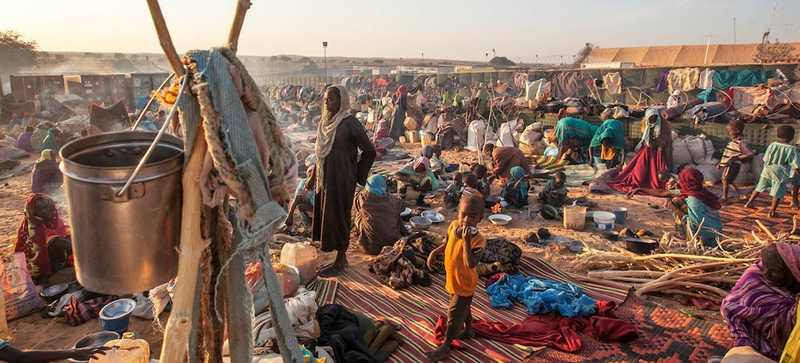
The heaviest cost falls on ordinary Sudanese. The million-plus returnees to Khartoum came back on the promise that the capital was stabilizing; a shuttered airport tells them otherwise. The dam strikes add a darker dimension: hitting the Sennar and Roseires hydropower stations does not degrade the army’s air force — it darkens homes across central and southern Sudan. Infrastructure warfare always bills civilians first.
The numbers behind the escalation
Step back and the week’s events fit a grim trend. The Armed Conflict Location & Event Data project counts at least 59,000 killed since April 2023, though aid groups say the true toll is far higher. The United Nations counts around 12 million displaced — the world’s largest displacement crisis. UN figures cited in regional reporting put civilian deaths from drone strikes alone at nearly 700 in just the first three months of 2026. Both sides have industrialized drone warfare this year, and the Khartoum airport campaign shows how it has evolved: from battlefield support to strategic denial, aimed as much at headlines and investor confidence as at runways.
Consider the timing. The strikes landed days after the fall of El Fasher gave the RSF full control of Darfur — the group’s greatest territorial prize — and as army chief Abdel Fattah al-Burhan publicly rejected talks and vowed to retake every inch of territory. The RSF is signaling that even in defeat in Khartoum, it sets terms in Khartoum. Meanwhile the war on aid convoys continues, and the same drone-first playbook is now scarring airports across the Red Sea in Yemen — a regional pattern worth watching.
What happens next
Three scenarios, none of them quiet. First, Badr Airlines’ October 26 booking reopening becomes the next test: if the RSF strikes again that week, the “reopening” becomes a rolling fiction and the army’s normalcy narrative collapses for good. Second, the dam strikes could mark an expansion of the target set — from military-linked infrastructure to the power grid itself, a step that would deepen the humanitarian catastrophe and invite international condemnation the RSF can ill afford. Third, the diplomatic track: Burhan has rejected negotiations while a US envoy pushes a Sudanese-led dialogue, and every drone over Khartoum hardens the army’s position that there is nothing to talk about until the RSF is disarmed.
The deeper truth is structural. As long as the RSF can build or buy long-range drones, no Sudanese government can guarantee a safe Khartoum — and as long as it cannot guarantee a safe Khartoum, the war’s end will remain something announced in press releases rather than experienced by the people living through it. The cancelled flight was supposed to carry passengers. Instead it is carrying a message, and the message is that in Sudan’s war, the sky itself is still contested.
Sources: The Eastleigh Voice (reporting Xinhua’s military and airport sources); AL24 News via local media; RSF field commander Col. Othman Jaafar statement on X; Reuters (May 2026 Khartoum airport drone wave); International Organization for Migration; Armed Conflict Location & Event Data (ACLED); United Nations.