Kharkiv park drone strike: a Russian drone hit the central park of Nova Vodolaha, a settlement southwest of Kharkiv city, at about 4:30 p.m. on Monday, October 19, 2026, while families with children were in the park, killing six people — including three children — and injuring 15, according to Reuters, citing Kharkiv Regional Governor Oleh Syniehubov and Interior Minister Ivan Vyhivskyi, and the Ukrainian human-rights organisation ZMINA. Investigators said preliminarily that a Geran-3 drone was used, and prosecutors opened a war-crimes investigation.
A Drone Hit a Village Park at Playtime
Track it live: follow the front lines on the Ukraine war map and see every active conflict on the live war tracker.
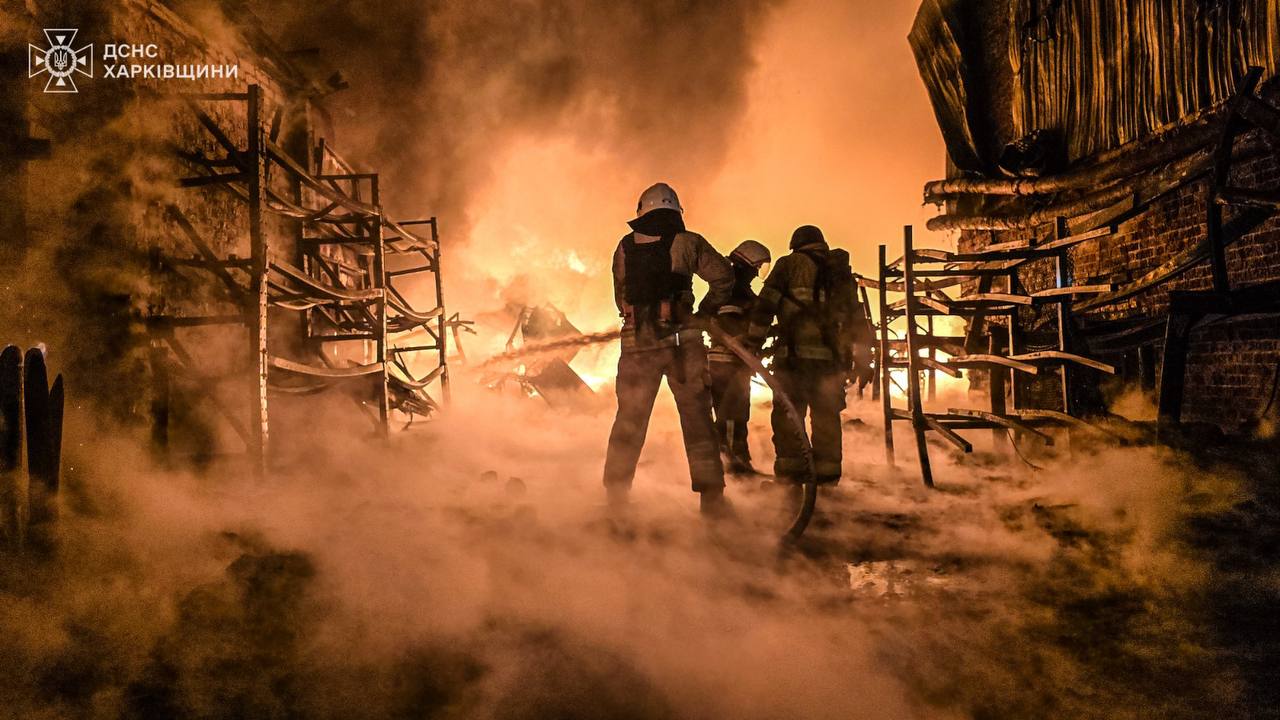
NOVA VODOLAHA, Ukraine — The Kharkiv park drone strike happened at about 16:30 local time on Monday in the central park of Nova Vodolaha, a settlement southwest of Kharkiv city in Ukraine's northeastern Kharkiv region, according to ZMINA, the Ukrainian human-rights organisation, which reported the timing and location from officials at the scene. Reuters, citing Kharkiv Regional Governor Oleh Syniehubov's posts on Telegram and Interior Minister Ivan Vyhivskyi, reported that a Russian drone struck the park while families with children were there. Six people were killed, including three children, and 15 people were injured, including seven children, Reuters and ZMINA reported.
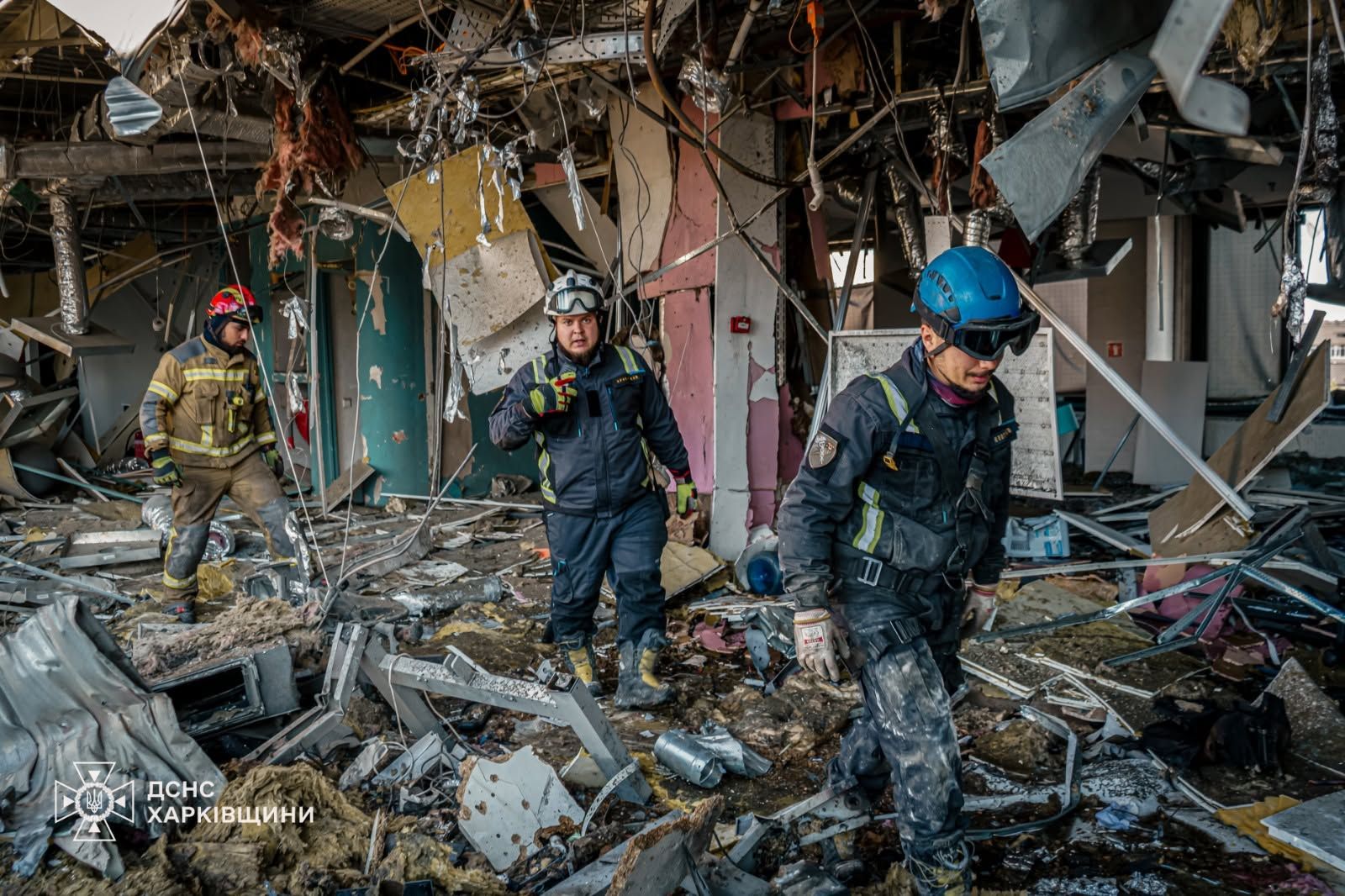
The injured were taken by medics and resuscitation teams to hospitals in Kharkiv, ZMINA reported, and a café building near the park was damaged. Emergency services and police worked at the scene into the evening, checking the area for explosives, according to ZMINA. Vyhivskyi, the interior minister, shared a blurred photograph of a child's body in a stroller, Reuters reported — an image this newsroom is not publishing. The casualty figures are Ukrainian official figures reported by Reuters and ZMINA; they could not be independently verified at the scene, and Russia did not immediately comment on this specific strike in the sources checked.
What is known, and what is not
The established core of the story is narrow and grim. A drone struck a public park in a settlement well away from the front line at an hour when the park was in use. Six people are dead and 15 injured on the count of Ukraine's regional governor and interior minister, carried by Reuters. Beyond that core, almost every element is either preliminary or attributed, and it is worth being precise about which is which.
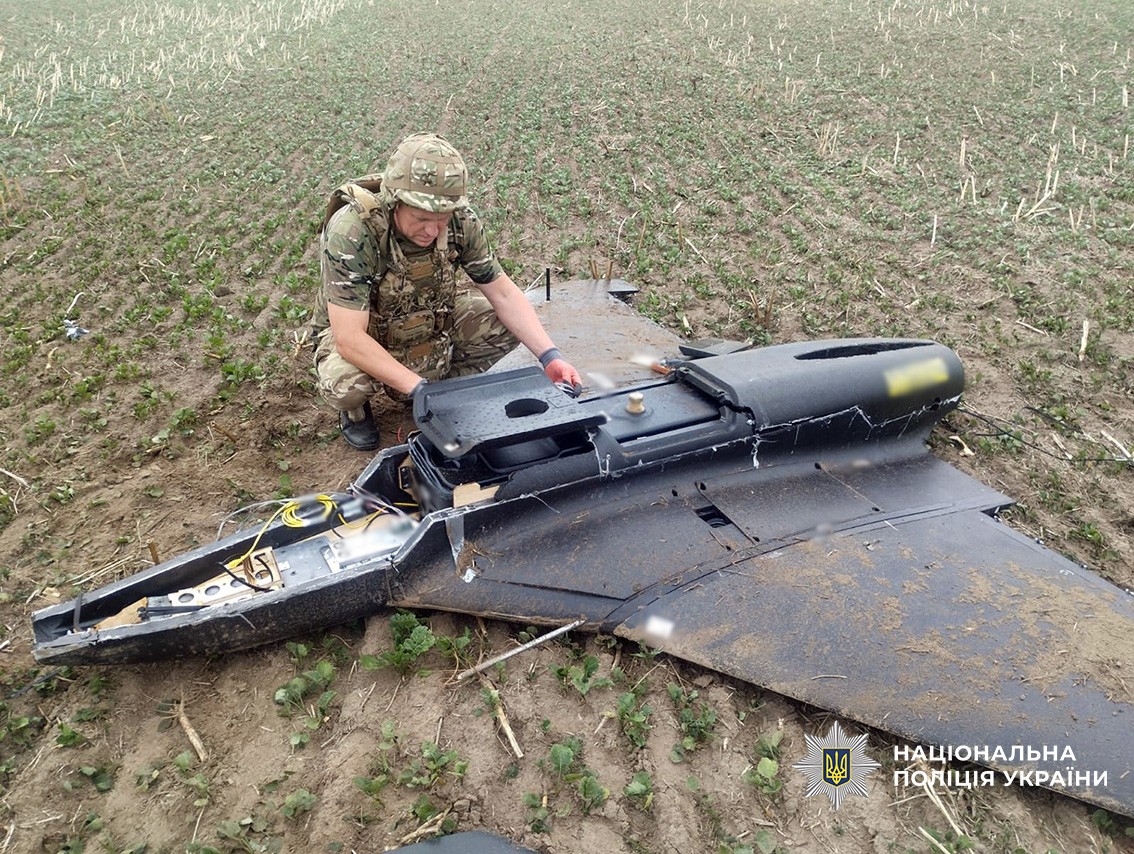
The drone type is preliminary. Investigators cited by ZMINA said a Geran-3 — the jet-powered variant in the Geran family of one-way attack drones, the Russian designation for the Shahed-type aircraft — was used, but ZMINA presented that identification as a preliminary finding of the investigation, not a settled conclusion, and it is reported here the same way. The legal process, by contrast, is a matter of record: the Kharkiv Regional Prosecutor's Office has opened a pre-trial war-crime investigation under Part 2 of Article 438 of Ukraine's Criminal Code, ZMINA reported.
The identities of the dead were still being assembled on Monday evening. Officials later identified five of the six people killed as three women aged 28, 34 and 36 and two girls aged 11 and 14 months, the New York Post reported. The sixth person had not been publicly identified in the reporting available on Monday night, and no identity is assumed here.
Zelenskyy names the youngest victim
President Volodymyr Zelenskyy addressed the strike in a post on X and Telegram on Monday, reported by ZMINA and the Kyiv Post. He named the youngest victim as Anhelina, a girl just over one year old, born in August 2025, who was killed in her stroller, and said her mother, Inna, died in hospital. Another of the girls killed was 11, according to his post. Zelenskyy called the strike a "pure atrocity" and an act of "absolute brutality" — his wording, as reported from his post — and wrote: "Lives must be protected. Ukraine needs air defense." He thanked the countries and leaders who help Ukraine shoot down Shaheds and missiles, urged partners not to lift sanctions on Russia while the killing continues, and asked that the Lindsey Graham sanctions law be applied, the Kyiv Post reported. (President Volodymyr Zelenskyy via X, as reported by ZMINA and the Kyiv Post.)
It is the sanctions sentence, as much as the grief, that connects a village park in Kharkiv region to the argument that has consumed Washington and Kyiv for a week — the fight over the Trump administration's sanctions waiver for Moscow, which Zelenskyy has attacked and the White House has defended. Monday's strike will now be cited inside that dispute, by Kyiv, as evidence of what the waiver purchases. What it cannot do on its own is settle the argument: a single atrocity, however well documented, is one data point in a debate about leverage both capitals were already conducting at full volume before Monday afternoon.
Russia's position
Russia did not immediately comment on this specific strike in the sources checked. Moscow's general stated position, repeated by its defence ministry and officials throughout the war, is that Russian forces strike military objects and do not intentionally target civilians; that position is stated here as Russia's position, attributed to Moscow, and it sits alongside the Ukrainian account without either being endorsed by this newsroom. The toll, the location and the timing in this article are Ukrainian official figures and Ukrainian official statements as reported by Reuters and ZMINA, and they could not be independently verified at the scene on Monday night.
The same afternoon, in Washington
Hours later in Washington, President Donald Trump told reporters on the South Lawn that Russia has been "fine" on Ukraine and "haven't been doing much," and said it may be time for Zelenskyy to get somebody else to negotiate, Reuters reported via the New York Post. The two statements — a president in Kyiv naming a dead child, a president in Washington suggesting Kyiv change its negotiator — were made about the same war on the same day, and the distance between them is the diplomacy as it now stands. The full Trump–Zelenskyy dispute over the sanctions waiver and the diesel deal is covered here: Zelenskyy blasts Trump's Russia diesel deal as a "gift to Putin".
Why this matters
Start with the hour. Most of the civilian toll of this autumn's air war has been accumulated at night — in the overnight waves against energy infrastructure that have cut power to hundreds of thousands of families at a time, including the ballistic strikes on Kyiv the night before this one, which damaged a medical centre in the Desnianskyi district and are covered here: Russian ballistic missiles slam into Kyiv as the sirens sound. A strike at about 16:30 on a park in use is a different category of event in risk terms: daylight, a public leisure space, a small settlement rather than a metropolis, and a casualty list in which half the dead are children. Air defence is organised around the night waves and the big cities. The Nova Vodolaha strike is a reminder of the geography that organisation cannot cover — thousands of settlements, each with a park, a school run and a bus stop, spread across a region the size of Kharkiv's.
Then consider the numbers the strike lands inside. The UN Human Rights Monitoring Mission in Ukraine reported on October 15–16 that verified civilian casualties in September 2026 were at least 328 people killed and 2,105 injured. The combined total — killed and injured — was 85 percent higher than September 2025, when 249 were killed and 1,068 injured, and it was the highest September since the full-scale invasion began. For January to September 2026, the mission counted 2,570 killed and 15,211 injured, 59 percent higher than the same period in 2025. Civilians were killed or injured across 22 regions; in Kyiv alone, casualties were recorded on 22 of September's 30 days, more frequently than in any month since 2022. Long-range missiles and drones caused 53 percent of September's casualties, and short-range drones a further 23 percent.
The mission's head, Danielle Bell, said the first two weeks of October were "among the deadliest periods for civilians in years," and warned that systematic attacks on electricity and heating as winter approaches are bound to inflict significant suffering. Nova Vodolaha happened on the nineteenth day of that October, in daylight, in a park. It does not change the trend the UN described. It illustrates it, in the form the trend takes when it reaches a village rather than a capital.
The drone arithmetic behind the numbers
The UN's breakdown — long-range drones and missiles causing a majority of casualties, short-range drones nearly a quarter — is the statistical shadow of a change in the weapons themselves. The Geran family, Russia's version of Iran's Shahed one-way attack drone, is built cheaply enough to launch in waves that saturate defences; analyst reporting has long noted that the jet-powered variants reported in this war, of which the Geran-3 is one, fly faster and are harder for Ukraine's mobile fire groups and interceptor drones to engage than the slower propeller-driven versions. That reporting is general context, not a finding about Monday's strike, where the drone type remains a preliminary identification. But the arithmetic it describes is the arithmetic in the UN table: as launch volumes rise and interception gets harder at the margins, a share of a much larger number of drones gets through — and what gets through lands in the places civilians actually are, including, on Monday, a park at playtime.
Kharkiv region's exposure
Kharkiv region borders Russia, and its exposure is structural: flight times from launch areas across the border are measured in minutes, the region's towns and villages sit inside the range of every category of weapon in the UN's table, and strikes on the region have continued throughout the autumn alongside the better-publicised waves on the capital. This site's coverage of the past week's air war — including the Kyiv strikes that arrived with no warning during the argument over an energy ceasefire — describes the same pattern from the capital's side: a campaign whose weight is falling on the systems civilians depend on, power and heat first among them, as the cold approaches. Nova Vodolaha adds a settlement of a few thousand people to a map that has mostly been drawn this month in regional capitals.
Who gains, who loses
Kyiv gains an argument and loses six people, and the order of those clauses is the whole obscenity of the exchange. Zelenskyy's post was written for two audiences: Ukrainians, who are asked to endure another winter of this, and partners, who are asked for air defence and for sanctions pressure — specifically, on Monday, against lifting sanctions and for applying the Graham law. A documented strike on children in a park is the strongest form of that appeal, and Kyiv will make it in every capital where the waiver is debated. Washington's sanctions critics gain the same evidence for the opposite brief: that easing pressure while strikes like this continue is indefensible. The administration's defenders answer, as they have all week, that negotiations require keeping Moscow at the table and that pressure is sequenced, not abandoned — an argument about leverage that Monday's strike does not refute but does make harder to deliver in public. Moscow, which did not comment on this strike in the sources checked, loses nothing it has shown itself to value in this exchange, which is itself a finding about the debate: the party accused of the strike is the only party not arguing about it.
What happens next
Three processes now run in parallel. The first is legal: the Kharkiv Regional Prosecutor's Office's pre-trial investigation under Article 438 will assemble the forensic record — the drone fragments, the blast pattern, the medical evidence — that determines what can ever be proved, in a courtroom, about a park in Nova Vodolaha. The second is military: whether the preliminary Geran-3 identification is confirmed matters beyond this case, because a confirmed jet-powered strike on a settlement target feeds directly into Kyiv's standing request for more and better interceptors, and into the argument over Patriot deliveries that has run through every week of this autumn. The third is political and has a date pressure on it: winter. The UN's warning about electricity and heating was issued about infrastructure, but Nova Vodolaha is a reminder that the same drone campaign touches places infrastructure maps do not show. If the first two weeks of October were among the deadliest periods for civilians in years, the question the rest of the month now poses — to Kyiv's air defenders, to Washington's negotiators and to the sanctions debate Zelenskyy joined on Monday night — is whether anything in the current trajectory bends before the cold does.
Sources: Reuters, October 19, 2026 (the toll of six killed including three children and 15 injured including seven children, Governor Oleh Syniehubov's statements on Telegram, Interior Minister Ivan Vyhivskyi's statements and the blurred stroller photograph he shared); ZMINA, October 19, 2026 (the Nova Vodolaha location and the approximately 16:30 timing, the preliminary Geran-3 identification, the café damage, the hospital transfers and explosives checks, the Kharkiv Regional Prosecutor's Office war-crime investigation under Part 2 of Article 438, and President Zelenskyy's post); Kyiv Post, October 19, 2026 (Zelenskyy's statement, his naming of Anhelina and her mother Inna, and his sanctions appeal including the Lindsey Graham law); UN Human Rights Monitoring Mission in Ukraine, October 15–16, 2026 (September 2026 verified civilian casualty data and Danielle Bell's statements); New York Post, October 19, 2026 (the updated victim breakdown identifying five of the six dead, and President Trump's South Lawn remarks as reported by Reuters). Casualty figures are Ukrainian official figures as reported by Reuters and ZMINA and could not be independently verified at the scene; Russia did not immediately comment on this specific strike in the sources checked, and its general stated position — that its forces target military objects and deny intentionally targeting civilians — is reported in the text. The drone-type identification is preliminary, as reported.