Ukraine No Warning Kyiv Strike as Energy Truce Shifts
Track it live: Live war tracker — follow the fighting in Ukraine and other active conflicts as they develop, including the Ukraine war map.
Ukraine received no prior warning from its Western partners about a Russian ballistic missile attack on Kyiv overnight, President Volodymyr Zelenskyy said on Tuesday, October 13, in a post on X. Zelenskyy said five ballistic missiles hit civilian infrastructure in the capital and called the attack particularly serious because advance intelligence on missile launches is one of the main tools Ukraine has to move people to shelter in time. He did not blame any specific partner for the missing warning. Reuters reported that air raid alerts in Kyiv sounded only after explosions had already been heard in the city, and Ukraine's air force said it had received no surveillance warning before the launches and was investigating what happened.
The warning question landed on the same morning as a second, quieter first. Russia's defence ministry, in its summary of overnight strikes, listed no Ukrainian energy facilities among its targets — the first night since President Donald Trump announced an "energy ceasefire" on Sunday on which Moscow reported hitting no energy targets at all, Reuters reported. Instead, the ministry said its forces struck transport and logistics targets. A Kremlin spokesman, asked about the ceasefire, said only that contacts were continuing and declined to give details. It was not clear, Reuters noted, whether Russia had deliberately avoided energy infrastructure overnight or whether the pattern was incidental.
What Russia says it hit — and what Ukraine says it cost
According to the Russian defence ministry — whose claims Reuters said it could not independently verify — the overnight targets included a workshop at a Kyiv printing facility that Moscow said was used to produce missiles and long-range drones, the Darnytsia locomotive depot in the capital, a postal logistics centre at Ternivka in the Mykolaiv region that Moscow said stored dual-use cargo, a warehouse it said held drones at Meshkovo-Pohorelove, and a dry cargo vessel carrying military and dual-use goods toward the port of Mykolaiv, struck in the Bug estuary.
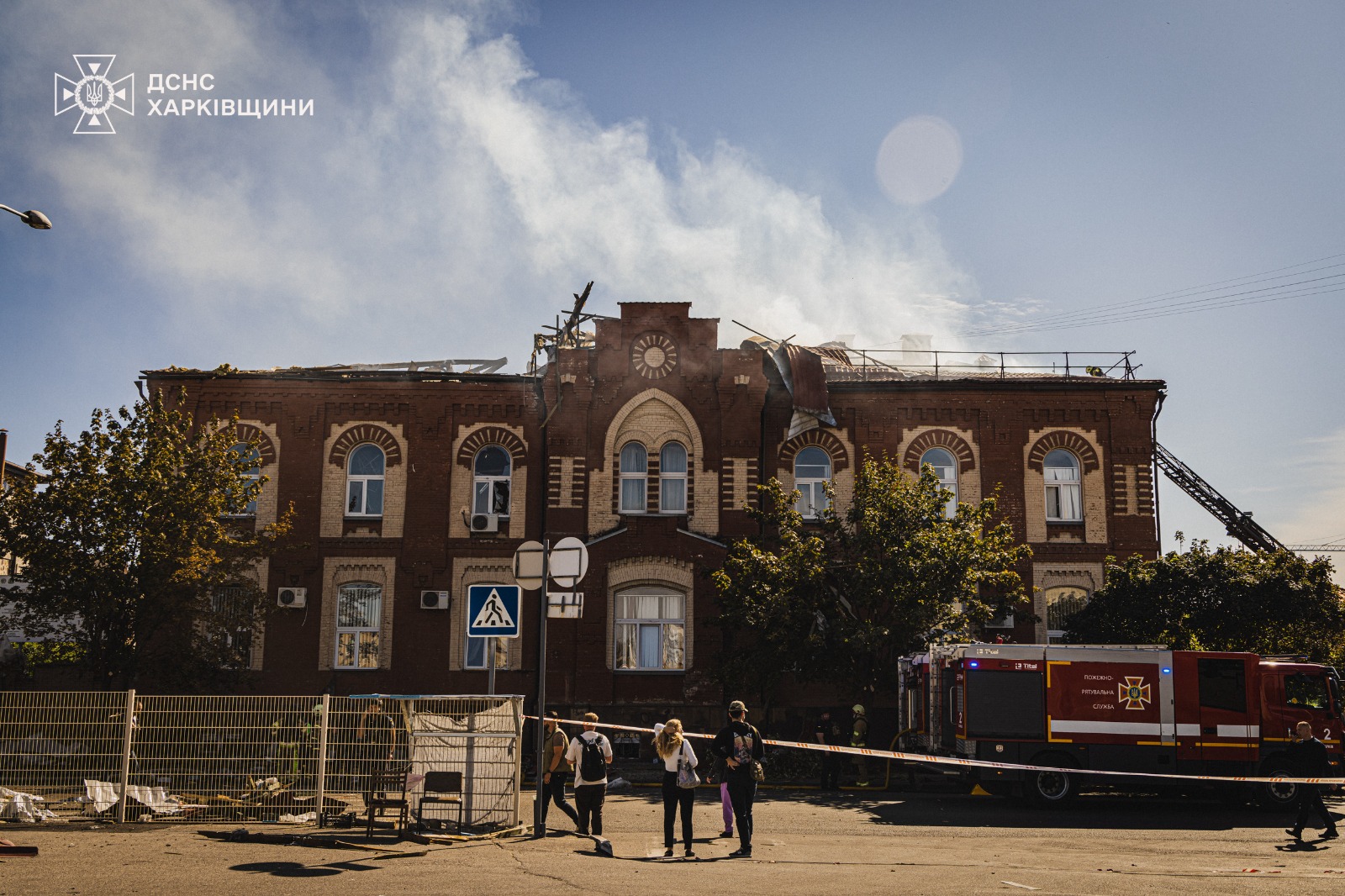
On the Ukrainian side of the ledger, officials said Russian strikes killed four people in Kharkiv, Ukraine's second city, where a residential building was destroyed and rescuers worked through the night, and injured dozens of people across the country. Zelenskyy said Russia had attacked Ukraine with more than 100 weapons — ballistic missiles, jet-powered drones and loitering munitions — since Monday evening. That toll follows a day, Monday, on which Zelenskyy said Russia struck six Ukrainian energy sites, in what Kyiv described as a direct violation of the ceasefire Trump had announced only hours earlier — the subject of our earlier report, Russia Violates Energy Ceasefire, Zelenskyy Says After Kharkiv Strike. Ukraine, for its part, says it has not struck Russian oil refineries for two days, since Trump's announcement.
The intelligence question underneath
The missing warning matters because of what sits behind it. Reuters and other outlets have reported that US officials have threatened to cut intelligence sharing and weapons purchases for Ukraine unless Kyiv halts its strikes on Russian oil refineries — the campaign Washington blames for pushing up diesel prices ahead of the November 3 midterm elections. Kyiv relies heavily on US satellite early-warning data to detect ballistic missile launches in time to sound alerts; a Norwegian defence-studies missile expert cited by Reuters said European allies have only a very limited ability to replace the US space-based infrared system that provides it. Zelenskyy stopped short of connecting the missing warning to those reported threats. Foreign Minister Andrii Sybiha, speaking at the Warsaw Security Forum, moved to calm the speculation, saying Ukraine is still receiving US military intelligence and that the delay in alerting Kyiv was due to the specific type of weaponry Russia used. President Trump, leaving the White House on Monday evening, said there had been violations on both sides and urged Zelenskyy and President Vladimir Putin to reach a deal to end the war.
Why this matters
Two different ceasefires are being tested at once, and Tuesday's news separates them. The first is the narrow energy truce: after two days in which Kyiv accused Moscow of striking power and gas sites within hours of Trump's announcement, Russia's target list went quiet on energy for one night while its missiles kept falling on rail depots, warehouses and a cargo ship. If that pattern holds for several more nights, it suggests Moscow is calibrating — honouring the letter of a deal it has never publicly confirmed, while shifting weight onto the logistics network that moves Ukrainian weapons and supplies. If it does not hold, the Kharkiv power-plant strike of Sunday night becomes the template and Tuesday the exception.
The second test is quieter and, for Ukrainian civilians, more immediate: whether the early-warning pipeline that turns a missile launch in Russia into a siren in Kyiv keeps working while Washington uses intelligence as leverage over Ukraine's refinery campaign. A ballistic missile reaches Kyiv in minutes. The difference between a warning and no warning is not diplomatic — it is the difference between a family in a corridor or a shelter and a family asleep in bed. Sybiha's insistence that cooperation continues, set against the air force's admission that no warning arrived, leaves the most important question of the night unanswered: was this a technical gap created by a fast, low-signature launch, or the first visible consequence of a threat reported for days? Neither Kyiv nor Washington has said, and the distinction will shape how much of Trump's ceasefire architecture Ukraine can actually rely on.

Who gains, who loses
For Moscow, a night without energy strikes costs little militarily — transport and port targets degrade Ukraine's war effort too — while letting the Kremlin keep its options open: Peskov's refusal to confirm or deny the truce preserves deniability in both directions. For Washington, the diesel logic that produced the ceasefire announcement remains intact only if Russian fuel flows and Ukrainian refineries both stay quiet; Ukraine's two-day pause on refinery strikes is, as Sybiha pointedly noted in Warsaw, itself a form of leverage Kyiv did not have a year ago. For Kyiv, the losses are concrete: four dead in Kharkiv, a damaged logistics chain, and a warning failure it has had to raise in public without accusing the ally it depends on. European governments, who on Monday imposed a major new sanctions package and publicly doubted Russia would honour any truce, gain an argument — that only pressure, not announcements, changes Russian targeting — but no new ability to replace American early-warning satellites.
What happens next
The next few nights are the test. Watch three things: whether Russian defence ministry summaries continue to omit energy targets; whether Ukrainian air alerts again lag explosions, which would turn one night's gap into a pattern; and whether the Kremlin moves from "contacts are continuing" to an actual confirmation of terms. The overnight fighting also connects to the wider escalation of the past week in the capital, covered in Russia Drone Strikes Kyiv High-Rise in Darnytskyi. Until Moscow confirms the ceasefire exists, Tuesday's energy-free night is a data point, not a truce — and Kyiv's missing warning is a reminder that in this war, information can be as decisive as any missile.
Sources: Reuters reporting from Kyiv and Moscow, October 13, 2026 (Reuters via KELO-FM; Reuters — Kremlin on ceasefire contacts; Reuters — Mykolaiv vessel claim); Associated Press, October 13, 2026 (AP via the Gazette); New York Post, October 13, 2026. Russian defence ministry target claims are attributed in the text and were not independently verified by Reuters.