Kerala High Court FIR Pinarayi Vijayan
Topics: Kerala High Court · Pinarayi Vijayan · CMRL · Exalogic · VACB · Enforcement Directorate
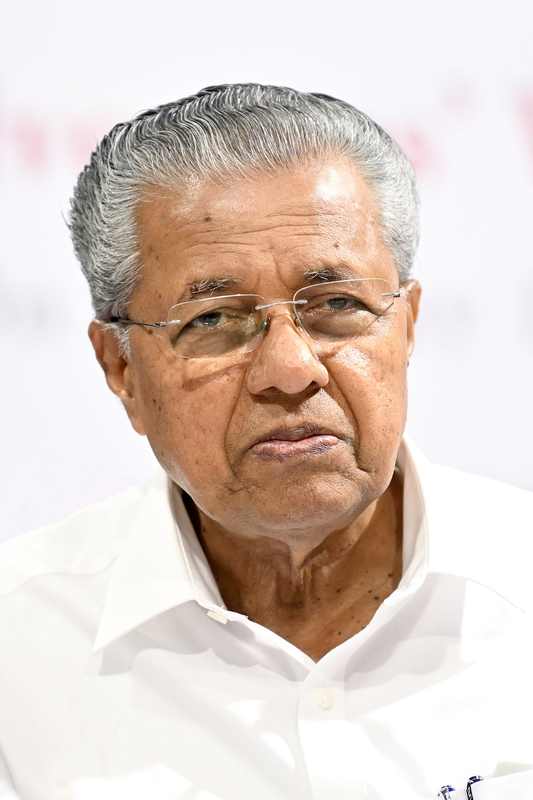
KOCHI — Justice A. Badharudeen of the Kerala High Court on Friday directed the Director of the Vigilance and Anti-Corruption Bureau, or VACB, to register a first information report against former chief minister Pinarayi Vijayan and others in the CMRL-Exalogic case. The court set aside the state government's decision to route the matter through a special investigation team and a preliminary enquiry.
The order followed material forwarded by the Enforcement Directorate under Section 66(2) of the Prevention of Money Laundering Act. The court held that the allegations described possible offences under the Prevention of Corruption Act, 1988, making the specialist anti-corruption agency the competent body to take the case forward. It directed the state police leadership and SIT to transfer the ED communication dated September 7, 2026, and supporting material to the VACB Director. The ED was also told to provide its documents to the bureau.
The proceedings name Vijayan, his daughter Veena Thaikkandiyil—widely known as Veena Vijayan—and her husband, former minister P. A. Mohammed Riyas, among others, according to reports by Bar & Bench, The Hindu BusinessLine and LiveLaw Business. The court had reserved its decision on September 29.
Why this matters
The immediate significance is procedural. A preliminary enquiry asks whether there is enough basis to open a case; an FIR formally records alleged cognizable offences and activates the investigative powers attached to a criminal case. That can include collecting bank and company records, examining witnesses, tracing money flows and testing explanations against documentary evidence.
The Kerala VACB FIR also changes who controls the next phase. The state had created an SIT under Crime Branch ADGP H. Venkatesh, with SP Vikraman as investigating officer, and allowed a 30-day preliminary enquiry. The High Court concluded that this route was not the correct one for alleged offences under the anti-graft law. The ruling therefore limits administrative discretion at the threshold while leaving the truth of the allegations to investigation and, if evidence supports charges, the courts.
That distinction is central. An FIR is neither a conviction nor proof that payments were unlawful. Vijayan, Veena Vijayan, Riyas and any other person named retain the presumption of innocence. Investigators must still establish the source, purpose and recipients of funds, the existence or absence of contracted work, and any public-official connection required by the offences eventually alleged.
How the CMRL-Exalogic case reached this point
From a 2019 tax search to the SFIO Exalogic investigation
The case grew from a January 2019 income-tax search that reportedly identified about ₹130 crore in suspected fictitious expenses at Cochin Minerals and Rutile Ltd, or CMRL. Questions later focused on payments to Exalogic Solutions, a Bengaluru-based technology company founded by Veena Vijayan and now described as defunct.
In January 2024, the Ministry of Corporate Affairs ordered an investigation that moved to the Serious Fraud Investigation Office. The SFIO filed a prosecution complaint before an Ernakulam court in April 2025. The Enforcement Directorate separately registered a money-laundering case and sought access to the corporate-investigation material; a Kochi court permitted that access in June 2026. BusinessLine also reported that ED investigators questioned CMRL finance chief Suresh Kumar and joint managing director Sharan S. Kartha that month.
The ED then sent its September 7 communication to Kerala's Director General of Police seeking registration of a case. The Congress-led UDF government responded by forming the SIT and authorizing a preliminary enquiry. Advocate K. M. Shajahan petitioned the High Court for an FIR and a VACB investigation. The court found that he had standing as a citizen and whistle-blower to seek judicial review of the state's chosen route.

What the ₹2.78 crore figure does—and does not—show
CMRL payments of ₹2.78 crore are an allegation, not the verdict
The ED alleges that CMRL paid ₹2.78 crore to Exalogic under the description of IT consultancy services without corresponding services being delivered. In plain numerical terms, ₹2.78 crore equals ₹27.8 million, or 278 lakh. The number is large enough to draw scrutiny, but scale alone cannot prove bribery, money laundering or a sham contract.
Some reporting has separately referred to ₹1.72 crore in recurring payments between 2017 and 2020. Other ED allegations cited in coverage concern ₹3.28 crore in alleged illegal gratification to Vijayan, alleged hawala-linked transactions, and a ₹50 lakh loan from Sasidharan Kartha's EICPL to Exalogic. These figures may concern different transaction sets, periods or legal theories. They should not be casually added together, treated as interchangeable or presented as established losses.
The decisive evidence will be granular: contracts, invoices, work products, emails, ledger entries, tax treatment and bank trails. If Exalogic can document genuine deliverables and commercially explain the pricing, that would weaken the claim that payments were disguised. If investigators find no deliverables, circular flows or links to official favor, the prosecution theory would strengthen. The FIR opens that test; it does not resolve it.
The political stakes in Kerala
Kerala politics and the CPI(M)'s defense
Vijayan is no longer chief minister. His term ran from May 25, 2016, to May 18, 2026, and he now leads the opposition in the Kerala Legislative Assembly. That status raises the political stakes: the case directly touches the CPI(M)'s most prominent state leader while the UDF controls the government and policing apparatus.
The CPI(M) and the accused camp have described the allegations as politically motivated. Vijayan and Riyas reject wrongdoing; Riyas has denied the claims and indicated that he would pursue legal remedies against allegedly false accusations. Their broader argument is that central agencies have been used selectively against opposition figures and that business transactions are being recast as corruption without proof of a quid pro quo.
The UDF government faces the opposite credibility test. Chief Minister V. D. Satheesan has said the law should take its course and that the process should not become a witch-hunt. The High Court's rejection of the government's preliminary-enquiry route nevertheless gives the opposition a line of attack: either the state acted too cautiously, or it used a procedural buffer where the court found a formal case was required.
The Enforcement Directorate's role—and its limits
The ED's role is significant because its referral supplied the material that triggered the dispute over whether an FIR should be registered. Under Section 66(2) of the PMLA, the agency can share information indicating possible offences with another authority. The High Court did not convert every ED allegation into a proven fact; it decided which agency should act on the material and at what procedural level.
Supporters of the order will argue that a specialist anti-corruption bureau, working under judicial direction, can test the evidence more credibly than a preliminary process selected by the executive. Critics of the ED will continue to question whether the agency's intervention is politically selective. Both claims now meet the same practical test: whether the VACB investigation is evidence-led, transparent about procedure and capable of surviving judicial scrutiny.
What happens after the FIR
Legal next steps in the Prevention of Corruption Act case
The VACB Director must first register the case in line with the order and take custody of the documents held by the DGP, SIT and ED. The bureau can then identify alleged offences and accused persons, appoint an investigating officer, secure relevant records and summon witnesses. Depending on the evidence and the offices held at the relevant time, questions of sanction or other statutory approvals may arise before prosecution.
Vijayan or other affected parties may seek review, appeal or interim relief, including a challenge to the order before a higher court. The state can also clarify the operational scope of the investigation. Unless a higher court stays or modifies the direction, however, the VACB is expected to proceed with registration and investigation.
There are several plausible outcomes. Investigators could file a closure report if the evidence does not support offences; they could seek further records and keep the case open; or they could file a charge sheet if they conclude there is prosecutable evidence. Each step is reviewable in court. Arrest is not automatic simply because an FIR exists, and the order does not predetermine charges.
Political fallout: three scenarios to watch
First, a fast legal challenge. If the accused obtain a stay or narrow the order, political attention may shift to the High Court's reasoning and the scope of the ED referral. Second, a document-heavy investigation. A months-long review of corporate and banking records could keep the issue active without producing immediate legal conclusions. Third, prosecutorial escalation. A charge sheet or corroborating evidence would intensify pressure on Vijayan and the CPI(M), while a closure report would strengthen their claim that the case was politically inflated.
For Kerala voters, the sharper question is not whether one side can claim an early victory, but whether institutions apply the same standards to political allies and opponents. The court has ordered a formal investigation. Its legitimacy will ultimately rest on evidence gathered, defenses fairly tested and findings that can withstand open judicial review.