Rahul Gandhi CEC resignation protests
Rahul Gandhi CEC Resignation Protests: 'Vote Theft' Row Grips India
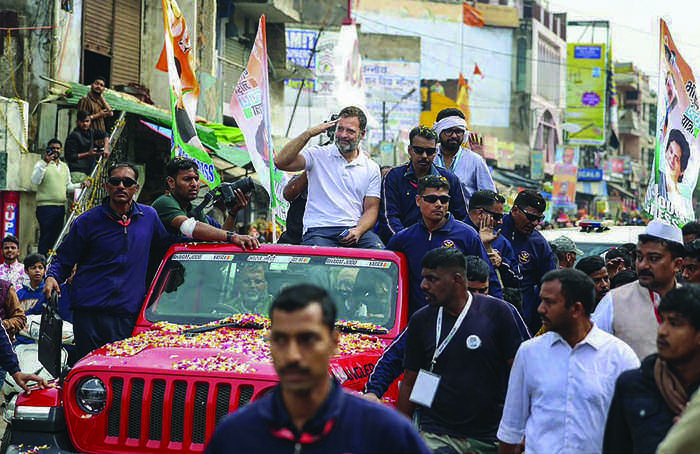
NEW DELHI — The Rahul Gandhi CEC resignation protests have turned a dispute over electoral-roll revisions into India’s sharpest institutional confrontation of 2026. On October 2, Gandhi Jayanti, the Leader of Opposition in the Lok Sabha said thousands of young people were peacefully exercising constitutional rights against alleged “vote theft.” Their demand, he wrote, was that Chief Election Commissioner Gyanesh Kumar resign.
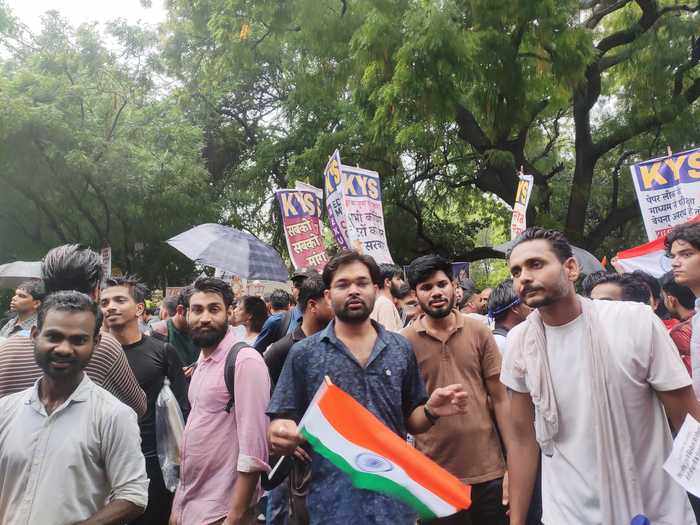
Police detained at least 700 protesters in and around Delhi’s Jantar Mantar, according to reports carried by NewsLocker and other outlets; The Indian Awaaz put the figure above 1,000. Permission for the gathering had been denied, and authorities imposed prohibitory orders under Section 163 of the Bharatiya Nagarik Suraksha Sanhita. AAP leader Saurabh Bhardwaj was among opposition figures detained. In Mumbai, thousands gathered at Shivaji Park in a separate mobilization led by the Cockroach Janta Party and civil-society groups.
The movement is no longer only about whether individual names were wrongly deleted from a roll. It is about whether India’s Election Commission can retain public trust while its internal procedures, software and revision decisions are under political attack. The opposition has chosen to move the argument from Parliament and press conferences into the street, and the state’s use of mass detention has given that strategy powerful images.
The Election Commission is the load-bearing institution of the world’s largest democracy. Parties can disagree over policy, campaign tactics and results while accepting the system because the referee is treated as independent. Once a large political constituency concludes that the referee is aligned with one side, every result becomes harder to legitimize and every administrative change looks like a partisan weapon.
That does not prove the opposition’s allegations. The commission rejects claims of manipulation, says differences inside an institution are normal and insists its actions were lawful. But institutional legitimacy depends on more than legal compliance. It also depends on transparent explanations, consistent procedures and the ability to persuade losing parties that they had a fair chance.
The demand for Kumar’s resignation personalizes what had been a bureaucratic dispute. Instead of arguing only about the Special Intensive Revision, the opposition now presents the chief election commissioner as the symbol of the problem. That makes compromise harder. A technical correction to the voter list may no longer satisfy protesters who define accountability as removal at the top.
Gandhi’s choice of Gandhi Jayanti was deliberate. By invoking Mahatma Gandhi’s teachings of truth and peaceful resistance, he framed detention not as ordinary crowd control but as suppression of constitutional dissent. His line that “a lathi can stop a crowd, but not a question” was designed to turn police action into proof of the movement’s moral argument.
From September 30 planning to October 2 detentions
On September 30, the INDIA opposition alliance announced a “save democracy” protest campaign after a newspaper report said the Election Commission pushed large-scale voter-list changes despite objections from two commissioners. Twenty of roughly two dozen alliance parties attended the meeting, according to Reuters.
The alliance set out a calendar rather than a single demonstration: a march to the Election Commission office on October 6, a New Delhi rally on November 1 and a representation to the president. Gandhi told reporters that those who had destroyed Indian democracy would be punished. The commission answered that institutional differences were normal and that its actions complied with law.
Two days later, protests spread across Delhi and Mumbai, with demonstrations also reported in Ahmedabad, Lucknow and Patna. In Delhi, opposition parties, youth organizations, the Students’ Federation of India and the Democratic Youth Federation of India were among the mobilizing groups. Police denied permission, imposed Section 163 restrictions and used buses to take detainees to stations across the capital.
The detention range — around 700 in some reports, more than 1,000 in another — should be presented honestly as a range, not flattened into false precision. Different outlets counted at different times and may have relied on different official and organizer estimates. Even the lower figure is politically significant: this was not a symbolic arrest of a few leaders but a large operation affecting hundreds of participants.
What SIR is — and why revisions trigger deletion fears
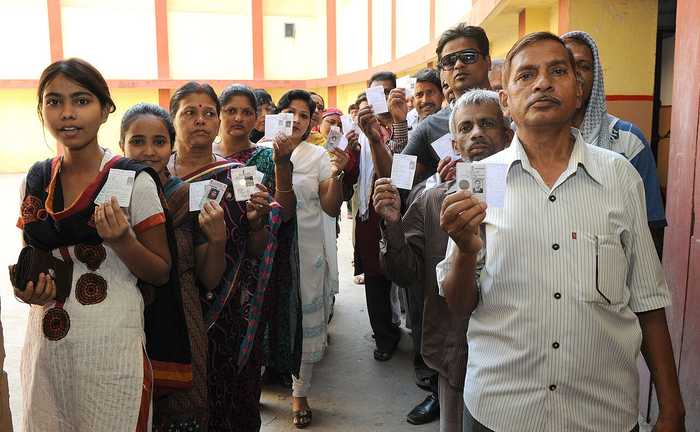
The Special Intensive Revision is an effort to verify and update electoral rolls. In principle, revision is essential. Voter lists accumulate duplicate records, deaths, relocations and incorrect addresses. New eligible voters must be added, and inaccurate entries must be corrected. A democracy with stale rolls can disenfranchise citizens just as surely as one with overly aggressive deletions.
The controversy turns on process and scale. Opposition parties allege that eligible voters were wrongfully removed or forced to navigate burdensome documentation. A Reuters report on September 28 said political analysts estimated that 130 million names had been struck from rolls since the latest revisions began, against roughly 650 million votes cast in the 2024 national election. That figure is an estimate, not an adjudicated count of wrongful exclusions, but its scale explains why administrative choices have become politically explosive.
Concerns intensified after the Indian Express reported that Election Commissioners Sukhbir Singh Sandhu and Vivek Joshi raised at least 14 formal objections over ten months to decisions involving voter registration, deletions and digital systems. The commission’s response — that differing views are normal in institutional deliberation — is plausible as governance. Yet the substance of the objections still requires public explanation, because routine disagreement inside the election authority can produce extraordinary consequences outside it.
The commission has ordered a review of voter-roll software and a special drive to add genuine electors left out during SIR. Booth-level officers are to visit homes of voters missing from pre-SIR lists, with enrollment available through Form 6. That corrective mechanism matters. It also creates an awkward political inference: if the process is entirely sound, why is a remedial drive needed? The commission can answer that quality control is evidence of responsible administration, not guilt. Its critics will call it an admission that exclusion risks were real.
The opposition angle: from Parliament to civil disobedience
The phrase “vote chori,” or vote theft, compresses a technical dispute into a moral accusation that is easy to chant and difficult to dislodge. It moves the debate away from forms, software and verification standards toward a claim that citizens’ political voice is being stolen. That rhetorical shift is central to the opposition’s strategy.
For years, opposition parties have challenged the government through Parliament, courts, election campaigns and press conferences. Street mobilization adds a different source of pressure. It creates repeated visual moments, lowers the barrier for youth participation and forces police to decide whether to tolerate, contain or detain. Each detention can then become content for the next mobilization.
Gandhi’s Gandhi Jayanti statement supplied a constitutional and historical frame. He said the protesters were peaceful, accused the “Modi-Shah government” of dragging young people off the streets and argued that their only offense was questioning alleged vote theft. He invoked Mahatma Gandhi to place nonviolence and truth on the protesters’ side. The message was not merely supportive; it was an attempt to define the movement’s identity before authorities or rivals could define it as disorder.
The advantage for the INDIA alliance is unity around institutional fairness, a theme that can bridge parties with different ideologies and state-level rivalries. The risk is overreach. If allegations are stated as proven facts without public evidence that persuades neutral voters, the campaign may look like an advance excuse for future electoral losses. The opposition needs documentation as much as crowds.
The Election Commission’s case
The commission’s defense has three parts. First, it says disagreement among commissioners is not evidence of illegality; collegial bodies routinely debate procedures. Second, it says its actions are lawful. Third, it points to remedial measures — software review, home visits and re-enrollment — as proof the system can correct errors.
That defense deserves serious weight. Electoral rolls cannot simply be frozen. Population movement in India is vast, and duplicate or obsolete entries can undermine confidence too. Officials responsible for maintaining accurate lists will sometimes remove records in good faith, and a later correction does not necessarily establish partisan intent.
But the commission’s burden is now higher than issuing categorical denials. It should publish the scale of additions and deletions, reasons by category, geographic distribution, appeal success rates and timelines for restoration. It should explain what the reported commissioner objections concerned and how decisions were resolved. Transparency can convert an argument over motives into an auditable argument over data.
Kumar’s resignation would not, by itself, settle the accuracy of the rolls. Nor would it prove the opposition right. It could even deepen politicization by teaching parties that pressure campaigns can remove the election chief. The stronger institutional outcome is a process that establishes facts independently and repairs legitimate exclusions quickly.
The government and police angle: permission, order and proportionality
Delhi Police had denied permission for the Jantar Mantar gathering and imposed prohibitory orders under Section 163 of the BNSS. From a law-and-order perspective, authorities can argue that organizers proceeded despite clear restrictions, central Delhi required security controls and detentions prevented disruption without the greater violence of a prolonged confrontation.
That argument does not end the proportionality question. Mass detention on Gandhi Jayanti gives the opposition precisely the contrast it wanted: peaceful constitutional language on one side, police buses and barricades on the other. The administration must show why narrower crowd-management measures were insufficient and whether all detainees were treated lawfully and released promptly.
Maharashtra Chief Minister Devendra Fadnavis rejected what he called a fake narrative after election commissioners addressed the allegations. Government supporters will argue that the opposition is attempting to delegitimize an institution because it cannot win at the ballot box. That is a politically potent counterattack, but it still leaves the government dependent on the commission’s credibility. Treating every question as partisan propaganda can make legitimate administrative concerns harder to resolve.
Civil society opens a legal track
The street campaign is being joined by a legal and expert track. NewsLocker reported that a lawyers’ body is forming a panel of five former judges to examine the constitutional and statutory validity of SIR. Senior lawyers are expected to advise the review. The panel’s credibility will depend on its membership, access to records and methodological independence, but its creation matters because it offers a forum other than party rallies.
A credible review could separate three questions that politics tends to collapse: whether the commission has legal authority to conduct the revision, whether its procedures satisfy constitutional standards of equality and due process, and whether particular implementation choices wrongfully excluded voters. The answers need not all point in the same direction.
If former judges conclude that the framework is valid but implementation was flawed, the commission could preserve authority while accepting repairs. If they identify constitutional defects, pressure would shift toward courts and Parliament. If they reject the opposition’s central claims, Gandhi and the INDIA alliance would face a choice between narrowing the campaign or attacking the review itself.
The Cockroach Janta Party factor
The Cockroach Janta Party’s name is deliberately irreverent, but its recent record is not trivial. The youth movement’s earlier protests contributed to the education minister’s resignation in July 2026. That episode gave organizers a proof-of-concept: sustained pressure can produce a personnel outcome. Kumar is now their next target.
At Shivaji Park in Mumbai, thousands joined the October 2 demonstration against alleged SIR irregularities. The movement’s participation broadens the campaign beyond traditional party machinery. Young activists can bring energy, digital reach and a language less constrained by parliamentary etiquette. They can also outrun the evidence or create statements that established parties later struggle to defend.
The education-minister precedent may encourage maximalism. A movement that has already secured one resignation will define anything less than another as failure. Yet election administration is a different institutional terrain. Removing a minister is a political decision by a government; removing or forcing the resignation of the chief election commissioner implicates safeguards designed to protect independence from exactly that kind of pressure.
What the numbers reveal
The scale is national but uneven. Delhi saw between roughly 700 and more than 1,000 detentions depending on the report. Mumbai saw thousands at Shivaji Park. Ahmedabad, Lucknow and Patna were also named as protest sites. Five cities are enough to establish geographic spread, but not yet enough to prove a mass national uprising.
The calendar matters as much as the headcount. October 2 was the emotional and symbolic launch. October 6 is the first major institutional test, with a planned march to the Election Commission office. November 1 is the scale test, when the alliance plans a New Delhi rally. A representation to the president adds a constitutional channel alongside street action.
Compared with past Election Commission protests, the current campaign is unusual in combining a named resignation demand, a cross-party alliance calendar, a youth movement with a recent political victory and mass detention on a national commemorative day. India has seen far larger demonstrations over citizenship, agriculture and corruption. What distinguishes this one is the target: the authority that certifies political competition itself.
Who benefits and who loses
Gandhi benefits if the campaign makes him the defender of institutional fairness rather than merely the leader of an opposition coalition. The INDIA alliance benefits from a unifying issue that does not require agreement on economic or foreign policy. Youth groups benefit from national visibility and the possibility of turning local networks into a durable democracy movement.
The Election Commission loses if every corrective action is read as proof of wrongdoing and every denial as concealment. The government loses if police tactics eclipse its substantive defense. Voters lose most of all if the dispute is reduced to partisan faith: one camp convinced that lists are stolen, the other convinced that every complaint is fabricated.
There are also potential beneficiaries of a transparent resolution. A public audit could improve roll accuracy, strengthen appeals and create clearer safeguards for future revisions. Institutions often become more legitimate after surviving scrutiny — but only when they expose enough evidence for scrutiny to be meaningful.
Forward scenarios
October 6: march, negotiate or detain again
The march to the Election Commission office is the next immediate risk point. If police again deny access and detain large numbers, the opposition will claim a pattern of suppression. If authorities permit a controlled delegation, attention may shift back to the commission’s answers. Organizers must decide whether symbolic confrontation or substantive engagement better serves the campaign.
November 1: the scale test
A large New Delhi rally would show whether the issue travels beyond activist and party networks. A weak turnout would expose the difficulty of turning voter-list administration into a mass cause. Between now and then, each side will fight to define the stakes: democracy under threat versus institutions under partisan attack.
The former-judges panel changes the battlefield
A rigorous panel report could become the decisive document. Its impact will depend on whether evidence is released, dissenting views are included and the commission cooperates. A delayed or opaque review would leave street narratives dominant.
“Vote chori” becomes a 2027 campaign frame
If the slogan sticks, opposition parties may carry it into state elections and the next national cycle, using every missing-name complaint as evidence of a systemic pattern. The government and commission will then need a public data infrastructure capable of answering claims quickly by constituency and category.
Escalation through repeated detention
Continued mass detentions could radicalize a movement currently organized around nonviolence. That does not mean violence is inevitable; Gandhi’s message explicitly rejected it. But frustration grows when lawful channels appear closed. The safest course is visible room for protest combined with fast, evidence-based institutional response.
Conclusion: trust cannot be ordered into existence
India’s Election Commission can lawfully revise rolls, and the opposition can lawfully challenge how it does so. Police can regulate assemblies, and protesters can question whether restrictions are proportionate. The crisis begins when every side treats its authority as self-proving.
The Rahul Gandhi CEC resignation protests matter because they compress those competing claims into one test of trust. Hundreds of detentions may disperse a crowd for a day. They do not answer whether eligible voters were removed, how internal objections were resolved or why corrective drives became necessary. Equally, a powerful slogan does not prove systematic theft.
The way out is evidence: auditable roll changes, transparent objections, accessible restoration and independent review. Without that, the October 6 march and November 1 rally will not be endpoints. They will be stages in a longer fight over whether Indians believe the referee before the next ballot is cast.
Sources
- Reuters — Indian opposition parties launch protests over alleged manipulation of voter lists
- Reuters — Gyanesh Kumar under pressure over alleged voter-list manipulation
- The Daily Jagran / ANI — Rahul Gandhi backs protests on Gandhi Jayanti
- The Indian Awaaz — More than 1,000 reportedly detained in Delhi
- NewsLocker — Delhi and Mumbai protests, SIR corrective drive and judges panel
- LatestLY — Opposition demonstrations and government response