A telephone call between Narendra Modi and Donald Trump has moved stalled trade negotiations back to the highest political level. The immediate prize is tariff relief; the larger contest is over energy, agriculture and the architecture of a U.S.-India supply-chain partnership.
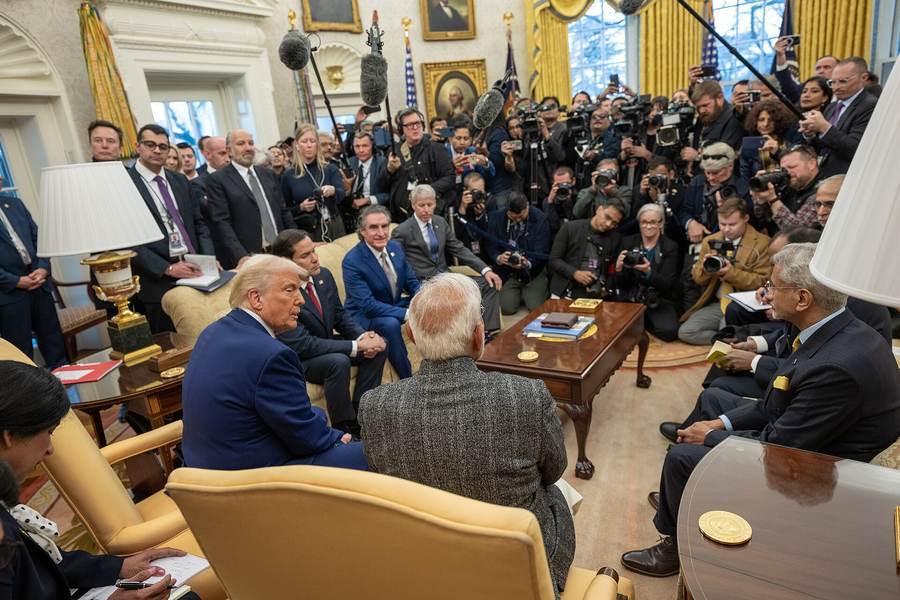
On Wednesday, September 30, 2026, Indian Prime Minister Narendra Modi and U.S. President Donald Trump spoke by telephone as both governments tried to turn months of difficult bargaining into an India US trade deal 2026. The Indian Prime Minister's Office said the leaders reviewed cooperation in trade, defence, energy and critical technologies and agreed to maintain close engagement in advancing the Comprehensive Global Strategic Partnership.
Modi described it on X as a “productive conversation.” According to the Indian account, the leaders also exchanged views on regional and international developments, including efforts to promote global peace and security. That language is deliberately broad, but its timing is precise: Commerce and Industry Minister Piyush Goyal began a U.S. visit this week with an interim trade arrangement at the center of his agenda.
The call does not itself constitute an agreement, and neither side announced tariff schedules or market-access concessions. What it does provide is a political signal. The negotiations have reached a point where technical work alone is unlikely to close the gaps. Modi and Trump have now placed their own authority behind the effort to find a landing zone.
The Goyal mission in Washington
Goyal is in the United States from September 29 through October 5 for talks on the proposed bilateral trade agreement and a nearer-term interim arrangement. India's trade ministry said he arrived in Milwaukee on Tuesday for a meeting of G20 trade ministers convened at the invitation of U.S. Trade Representative Jamieson Greer.
Milwaukee gives Goyal two forums at once. The formal G20 gathering lets governments discuss tariffs, supply chains and industrial policy in a multilateral setting. Parallel meetings provide the space for the detailed bargaining that an India US interim trade deal requires. A minister can test ideas with business and allied governments before carrying them into a bilateral room.
Goyal also met U.S. manufacturing and technology chief executives at a roundtable hosted by the National Association of Manufacturers, the ministry said. Those companies have direct stakes in Indian market access, component costs and alternatives to China-centered production. Industries that expect to gain from lower barriers can supply political pressure for a deal; companies that fear Indian competition can harden Washington's demands.
The minister is due to meet U.S. counterparts to advance what India calls a “balanced and mutually beneficial” Bilateral Trade Agreement. New Delhi wants relief now without committing to concessions it cannot defend at home, while Washington wants any early tariff reduction to establish the direction of the final accord rather than merely postpone the hardest disputes.
Why this matters
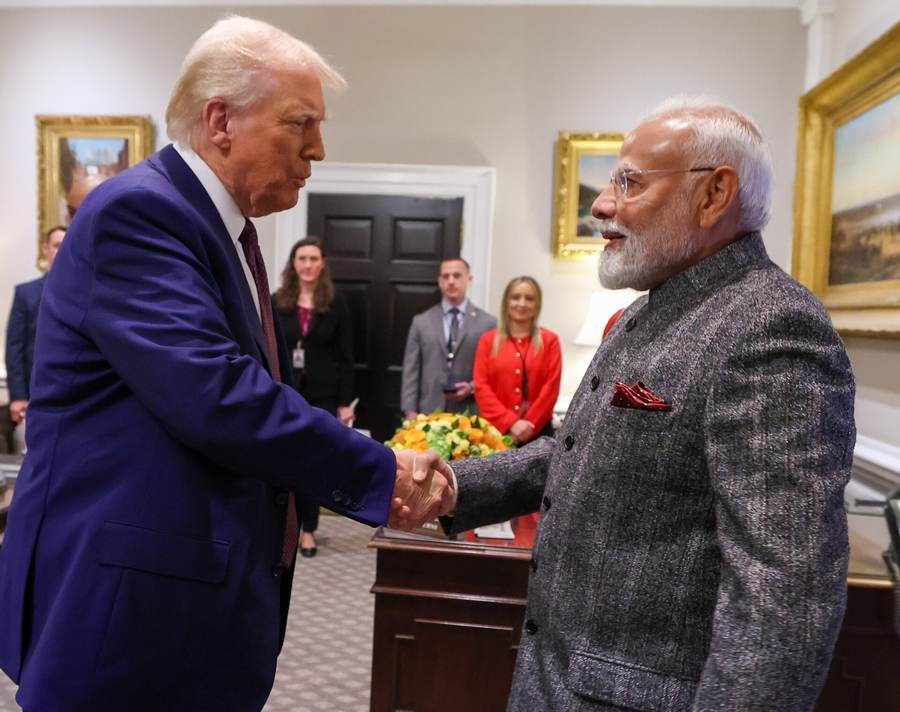
The most important feature of the Modi Trump phone call is not the diplomatic vocabulary. It is that the trade file is being handled at the top. Trump-era trade outcomes have historically turned on leader-level decisions after negotiators narrow the choices. This call is the tell that officials may have political cover to assemble an interim package even if they cannot yet finish the full agreement.
For India, the immediate objective is relief from punishing U.S. tariffs that reduce competitiveness and complicate investment decisions. Exporters need to know whether a shipment priced today will still make sense when it lands. Uncertainty can function like a tariff of its own: buyers delay orders, factories avoid adding capacity and working capital becomes harder to plan.
For Washington, the strategic argument is larger than bilateral arithmetic. The United States wants resilient supply chains in pharmaceuticals, electronics, critical technologies and manufactured components as it reduces dependence on China. A more predictable trade framework with India could help create that alternative. The recent U.S.-China tariff and AI dialogue shows why Washington is balancing selective engagement with Beijing against a wider diversification strategy.
Yet strategic alignment does not erase commercial rivalry. Both countries want investment, jobs and bargaining leverage. The durable deal will be the one that aligns those interests rather than assuming defence cooperation can carry unresolved economic disputes indefinitely.
How we got here
Negotiators have spent months trying to close a package without agreement. New Delhi has pressed for improved terms as tariffs escalated through the year, including U.S. measures tied to India's purchases of Russian oil. Earlier this month, India told Washington those tariff measures could affect the broader bilateral relationship.
The Russian-crude question is the single biggest source of friction because it crosses trade, energy security and geopolitics. Washington wants New Delhi to diversify away from Russian supply, both to increase economic pressure on Moscow and to align a major partner more closely with U.S. strategy. India argues that discounted crude protects a vast, price-sensitive economy from energy shocks and that its purchases are driven by national interest.
Neither position is easily reduced to a tariff line. If India cuts Russian purchases, it needs confidence that alternative supplies will be affordable and dependable. If the United States removes penalties without a change in Indian behavior, it risks appearing to dilute a central instrument of its Russia policy. Recent U.S. efforts to link energy and diplomacy, including the Trump-Zelenskyy talks over an energy ceasefire, underline how closely oil flows and security calculations now travel together.
A narrow interim deal can postpone that strategic clash while lowering tariffs in selected sectors. The danger is that temporary arrangements become a ceiling rather than a bridge: businesses get partial relief, leaders claim momentum and the politically expensive issues remain unresolved.
Who benefits, who loses
Indian exporters have the clearest upside. Pharmaceuticals, textiles, electronics and auto components all depend on price competitiveness in the U.S. market, and steep duties can erase narrow margins. A sector-by-sector reduction would help exporters recover orders, make investment more predictable and prevent rivals in other Asian manufacturing hubs from capturing market share.
U.S. importers and consumers would also benefit where tariffs have been passed through into higher prices. Tariffs are collected at the border from importers, not foreign governments, even when their political purpose is to pressure a trading partner. Lower rates can reduce landed costs, though the speed and size of consumer savings depend on contracts, inventories and whether companies preserve part of the reduction as margin.
The risks are concentrated in politically sensitive Indian sectors. Dairy and farm groups remain wary of U.S. demands for greater market access, fearing competition from heavily capitalized American producers and products that do not fit local religious and regulatory expectations. Any government concession will be measured not only in national trade gains but in the livelihoods of farmers with strong electoral influence.
Energy is the other pressure point. A concession on Russian crude could raise India's import bill if it forces refiners toward more expensive barrels. That cost could flow into transport, food and manufacturing. Domestic opposition parties have attacked the talks as one-sided, meaning even an economically defensible arrangement will face scrutiny over what Modi gave away to secure Trump's tariff relief.
What the numbers say
Indian commerce data reported this year put India's exports to the United States at $87.3 billion in the financial year ending in March. Imports from the United States rose 17.2% to $53.48 billion. The figures reveal both the opportunity and the imbalance that shapes Washington's negotiating posture.
The United States is India's biggest export destination and its second-largest trading partner. That means even a few percentage points of tariff change touch tens of billions of dollars in annual trade. The practical impact, however, will vary by product. A modest reduction on a high-volume category can matter more than a larger cut on a politically visible but smaller line.
The headline bilateral surplus is likely to remain a Trump concern. India can answer by buying more U.S. energy, aircraft, technology and industrial goods, but purchases made to balance a spreadsheet are sustainable only when they also meet Indian demand. A credible agreement must expand trade rather than merely redirect it to satisfy a target.
What happens next
The base case is an interim arrangement announced during or shortly after Goyal's trip. It would ease tariffs on selected sectors, record commitments that both governments can present as reciprocal and keep negotiations on the full Bilateral Trade Agreement moving. This is the most plausible route because it creates visible relief without requiring either side to settle every dispute at once.
The upside scenario is a leader-level announcement framed directly by Modi and Trump. Such an event could lock in the political bargain, give negotiators deadlines and reassure markets that neither bureaucracy will reopen settled points. It would also let both leaders claim a strategic win: India secures access, while Trump presents concessions and new commercial commitments.
The downside is another stall over agriculture access and the Russian-oil penalty. If that happens, exporters would carry tariff pain into the holiday shipping season, businesses would delay orders and the political goodwill created by Wednesday's call would fade quickly. A warm conversation is not a substitute for tariff schedules, exclusions and enforceable text.
The next test is concrete. Watch what Goyal and Greer say about sectors, timetables and the treatment of energy-related penalties. If their statements move from principles to named products and dates, an interim deal is close. If they repeat only “balanced and mutually beneficial,” the leaders have reopened the door without yet finding the room in which the bargain can be signed.
Sources
- Reuters, September 30, 2026 — Modi-Trump call, Goyal's U.S. itinerary, trade data and the tariff dispute over Russian oil.
- The Business Standard / TBS News, September 30, 2026 — PMO account of cooperation on trade, defence, energy and critical technologies.
- Narendra Modi's post on X, September 30, 2026 — the prime minister described the call as a “productive conversation”; the statement is cited through the official PMO account and contemporaneous reporting above.
Reporting basis: Information available September 30, 2026. Facts about the call, Goyal's meetings and the trade figures are attributed to the Indian government and contemporaneous reporting. Judgments about political cover, likely beneficiaries and the three negotiating scenarios are Signal Post News analysis; no agreement had been announced at publication.