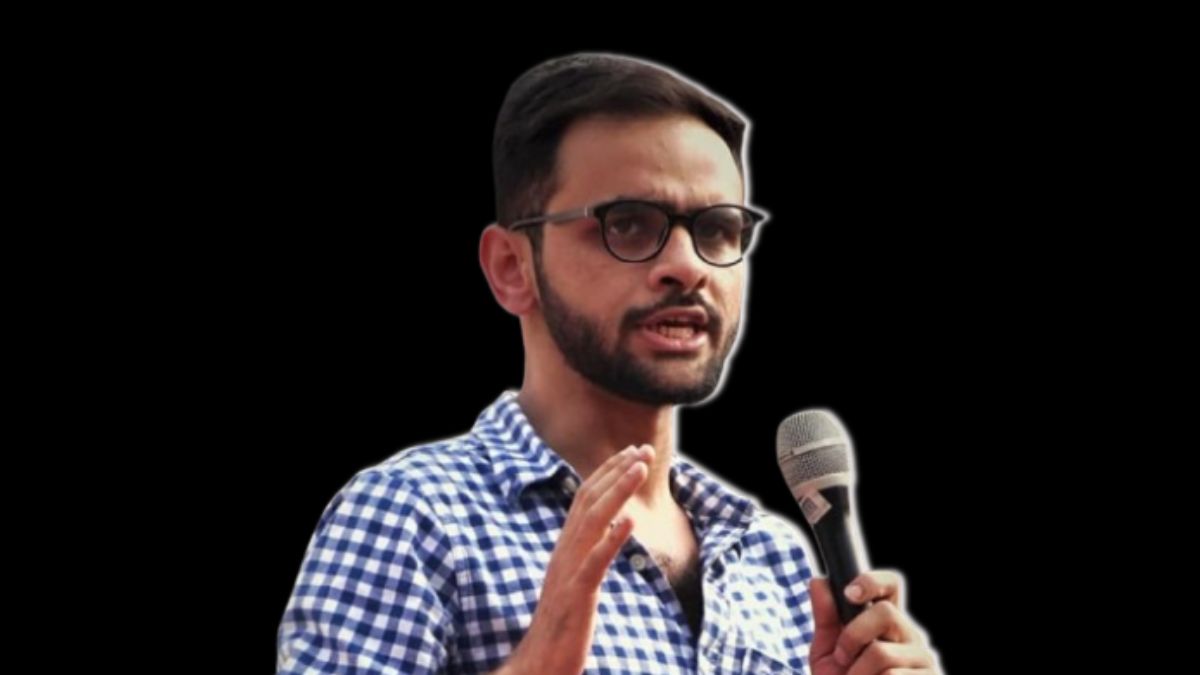
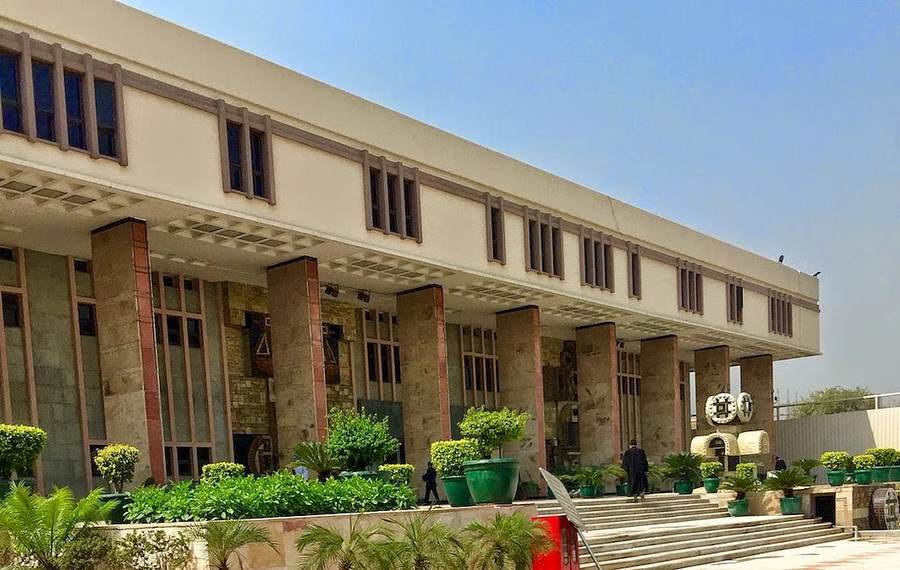
The Delhi High Court on Wednesday refused to enlarge two of India's most high-profile undertrial prisoners, dismissing the bail appeals of former Jawaharlal Nehru University scholar Umar Khalid and activist Sharjeel Imam in the "larger conspiracy" case behind the 2020 northeast Delhi riots. A division bench of Justices Prathiba M. Singh and Dinesh Bhatt held that it was bound by "judicial discipline" to follow the Supreme Court's January 5, 2026 order — which denied the two men bail while granting relief to five co-accused, and which permits them to seek bail afresh only after protected prosecution witnesses are examined or after a year has passed, whichever is earlier.
The appeals, filed under Section 21 of the National Investigation Agency Act against a Karkardooma trial court's July 4 order refusing them bail, are now dismissed. It is the third time the High Court has denied bail to Khalid, and the second time for Imam. Neither man has been convicted of anything. The trial has not begun — charges have not even been framed.
What the court decided
The bench was unmoved by the defense's claim of a "change in circumstances" since the Supreme Court's January ruling. Senior Advocate Trideep Pais, appearing for Khalid, argued three points: that a coordinate bench of the Supreme Court had since questioned the reasoning of the January verdict; that co-accused Tasleem Ahmed and Khalid Saifi had been granted interim bail purely on the ground of delay in trial; and that six more months had elapsed without the trial moving forward. Advocates Talib Mustafa and Ahmad Ibrahim, for Imam, argued that the Supreme Court itself had acknowledged that continued incarceration without progress in the trial would be a ground to seek bail — and there has been no progress.
The court even asked counsel whether the two men were willing to wait until the first week of January — when the one-year condition in the Supreme Court's order would be satisfied — before pressing their appeals. Told they were not, the bench proceeded to decide the matter on Wednesday. Additional Solicitor General S.V. Raju, for Delhi Police, countered that the role ascribed to Khalid and Imam could not be equated with the co-accused who got bail, and that a coordinate bench's observations in a different case could not override the specific findings recorded against these two men in their own case.
"Bound by judicial discipline": the Gulfisha Fatima knot
To understand Wednesday's order, you have to go back to January 5, 2026, and a case with an unlikely name: Gulfisha Fatima v. State. In that judgment, a two-judge bench of the Supreme Court granted bail to five accused in the same conspiracy case — Gulfisha Fatima, Meeran Haider, Shifa Ur Rehman, Mohd. Saleem Khan and Shadab Ahmed — while denying it to Khalid and Imam. The court drew a deliberate line: the five faced allegations it called "limited" and "ancillary," while Khalid and Imam, in the prosecution's telling, were the "ideological drivers" of the entire alleged conspiracy, occupying "a separate position distinct from the co-accused."
The January order came with a key attached: the two men could renew their bail pleas once the protected witnesses relied on by the prosecution had been examined, or on the expiry of one year from the order — whichever was earlier. Until one of those conditions is met, the Delhi High Court said on Wednesday, its hands are tied. "This court is bound by judicial discipline," the bench said, adding that granting bail now would amount to modifying the Supreme Court's order, which a High Court cannot do.
It is a legally impeccable position — and, for the two men in Tihar Jail, a devastatingly circular one. The condition for seeking bail is progress in a trial that has not meaningfully begun.
Why this matters
This ruling matters for reasons well beyond two individuals, because it crystallizes three fault lines running through Indian criminal justice.
First, the two-tier outcome. Eighteen people are accused in FIR 59 of 2020. Most have been granted bail, including by the Supreme Court itself. Two have not — singled out not for what a trial has found, but for the role the prosecution attributes to them. Whatever one thinks of the allegations, a system in which co-accused in the same chargesheet experience radically different liberty outcomes, based on a pre-trial characterization, deserves scrutiny. The "ideological drivers" label was coined before any witness has been cross-examined.
Second, the calendar. Khalid was arrested in September 2020; Imam on August 25, 2020. If the earliest realistic bail window is January 2027 — and that is only a window to apply, which the prosecution will oppose — both men are looking at well over six years of incarceration without a verdict. In any ordinary criminal case, that duration alone would weigh heavily toward bail. Under the UAPA, it barely registers.
Third, the signal. Courts have repeatedly acknowledged the delay — the Supreme Court did so in January — yet the institutional response is always to defer: to hierarchy, to procedure, to a later date. Each deferral is reasonable in isolation. Together, they form a machine that keeps people in jail while everyone agrees the trial should have started by now.
Six years in jail, no trial yet: the numbers
The figures in this case tell their own story. Khalid has spent roughly six years in Tihar Jail; Imam slightly longer. The chargesheet alleges a multi-layered conspiracy behind the February 2020 communal violence in northeast Delhi, registered under the Unlawful Activities (Prevention) Act and provisions of the Indian Penal Code. Eighteen accused. Charges not yet framed — a fact conceded in court by the defense and not disputed. Protected witnesses not yet examined. Trial not likely, in the defense's words, "to conclude any time soon."
Set that against the co-accused who walked out: Tasleem Ahmed and Khalid Saifi were granted interim bail on the ground of delay alone. The High Court distinguished their roles from Khalid's and Imam's and refused parity — but the contrast is stark. Delay is a ground for bail for some accused in this case, and not for others, depending on a hierarchy the prosecution proposed and the courts have now ratified at two levels.
The case against them — and the case for letting them out
What the prosecution alleges
Delhi Police's Special Cell, which is probing FIR 59 of 2020, alleges that Khalid and Imam were central to a "larger conspiracy" to orchestrate the 2020 riots. The chargesheet claims Khalid's speeches — including during U.S. President Donald Trump's February 2020 visit to India — were provocative and instigating, and alleges he met councillor Tahir Hussain and activist Khalid Saifi at the Shaheen Bagh protest against the Citizenship Amendment Act on January 8, 2020, where the riots were planned. Police have called the two men the "masterminds" of the violence and opposed every bail plea, arguing their role cannot be equated with the foot soldiers and peripheral accused who have been released. In court on Wednesday, the prosecution's position was procedural but firm: the Supreme Court has spoken specifically about these two men, and no coordinate bench's observations elsewhere can dilute that.
What the defense argued
The defense case is built on time, parity, and shifting law. Time: six years incarcerated, charges not framed, trial nowhere near conclusion — a violation, counsel argued, of the fundamental right to personal liberty. Parity: co-accused granted bail on delay grounds alone, while their clients remain inside. Shifting law: in May 2026, a Supreme Court bench acknowledged a "perceived conflict" between the January Gulfisha Fatima ruling and the 2021 three-judge bench decision in Union of India v. K.A. Najeeb — which recognized that prolonged delay in trial can justify bail even under the UAPA's stringent embargo — and referred the question to a larger bench. If the Supreme Court itself is unsure which of its rulings governs, the defense asked, how can the embargo hold absolutely?
The defense also stressed, as it has at every hearing, that no violence has been directly attributed to Khalid and no incriminating recoveries were made from him — the case rests on speeches, meetings, and alleged conspiracy, all of which remain to be tested at trial.
The UAPA bail trap
At the heart of this case sits Section 43D(5) of the UAPA, one of the harshest bail provisions in Indian law. It flips the normal presumption: bail must be refused if the court finds "reasonable grounds for believing that the accusation against the accused is prima facie true." In practice, the accused must disprove the prosecution's case to get out — before the prosecution has proved anything.
The Supreme Court tried to soften this in K.A. Najeeb (2021), holding that constitutional courts could still grant bail where the trial was indefinitely delayed. But the January 2026 Gulfisha Fatima order pulled in the other direction for Khalid and Imam specifically — and a different bench has since questioned whether that order properly followed Najeeb. The result is exactly the kind of doctrinal fog that the May 2026 reference to a larger bench was meant to clear. Until that larger bench rules, the fog is the law — and the fog keeps people in jail.
This is the deeper significance of Wednesday's order. It is not really about whether two men get bail. It is about a legal architecture in which delay is simultaneously acknowledged as unjust and treated as irrelevant, in which the process itself becomes the punishment, and in which every institution points to another institution as the one that must act first. The High Court points to the Supreme Court. The Supreme Court's January bench pointed to its own conditions. The conditions point to a trial that has not started.
The world is watching
Few undertrial cases in India draw the international attention this one does. In 2025, the UN Working Group on Arbitrary Detention issued an opinion on Khalid's detention. Amnesty International and six other human rights organizations jointly called for his release ahead of the fifth anniversary of his arrest, calling the repeated bail denials a mockery of fair-trial guarantees. In January 2026, eight U.S. lawmakers wrote to India's ambassador in Washington urging bail and a time-bound trial, and New York City's newly inaugurated mayor Zohran Mamdani wrote to Khalid in solidarity. The New York Times has described him as "a symbol of the wide-ranging suppression of dissent" under Prime Minister Narendra Modi.
The case has also become a cultural flashpoint at home. Filmmaker Lalit Vachani's 2024 documentary Prisoner No. 626710 is Present, tracing Khalid's trajectory from JNU student leader to UAPA accused, has triggered a rolling controversy this month: a screening at NLSIU Bengaluru was postponed after ABVP opposition, students at NALSAR Hyderabad held a solidarity screening, and the Central Board of Film Certification flagged a proposed IIIT-Hyderabad screening as a violation of the Cinematograph Act. The film, like the case, has become a proxy battle over dissent itself.
Supporters of the denial — including the government and the prosecution — reject the dissent framing entirely. Their argument is that this is not a case about speeches or ideas but about a criminal conspiracy behind communal violence in which dozens died, and that the gravity of charges including murder, rioting with deadly weapons, and terrorist acts justifies pre-trial custody until the courts decide. That argument has now prevailed at every level, six times over.
What happens next
Four scenarios, in rough order of likelihood:
1. The January 2027 window. When a year has elapsed since the Supreme Court's January 5, 2026 order, Khalid and Imam become formally eligible to renew their bail pleas. Expect fresh applications within weeks — and expect the prosecution to oppose them just as fiercely, armed with the "ideological drivers" finding. Eligibility is not entitlement.
2. The larger bench. The reference on the K.A. Najeeb conflict could, in principle, reset UAPA bail jurisprudence for every undertrial in the country. But larger-bench references in India move slowly, and there is no guarantee of a ruling before the January 2027 window arrives anyway.
3. Trial progress. If protected witnesses are examined before January 2027, the other condition in the Supreme Court's order would be satisfied. Given that charges have not been framed more than six years after arrest, this looks like the least likely path.
4. The political calendar. Cases like this one do not exist in a vacuum. With the documentary controversy fresh, international attention steady, and questions about UAPA bail law now before a larger bench, the pressure for movement — in one direction or another — will only grow. What is near-certain is that neither man will see the outside of Tihar Jail this year.
Wednesday's order changes nothing on the ground and clarifies everything about the system: in India's anti-terror bail regime, the wait is the sentence, and the sentence is served before the trial.
Related coverage
Sources
- LiveLaw — Delhi High Court denies bail to Umar Khalid, Sharjeel Imam in Delhi riots UAPA case
- Bar & Bench — Delhi High Court denies bail to Umar Khalid and Sharjeel Imam in Delhi riots conspiracy case
- IANS — Delhi HC denies bail to Umar Khalid, Sharjeel Imam in 'larger conspiracy' case