Kabila takes over M23 rebellion: former Democratic Republic of Congo president Joseph Kabila has launched a new political-military coalition, the Front pour la Refondation de la Nation (FRN), to replace the AFC/M23 alliance fighting government forces in eastern Congo. Announced in rebel-held Goma on Monday, October 12, the move puts a former head of state — sentenced to death in absentia by a Congolese military court in September 2025 and placed under U.S. sanctions in April — openly at the head of an insurgency Kinshasa had long accused him of backing, which he had previously denied. The FRN says it assumes all of AFC/M23's rights and commitments, including the Doha peace negotiations.
Congo / A former president now leads the rebels holding Goma — and the peace talks just got a new name at the top
Track it live: follow armed conflicts in Africa on the Signal Post News Africa Wars Tracker and worldwide on the Live Global Wars Tracker.
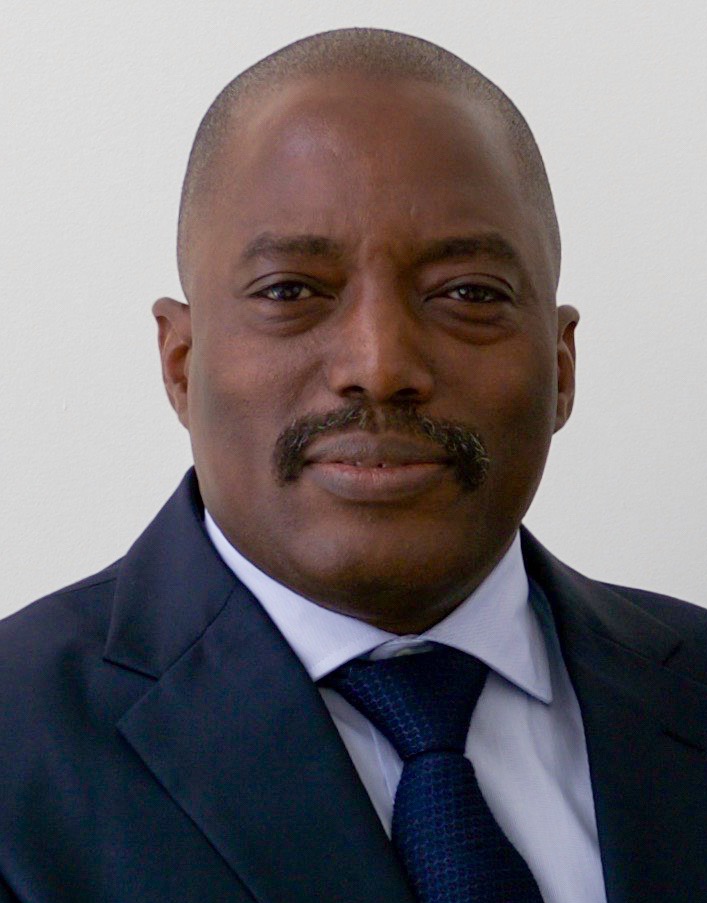
GOMA, Democratic Republic of Congo — Former Congolese president Joseph Kabila has launched a new political-military coalition to replace the AFC-M23 alliance fighting government forces in eastern Congo, taking a more direct role in an insurgency he had previously stopped short of openly backing, Reuters reported from Goma on October 12. The new group, the Front pour la Refondation de la Nation (FRN) — the Front for the Refoundation of the Nation — will be headed by Kabila, with rebel leaders Corneille Nangaa, Bertrand Bisimwa, Freddy Kaniki and Sultani Makenga serving as deputies, the group's adviser Claude Ibalanky announced at a press conference. Ibalanky said the front's mission is to unite and coordinate resistance forces to, in its words, put an end to tyranny by all means, including force.
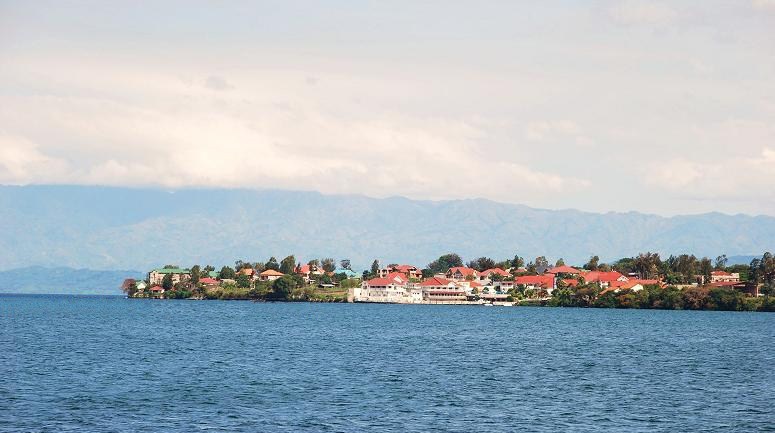
The announcement, made at Kabila's residence in Goma on Monday evening, formally dissolves the old alliance. The Alliance Fleuve Congo (AFC) was the political coalition built around the March 23 Movement (M23), the armed group whose offensive last year captured vast territory in eastern Congo, including Goma, the capital of North Kivu province, which has been under AFC-M23 control since January 2025, according to reporting by AFP via Al Jazeera. M23 says it took up arms because the Congolese government failed to honour earlier commitments. The Congolese government, the United Nations and Western governments accuse Rwanda of backing M23 and exercising command and control over the rebels. Rwanda denies supporting the insurgency, while acknowledging, as Reuters noted in its October 16 explainer, that it has coordinated with the rebels on security matters and citing threats from armed groups operating in eastern Congo.
What actually changed on Monday — and what did not
The most obvious change is the name, Reuters wrote in its October 16 explainer of the takeover. An alliance named for a river and a date — the Congo River Alliance and the March 23 Movement, a name drawn from a failed 2009 peace deal — is now a Front for the Refoundation of the Nation. The name suggests a greater focus on national Congolese, not regional, affairs, and that is the point: the move gives the rebels a highly prominent Congolese figurehead and could boost their efforts to present themselves as a national movement rather than a Rwandan proxy, diplomats, rebel sources and analysts told Reuters.
Much of the rebel leadership remains in place. Kabila takes over as president, while former AFC coordinator Corneille Nangaa and M23 political leader Bertrand Bisimwa become vice presidents. Veteran M23 commander Sultani Makenga also takes a vice-presidential role and remains chief of the rebel armed wing — the Congolese Revolutionary Army — preserving his central role in the movement, Reuters reported. Freddy Kaniki serves as secretary-general. In other words, the command structure that fought the war is intact; what has been added on top of it is a politician who ran the Congolese state for nearly two decades, with the networks that come with that.
Congolese authorities have for months accused Kabila of supporting AFC/M23, but the former president had denied involvement, Reuters reported. The circumstantial trail had been lengthening: Kabila travelled to rebel-held Goma in 2025, and several former allies have since taken positions within AFC/M23, deepening perceptions of an alliance. In a speech on the Friday before the announcement, Kabila accused the government of corruption, poor governance and military setbacks in eastern Congo, and criticised its minerals deal with the United States. The FRN launch converted what Kinshasa called a hidden hand into an open one.
The legal shadow Kabila carries into the job
Kabila does not arrive as a neutral elder statesman. A Congolese military court sentenced him to death in absentia in September 2025 after convicting him of treason, war crimes and crimes against humanity over allegations that he supported the AFC/M23 rebellion, Reuters reported. He has denied the accusations and said the case was politically motivated; his relatives described the conviction as unjust. He was also placed under U.S. sanctions in April for providing material support to the rebels and destabilising eastern Congo, according to Reuters' explainer. And a 2021 investigation by international media outlets and anti-corruption groups, based on millions of leaked bank documents, showed that Kabila and his family amassed significant wealth during his nearly two decades in power — wealth whose location, Reuters noted, is unclear, as is how he could mobilise it for the rebellion.
His political base has also thinned. After remaining in power for two years beyond his mandate, Kabila left office deeply unpopular in much of Congo, including in his home region of Katanga in the south, Reuters reported. Many former allies have switched allegiance to Tshisekedi, gone into exile or been imprisoned, and since Monday's announcement several prominent figures from his political camp have publicly broken ranks with him. That is the counterweight to the figurehead theory: the name at the top is famous, but the machine underneath it is smaller than the one he commanded as president.
Why this matters
The Kabila takeover matters because it changes what kind of war Congo's war can plausibly become — in three distinct ways.
First, it nationalises the rebellion's claim. Until Monday, Kinshasa's core argument, accepted by the UN and Western governments, was that the eastern insurgency was substantially a Rwandan project fought through Congolese proxies. A rebellion fronted by Congo's own former president does not disprove the backing allegations — the UN expert findings stand, and Rwanda's denials are unchanged — but it gives the movement a Congolese face, a Congolese biography and a grievance framed in national terms: corruption, governance and a contested minerals deal, rather than the east's local disputes alone. Kabila is from Katanga, where Reuters reports resentment toward Tshisekedi's administration is mounting, even though the rebellion has not reached the province. If the FRN can recruit or rally support beyond its eastern stronghold, a regional war becomes a contest for the state itself. If it cannot, the rebrand is cosmetic — and the coming months will show which it is.
Second, it scrambles the peace process without formally leaving it. AFC/M23 had been negotiating with the Congolese government in Qatari-mediated talks in Doha, launched in April 2025, and had signed a declaration committing both sides to a permanent ceasefire and broader negotiations; the talks are structured around eight protocols, three of which have been signed, with implementation limited by disagreements over ceasefire arrangements and prisoner releases, according to The Eastleigh Voice's account of the transition. In a midweek communiqué, FRN secretary-general Freddy Kaniki stated that the FRN "succeeds the AFC in its entirety, assuming all of its rights, obligations, and commitments, most notably those undertaken within the framework of the Doha negotiations." Legally, that continuity helps: Kinshasa is not being asked to start over with a stranger. Politically, it is harder: the man now across the table is the predecessor Tshisekedi's courts sentenced to death. The Congolese government has not announced its position on the future of the talks or on the new movement, and at a UN Security Council meeting on Tuesday Congo stressed the need for all parties to make good on promises, while the United States called for the pursuit of negotiations, Reuters reported.
Third, it raises the personal stakes past the point of easy compromise. A rebel leader can sign a peace deal and take an amnesty, a ministry or exile. A former president under a death sentence for treason, leading a movement whose stated aim is to remove his successor "by all means, including force," has far less room to settle for a partial outcome — and Kinshasa has correspondingly less room to offer one. That is why residents and activists quoted by Al Jazeera reacted with fear rather than relief: "The fact that Joseph Kabila has joined the rebellion, bearing in mind that he is our former president and knows this country inside out, means the war is far from over," Goma resident Basa Juhudi said. Human rights activist Josue Akuzwe Walayi warned that the danger is agreements becoming "yet more agreements without any real peace for the Congolese people," while former National Assembly speaker Vital Kamerhe urged the movement to abandon armed struggle: "Whatever our frustrations, our differences or our ambitions, nothing, absolutely nothing, can justify us taking up weapons against our own country." Government spokesman Patrick Muyaya, responding to Kabila's earlier warning that the country was in peril, called him "a man of the past, nostalgic for anti-democratic methods" who had "nothing to offer but chaos." Both characterisations — national refounder and man of the past — are now the competing frames of the same war.
Background: how a president became a rebel
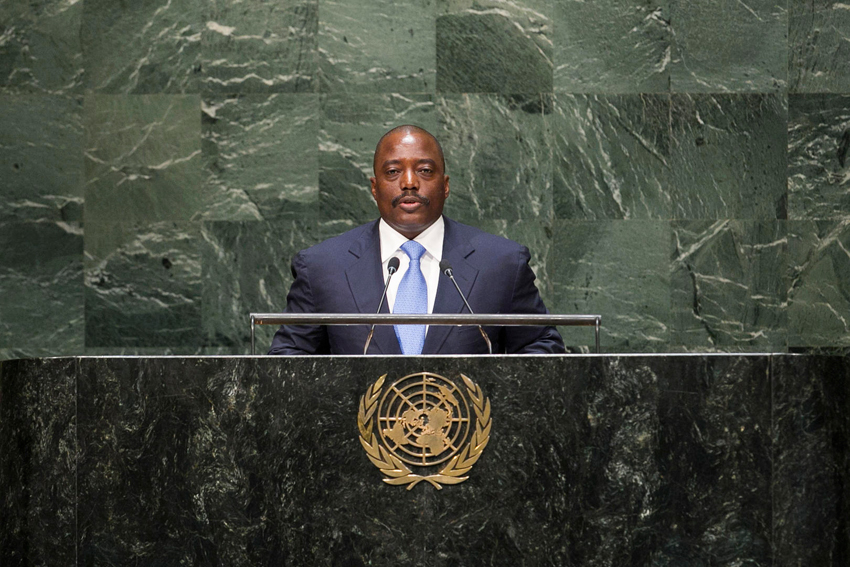
Kabila came to power in January 2001, aged 29, following the assassination of his father, President Laurent-Désiré Kabila, in the middle of the Second Congo War. He was elected president in 2006 and re-elected in 2011. His second constitutional term was due to end in 2016, but elections were delayed; critics accused him of seeking to remain beyond the two-term limit, protests against the delays were met with deadly violence, and a political compromise eventually paved the way for elections in December 2018. Tshisekedi — the man whose electoral commission, then headed by Corneille Nangaa, declared the result — took office in January 2019 in Congo's first peaceful transfer of presidential power. The irony now structuring the war is hard to miss: Nangaa, who oversaw the vote that ended Kabila's presidency, is Kabila's deputy in a movement seeking to end Tshisekedi's.
The eastern conflict itself is older than either presidency. UN experts and analysts told Reuters the violence has been driven primarily by long conflicts over power, identity and resources dating back to the 1994 genocide in neighbouring Rwanda and even earlier. The Doha process is meant to address the conflict between Kinshasa and the rebels, while the separate Washington Accords, signed by Rwanda and Congo on June 27, 2025, address the interstate layer — including neutralisation of the FDLR, a militia formed by remnants of the forces responsible for the 1994 genocide, and the lifting of Rwanda's defensive measures. The AU's own mediation track was in Goma earlier this month, when a panel including former Kenyan president Uhuru Kenyatta met rebel representatives — see our earlier coverage of the AU delegation's Goma peace talks. Congo's overlapping crises, including the Ebola outbreak in the northeast, are covered in our report on the Congo Ebola death toll passing 4,000.
What happens next
Three tests will show whether the FRN is a transformation or a relabelling. The first is geographic: does support for the rebellion appear outside the east — in Katanga or elsewhere — in any organised form, or does the map stay frozen along the current front lines? The second is diplomatic: does Kinshasa keep negotiating in Doha with a delegation now formally headed, at one remove, by Kabila, and does the FRN's assumption of AFC/M23's commitments translate into movement on the unsigned protocols, prisoner releases and a monitored ceasefire? The third is regional: Kabila brings connections in Namibia, Kenya, South Africa and elsewhere that he regularly visits, Reuters reported — whether those translate into tangible support, quiet mediation or nothing at all will shape how Rwanda, the AU and Washington calibrate their next moves. For the millions displaced by this conflict, the immediate question is simpler and was put by a Goma resident this week: whether a war that just acquired a former president is a war moving toward a settlement, or one settling in for much longer.
Sources: Reuters, October 12, 2026 — Congo's former president Kabila forms new group to replace M23 insurgency; Reuters explainer via LA Post, October 16, 2026 — Will a new leader and a new name boost the rebellion in eastern Congo?; AFP / Al Jazeera, October 2026 — Fears grow in DRC as former President Joseph Kabila joins rebellion; The Eastleigh Voice, October 16, 2026 — Kabila-led FRN takes over Doha peace talks with Kinshasa.