
ADDIS ABABA, Ethiopia — Explosions rocked the Ethiopian capital in the early hours of Friday, October 2, 2026, just hours after the government banned all drone flights over the city and its surroundings. The October 2026 Addis Ababa drone strikes — if the rebel claim behind them holds — would be the first known rebel drone attack on the capital, hundreds of kilometers from the war's front lines in the north. Three diplomatic sources told Reuters that blasts were heard across the city overnight, while a source linked to the Ethiopian Peoples' Forces Alliance for Survival told the agency the alliance had carried out several drone strikes, including targets at the Ethiopian National Defence Force's military headquarters.
Residents cited by AFP reported an explosion at the Defence Ministry and ENDF headquarters complex in the Tor Hayloch district, and a separate blast in the Gotera area at about 00:30 local time. The devices were most likely FPV-style militarized commercial drones — cheap, hard to detect and increasingly the weapon of choice for outgunned forces. The Ethiopian government, the military and Prime Minister Abiy Ahmed's office all refused to comment. Reuters said it could not independently verify the rebel claim — a distinction that matters enormously, because almost everything about this story sits in the gap between what was heard, what is claimed and what is proven.
What is not in dispute is the timing. The blasts came as federal forces pressed to within roughly 30 kilometers of Mekelle, the Tigrayan capital, in the heaviest fighting since the 2020–2022 civil war — and one day after Ethiopia shuttered its embassy in Asmara and expelled 10 Eritrean diplomats, with an Egyptian diplomat expelled for good measure. The capital's skyline, long treated as proof that the war was something happening elsewhere, is no longer outside the story.
Why this matters: the capital was supposed to be untouchable
Capitals are not just cities; they are arguments. Addis Ababa hosts the African Union, the continent's diplomatic nerve center, and for the duration of the renewed northern war the federal government has treated it as a sanctuary — the place where embassies stayed open, markets functioned and the war remained a northern problem discussed in briefing rooms. Overnight explosions, whatever their authorship, puncture that argument in a way no battlefield gain in Tigray could.
The strategic logic is brutal and familiar. A rebel alliance that cannot match the ENDF tank-for-tank or jet-for-jet does not need to capture the capital to change the war's arithmetic; it needs to make the capital spend. Every drone that might be headed for Addis Ababa forces the government to divert air defenses, intelligence assets and political attention from the northern offensive — the very offensive that had been going its way. Distance was Ethiopia's quiet advantage. If that advantage is gone, the map of the war has to be redrawn.
There is a second, subtler significance. Drone bans are confessions. A government does not prohibit all civilian drone flights over its capital hours before explosions unless its security services already believed an aerial attack was coming. The ban suggests the strikes — or the threat of them — were anticipated. That anticipation, and the silence that followed, tells its own story about how seriously Addis Ababa takes the threat.
What is confirmed, what is claimed — and the gap between them
Confirmed: explosions were heard in Addis Ababa overnight on October 1–2. Three diplomatic sources told Reuters so, independently of the rebel claim. Residents told AFP about a blast at the Defence Ministry and ENDF headquarters in Tor Hayloch and another in Gotera around 00:30 local. A blanket drone ban over the capital and its surroundings preceded the blasts by hours. The government, the ENDF and Abiy's office declined all comment.
Claimed but unverified: that the Ethiopian Peoples' Forces Alliance for Survival — a coalition of seven armed groups including the TPLF and factions from Amhara, Afar, Somali and Benishangul-Gumuz communities, united by the goal of removing Abiy Ahmed — carried out several drone strikes on the capital, including at ENDF headquarters. Reuters could not independently verify this. No photographs of damage, no official casualty figures, no recovered wreckage have been made public.
The gap matters because both sides have reasons to shape it. A rebel alliance benefits from the perception of reach whether or not every claimed strike landed; fear is the payload. A government benefits from silence while it assesses damage and decides whether acknowledgment would project vulnerability or control. Readers should treat the blasts as established, the authorship as alleged, and the scale of damage as unknown. No casualties have been confirmed by any source.
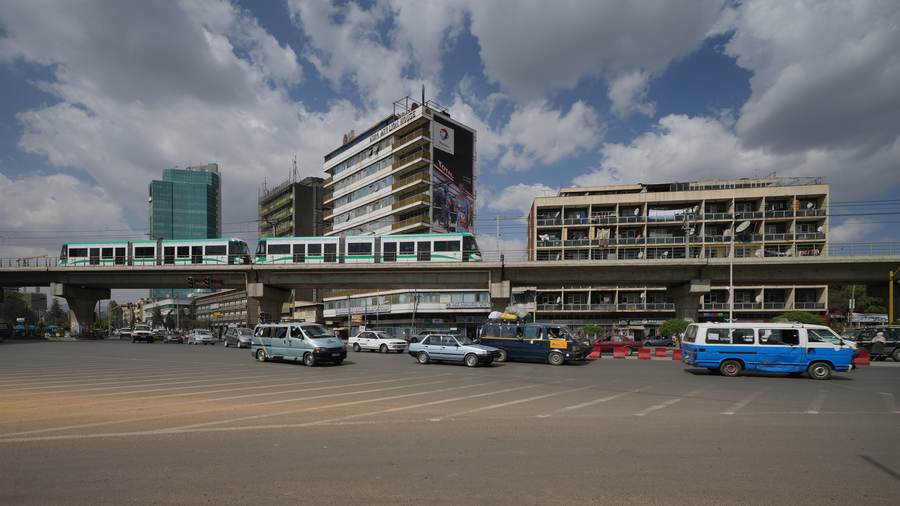
Background: the war that was supposed to stay in the north
To understand how explosions reached Addis Ababa, rewind to September 23, 2026, when the TPLF-led alliance launched a coordinated offensive — seizing positions including Mekelle's airport — in what it described as a defensive war. Addis Ababa called it an unprovoked rebellion. Each side blames the other for firing first, and with Tigray largely cut off from independent reporting, there is no neutral arbiter to settle the question.
The federal response was swift and, until this week, effective. Alamata fell to government forces amid reports of civilian deaths, and the front rolled north until federal troops stood within striking distance of Mekelle itself — the gravest escalation since the 2020–2022 civil war that killed an estimated 600,000 people. TPLF chairman Debretsion Gebremichael has threatened a counter-attack, and the advance on Mekelle has raised fears of a wider regional war drawing in Eritrea, Sudan and Egypt — all three accused by Addis Ababa of backing the rebels, all three denying it.
The diplomatic front collapsed in parallel. On Thursday, Ethiopia closed its embassy in Asmara and ordered 10 Eritrean diplomats out within 48 hours, accusing Eritrea of hostility; Eritrea severed all diplomatic ties in retaliation. An Egyptian diplomat was expelled, and Cairo retaliated in kind. The African Union has urged restraint. In other words, every channel that might clarify an ambiguous explosion was being dismantled at exactly the moment ambiguity became most dangerous.
The historical parallel is uncomfortable. In the 2020–2022 war, Tigrayan forces at one stage advanced to within roughly 200 kilometers of Addis Ababa before being pushed back — the closest the capital had come to the fighting in a generation. The difference now is the vector: not a ground column that can be seen coming, but small unmanned aircraft that cross hundreds of kilometers of defended airspace and arrive without warning. The Critical Threats Project, which tracks the conflict, says the rebels have launched a drone-strike campaign across Ethiopia — a campaign that, if the capital strikes are confirmed, has just crossed its most significant threshold.
Who benefits — and who loses — when the capital is in range
The rebel alliance gains leverage disproportionate to the damage. Seven disparate groups — Tigrayan, Amhara, Afar, Somali, Benishangul-Gumuz — hold together more easily against a common enemy than around a common program. A strike on the capital is the ultimate proof of relevance: it tells every fence-sitting community that the alliance can impose costs anywhere, and it tells the federal government that winning in Tigray will not buy security at home. The risk is symmetrical: bringing war to the capital can harden public opinion behind Abiy, justify a much broader military response and cost the alliance what diplomatic sympathy it retains.
The federal government loses the presumption of control — but may gain the politics of victimhood. An attacked capital rallies populations. Abiy's government can now frame the northern campaign not as a counterinsurgency against fellow Ethiopians but as national defense against an alliance striking the seat of government. The danger for Addis Ababa is the precedent it sets for itself: every future unattributed explosion in the capital will now be read as a rebel attack, true or not, and the government's credibility will rest on investigations it has so far declined to discuss.
Diplomats and the African Union lose room to maneuver. The AU is headquartered in the very city where the explosions occurred. An organization that cannot guarantee the security of its own host city struggles to mediate the war around it. Foreign embassies, already on edge after the Eritrean expulsions, must now factor the capital into their contingency planning — a shift that quietly raises the international cost of the war.
Civilians lose first, as always. Addis Ababa is home to more than five million people. A drone campaign against the capital — real or rumored — means air-raid anxiety, security crackdowns, checkpoints and the slow constriction of daily life. In the north, civilians near the front face the more immediate arithmetic of artillery and displacement. The war's geography is expanding, and its civilian footprint expands with it.

What the numbers mean: hundreds of kilometers, one night, seven groups
The distance is the story's most important number. Addis Ababa sits hundreds of kilometers south of the Tigray, Amhara and Afar front lines. A successful drone strike across that distance — with FPV-style commercial systems, which typically have far shorter ranges — implies either launch teams operating deep inside government-held territory, longer-range platforms, or staging through sympathetic areas. Each possibility carries different implications for how penetrated the federal security apparatus is. None of them are reassuring for Addis Ababa.
The timing compresses a second number: hours. The drone ban preceded the blasts by hours, not days — suggesting specific, actionable warning rather than general precaution. Intelligence that precise raises its own questions: what did the government know, what did it intercept, and why has it said nothing since?
Seven is the coalition's number — seven armed groups in the alliance. Coalitions that broad are hard to hold together and harder to disarm; they also make attribution genuinely difficult. A strike claimed by "the alliance" could have been conducted by any constituent with drone capacity, or by actors freelancing under its banner. Verification is not just a journalistic nicety here; it is the difference between negotiating with a coalition and chasing ghosts.
The historical comparator is the 2020–2022 war's death toll, estimated at 600,000 — a figure that should discipline every forecast. Ethiopia has already demonstrated how quickly a northern war becomes a national catastrophe. The question the overnight blasts pose is whether the catastrophe's geography is about to invert: not the capital projecting force northward, but the north projecting force into the capital.
Critics' views: a turning point or a propaganda round
Skeptics of the rebel claim note what is missing: no verified imagery of damage at Tor Hayloch or Gotera, no official acknowledgment, no independent confirmation of the strike platforms. In an information environment as constrained as Ethiopia's, an unverified claim can travel as far as a verified strike — which is precisely why verification, not velocity, should govern coverage. It is possible that some of what was heard overnight was air-defense fire, accidents or unrelated incidents folded into a convenient narrative.
Skeptics of the government's silence make the opposite point: three diplomatic sources and AFP's resident accounts are not nothing, and a government confident that nothing happened would typically say so. Silence, in this reading, is damage control — an attempt to deny the rebels the psychological victory of an acknowledged strike on the capital. But silence also cedes the narrative: in the absence of an official account, the rebel claim stands unrebutted in international coverage.
Military analysts will focus on the drone question itself. If the alliance can reliably strike the capital, the federal government's vast conventional advantage — armor, artillery, air power — is partially neutralized, because none of those assets protect a ministry building from a small drone at 00:30. If it cannot, and the claim outruns the capability, the episode still demonstrates how cheaply a weaker force can seize the agenda. Either way, the era in which Addis Ababa's distance guaranteed its safety is over.
What happens next: three scenarios for the capital
1. A sustained drone campaign against the capital
The alliance follows the night's strikes with more — probing air defenses, hitting symbolic targets, forcing the government to ring the capital with counter-drone systems. Addis Ababa adapts but pays a permanent tax: every military decision in the north is now weighed against the capital's vulnerability. The war becomes two-front by design.
2. A single spectacular, then silence
The strikes prove to be a one-off demonstration — costly to mount, hard to repeat — and the government's silence strategy works: without acknowledgment, the episode fades into the fog of competing claims. The north remains the decisive theater, and the capital returns to uneasy normalcy. This is the best case for Addis Ababa and the likeliest if the alliance's drone capacity is as limited as its supply lines suggest.
3. Misattribution spirals into a wider crackdown
The most dangerous scenario needs no rebel drones at all — only the belief in them. A government convinced the capital is under attack turns inward: mass arrests, shuttered communications, a security dragnet that treats whole communities as suspect. Ethiopia has been here before. A crackdown manufactured from ambiguity could do the rebels' work for them, radicalizing the very populations whose neutrality the government needs.
What to watch now
- Official acknowledgment: whether the government, the ENDF or Abiy's office breaks its silence — and what it admits or denies.
- Physical evidence: verified imagery of damage at Tor Hayloch or Gotera, recovered drone wreckage, or air-defense activity over the capital.
- Attribution: any technical assessment of the platforms used — FPV commercial types, ranges, launch points — and who supplied them.
- Airspace measures: whether the drone ban is extended, tightened or quietly lifted, and what that signals about the threat picture.
- Diplomatic fallout: embassy security postures in Addis Ababa and any AU or IGAD response to a war reaching the host city.
- The northern front: whether the Mekelle offensive pauses, accelerates or continues unchanged while the capital absorbs the shock.
Sources and reporting notes
- Reuters, October 2, 2026: federal forces nearing Mekelle, three diplomatic sources on blasts heard in Addis Ababa, the rebel alliance's drone-strike claim, government and military silence, and wider-conflict concerns.
- Al Jazeera, October 1, 2026: blasts heard in Addis Ababa as Ethiopia's northern conflict widens.
- Signal Post News background: Ethiopian forces close in on Mekelle as wider Horn of Africa war fears grow.
- Signal Post News background: Ethiopia closes Asmara embassy and expels Eritrean diplomats.
- Signal Post News background: the Alamata front and reported civilian deaths.
Reporting cutoff: October 3, 2026 at 7:20 p.m. PDT. The rebel claim of responsibility has not been independently verified; Reuters and AFP could not confirm who carried out the strikes. The Ethiopian government, the ENDF and Prime Minister Abiy Ahmed's office declined to comment. No casualties have been confirmed by any source. Claims of foreign support are attributed to Ethiopia's government; Eritrea, Sudan and Egypt deny them. File photographs show Addis Ababa in 2018 or earlier and do not depict the October 2026 explosions.