AU delegation meets M23 rebels Goma
Three former heads of state walked into rebel-held Goma this week — the first visit of its kind. What the AU's boldest peace gamble yet says about who really holds eastern Congo.
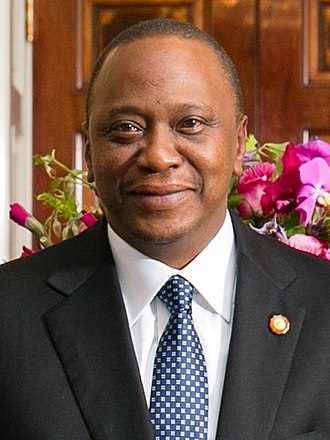
AU delegation meets M23 rebels Goma is more than a diplomatic itinerary. On Monday, October 5, former Kenyan president Uhuru Kenyatta, former Botswana president Mokgweetsi Masisi and former Ethiopian president Sahle-Work Zewde entered a city controlled by AFC/M23, met the movement's senior leaders behind closed doors and stayed under rebel security. Two days later, the African Union urged all parties to remain engaged, honor the ceasefire, cooperate with verification teams, protect civilians and allow safe humanitarian access — even as fighting continued elsewhere in eastern Democratic Republic of Congo.
The encounter exposes the central contradiction of Congo's peace effort. Diplomats need to speak with the armed movement that controls territory if they want the violence to stop. Yet the very act of meeting M23 in the provincial capital it seized can look like political recognition of power won by force. That tension makes the visit consequential before any agreement is reached.
What happened in Goma
Uhuru Kenyatta M23 meeting brought three former presidents into rebel-held territory
The AU Panel of Facilitators met AFC/M23 leaders on October 5, according to the African Union account reported by Reuters. Regional outlets identified the rebel delegation as including political coordinator Corneille Nangaa, Bertrand Bisimwa and Freddy Kaniki. The Kampala Report said the group was taken to the Serena Hotel for a closed session focused on the peace process. UKwelitimes separately reported talks at the movement's political coordination office and a reception with military honors.
The differing location details do not change the main verified point: the facilitators held direct, high-level discussions inside Goma with the authorities controlling the city. The substance was not made public, and no new accord was announced. AFC/M23 described the consultations as constructive. Its spokesperson Lawrence Kanyuka also accused the Kinshasa government of repeated ceasefire violations and attacks affecting civilians. That is the movement's account; it does not settle responsibility for the clashes.
Two figures previously associated with the wider facilitation panel were absent. UKwelitimes reported that former Central African Republic president Catherine Samba-Panza did not travel for health reasons, while former Nigerian president Olusegun Obasanjo was occupied by an urgent mission linked to Ethiopia and Eritrea. The three-member team then met Rwanda's foreign minister on Tuesday and was expected to continue to Kinshasa for consultations with the Congolese government.
Why this matters
African Union Goma peace talks test diplomacy without conferring legitimacy
Local reporting described the trip as the first time a delegation of this stature had been hosted in territory controlled by AFC/M23. The image of three former presidents crossing into Goma has two readings. For the AU, it demonstrates access and a willingness to confront the conflict's actual balance of control rather than negotiate only from distant capitals. For the rebels, it supplies powerful optics: regional statesmen arrived at their door, met their political leadership and accepted security arrangements in the city they hold.
That does not amount to legal recognition. Mediators routinely meet armed actors without endorsing them. But recognition also operates politically. A movement can convert a photograph, ceremonial reception or formal meeting into evidence that it cannot be ignored. Kinshasa therefore has reason to scrutinize protocol, sequence and language even while it needs an effective channel to the armed group.
The AU's challenge is to make contact produce obligations. Its October 7 statement emphasized the Doha commitments, compliance with the ceasefire, cooperation with verification mechanisms, civilian protection and humanitarian access. Those are measurable demands. If the Goma visit yields clearer lines of communication for observers or aid agencies, the practical return could outweigh the symbolic gain handed to M23. If it yields only another round of statements, the symbolism will be what remains.
Three peace tracks can reinforce one another — or split the process
The eastern Congo peace process now runs through at least three diplomatic channels: the African Union's facilitation, the Doha process backed by Qatar and a United States-led track involving Congo and Rwanda. In principle, the tracks can divide labor. Doha can concentrate on direct negotiations between Kinshasa and AFC/M23; the United States can press the interstate dimension; and the AU can provide regional political ownership and senior mediation.
In practice, multiple channels can create room for delay. A party facing pressure in one forum can wait for a more favorable audience in another. Different sponsors may use different definitions of compliance, different timetables and different incentives. The more fragmented the process becomes, the easier it is for a ceasefire violation to become a dispute over which mechanism has authority to judge it.
That is why the AU panel's reference to verification matters more than ceremonial access. A durable process needs one shared factual record of where forces are positioned, when firing occurs and whether agreed corridors are open. Without it, every battlefield setback can be recast as retaliation for the other side's first violation.
How eastern Congo reached this point
M23 rebels Congo 2026: control built by the 2025 offensive
M23's current leverage was created on the battlefield. The movement captured Goma in January 2025 during a rapid offensive and went on to control large areas of North and South Kivu, according to Reuters. By October 2026, the territorial reality had outlasted multiple diplomatic initiatives. The AU delegation therefore arrived not at a temporary encampment but at the principal city of North Kivu under an alternative armed administration.
The conflict sits inside a much longer cycle in the Kivus: contested authority, armed groups, regional security fears and competition over local control have repeatedly outlived ceasefire documents. M23 presents itself as a political-military movement defending communities it says Kinshasa has failed to protect. Congo's government treats the movement as an armed challenge to national sovereignty and points to Rwanda's backing, an assessment also reflected in Reuters' description of the rebels. Rwanda denies supporting M23 and frames the crisis through cross-border security threats. Those positions are mutually incompatible, which is why technical monitoring alone cannot resolve the political dispute.
The region's other wars show how quickly military pressure can overtake diplomacy. Signal Post News has also reported on renewed airstrikes in Ethiopia's Tigray region, the earlier capture of Mekelle and attacks on aid operations in Sudan. The common lesson is not that the conflicts are the same; it is that mediation loses leverage when events on the ground move faster than the institutions assigned to contain them.
Doha ceasefire Congo: a declaration with limited gains
Kinshasa and AFC/M23 signed a declaration in Doha in July 2025 committing to a permanent ceasefire and negotiations toward a broader peace agreement. The process has produced some concrete movement: detainees were released in August, and teams responsible for observing implementation of the ceasefire were deployed. Those steps matter because they create both confidence and a mechanism for testing claims.
But the gap between agreement and reality remains visible. Fighting has persisted in remote parts of South Kivu's highlands and in North Kivu's Masisi territory. During the AU visit itself, The Kampala Report described clashes in the Ufamandu I area of Bahunde Chiefdom between Congolese forces and allied Wazalendo fighters on one side and M23 on the other. Competing claims of recaptured positions were not independently resolved in the reports reviewed.
That sequence is the most revealing data point in the peace process: July 2025 brought a commitment to a permanent ceasefire; by October 2026, observer teams existed, detainees had been released, and combat was still occurring in both Kivus. The problem is no longer the absence of a pledge. It is the lack of an enforcement chain that can turn an alleged violation into a verified incident, an agreed remedy and a consequence for repetition.
Who gains, who risks losing
Corneille Nangaa AU talks give AFC/M23 diplomatic visibility
AFC/M23 gains the clearest immediate advantage in presentation. Hosting the facilitators lets the movement portray itself as an authority with whom international actors must negotiate. The closed-door format also allows its leaders to present grievances directly while controlling how much of the exchange becomes public. That visibility may strengthen the movement's position in any later bargaining over administration, security arrangements or disarmament.
The AU gains a chance to restore relevance. An African-led delegation able to move from Goma to Kigali and Kinshasa can argue that regional diplomacy has access Western sanctions and statements cannot create by themselves. Qatar and the United States may benefit if the panel draws parties back toward existing commitments. They may also see competition if the AU develops a separate sequence of promises that is not integrated with Doha.
Kinshasa faces the sharpest optics risk. A visit to rebel-held Goma can appear to normalize the loss of government authority. But refusing contact would not restore that authority, and a mediator without access to M23 cannot test the movement's willingness to stop fighting. The government's interest is therefore in ensuring that engagement is tied to sovereignty, withdrawal, verification and a reciprocal process — not simply to status.
Rwanda, too, has competing interests. Direct regional diplomacy gives Kigali a forum to state its security concerns and its denial of backing M23. Yet a process that establishes credible monitoring would also increase scrutiny of cross-border support claims. The burden for mediators is to address security arguments without allowing them to erase Congo's territorial claims or the responsibilities of armed actors.
Civilians risk losing most if the tracks remain disconnected. None of the prestige surrounding the visit guarantees access to food, medical care or safer roads. The AU explicitly called for civilian protection and safe humanitarian access because diplomatic momentum cannot be measured only by meetings. It must be visible in whether people can move, aid can pass and firing stops.
What happens next
Kenyatta, Masisi and Zewde head toward the harder Kinshasa conversation
The panel's expected consultations with the Congolese government are the immediate test. The facilitators will need to explain what M23 offered, what it refused and how the AU intends to prevent the Goma visit from becoming a substitute for the Doha commitments. They must also hear Kinshasa's conditions without letting the talks collapse into arguments over protocol.
A first scenario is incremental progress: the parties agree on a clearer role for ceasefire observers, publish a common incident-reporting process, expand humanitarian access and schedule the next direct negotiations. That would not settle the conflict, but it would create a way to contain incidents before they become campaigns.
A second scenario is a frozen conflict. High-level meetings continue, the front lines shift only at the margins and each side consolidates the areas it controls while avoiding a decisive offensive. Diplomacy in that case manages escalation but also risks entrenching division. The longer temporary arrangements last, the more politically costly they become to reverse.
The third scenario is renewed escalation. If clashes in Masisi or South Kivu widen, either side may decide that battlefield gains offer more leverage than compliance. A failed verification mechanism would make escalation easier because neither party would trust allegations to be judged impartially.
For a ceasefire to hold, the next phase needs fewer declarations and more operational detail: named liaison officers, agreed maps, rapid access for observers, deadlines for resolving incidents and consequences that all sponsors are prepared to enforce. The AU panel can provide political weight, but it cannot substitute for a system that separates a disputed claim from a verified breach.
The bottom line
The Goma visit acknowledges a hard fact: eastern Congo's war cannot be negotiated as if control on the ground were unchanged. Speaking to M23 is necessary; treating contact as progress is not. The panel's credibility will depend on whether it can turn access to all sides into compliance by all sides.
For the rebels, the meeting brings stature. For the AU, it brings responsibility. For Kinshasa, it brings a difficult choice between the symbolism of engagement and the costs of a process that cannot reach the armed movement. For civilians in North and South Kivu, the only measure that ultimately matters is whether the guns stop and access opens. The former presidents have crossed the line into Goma. Their harder task is to move the parties back across the line between talks and an enforceable peace.