
The order requires DHS to secure the Phoenix man's release, provide a boarding letter and pay for transportation to a U.S. port of entry after more than five months of detention in Equatorial Guinea.
The Soliman Equatorial Guinea deportation has become the first major court-ordered reversal of the Trump administration's third-country removal program. U.S. District Judge John C. Hinderaker ordered the Department of Homeland Security to facilitate Ahmed Soliman's release and return to the United States at government expense, finding that officials removed him without telling him the destination or giving him a meaningful chance to raise a country-specific claim.
The 22-page order, dated October 6 and first reported October 8, requires DHS to provide a boarding letter and transportation to a U.S. port of entry. The agency must report its progress within three days and every seven days after that. The government is also barred from helping move Soliman from Equatorial Guinea to Egypt, where an immigration judge had already found he could face torture or death.
Why this ruling matters beyond one man
A third country deportation meets a constitutional limit
Third-country removals have allowed the government to deport people to states that are neither their country of citizenship nor their habitual home. Hinderaker's order does not declare every such transfer unlawful. It does something more immediately consequential: it says the executive branch cannot use a foreign destination to bypass notice and an individualized opportunity to object.
That distinction puts the broader program on legal notice. If a person has protection from removal to one country, substituting a different country does not erase Fifth Amendment process. The administration argued that foreign-affairs concerns counseled judicial restraint. Hinderaker, a Trump appointee, rejected that position, writing that the court was not persuaded, and denied a stay pending appeal.
The DHS deportation ruling creates a remedy, not only a rebuke
Courts frequently identify a legal error after a removal. The practical question is whether they can repair it after the person is outside the country. Here, the judge orders deportee return: not just reconsideration on paper, but release, travel documents and DHS-paid transportation. That makes the ruling a potential template for other people sent to unfamiliar African countries without a destination-specific hearing.
It also shifts the government's burden. DHS can no longer treat Soliman's location abroad as an accomplished fact beyond the court's reach. The order requires the administration to use its authority and resources to undo what the court found unconstitutional.
The Ahmed Soliman case: Phoenix, prison and protection from Egypt
Soliman, 31, was born in Egypt and came to the United States with his family at age 4 on a religious visa. He later became a lawful permanent resident and built his life in Phoenix. His immigration status unraveled after a 2021 DUI crash and a 2023 conviction that led to a two-and-a-half-year prison term. He says the sentence became a period of rehabilitation.
Those facts are central to the government's argument for removal, but they do not answer the separate question the court confronted: where could he lawfully be sent, and what process was due before that destination was chosen?
Soliman is gay. In October 2025, an immigration judge granted him protection under the United Nations Convention Against Torture, agreeing that removal to Egypt could expose him to torture or death. That ruling did not give him a right to remain in the United States indefinitely. It did establish a legal barrier to sending him to Egypt and made the safety of any alternative destination more than an administrative detail.
April removal, hotel confinement and a September arrest
The third-country removal scheme in practice
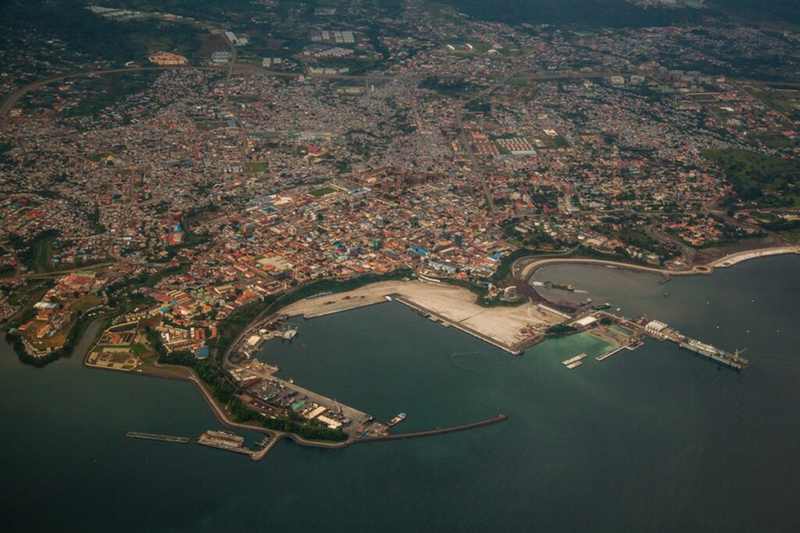
In April 2026, according to the court record and reporting, officers forcibly carried Soliman onto a plane bound for Equatorial Guinea. His lawyers say he received no advance notice of the destination and no opportunity to explain why it posed a danger. Once there, he was held for months in a hotel with dozens of other U.S. deportees who likewise had no ties to the country.
The arrangement blurred the lines between removal and continuing custody. The United States had expelled the group from its territory, but the deportees were not free to establish ordinary lives in the receiving country. They remained confined, dependent on state authorities and uncertain whether they could leave.

Equatorial Guinea deportees faced retaliation after speaking out
Soliman spoke to news organizations about the conditions. Reuters later obtained video showing police drawing firearms on migrants, including Soliman. On September 11, authorities violently arrested him and moved him to a gendarmerie station also used to detain human-rights activists. His attorneys say he has since been held incommunicado.
The lawyers describe confinement, beatings and threats at gunpoint, combined with the fear of being stranded indefinitely under an authoritarian government. Those allegations have not been answered publicly by Equatorial Guinea. DHS also did not respond to requests for comment cited in the reporting. The court's order addresses what U.S. officials must do; it does not itself command Equatorial Guinean officers to open a cell.
Fifth Amendment deportation due process
Notice and a meaningful country-specific hearing
Hinderaker found a Fifth Amendment violation because Soliman was removed without notice of the chosen country and without a meaningful opportunity to raise a claim specific to that country. The principle is narrow enough to be administrable: before a third-country transfer, the government must disclose the destination with enough time for the person to seek protection based on conditions there.
It is also broad enough to matter across the program. Protection from Egypt did not automatically establish protection from every country in Africa. But without notice, Soliman could not present evidence about Equatorial Guinea at all. A process that offers a hearing about the wrong country is not meaningful process.
The numbers behind the program
Human Rights Watch deportation report: 536 people sent to non-home African countries
Human Rights Watch reported on October 8 that 536 people were deported from the United States to African countries that were neither their country of citizenship nor habitual residence between January 2025 and August 2026. That is a small share of total U.S. removals, but total removals are the wrong denominator for judging the specific legal risk. The relevant fact is that hundreds of people entered a relatively new channel in which the destination itself may create a fresh protection claim.
Soliman is one name among those hundreds. His case makes visible what an aggregate count can conceal: removal can become prolonged foreign detention, and a destination selected for diplomatic convenience can have no connection to the person sent there.
LGBT asylum deportation Africa: Reuters documented 40 protection cases
Reuters has documented 40 cases in which migrants who won U.S. legal protection after persecution tied to LGBT status were nevertheless deported to third countries in Africa that criminalize same-sex relations or that the State Department describes as hostile to LGBT people. The figure does not prove that every person faced the same individual risk. It does show a recurring mismatch between protection granted on one record and exposure created by a new destination.
That pattern helps explain why destination notice matters. Country conditions, criminal laws and police practices vary. A rule allowing removal to “somewhere other than the protected country” without a real chance to challenge the alternative would turn a safety judgment into a routing exercise.
Who benefits, who loses and what the ruling does not settle
Soliman is the immediate beneficiary if the order produces his release and return. His family in Phoenix gains a defined legal path toward reunion. Other third-country deportees gain a precedent and a litigation model: identify the missing notice, document the destination-specific danger and seek an affirmative return remedy.
The administration's removal machinery absorbs the setback. Its foreign-affairs argument did not persuade the judge, and the reporting schedule forces visible compliance rather than an open-ended internal process. Yet the ruling does not abolish third-country removals or guarantee relief to every person sent abroad. Different records, destinations and procedural histories can produce different outcomes.
Human-rights advocates therefore have reason for both relief and caution. A single district-court order can change one life and influence other courts. It cannot on its own dismantle the program, compel Congress to legislate or ensure that a foreign government cooperates quickly.
What happens next
Deportation appeal Ninth Circuit: the administration's next legal move
DHS can ask the U.S. Court of Appeals for the Ninth Circuit to pause or reverse Hinderaker's order. The district judge has already denied a stay pending appeal, so the government would need to seek emergency relief from the appellate court if it wants to halt compliance. The central appellate questions will include the scope of due process before a third-country removal and a federal court's power to order the government to facilitate return.
The first compliance report is due within three days of the order, followed by weekly updates. Those filings should reveal whether DHS is arranging travel, negotiating access with Equatorial Guinea or fighting the order while taking only protective steps. The court also expressly barred U.S. assistance in moving Soliman to Egypt.
Attorney Dana Camilleri said Soliman's legal team broke into tears of relief and hope, but remained cautiously optimistic. Her warning captures the practical gap: “A court order is not a plane.” Release still depends on action by two governments, documents, transportation and safe passage to a U.S. port of entry.
If Soliman returns, the case will move from emergency extraction to the legal terms of his presence in the United States. A family reunion in Phoenix would not erase his conviction or automatically restore permanent status. It would restore the process the court said he was denied before officials chose Equatorial Guinea.
The larger question is whether other courts, Congress or the Ninth Circuit extend the logic to people still held across Africa. Soliman's order provides a route, not a mass remedy. The next cases will test whether that route is exceptional or the beginning of a durable constitutional boundary.
Related coverage
- Supreme Court allows third-country deportations to restart
- UN experts urge a halt to Trump administration third-country deportations
- Mamdani calls ICE “rotten to its core” after Bronx shooting
Sources
Reporting with the court order, the government's appeal rights and the limits of a single ruling in view.