Hegseth meets Netanyahu: the US defense secretary made an unannounced visit to Israel on Monday and discussed Iran with the prime minister at a desert air force base, Israeli officials said — eight days before an election that could end Netanyahu's government, and with US–Iran talks frozen in a stalemate Tehran is in no hurry to break.
World / No announcement, no readout, no comment from the Pentagon — just a defense secretary on a desert air base, an election eight days away, and a war both capitals expect to resume.
Track it live: Iran war tracker — live map and latest developments
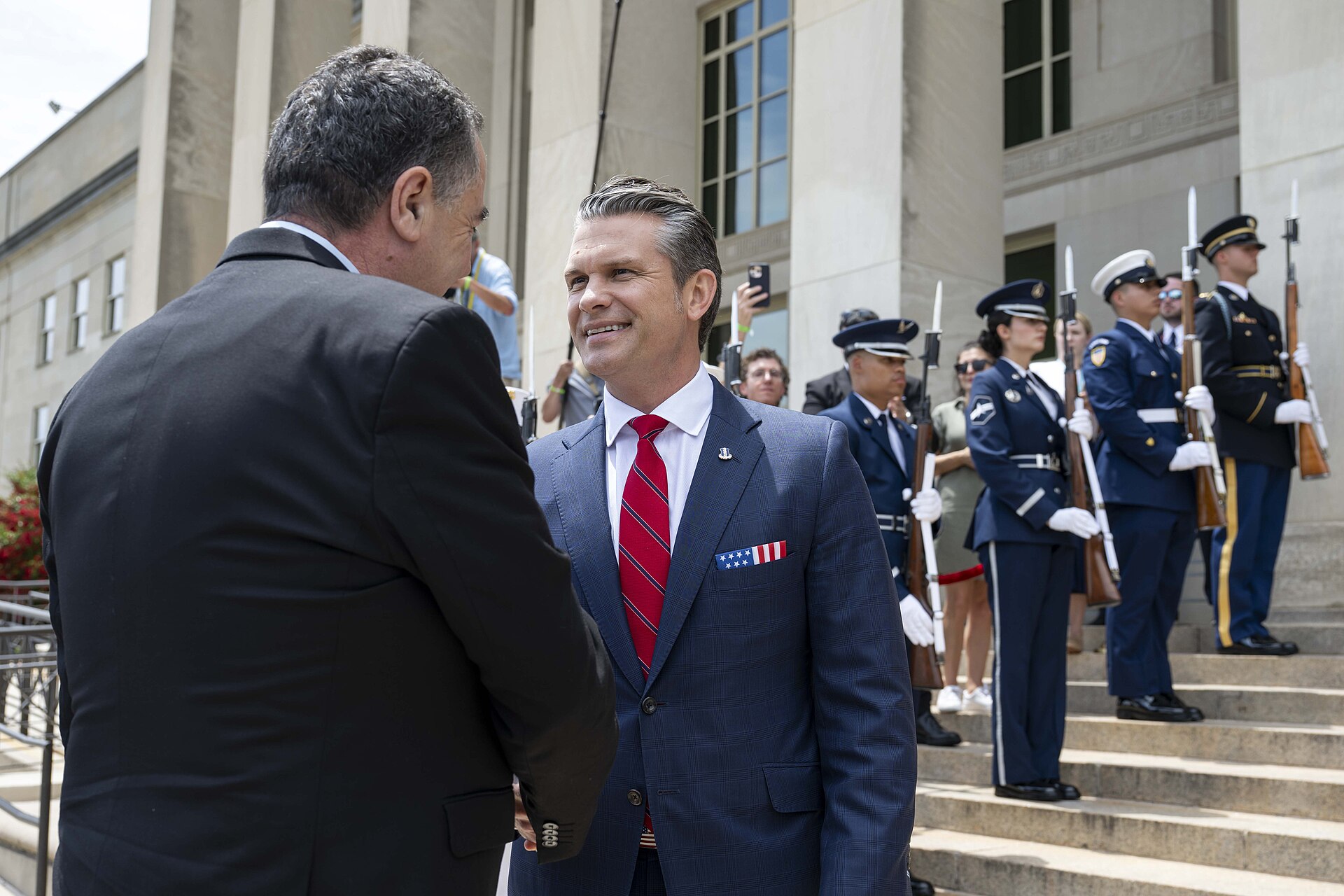
What is known about the meeting
The confirmed facts are deliberately thin, and that thinness is itself part of the story. Three Israeli officials, speaking to Reuters, said Hegseth discussed Iran with Netanyahu on Monday. Axios first reported the meeting, citing sources with knowledge of it. Neither government issued a readout. The Pentagon declined to comment on the record, and the prime minister's office did not immediately respond. The only public trace from Hegseth's own side was his social media post about visiting American troops in the CENTCOM region — a true statement that also functions as cover, since a troop visit requires no explanation and reveals nothing about a prime-ministerial meeting at a desert air base.
Israel's Army Radio placed the meeting at an air force base in the country's southern desert. Reporting does not name the base, and Signal Post News is not speculating about which one: the southern desert hosts several major installations, and the location detail matters less than the choice of a military setting over the prime minister's office or the Kirya defence compound in Tel Aviv. A meeting on an air base, unannounced, with no cameras and no statement, is how two governments talk about operations rather than communiqués.
What they had to talk about is not in doubt. The United States and Israel launched joint strikes on Iran in late February, opening an eight-month war that has effectively closed the Strait of Hormuz, driven American gasoline prices up and Trump's approval rating to a record low, and settled into an armed stalemate: a US maritime blockade strangling Iran's oil exports on one side, an Iranian-controlled strait and a trickle of shipping on the other. Netanyahu has told Israeli media this month that he is not seeking to attack Iran before the October 27 election. Trump has said the US will not bomb Iran again before the November 3 midterms. Both of those pledges have dates on them — and both dates are now close.
Why this matters
An unannounced visit by a US defense secretary to an ally at war, eight days before that ally's election and two weeks before America's, is a signal sent in three directions at once. To Tehran, it says that whatever the public stalemate looks like, Washington and Jerusalem are coordinating in person at the highest military level — the channel through which any resumed campaign would be planned. To Israeli voters, it is a visible American embrace of Netanyahu at the moment polls project his religious-nationalist coalition to lose its majority — landing one day after Trump's explicit endorsement, and in pointed contrast to Vice President JD Vance, who this week declined to endorse Netanyahu and said he was "not getting involved in Israeli elections." And to Washington's own bureaucracy and Congress, it says the Iran file is being run through the Pentagon and the prime minister's office, not through public diplomacy.
The deeper significance is the calendar. Both governments have publicly tied their restraint to elections: no Israeli attack before October 27, no American bombing before November 3. Those are not peace pledges; they are scheduling statements. Iranian officials read them exactly that way. "Iran is preparing for renewed Israeli and US attacks, not for a deal with America to end the war," one senior Iranian official told Reuters this week. "The clerical establishment is determined not to give Trump a political victory." A defense secretary does not fly unannounced to a desert air base in the middle of that standoff to discuss anything else.
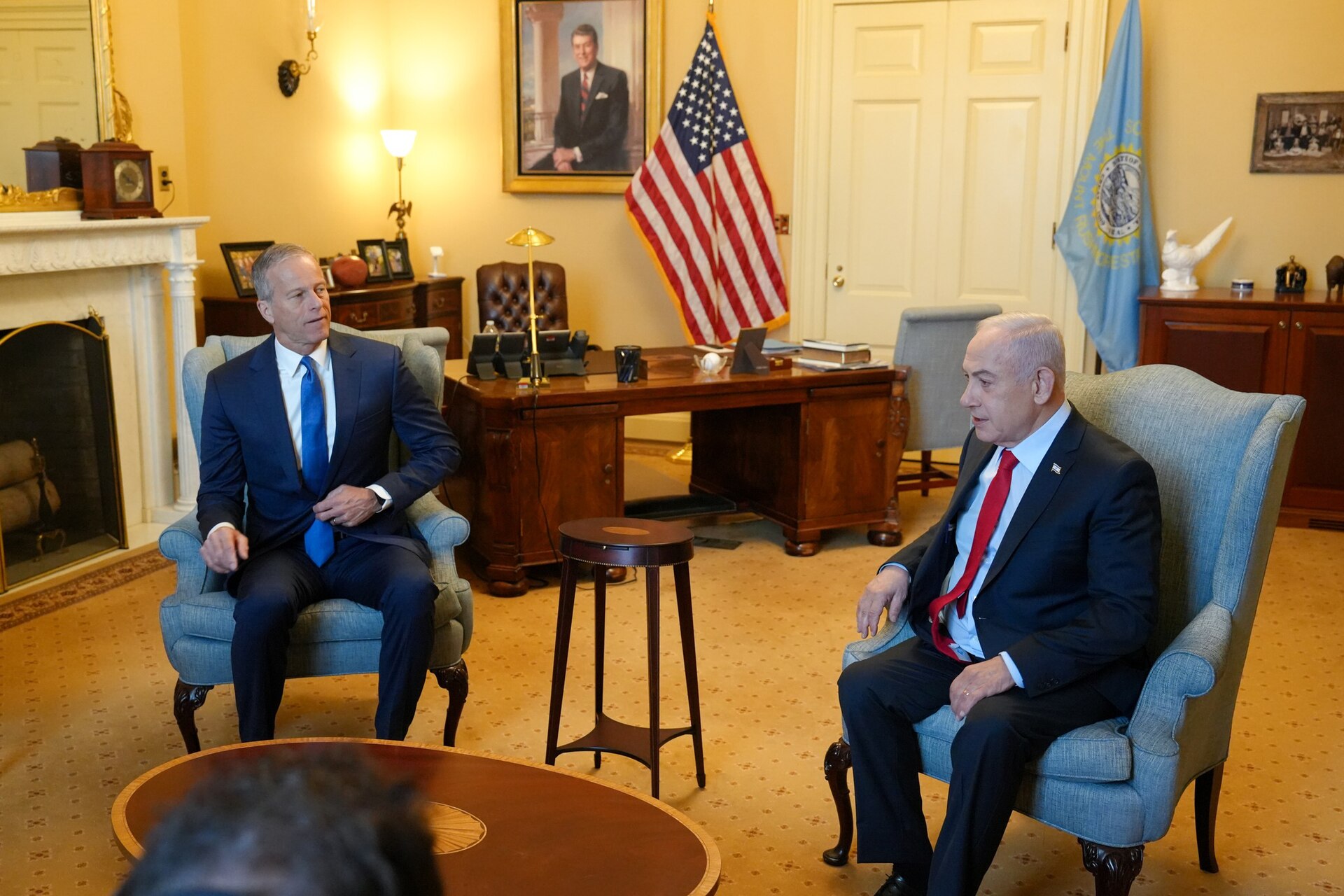
The stalemate Tehran is choosing
The meeting cannot be understood without the second Reuters story running alongside it: Tehran's deliberate freeze. Three senior Iranian officials and an Iranian insider told Reuters that Iran has purposefully prolonged talks with the US to weaken Trump politically ahead of the midterms, convinced he is ready to resume attacks to break the deadlock. Iran's proposal, conveyed through Qatari mediators, remains on the table, Foreign Minister Abbas Araqchi said Sunday: Tehran would reopen the strait within seven days — albeit under Iranian control — if Washington lifted its maritime blockade, eased restrictions on Iranian oil exports, released frozen assets and ended hostilities on all fronts. Washington, under pressure from Israel, wants Iran's nuclear programme on the table from the outset; Tehran insists its seven-day conditions come first. Neither side has moved.
The numbers explain why each side thinks time is on its side — and why both may be wrong. Iran's seaborne crude exports fell to zero in the second week of September, from a 14-day average of 230,000 barrels a day at the start of the month, and were still there on October 5, according to the energy intelligence platform Vortexa. Annual inflation hit 73.6 percent in September, and the rial has fallen nearly 35 percent against the dollar since Washington reapplied its naval blockade in July. That is an economy being strangled in public. But the strait stays shut, ship traffic stays at a trickle, and American voters facing high gasoline prices are, in Tehran's calculation, Trump's problem rather than Iran's. "By prolonging the talks, Iran is influencing the US election without taking any unlawful action," Tehran analyst Saeed Leylaz told Reuters. Alex Vatanka of the Middle East Institute put the harder edge on it: Tehran believes Trump is interested in regime change and is following Netanyahu's policy of seeking to bring down Iran's ruling establishment — and a government that believes that does not sign its own surrender schedule.
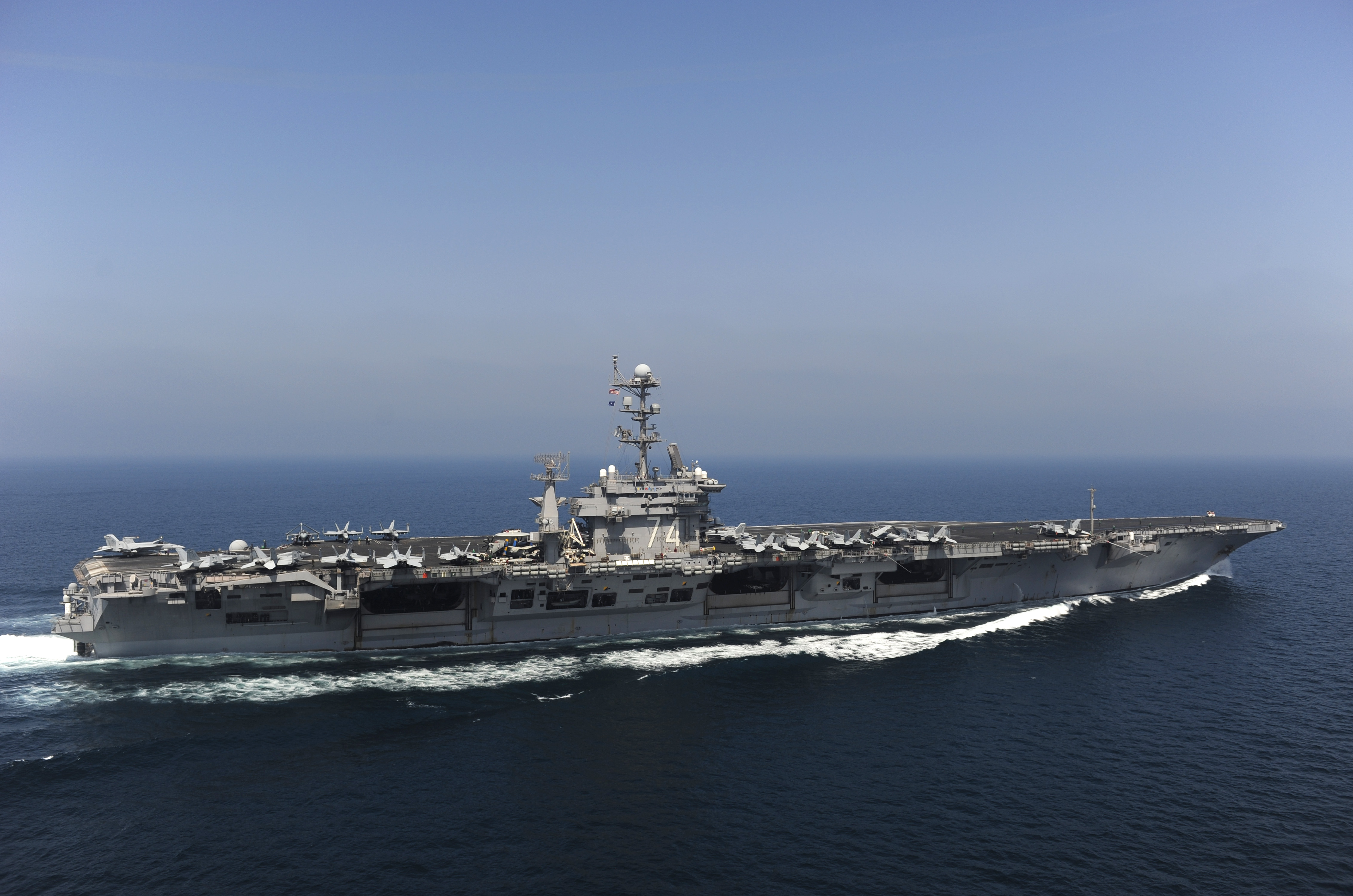
How we got here
The distrust has a documented history, and both capitals keep their own copy. In June 2025, an Israeli attack wrecked plans for a sixth round of US–Iran nuclear talks in Oman. Last February, the US and Israel launched their war just after another round of talks ended, with further technical discussions already scheduled. From Tehran's side of the table, negotiations have twice been the overture to bombing — which is why, as Leylaz put it, Iranian officials now say "nothing will go back to the pre-war status quo," and why a sustainable deal is viewed inside the system as close to impossible. From Washington and Jerusalem's side, the ledger reads differently: Iran's nuclear programme, its missile forces and its network of allied militias — including Yemen's Houthis, who have intensified attacks on Saudi Arabia in recent days — are presented as threats that diplomacy alone has never contained. Signal Post News reports both ledgers because both are what the decision-makers in that desert meeting actually believe.
For background on the frozen negotiation itself, see our explainer on the US–Iran talks and the seven-day Hormuz plan, our reporting on how the US military has prepared options to resume Iran strikes, and the scenario analysis in Will the US bomb Iran after the midterms?
Who gains, who loses
Netanyahu gains most visibly in the short term: a wartime defense secretary's visit, days after a presidential endorsement, is the strongest possible closing-week image for a leader whose coalition is projected to fall short — American backing made physical, without a single quotable promise attached. Critics in Israel will note the other side of that coin: an unannounced meeting with no readout also means no announced deliverables — no air defences pledged, no timetable given — and an opposition can fairly ask whether Israel's war planning is being scheduled around two countries' elections rather than its own security cabinet. Trump gains a show of alliance management without a new commitment, and loses nothing he has not already priced in; Vance's refusal to endorse, set against Trump's endorsement and Hegseth's flight, leaves the administration visibly split on how entangled it wants to be in Israel's ballot. Iran's leadership gains time — the one resource the blockade is designed to deny it — at a price its own public pays in inflation and a collapsed currency. Ordinary people on every side of the strait, and everyone who buys fuel anywhere on earth, hold the losing ticket in every scenario where the stalemate breaks by force.
What happens next
Three dates now govern this war. October 27: Israel votes, and Netanyahu's self-imposed restraint expires with the ballot. November 3: the US midterms, after which Trump's pledge not to bomb Iran lapses. And running underneath both, the seven-day plan sits unanswered in Qatari channels — the only live diplomatic document in the conflict, requiring, by its own terms, a week to reopen the strait if Washington ever says yes. The scenarios, in ascending order of danger: the stalemate simply continues, blockade against closed strait, into the winter; a post-election deal trades blockade relief for a strait reopening with the nuclear file deferred; or the attacks both Tehran and — if this meeting is the evidence it appears to be — Washington and Jerusalem are preparing for resume once the electoral calendars clear. What Monday's meeting established, at minimum, is that the military channel between the two allies is warm, personal and current. Wars that are truly ending rarely need their defense chiefs to meet in secret in the desert.
Sources
Reuters (October 20, 2026): Hegseth discussed Iran with Netanyahu in an unannounced visit to Israel on Monday, three Israeli officials said; the Pentagon declined to comment; Israel's Army Radio reported the meeting took place at an air force base in Israel's southern desert. BusinessWorld/Reuters and Reuters syndication (WNFL). Reuters (October 20, 2026): Iran prolongs the talks stalemate to influence the US midterms, senior officials say — including the seven-day plan terms, Araqchi's Sunday statement, Vortexa export figures, Statistical Centre of Iran inflation data, and the Vatanka and Leylaz assessments. Reuters. The meeting was first reported by Axios, as cited by Reuters. Trump endorsed Netanyahu on Sunday; Vance declined to endorse him in a 2WAY interview, as reported by Reuters. Photo credits are carried in each caption; all photographs are file images and none depicts Monday's unannounced meeting, which neither government photographed for release.