The former special counsel stood by his prosecutions of Donald Trump as Senate Republicans confronted him with whistleblower records showing his "Arctic Frost" probe collected bank data from 4,782 small donors and swept up the texts of dozens of reporters.
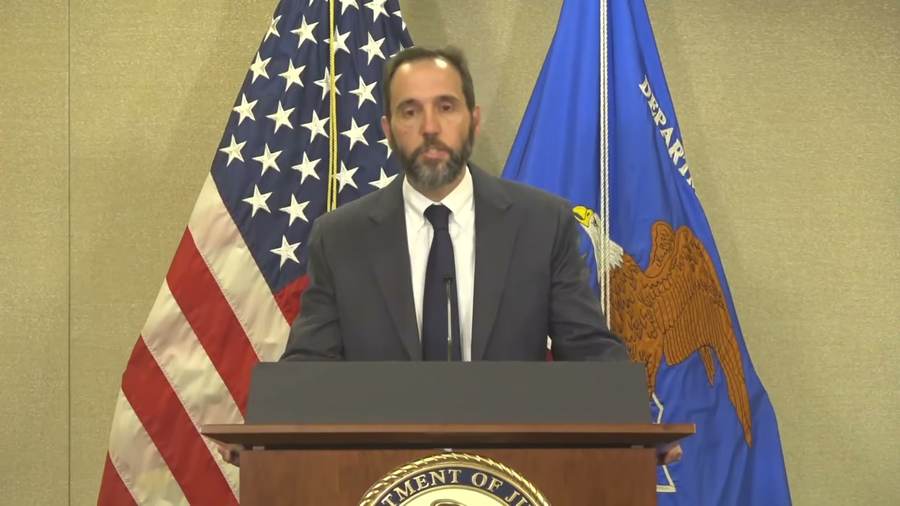
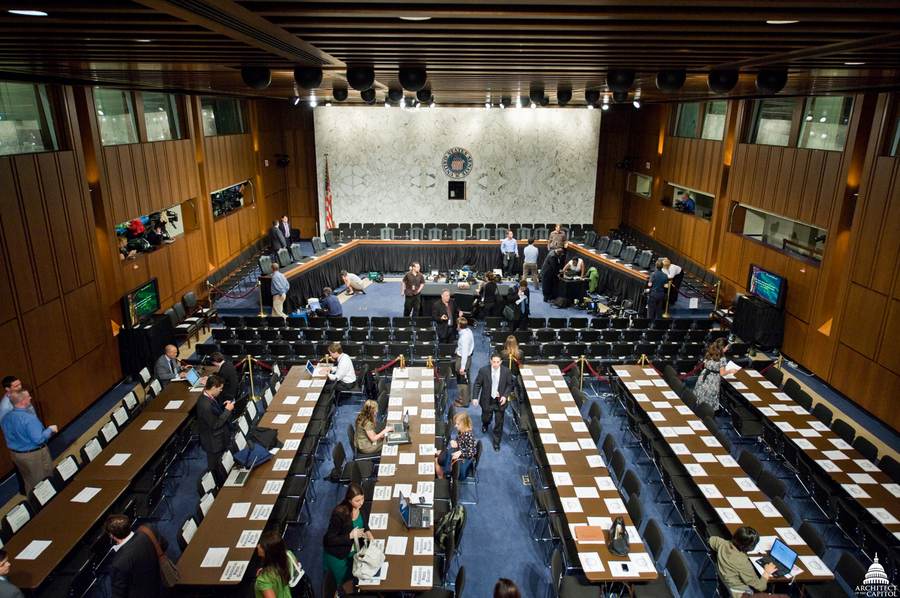
WASHINGTON — Former special counsel Jack Smith took his seat before the Senate Judiciary Committee on Tuesday morning for the first time, and the man who once held Donald Trump's legal fate in his hands spent the day defending his own. In a hearing titled "Oversight of Jack Smith's Abuse of Authority and the Targeting of Republicans and Related Matters," Chairman Chuck Grassley and his fellow Republicans accused Smith of running a politically driven dragnet under the FBI codename "Arctic Frost" — one that, according to whistleblower documents Grassley released, obtained at least 4,782 personal checks from Americans who donated to Trump or Trump-aligned groups, some for as little as $1.
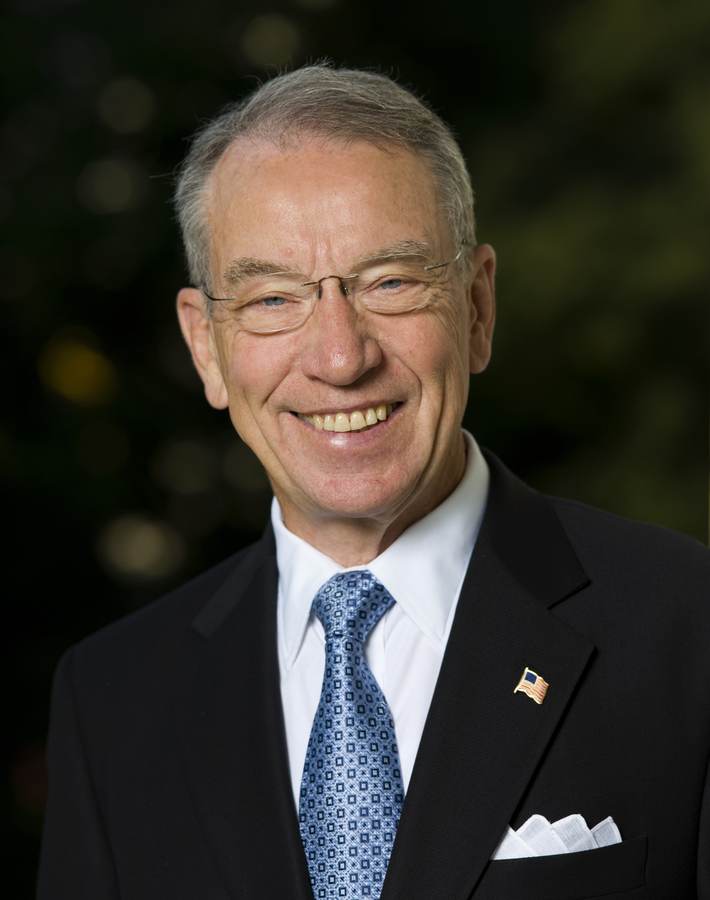
The checks, spanning September 2019 to August 2023 and drawn from all 50 states, Washington, D.C., and Puerto Rico, exposed donors' home addresses, bank account and routing numbers, and signatures to federal investigators. "No matter what you say, there's no legitimate basis for what you did," Grassley told Smith. "Now, the Justice Department and the FBI will forever possess thousands of people's address, phone number, bank and bank account number, bank routing number, and a copy of their true signature."
Smith did not dispute the collection. "Yes, we acquired financial information," he confirmed under questioning, adding: "As I sit here right now, I cannot recite to you every subpoena we issued. I can tell you why we issued subpoenas, and it was to conduct a criminal investigation of one of the most serious crimes that's ever happened in our nation's history. I had a duty to collect facts."
In his opening statement, Smith stood his ground. "I stand by my decisions as Special Counsel, including my decision to bring charges against President Trump," he said, adding: "I will not be silenced by the continued threats of prosecution from the president or others." Under questioning he went further: "Our investigation developed proof beyond a reasonable doubt that President Trump engaged in criminal activity," and said he would make the same decision to prosecute today regardless of political party.
The hearing also surfaced the probe's reach into the press and Congress. According to Grassley's disclosures, a June 2023 subpoena for text messages from the phones of officials who served in the first Trump administration swept up the communications of nearly 50 journalists with government sources — reporters for more than a dozen outlets including Fox News, CNN, CBS News, NBC News, CNBC, the Wall Street Journal, the Washington Post, Bloomberg, the Los Angeles Times, New York Magazine, the Associated Press, Reuters, and NPR. At least 87 White House phone numbers were listed in the subpoena request. Smith's office also seized messages between Trump White House officials and 44 lawmakers from both parties, covering October 2020 through January 20, 2021.
Grassley paired the disclosures with a pointed accusation: that Smith's team had, in his words, "killed an investigation into the Clinton campaign" even as it pursued Republican donors — a claim Smith's side has not publicly answered in detail and one Democrats dismiss as unsubstantiated. The hearing's sharpest subtext, though, was House Judiciary Chairman Jim Jordan's referral of Smith to the Justice Department, alleging Smith gave false statements in a prior closed-door deposition about the acquisition of lawmakers' records. Smith's legal team has firmly denied he testified untruthfully.
Democrats used the hearing to mount Smith's defense. Senator Dick Durbin noted that "Jack Smith investigated Donald Trump's efforts to overturn the 2020 election, yet for months, Senate Republicans refused to allow him to testify about what he found. I look forward to hearing what Mr. Smith has to say." Senate Judiciary Democrats said Smith would finally "be able to tell… his story," and accused Republicans of carrying out vindictive justice on Trump's behalf.
Why this matters
Strip away the theater, and Tuesday's hearing was about something larger than one prosecutor's subpoenas: it was the collision of two rival theories of accountability, each claiming the mantle of the rule of law.
The first theory — Smith's — is that no one is above the law, and that a special counsel who found proof beyond a reasonable doubt of criminal efforts to overturn an election had not just the right but the duty to follow the money, the messages, and the paper trail wherever they led, using the same compulsory tools every federal conspiracy investigation uses.
The second theory — Grassley's — is that the tools themselves became the abuse: that when the government collects the bank records of 4,782 private citizens, many of whom gave a dollar to a political cause, the investigation stops looking like law enforcement and starts looking like a warning to anyone who might donate to the wrong candidate next time.
Both theories can't be fully true, but both contain something true — and that is precisely why the hearing matters beyond the news cycle. The special counsel mechanism was designed to take politics out of the prosecution of powerful people. What Tuesday demonstrated is that the mechanism has no defense against the politics that follow: the prosecutor of a president can become, within two years, the investigated — scrutinized by a Justice Department now run by the administration of the man he charged. Whatever one thinks of Smith's methods, that inversion will shape how every future special counsel weighs the risks of aggressive investigation against the certainty of aggressive retrospection.
How we got here: what was Arctic Frost, exactly?
"Arctic Frost" began in April 2022 as an FBI investigation into the 2020 fake-elector scheme — the effort to assemble alternate slates of electors in states Joe Biden won. When Attorney General Merrick Garland named Smith special counsel in November 2022, the probe expanded into the fullest federal accounting of the attempt to overturn the 2020 election, alongside a second investigation into Trump's retention of classified documents at Mar-a-Lago after his first term.
Smith brought both cases in 2023. Neither reached a jury: after Trump's 2024 election victory, Smith moved to dismiss them under the Justice Department's longstanding policy against prosecuting a sitting president. Trump, for his part, has repeatedly called for Smith himself to be prosecuted — a demand Tuesday's hearing effectively began to institutionalize, with a Republican-led Congress building the record and a Trump-led Justice Department holding the pen.
The scrutiny has multiplied on other fronts. The Office of Special Counsel — the federal watchdog agency, entirely distinct from Smith's former office — opened an investigation into whether Smith's work violated the Hatch Act's ban on partisan political activity by federal employees. And Jordan's criminal referral over the closed-door deposition keeps the threat of prosecution concrete rather than rhetorical.
The numbers in context
The figure that will define this hearing is 4,782 — and it deserves a closer look than either side gave it on television.
Start with the timeline. The checks span September 2019 to August 2023. "Arctic Frost" began in April 2022. That means the dragnet reached back roughly two and a half years before the probe existed — covering donations made while Trump was still president, during an ordinary reelection campaign, long before any fake-elector plot. To Grassley's side, that backward reach is the tell of a fishing expedition: if the crime under investigation began in late 2020, what legitimate purpose did a $1 donation from 2019 serve?
The counterargument — the one prosecutors make in conspiracy cases as a matter of course — is that conspiracies have long tails, and money is fungible: tracing how a political operation was financed legitimately starts before the conspiracy's overt acts. "Follow the money" is not a controversial technique; it is the backbone of federal fraud and racketeering practice, and each of those subpoenas would have passed through a grand jury process with judicial oversight.
What is harder to normalize is the scale relative to the target. The fake-elector scheme was geographically concentrated in a handful of contested states; the donor dragnet touched all 50 states plus the District of Columbia and Puerto Rico. And the granularity — home addresses, routing numbers, signatures — is the full financial identity of each donor, retained by the government indefinitely. Even defenders of the investigation tend to concede the optics: there is a meaningful difference between subpoenaing a campaign's bank records and subpoenaing 4,782 individual citizens' canceled checks, and that difference is measured in public trust.
The reporter-texts sweep raises a parallel concern. Nearly 50 journalists across more than a dozen outlets had their communications with government sources incidentally collected — the classic "incidental collection" problem that has bedeviled intelligence-surveillance debates for a decade, now appearing in a domestic criminal probe. The Justice Department maintains internal guidelines restricting when prosecutors may seek journalists' records; whether a subpoena nominally aimed at officials' phones but known to sweep in reporters' texts honors the spirit of those guidelines is a question Tuesday left unanswered — but it is already driving legislation. Earlier this month, the House unanimously passed the bipartisan NDO Fairness Act, which would tighten the standards for the secrecy orders that kept much of this collection hidden, require written judicial findings, and generally cap such orders at 90 days. Senator Tim Sheehy is now pressing the Senate to take it up, explicitly citing Arctic Frost.
Who benefits, who loses
The winners from Tuesday are easy to spot. Republicans banked hours of footage for the 2026 midterms — five weeks out — casting the Biden-era Justice Department as an institution that treated ordinary Republican donors as suspects. The NDO reformers gained their most vivid exhibit yet. And Smith himself, paradoxically, got something too: a public, on-the-record forum to state his case — "proof beyond a reasonable doubt" — after months in which, as Durbin noted, Republicans declined to let him testify.
The losers are less visible but more numerous. The 4,782 donors did not choose to have their bank details filed in a federal investigation; whatever the legal justification, their privacy was spent as an investigative input. The journalists swept into the text-message collection now know their source communications can be collateral in someone else's subpoena. And the special counsel institution itself takes the deepest hit: the lesson future prosecutors will draw from the Smith saga is that investigating a president who might return to power carries personal, professional, and potentially criminal risk — a lesson that cuts in exactly the wrong direction for accountability, whichever party holds the White House.
Critics on the right say none of this excuses what they call the original sin: a prosecution they view as an effort to jail a political opponent. Critics on the left say the hearing is the cover story for the real project — using the machinery of oversight to punish the man who dared to charge Trump, and to chill the next prosecutor who might. Both critiques assume bad faith on the other side; the facts established Tuesday — the checks were obtained, the texts were swept up, the charges were brought and then dismissed without trial — are compatible with either reading. That ambiguity is not a failure of the hearing. It is the point of it.
What happens next
Three tracks now run in parallel. First, the legal track: Jordan's referral sits with a Justice Department that answers to Trump, and Grassley's document releases are transparently building a record for more. Whether that ends in charges against Smith or in a report that simply stains him is the highest-stakes unanswered question in Washington.
Second, the legislative track: the NDO Fairness Act's unanimous House passage gives it rare bipartisan momentum, and Arctic Frost has handed its Senate champions their case study. If it becomes law, it will constrain not just future special counsels but every federal prosecutor's use of secrecy orders — a genuine structural reform born of a partisan fight.
Third, the political track: with the midterms five weeks away, both parties will clip Tuesday's exchanges into ads. Republicans will run Grassley's "no legitimate basis"; Democrats will run Smith's "I will not be silenced." The voters who gave those $1 donations will decide which story they believe — and whether the knock-on effect is a chilling of small-dollar political giving or a rallying cry that fills the next quarter's coffers. Either way, the precedent is set: in American politics now, the investigator gets investigated. Everyone in the next special counsel's office just watched what that looks like.
Sources: Reuters; New York Post