Red Cross West Bank warning
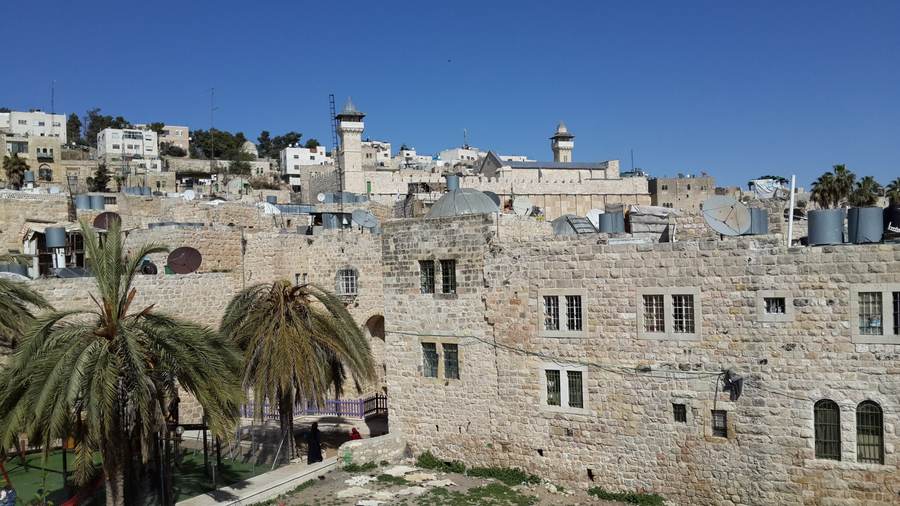
JERUSALEM — The International Committee of the Red Cross issued an urgent warning Tuesday that escalating violence, Israeli military operations, demolitions and movement restrictions are subjecting Palestinian civilians in the West Bank to “increasingly intolerable conditions in which to live.”
The statement from Julien Lerisson, head of the ICRC's delegation for Israel and the occupied territories, said Israeli authorities have a duty to protect the population from violence “including when that violence is inflicted by settlers.” It also restated the organization's longstanding legal position that establishing and expanding Israeli civilian settlements anywhere in the West Bank is incompatible with Article 49(6) of the Fourth Geneva Convention.
What happened
“The frequent and severe violence must be brought to an end,” Lerisson said. He called for respect for international humanitarian law protecting private and public property and access to essential services, and said restoring safety and dignity requires both civilian protection and an end to settlement expansion.
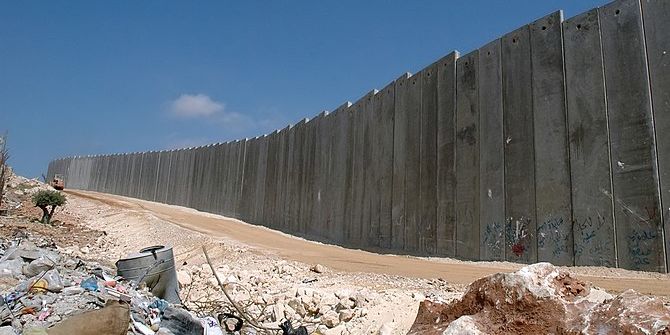
The ICRC described the effects in ordinary, immediate terms. Movement restrictions can keep patients from health care, children from school and families from homes and livelihoods. Ambulances, it said, are sometimes held for hours at checkpoints and roadblocks or forced to add hours to routes to avoid closures and violence, making emergency response harder and putting lives at risk.
The statement also drew a legal balance often lost in political argument. Israel has a right to take measures for its own security, the ICRC said. But as the occupying power it must treat protected persons humanely, protect them from acts or threats of violence and make every effort to restore and maintain public order and civil life.
(a) Why this matters
The ICRC operates through confidential dialogue wherever possible, which gives a direct public appeal added significance. The statement does not offer a new legal theory; it says existing obligations are not being met while the humanitarian costs are intensifying.
It is also a signal flare at a moment when international attention is split among Gaza, Ukraine and other crises. The West Bank warning connects headline violence with slower forms of coercion — blocked roads, delayed ambulances, inaccessible schools, demolished homes and pressure on livelihoods — that can make a community unlivable without a single mass-casualty event.
(b) Context and background
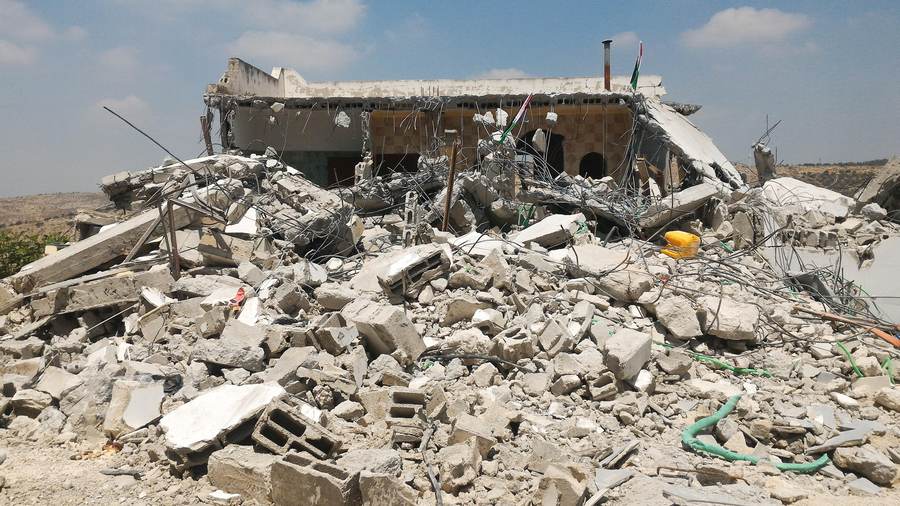
OCHA reported on September 18 that more than 1,100 structures had been demolished in the West Bank in 2026 for lacking Israeli-issued building permits, displacing more than 1,500 people. Those permit-related demolitions accounted for more than a third of the 4,300-plus Palestinians displaced in the territory so far this year.
The geographic spread of settler attacks has nearly matched an entire previous year. OCHA said 275 Palestinian communities had been affected in 2026, compared with 279 in all of 2025, the highest annual figure recorded since 2006. In its September 25 situation report, OCHA said Israeli authorities demolished 86 Palestinian-owned structures during the September 15–21 reporting period; one family was also forced to demolish its own home. The week's demolitions displaced 147 people, including 73 children.
The ICRC anchors its settlement position in Article 49(6) of the Fourth Geneva Convention, which prohibits an occupying power from transferring part of its civilian population into territory it occupies. Separately, an August tender opened bidding for 1,234 units in the E1 project, part of 3,401 housing units approved for construction east of Jerusalem. Human Rights Watch says the corridor would fragment the West Bank and place nearby Bedouin communities at risk of forced displacement.
(c) Who benefits, who loses, what critics say
The ICRC's intervention gives diplomats, courts and humanitarian organizations a concise legal and factual record from an institution mandated by the Geneva Conventions. It strengthens arguments for civilian-protection measures and against further settlement expansion without asking governments to adopt a partisan account of every individual incident.
Palestinian communities bear the immediate losses: shelter, mobility, access to care, income and the practical ability to remain on their land. Israeli civilians also lose when impunity and road violence erode public order, while first responders lose time at the very moment speed matters most.
Israeli officials and supporters of settlement policy have often argued that security measures respond to attacks and that permit enforcement is a matter of law. The ICRC does not deny Israel's security rights; its answer is that security authority does not erase occupation-law duties. Critics of statement-driven diplomacy will say moral pressure without enforcement rarely changes facts on the ground. That criticism is strongest precisely because the legal rules are already well established.
(d) The numbers in context
The demolition pace makes displacement cumulative. More than 1,500 people displaced by permit-related demolitions are only one part of the 4,300-plus Palestinians displaced in the West Bank in 2026. The 147 people displaced in a single week were more than three times the 2026 weekly average for demolitions on those grounds, OCHA said.
The community count captures a different dimension. When settler attacks affect 275 communities, the harm is not confined to a handful of recurrent flashpoints. It changes how people plan travel, school, health care, farming and overnight security across a widening map.
Gaza's scale of destruction is vastly larger, but that contrast should not erase the West Bank pattern. The ICRC's statement treats the West Bank as its own protection emergency: one driven by repeated violence, movement restrictions, settlement growth and demolitions rather than by a single front line.
(e) What happens next — scenarios
1. The warning is absorbed without policy change — the most likely near-term outcome. Israeli authorities acknowledge security concerns but continue current enforcement, military and settlement policies; humanitarian organizations document the consequences.
2. Legal aftershocks build. The ICRC statement and OCHA data are cited in court filings, diplomatic démarches or sanctions debates, increasing costs for officials and businesses linked to settlement expansion without immediately changing conditions.
3. Ground-level escalation accelerates. More settler attacks, demolitions or access restrictions displace additional families and overwhelm mobile clinics and first responders. The danger is not only a higher incident count but communities becoming impossible to sustain.
Sources
- International Committee of the Red Cross — civilian-protection appeal, Lerisson quotations and legal position on settlements.
- Demócrata — independent report on the ICRC warning.
- UN OCHA Humanitarian Situation Report, September 25, 2026 — September 15–21 demolitions, displacement and access constraints.
- OCHA / ReliefWeb Humanitarian Situation Report, September 18, 2026 — 2026 demolition, displacement and affected-community totals.
- Human Rights Watch via ReliefWeb — E1 tender, approved-unit count and legal context.