Trump blocks Netanyahu Iran strike plan: Israel's military readied a multi-day bombing campaign against Iran for the weekend of October 10, larger than February's offensive, and the US president shut it down weeks before the midterm elections.
World / Middle East — the IDF had prepared a multi-day bombing campaign against Iranian nuclear, military, energy and regime targets for the October 10 weekend, the Financial Times reports; Trump said no, and both sides are now living inside the pause he imposed
Track it live: Iran war tracker — live map and latest developments
What the Financial Times found
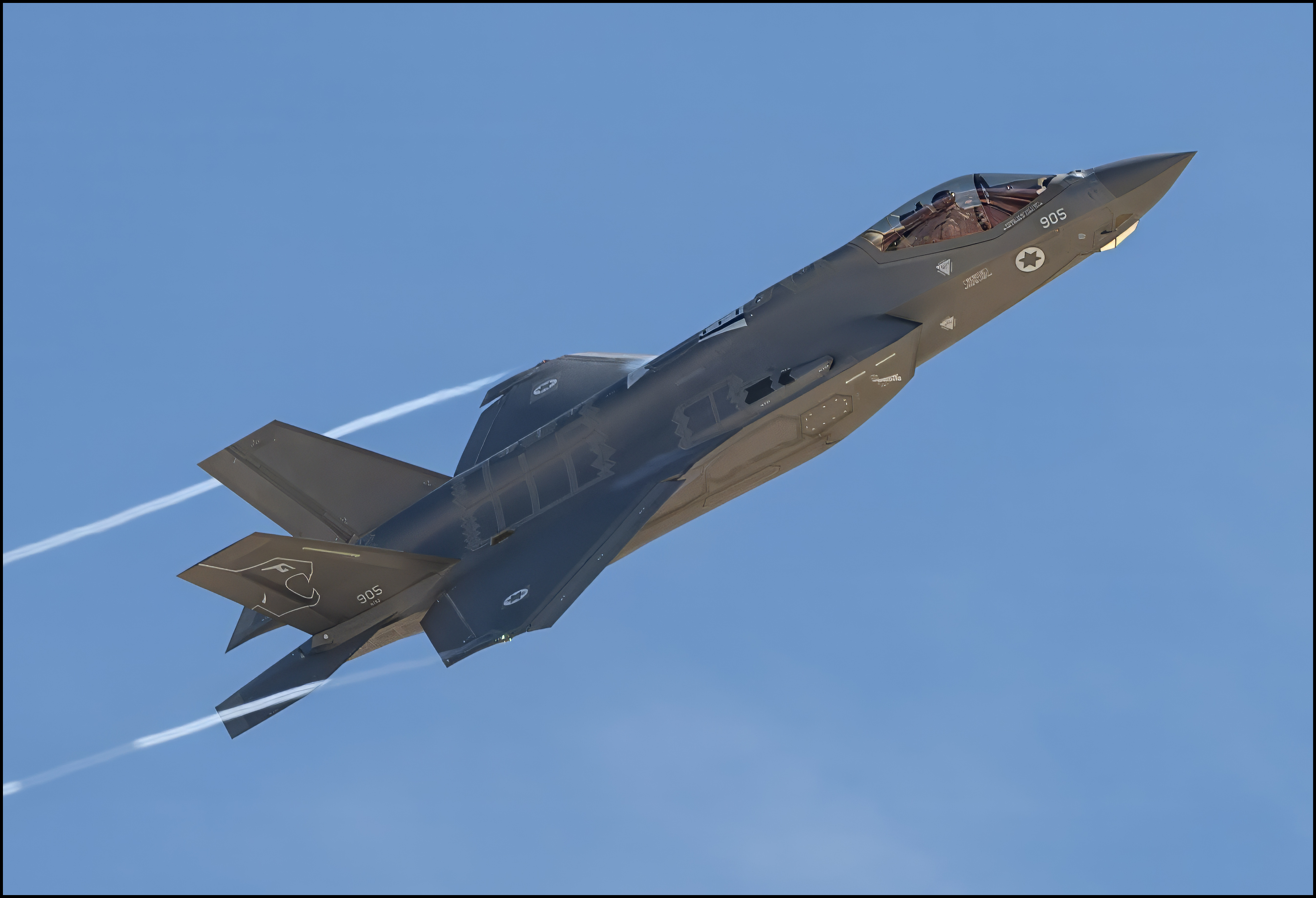
The report, published Wednesday, is the most detailed account yet of how close the region came to a second full-scale Iran war this month. According to the FT's three sources, Netanyahu ordered the military to plan the offensive earlier in October, the IDF prepared a bombing campaign lasting several days, and the start was set for the weekend of October 10. The target set was not a limited reprisal: it reportedly included Iranian nuclear facilities, power plants and other civilian infrastructure, military sites and targets associated with the regime — a list Israeli officials have since updated and shared with their American counterparts, based on intelligence gathered in recent months, including infrastructure that was not struck during the February campaign.
The operation did not proceed because Trump withheld his approval. The FT's sources say the primary reason was the American electoral calendar: Trump did not want to restart the war before the November 3 midterms, and was concerned about what renewed fighting would do to the economy and energy prices at a moment of domestic political pressure. One person familiar with the discussions summed up the position Washington is now putting to Tehran and Jerusalem alike: "Either there will be a deal or there will be an attack." The administration, the report says, is seeking an agreement covering Iran's nuclear programme and control of the Strait of Hormuz — and Israeli and American strikes resuming jointly in the coming weeks remains, in the sources' words, "not an unreasonable scenario" if no deal comes.
The public trail pointed the same way
The striking thing about the disclosure is how much of it was visible in public at the time — it just was not assembled. On October 8, two days before the campaign was reportedly due to begin, Trump wrote on Truth Social: "We are having productive discussions with the Islamic Republic of Iran. We will not be attacking Iran at any time prior to the Midterm Elections to be held in the United States on November 3rd" — while insisting, in the same post, that "IRAN WILL NOT HAVE A NUCLEAR WEAPON!" At the time, the statement read as a unilateral assurance to Tehran. Read against the FT's account, it was also a public padlock on an ally's air force: a commitment Israel could not break without openly defying Washington. Signal Post News covered that pledge as it landed — Trump's no-attack-before-the-midterms promise — and the reporting that followed it, in the debate over strikes before the midterms.
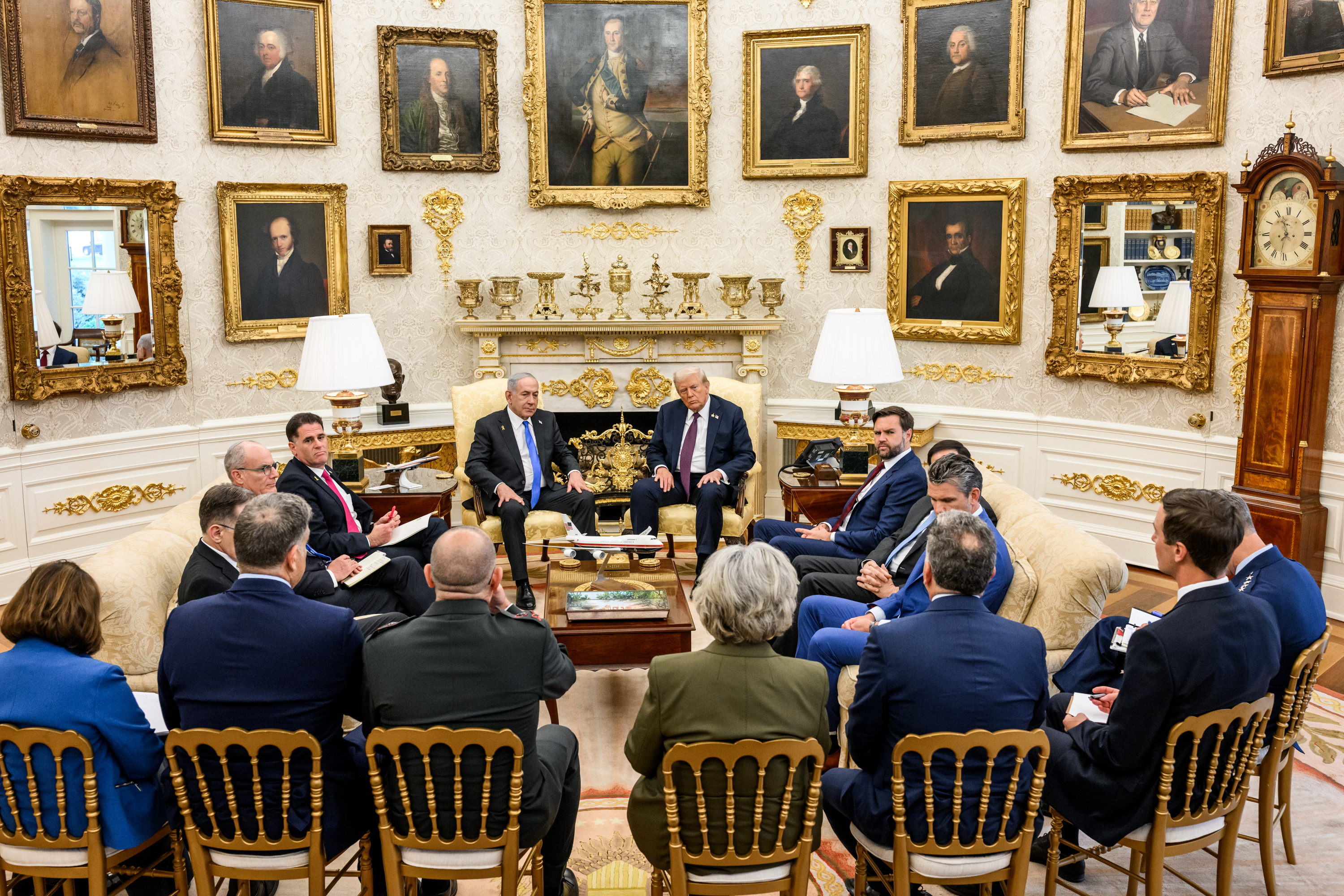
The military traffic never really stopped, either. On Monday, US Defense Secretary Pete Hegseth met Netanyahu in Israel in a visit neither government announced in advance; Reuters confirmed the visit took place, though Hegseth would not elaborate on the talks. Israel's KAN public broadcaster reported the main topic was Iran, and the Jerusalem Post, citing Walla, reported that Defense Minister Israel Katz attended while IDF Chief of Staff Eyal Zamir and other senior officials were not invited, for confidentiality — and that Israeli officials presented the Americans with the updated Iranian target list. The same day, Netanyahu released a video from an Israeli Air Force base featuring a phone call with Trump, in which he told the president: "Donald, you said we have a job to finish, and we're going to finish it together." Trump replied: "You're a great fighter, and we're going to prove that very soon. You're the man I want by my side." A job to finish, a target list handed over, and a start date that has already passed: the pause is real, but nobody involved is behaving as if the plan is dead.
What officials say — and what they will not say
Neither government has confirmed the FT's account, and the silences are worth recording precisely. The Prime Minister's Office did not respond to the Financial Times' repeated requests for comment, and the IDF declined to comment on the report. That is not a denial — but the surrounding record contains real pushback on earlier versions of this story. Last week, Axios reported that Trump and Netanyahu had discussed renewing strikes against Iran ahead of elections in both countries; an American official subsequently denied that such a conversation had taken place, the Prime Minister's Office denied that Netanyahu was seeking to launch a war before the elections, and a White House official called that report "false," restating that "we will not be attacking Iran at any time prior to the midterm elections." Netanyahu himself, in an interview last week, said he did not favour initiating a strike before Israel's election — while emphasising that Israel would respond with substantial force if Iran attacked.
There is also an earlier, conflicting strand of Israeli reporting that readers should hold alongside the FT's version: in the days around October 10–11, Israeli journalists reported that it was Washington privately urging an Israeli-only strike, and Israeli military leaders pushing back, warning that renewed fighting could force Israel's own election to be postponed. The two accounts cannot both be wholly right about who was pressing whom. What they agree on is the underlying fact pattern — a live strike plan, an argument about timing, and two election calendars colliding. Everything in this article that describes the plan itself rests on the FT's sourcing, and it is reported here as exactly that: a reported plan, denied in part and unanswered in part, not a confirmed operational record.
Why this matters
Start with what the episode reveals about the alliance. Israel's air force can plan a campaign against Iran on its own; it cannot sustain one at this scale — multi-day, against hardened and dispersed targets, under missile retaliation — without American munitions, tanker support, intelligence and diplomatic cover. That dependency is precisely what Trump's veto exposed. In February, Washington and Jerusalem attacked together. In October, Jerusalem was ready and Washington said the timing was wrong, and the operation simply did not happen. Allies plan; hegemons schedule. For every other US partner watching — in Europe, in the Gulf, in Asia — the lesson cuts both ways: American protection is real, and it comes with an American veto over when you may fight.
Second, the calendar is now a strategic actor in its own right. Israel votes on October 27. The United States votes on November 3. Between those two dates sits a window in which a war is, by the reported logic in Washington, politically impossible — and after them, a window in which the constraint that stopped the October campaign no longer exists. Tehran can read a calendar too. If Iranian negotiators believe the threat becomes credible again on November 4, the rational move is to offer just enough before then to extend the pause, and concede nothing structural. If they believe Trump is bluffing about afterwards, the rational move is to concede nothing at all. Either way, the FT's sources have handed Tehran the one thing negotiators usually pay to learn: the deadline is electoral, not military.
Third, consider what was on the target list. The reported inclusion of power plants and civilian infrastructure not struck in February marks a shift in kind, not just scale — from degrading Iran's nuclear and military programmes toward coercing its state and society directly. Campaigns built on infrastructure targets historically produce rally-round-the-flag effects more reliably than capitulation, they carry heavy legal and humanitarian costs, and they invite symmetrical retaliation against the Gulf energy infrastructure Iran has already shown it can hit. That the list exists, was updated, and was formally handed to the Pentagon this week tells you the idea is not fringe. It is the standing option.
Two elections, one argument
The asymmetry between the two leaders' incentives explains most of the friction. For Netanyahu, campaigning for the October 27 election — Israel's first since the October 7, 2023 Hamas attack — a resumed war is not obviously a liability: security crises have historically consolidated his base, and Trump has publicly endorsed him. Current and former Israeli security officials, though, have raised a colder concern reported alongside the FT story: a major campaign launched days before a vote could disrupt the election itself, and if Netanyahu fails to form a government afterwards, he would remain caretaker prime minister during a transitional period — raising the prospect of a war decision taken by a government whose mandate has expired. Zamir's reported warning that Iranian retaliation could force the election's postponement cuts into the same problem from the military side.
For Trump, the arithmetic runs the other way. A new Iran war in the final fortnight of a midterm campaign means oil-price risk, market risk, and a reminder to voters of a conflict many of them never supported — for a president whose own advisers are split. Earlier reporting described Hegseth and US Central Command's leadership backing the Israeli position, most other advisers favouring sanctions and pressure for now, and Trump himself characteristically uncommitted in private — one US official summarised his message to Netanyahu as "go ahead and get ready," amounting to "maybe now, maybe later, maybe never." The FT account suggests that, at the decisive moment in October, "maybe later" won.
Who wins, who loses
Tehran is the clearest short-term winner: it gains at least a month of guaranteed immunity from American attack, publicly pledged, plus a detailed leak of what was planned against it — target categories, timing logic, and the identity of the constraint. Iranian officials have spent recent days warning of retaliation while keeping diplomatic channels open, which is exactly what a government does when it believes time is briefly on its side. Netanyahu loses the operation but keeps the option, and arguably gains a campaign asset: he can present himself as the leader who was ready, restrained only by Washington. Trump keeps his midterms insulated from an oil shock and preserves his preferred self-image — the dealmaker who can still choose war later. The losers are less visible: Israeli planners whose October window closed, Gulf states whose infrastructure sits inside Iran's retaliation envelope whenever this resumes, and anyone who believed the April ceasefire was a settlement rather than what it now plainly is — an interval.
What happens next
Three dates structure everything. October 27: Israel votes; a Netanyahu victory strengthens the strike camp, a defeat complicates any caretaker-period decision. November 3: the US midterms; the public no-attack pledge expires by its own terms. And running underneath both, the negotiation the administration says it wants — on the nuclear programme and Hormuz — which now proceeds under a disclosed deadline. Watch for three signals: whether Washington and Tehran announce any interim understanding before November 3 (which would convert Trump's veto into a deal he can campaign on); whether the target-list diplomacy of Monday's Hegseth visit produces visible force movements after the Israeli vote; and whether Netanyahu, if re-elected, treats the pledge as expired on November 4 or continues to wait for an American green light that may be designed never quite to arrive. "Either there will be a deal or there will be an attack" is a threat with a date attached. The date is now public. So is the plan. What neither capital has said is what happens if, come November, there is neither.
Sources
Financial Times reporting on the planned October offensive, the October 10 start date, the target categories, Trump's refusal and the "deal or attack" assessment (October 21, 2026), as reported by the Jerusalem Post, AzerNews and United With Israel; Reuters on Defense Secretary Pete Hegseth's unannounced Israel visit and meeting with Netanyahu (October 20, 2026); KAN News and Walla reporting via the Jerusalem Post on the meeting's agenda, attendance and the updated Iranian target list; Axios reporting (October 2026) on earlier Trump–Netanyahu strike discussions and the subsequent US and Israeli denials, via the Jerusalem Post; President Donald Trump's Truth Social post of October 8, 2026; Netanyahu's Air Force base video and call remarks (October 20, 2026), via the Jerusalem Post. Claims about the plan rest on anonymous sourcing and are attributed throughout; the Prime Minister's Office did not respond to the FT and the IDF declined to comment.