War · Middle East · Gaza
A 12-year-old boy shot east of Al-Bureij refugee camp, two people killed in strikes near Al-Zawayda, a woman killed by gunfire near Khan Younis and one person killed in a drone strike west of Gaza City — five deaths in a single day, more than a year after a ceasefire that has never fully held.
Track it live: Israel/Gaza war map
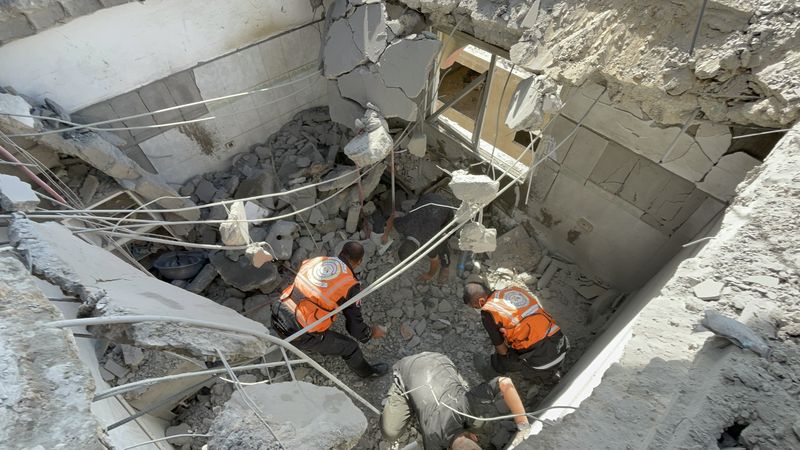
GAZA CITY, November 5, 2026 — Israeli fire kills five in Gaza on Thursday, according to Gaza’s Civil Defence, in a day of strikes and gunfire that stretched the length of the enclave — from the Al-Bureij refugee camp in the centre, where a 12-year-old boy was shot dead, to Khan Younis in the south, where a woman was killed, and back north to a drone strike west of Gaza City that killed one more person and wounded several others. The deaths, reported by the Civil Defence and confirmed in part by two Gaza hospitals, are the latest in a ceasefire that began in October 2025 and has now entered its second year without ever fully silencing the guns: by the Gaza Health Ministry’s count, carried by AFP, more than 1,600 people have been killed in Gaza since the truce was announced.
The Israeli military, asked about Thursday’s incidents, said it had struck “terrorists” in the Al-Zawayda area of central Gaza and west of Gaza City, and that it was “looking into” the reports concerning the woman killed near Khan Younis. The AFP report carried no Israeli comment on the killing of the boy near Al-Bureij. No names of Thursday’s dead were published in the reporting available at publication time, and Signal Post News does not invent them: what follows is what each side, each hospital and each wire report establishes, incident by incident, with the differing tallies kept separate and attributed, because on a day like Thursday the counts themselves are part of the story.
Al-Bureij: a 12-year-old boy killed by gunfire
The youngest of Thursday’s dead was 12 years old. Civil Defence spokesman Mahmoud Bassal told AFP that the boy was killed by Israeli gunfire east of the Al-Bureij refugee camp, in central Gaza — the strip of farmland and built-up camp edge that lies close to the line Israeli forces have held since the ceasefire. Bassal gave no further detail in the AFP account: not what the boy was doing, not the time of day, and no name was released. Al-Aqsa Martyrs Hospital, the main hospital for the central governorate, confirmed that the boy was dead on arrival, as it did for the two people killed near Al-Zawayda, a few kilometres away.
Al-Bureij is one of the eight historic refugee camps of the Gaza Strip, dense and poor, and its eastern edge has been a recurring flashpoint throughout the ceasefire year: the open ground beyond the camp is where residents, farmers and children moving near the military line have repeatedly come under fire, in incidents each side describes differently. Israel has said throughout the truce that its forces fire on people who approach positions or cross lines they are warned away from; Palestinian officials have said the dead in such incidents include civilians, among them children, going about ordinary life. Thursday’s AFP report does not settle which description fits the boy’s death, and the Israeli military offered no comment on this incident in it. What is established is narrower and, for the family concerned, total: a 12-year-old from the Al-Bureij area is dead, and a hospital in Deir el-Balah received his body.
Al-Zawayda: two killed in separate strikes
A few kilometres from Al-Bureij, near the town of Al-Zawayda on the central coast road, two people were killed in separate Israeli strikes on Thursday, Bassal said. Al-Aqsa Martyrs Hospital confirmed both deaths, as it confirmed the boy’s — three bodies from central Gaza accounted for by a single hospital in a single day. The AFP report does not name the two killed near Al-Zawayda, does not describe what was hit, and does not say whether the strikes were carried out by aircraft, drones or artillery.
The Israeli military’s account of the central-Gaza fire is different in kind, not just in detail: the IDF said it had struck “terrorists” in the Al-Zawayda area. It did not, in the AFP report, specify how many people it believed it had killed, identify the targets, or say what activity prompted the strikes. That gap — a rescue service counting bodies and a hospital confirming them, an army describing targets without names or numbers — is the standard shape of ceasefire-era reporting from Gaza, and it is why this article keeps the two accounts side by side rather than merging them into a single narrative neither side would recognise.
Khan Younis: a woman killed by gunfire in the south
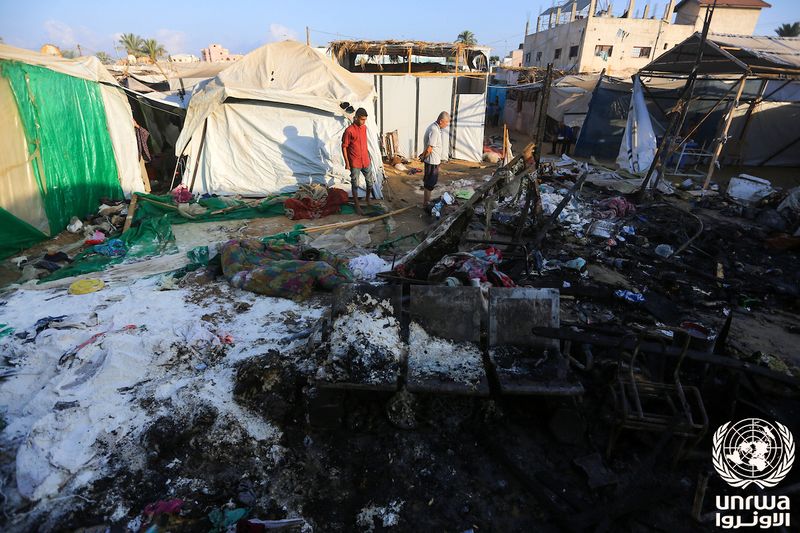
In southern Gaza, a woman was killed by Israeli gunfire near Khan Younis on Thursday, the Civil Defence said, and Nasser Hospital — the south’s largest medical facility, in Khan Younis itself — confirmed her death. As with the boy at Al-Bureij, the AFP report gives no name, no age and no account of the circumstances beyond the location and the cause: gunfire, near Khan Younis.
Of all Thursday’s incidents, this is the one the Israeli military addressed most directly, and its answer was the most open-ended: the IDF said it was “looking into” the reports concerning the woman’s death. That formulation, familiar from a year of ceasefire incidents, neither confirms nor disputes the Civil Defence account; it places the incident in a queue of reviews whose outcomes are rarely published. Anadolu, in its separate tally of Thursday’s fire, reported that a 54-year-old woman’s body was brought to Nasser Hospital — an account that overlaps the AFP reporting on this death, though Anadolu’s overall count for the day was compiled differently, as the numbers section below sets out. Khan Younis has been the single most struck city of the ceasefire’s second year: it was the centre of Sunday’s strikes, which killed eight people, and of Monday’s strikes in Khan Younis and Al-Mussadar, which killed three more.
West of Gaza City: one killed in a drone strike
Later on Thursday, the day’s last reported killing came in the north. One person was killed and several others injured in an Israeli drone strike west of Gaza City, Bassal told AFP. The military, for its part, said it had struck “terrorists” west of Gaza City — the same formulation it used for Al-Zawayda, and the only two of Thursday’s four incidents for which it claimed deliberate targets.
West of Gaza City is the coastal strip that includes the Al-Shati, or Beach, refugee camp, and Anadolu’s Thursday reporting placed a drone strike in Al-Shati camp itself, killing one person and wounding two — a toll that sits inside, and may describe the same incident as, the Civil Defence’s west-of-Gaza-City account. Al Jazeera separately reported that Israeli forces carried out a large-scale demolition operation on Thursday targeting buildings east of Gaza City’s Al-Tuffah neighbourhood — not a strike with a reported toll, but a reminder that Thursday’s violence was not limited to the four incidents in the Civil Defence count.
What the IDF said — and what it did not
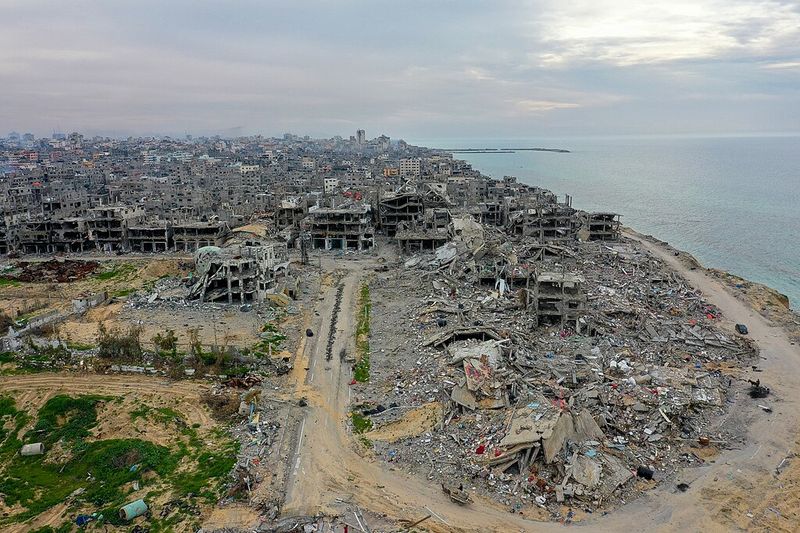
Set out in one place, the Israeli military’s response to Thursday, as carried by AFP, is three sentences’ worth of material covering four incidents. It struck “terrorists” in the Al-Zawayda area. It struck “terrorists” west of Gaza City. It was “looking into” the reports about the woman near Khan Younis. And it offered no comment in the report on the 12-year-old boy killed east of Al-Bureij.
That pattern is itself a fact about how this ceasefire is policed and described. Israel’s standing position across the truce’s first year has been that its fire inside Gaza is directed at armed militants — men approaching its positions, planting explosives, or preparing attacks — and that Hamas and other factions routinely violate the agreement in ways that force a response. Hamas and Gaza’s authorities hold the mirror-image position: that Israel fires on civilians in areas it was supposed to stop striking, and that the daily toll is itself the violation. Both governments accuse the other of breaking the October 2025 agreement, regularly and on the record, and Thursday produced a fresh exhibit for each side’s file. Signal Post News reports both characterisations because both are part of the record; the hospital confirmations — three bodies at Al-Aqsa Martyrs, one at Nasser — are the part of Thursday that does not depend on either side’s framing.
The numbers in context — three tallies, kept separate
Thursday’s headline figure is five: five people killed, attributed by AFP to Gaza’s Civil Defence, with four of the deaths confirmed on arrival by the two hospitals that received the bodies. Two other counts of Thursday circulated, and they do not contradict the five so much as measure different things — which is precisely why they must not be folded into it.
Al Jazeera, reporting the Gaza Health Ministry’s daily update, put eight new deaths and 26 wounded in the past 24 hours — a rolling ministry window that includes people who died of earlier wounds, not only people killed on Thursday. The same Al Jazeera report carried the ministry’s running totals: 1,439 killed and 5,052 wounded since the October 2025 ceasefire took effect, 834 bodies recovered from rubble, and at least 74,040 killed and 175,168 wounded since October 2023. Anadolu, in a tally published Thursday evening, counted four Palestinians killed and 11 wounded across Gaza that day, including the Al-Shati drone strike and the woman whose body reached Nasser Hospital — a partial count, compiled earlier and from different incident reports, that overlaps the AFP five without matching it.
The longer-run figures frame all three. The Gaza Health Ministry, cited by AFP, says more than 1,600 people have been killed by Israeli forces since the ceasefire was announced a year ago; the ministry operates under Hamas authority, and AFP notes its figures are considered reliable by the United Nations. Readers will notice that 1,600-plus and Al Jazeera’s 1,439 do not match: they are the same ministry’s numbers reaching print through different wires, at different moments, on slightly different definitions of when the count begins — “since the ceasefire was announced” against “since it took effect.” Against the Palestinian toll, AFP sets the Israeli one: the Israeli army has identified seven deaths in its own ranks over the same period, plus one civilian contractor. Seven soldiers and a contractor on one side; somewhere between fourteen and sixteen hundred dead on the other, depending on which ministry figure and which start date is used. Both numbers are attributed, both are part of the record, and the distance between them is the central fact of the ceasefire’s first year.
Why this matters
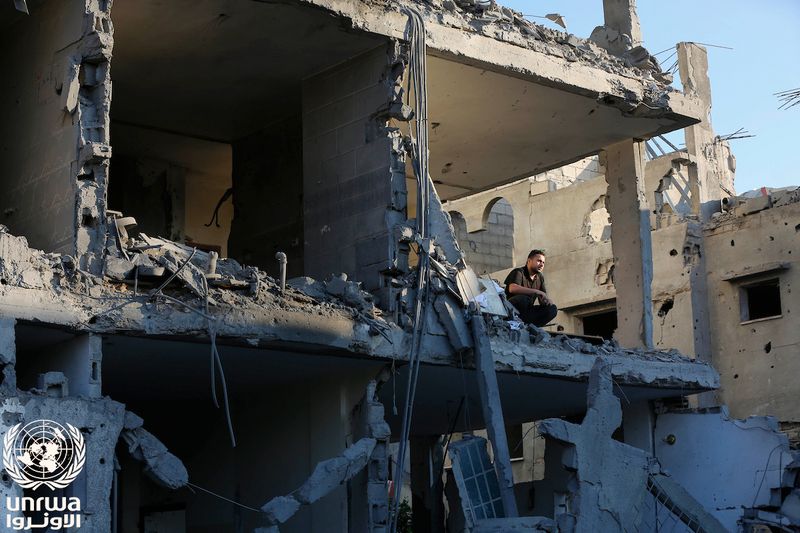
Five deaths on a Thursday would have been an unremarkable day in the war that preceded this ceasefire. Under a ceasefire, they are something else: a data point in the argument over whether the October 2025 agreement is a peace process in slow motion or a war continuing at lower intensity under a diplomatic label. More than a hundred humanitarian and civil-society organisations marked the truce’s first anniversary by calling it a ceasefire in name only, as we reported in our account of the ceasefire at one year — and the raw material of their case is days like Thursday: a child shot near a camp, a woman shot near Khan Younis, a drone over the coast, and a cumulative ministry toll that has climbed past 1,600 while the agreement supposedly held.
The asymmetry in the year’s toll — more than 1,600 Palestinian dead against seven Israeli soldiers and a contractor — cuts two ways in the diplomacy, and honest analysis has to hold both. For mediators trying to move the agreement into its second phase, the Palestinian toll is the argument that the current equilibrium is neither stable nor defensible: every lethal week strengthens the factions and publics who say the truce merely changed the tempo of the killing, and it raises the price Hamas can demand for the concessions phase two requires of it, above all disarmament. For Israel, the same figures are presented as evidence of restraint under provocation: an army that says it is striking identified militants, in an enclave where armed groups still operate, while its own losses are counted in single figures precisely because it holds the positions the ceasefire gave it. What neither framing changes is the arithmetic of trust. A second phase that asks Hamas to give up weapons and asks Israel to withdraw further cannot be negotiated on the strength of a first phase in which, on the ministry’s count, an average of more than four people a day have been killed. Thursday’s five sit almost exactly on that average — which is the most damning way to describe them, and the most accurate.
Thursday also shows how the ceasefire is actually administered day to day: not by monitors publishing verified incident reports, but by a rescue service spokesman talking to a wire agency, two hospitals confirming bodies, and an army issuing sentence-long characterisations. There is no joint mechanism that will rule on whether the boy at Al-Bureij or the woman at Khan Younis died inside or outside the agreement’s terms. In that vacuum, each incident becomes raw material for the violation ledger both sides keep — and the ledgers, not the incidents, are what the mediators will eventually have to settle.
Background: a ceasefire a year on
The agreement whose violations are at issue was announced in October 2025, ending the two-year war that began in October 2023 at a cost the Gaza Health Ministry now puts at more than 74,000 Palestinian lives, alongside the Israeli dead of the war’s opening attack and the fighting that followed. Its first phase froze the lines roughly where they stood, returned hostages and prisoners, and promised a second phase — Hamas disarmament, an Israeli withdrawal, an interim administration and reconstruction — that has still not begun in earnest a year later. The central questions have not moved: Hamas has not disarmed, Israeli troops have not withdrawn to the lines the deal envisaged, and the “yellow line” geography of the frozen front runs through farmland east of camps like Al-Bureij, where Thursday’s youngest victim died.
What has filled the space where phase two was supposed to be is a rhythm that this autumn’s reporting has made grimly familiar: lethal days in clusters. Eight killed on Sunday, three on Monday, five on Thursday — sixteen dead in five days, by the Civil Defence and medics’ counts in the reports Signal Post News has published this week alone. Each cluster produces the same exchange: Palestinian officials citing hospitals and rescue services, the IDF citing terrorists and reviews, mediators urging restraint, and no mechanism capable of declaring, with authority both sides accept, whether the ceasefire still exists in anything but name. Both Israel and Hamas say the other is responsible for that condition. The hospitals, at least, keep a count that does not depend on the argument.
What happens next
Three things bear watching in the coming days. The first is whether the IDF’s review of the Khan Younis shooting produces a public finding — and whether any account emerges of the Al-Bureij shooting, the incident on which the military has so far said nothing; a named child victim is the kind of death that has, in past ceasefire flashpoints, forced fuller statements from both armies and governments. The second is the mediators: Qatar, Egypt and the United States have treated each lethal cluster this autumn as a test of whether the parties can be pulled back to the agreement’s terms, and a week running Sunday-eight, Monday-three, Thursday-five is the heaviest sustained toll since the anniversary — the point at which quiet demarches have previously become public pressure. The third is phase two itself, which cannot be launched into a week like this one and cannot be postponed forever: every month it waits, the ministry’s toll climbs by more than a hundred, and the disarmament-and-withdrawal bargain at its heart gets harder for both sides to sell at home.
For Gaza’s residents, the nearer horizon is simpler and worse. Thursday’s incidents touched the centre, the south and the north of the enclave in a single day, in places — a camp’s eastern fields, a coast road, the streets west of Gaza City — where daily life, such as it is a year after the war’s formal end, is conducted in the open. The ceasefire’s promise was that those places would get safer with time. On Thursday, in all three, they did not.
Related coverage: Israeli strikes kill eight in Gaza on Sunday, Israeli strikes kill three in Gaza on Monday and Gaza ceasefire at one year: a truce in name only.
Sources
Agence France-Presse (AFP), November 5–6, 2026, reporting Gaza Civil Defence spokesman Mahmoud Bassal’s account of Thursday’s five deaths — the 12-year-old boy killed by gunfire east of Al-Bureij refugee camp, two people killed in strikes near Al-Zawayda, a woman killed by gunfire near Khan Younis, and one person killed and several injured in a drone strike west of Gaza City — the confirmations by Al-Aqsa Martyrs Hospital and Nasser Hospital, the Israeli military’s response (strikes on “terrorists” in the Al-Zawayda area and west of Gaza City; “looking into” the Khan Younis reports), and the context figures: the Gaza Health Ministry’s count of more than 1,600 killed since the ceasefire was announced, and the Israeli army’s seven soldiers and one civilian contractor killed in the same period. Al Jazeera, November 5, 2026: the Health Ministry’s rolling figures of eight deaths and 26 wounded in 24 hours, 1,439 killed and 5,052 wounded since the ceasefire took effect, 834 bodies recovered from rubble, at least 74,040 killed since October 2023, and the demolition operation east of Gaza City’s Al-Tuffah neighbourhood. Anadolu Agency via MNTV, November 5, 2026: a separate tally of four killed and 11 wounded, including the Al-Shati camp drone strike and the woman whose body was brought to Nasser Hospital. Photos: Wikimedia Commons, as credited in the captions; all are file photographs from the 2023–25 war, and no photograph of Thursday’s incidents has been published.