National Security Analysis
The Wanying Zhang FBI complaint is about more than one airport arrest. It alleges a quiet form of state-directed surveillance aimed at a Taiwanese official's family — and gives Washington a public stage for deterrence.
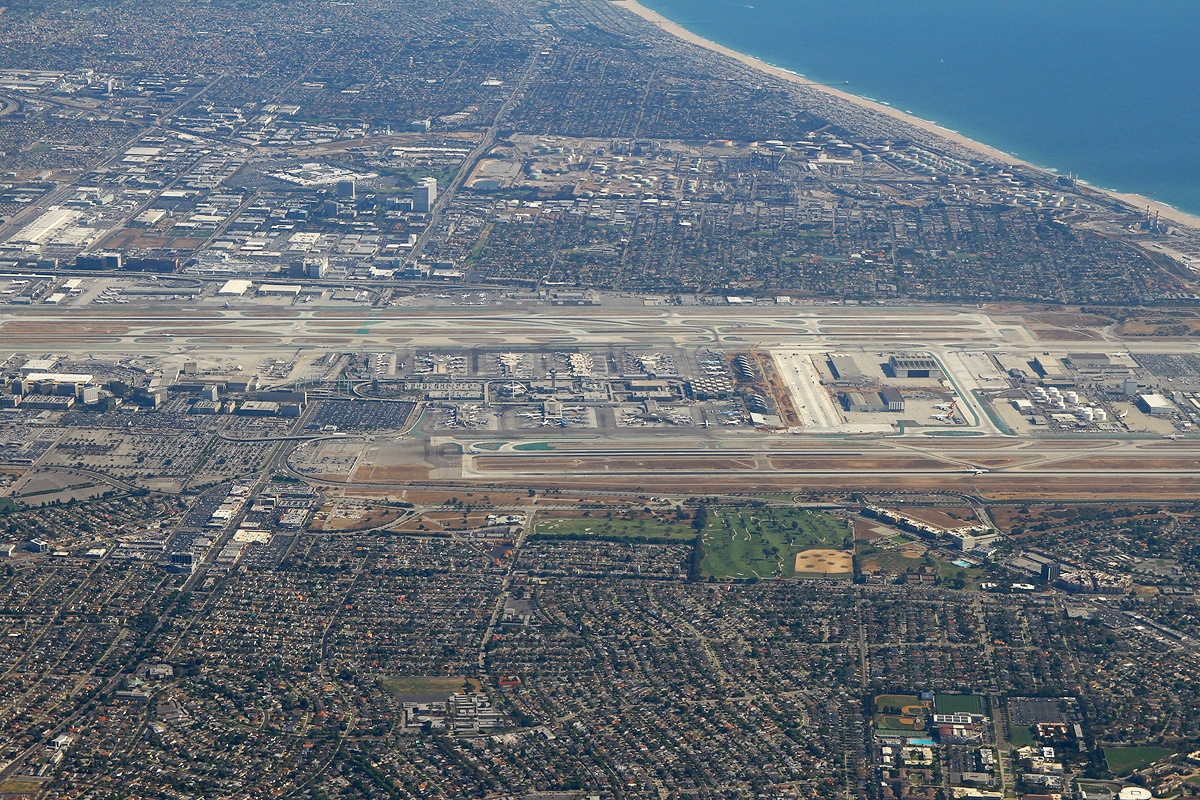
China spy arrested at LAX is the blunt search phrase attached to a case that is legally narrower and strategically more consequential than the label suggests. According to the federal complaint, FBI agents arrested Wanying Zhang, also known as “Heather,” at Los Angeles International Airport on October 4 as she attempted to depart for China. Federal prosecutors allege that the 34-year-old Irvine real estate agent acted inside the United States as an unregistered agent of the People's Republic of China. Zhang has been charged, not convicted, and is presumed innocent.
First Assistant U.S. Attorney Bill Essayli announced the arrest publicly the same day, according to the Justice Department announcement reported by the New York Post. Essayli said Zhang was expected to make her initial appearance in federal court in Los Angeles on Monday, October 5. The complaint exposes her to a statutory maximum of 10 years in prison if she is convicted, but that ceiling is not a prediction of sentence. The government must first prove the elements of the offense beyond a reasonable doubt, or obtain a knowing and voluntary guilty plea.
The allegation: surveillance that crossed an ocean
Wanying Zhang FBI complaint centers on a 2025 Seattle trip
According to the federal affidavit, Zhang traveled to Seattle in 2025 at the direction of PRC officials and surveilled a close relative of a Taiwanese government official. The affidavit alleges that she sent photographs, video and license-plate information back to those officials. Federal prosecutors further allege that she coordinated the trip with an associate, used counter-surveillance methods intended to avoid detection and never notified the U.S. attorney general that she was operating on behalf of a foreign government.
Those allegations matter because the claimed target was not a weapons laboratory, a military installation or a classified network. It was a relative. That is the signature of alleged transnational repression: political pressure is projected across borders by making families, diaspora communities and private lives feel reachable. If prosecutors can prove the affidavit's account, the operational value was not merely the collection of a plate number or an image. The value was the message implicit in the collection — that proximity to a Taiwanese official could carry consequences even on American soil.

Why an ordinary profession can be operational cover
The complaint's most unsettling implication is precisely its ordinariness. A real estate agent has legitimate reasons to travel, photograph property, record street details and note vehicles. None of those acts alone proves foreign direction. But federal prosecutors allege that direction, tasking and reporting transformed otherwise commonplace conduct into government service. Modern intelligence work often prizes access and deniability over cinematic tradecraft. A civilian with a flexible schedule and a plausible reason to be in a neighborhood can be more useful than someone who looks like an intelligence officer.
That is also why the evidence will matter so much. Prosecutors cannot rely on atmosphere, nationality or suspicious-looking travel. They must connect the defendant to the foreign principal and show that the conduct was undertaken subject to that government's direction or control without the required notification. Defense lawyers can be expected to attack translations, the meaning of messages, the identity of alleged handlers, the voluntariness of statements and whether ordinary communications are being recast as espionage. The statutory label “agent” carries emotional force; the courtroom definition has elements that must be proved.
How the unregistered-agent law works — and what it does not say
The charge described in the federal complaint is not itself a conviction for stealing classified documents. The unregistered-foreign-agent statute criminalizes acting in the United States as an agent of a foreign government without prior notification to the attorney general. In practical terms, the prosecution must establish more than sympathy for a foreign state, cultural affinity or independent advocacy. It must prove an agency relationship and covered conduct. That distinction protects both national security and lawful political expression.
The “unregistered agent China 10 years prison” formulation describes the maximum exposure associated with the charge cited by prosecutors. Actual punishment, if any, turns on the proven conduct, guideline calculations, acceptance of responsibility, criminal history, obstruction and the judge's assessment of the statutory sentencing factors. The recent Southern California cases offer useful reference points, but not a tariff.
California's emerging pattern
FBI Chinese spy California cases are producing real sentences
Justice Department records show that Yaoning “Mike” Sun, 65, of Chino Hills, received a 48-month sentence in 2025 after acting as an illegal agent of the PRC. Prosecutors described Sun as the fiancé and campaign manager of Arcadia political figure Eileen Wang. Wang later pleaded guilty in May 2026 to acting as an illegal PRC agent, according to federal court records cited in reporting on the Southern California cases. In a separate matter, DOJ records show that John Chen, 71, received a 20-month sentence for acting as an unregistered PRC agent and bribery in a scheme targeting an IRS-related Falun Gong entity.
Those numbers help calibrate the present case. A 10-year statutory maximum can dominate headlines, but Sun's four years and Chen's 20 months show how sharply outcomes can vary with conduct, evidence, plea terms and sentencing factors. Zhang's exposure cannot responsibly be projected from those sentences before prosecutors present evidence and the court resolves detention, motions and any plea negotiations. The comparison does show that these are not merely symbolic prosecutions: recent cases have ended in substantial custody.
The pattern also shows why Southern California has become a counterintelligence focus. The region combines large diaspora communities, technology and defense firms, local political networks, ports, universities and constant trans-Pacific travel. Those are strategic advantages for California and for the United States. They are also features that a foreign intelligence service might seek to exploit. The answer cannot be generalized suspicion; it has to be precise, evidence-led enforcement.
Why announce the arrest at the airport?
Bill Essayli FBI arrest announcement doubles as deterrence
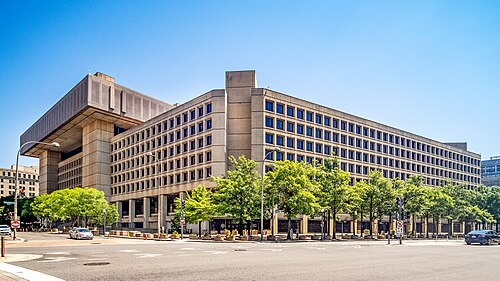
An arrest at a departure gate is tactically understandable if prosecutors believe a defendant is about to leave the country. It is also an unusually vivid piece of public signaling. Airports are border spaces: the moment when alleged clandestine work, mobility and the state's power to stop departure become visible at once. A same-day announcement by the top line prosecutor in the district magnifies that symbolism.
Washington benefits from the deterrent effect. People considering accepting covert assignments can see that a civilian profession and a commercial flight do not place them beyond scrutiny. Taiwan benefits if the case reassures officials and their families that alleged surveillance in the United States will be treated as a national-security offense rather than as private harassment. The FBI and prosecutors benefit from demonstrating that investigations can identify low-signature activity before a suspect leaves U.S. jurisdiction.
But deterrence has costs when rhetoric outruns evidence. Chinese-American communities lose when an allegation against one person is transformed into suspicion of millions. Past counterintelligence initiatives have shown how quickly nationality can become a proxy for proof, damaging careers and cooperation with law enforcement. The government should speak precisely: the complaint alleges conduct by Zhang; it does not accuse a community. Civil-liberties critics will properly insist on open proceedings, tested evidence and a defense able to challenge the government's characterization of communications and travel.
Monday's first courtroom test
Irvine realtor FBI arrested: detention will be the immediate fight
At an initial appearance, a magistrate judge typically confirms identity, advises the defendant of the charge and rights, addresses counsel and sets the next procedural dates. The immediate contest is often release. Prosecutors are likely to point to the alleged attempt to depart for China as evidence of flight risk, while the defense can emphasize community ties, employment, family, proposed travel restrictions, surrendered passports and secured bond conditions. The judge may detain Zhang, release her under strict conditions, or schedule a fuller detention hearing.
The defense will then seek the evidence behind the affidavit: messages, travel records, device extractions, surveillance, translations and any statements. Prosecutors may pursue an indictment through a grand jury rather than rely on the complaint alone. Discovery will reveal whether the case rests principally on digital communications, an associate's testimony, physical surveillance or a combination. That evidentiary mix will shape both pretrial motions and leverage.
A plea is statistically more common than a federal trial, but it is too early to assume one. If the government has direct tasking messages and corroborated reporting to PRC officials, the incentive to negotiate could be strong. If agency, intent or translation is ambiguous, the defense may see a triable gap between suspicious contact and criminal direction. Any plea would likely turn on sentencing exposure, factual admissions and cooperation; any trial would put the alleged chain of command at center stage.
What this signals for U.S.-China counterintelligence in 2026
The broader signal is that counterintelligence is moving down the hierarchy. The alleged collector need not hold a government title, and the target need not possess classified information. Family mapping, vehicle identification and pattern-of-life reporting can be useful in coercion, recruitment or future operations. The affidavit's theory, if proved, describes intelligence as an ecosystem of small tasks distributed through people whose public lives appear unremarkable.
That should sharpen enforcement without broadening prejudice. The most effective response is not a climate of fear; it is better tradecraft on the American side — stronger outreach to threatened diaspora communities, clearer reporting channels for harassment, careful financial and digital analysis, and prosecutions built tightly enough to survive adversarial testing. A case that collapses after an overheated announcement would weaken deterrence. A case proved with transparent, specific evidence would strengthen it.
The arrest therefore opens two tests. Prosecutors must prove that Zhang was directed by PRC officials and acted without notification, rather than asking the public to infer guilt from a one-way ticket and a nationality. The United States must show it can confront alleged transnational repression while protecting the communities most vulnerable both to foreign pressure and domestic suspicion. National security and due process are not rival objectives here. The legitimacy of the first depends on the rigor of the second.
Sources
- New York Post: federal complaint and DOJ arrest announcement, October 4, 2026
- U.S. Department of Justice: Yaoning Sun unregistered-agent case
- U.S. Department of Justice: John Chen sentencing and bribery case
Legal note: The allegations against Wanying Zhang come from a federal complaint and affidavit. A complaint is not proof of guilt. Zhang is presumed innocent unless and until convicted in court.