Taiwan F-16V fighter jets delivered
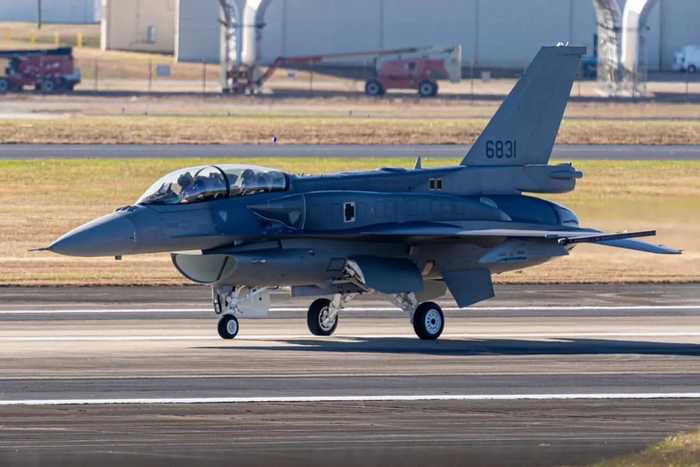
TAITUNG, Taiwan — Taiwan F-16V fighter jets delivered to Chihhang Air Base at noon on Friday, October 2, 2026, opened a new chapter in an old air war problem. The two single-seat F-16Cs, serials 6727 and 6728, are the first of 66 new-build Block 70 aircraft bought from the United States and the first factory-new fighters delivered to Taiwan in 25 years. They arrived on the island's mountainous east coast after a trans-Pacific journey through Hawaii and Guam.
The arrival is a milestone, not a transformation. Two aircraft do not erase the Republic of China Air Force's daily burden of monitoring Chinese military activity, nor do they close the gap between Taiwan's inventory and the far larger People's Liberation Army Air Force. But deliveries are where policy becomes capability. For years Taipei had an $8 billion approval, production schedules and repeated assurances. On Friday it finally had airframes on Taiwanese soil.
President Lai Ching-te called the landing an “important development in strengthening Taiwan's air defence capabilities” and thanked the United States. Defence Minister Wellington Koo said more F-16Vs would arrive before the end of the year, telling reporters, “Of course we won't only have delivered these two by year-end.” Neither official disclosed how many additional jets to expect or how quickly the first pair will be accepted into operational service.
Why this matters one week after the Trump–Xi meeting
The timing gives the Taiwan F-16 Block 70 delivery meaning beyond the runway. The aircraft arrived almost exactly one week after President Donald Trump met Chinese President Xi Jinping in Washington. That summit did not settle the Taiwan question, and the delivery was the product of a contract signed years earlier rather than a sudden White House decision. Even so, strategic signaling is often created by sequence as much as intent.
Beijing saw a U.S.-built fighter land in Taiwan days after Xi's meeting with Trump. Taipei saw evidence that the American arms pipeline still functions despite persistent doubts about Trump's willingness to absorb costs for Taiwan. Washington can plausibly say that longstanding policy has not changed. All three readings can be true at once.
The distinction between a completed delivery and a new political commitment matters. Trump said in May, after meeting Xi in Beijing, that he was holding a proposed $14 billion Taiwan package in abeyance. His administration had approved an $11 billion package in December 2025. Those decisions point in different directions: one demonstrates continued support, the other suggests that future arms may be treated as leverage in a broader U.S.-China negotiation.
That is why Friday's landing is reassuring but not conclusive. It shows that a mature contract can survive political turbulence and industrial delay. It does not answer whether the next package will move, whether munitions and sustainment will arrive on schedule, or whether Washington would maintain the pipeline during a sharper crisis.
Seven years from the 2019 U.S. arms sale to Taiwan
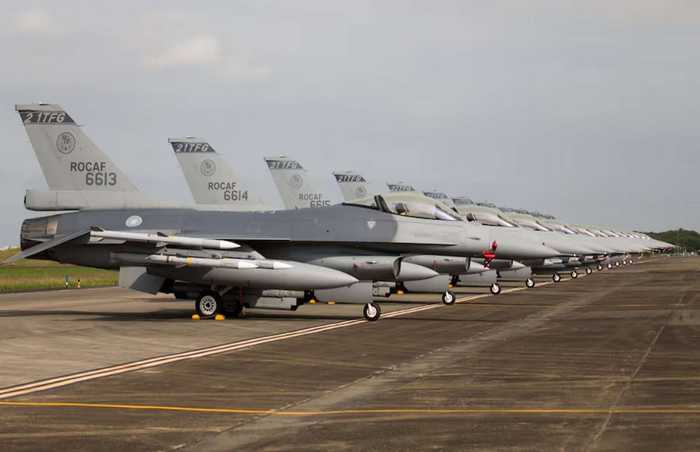
Washington approved the sale of 66 F-16V Block 70 fighters in 2019 for roughly $8 billion, known in Taiwan as the Peace Phoenix Soaring project. The aircraft were intended to expand and modernize a force already centered on F-16s, including older F-16A/B aircraft upgraded with Viper-standard avionics.
The original schedule proved optimistic. Software problems were among the issues that delayed delivery, while production-line restart, workforce constraints and supply-chain friction added pressure. Lockheed Martin had moved F-16 production to Greenville, South Carolina, creating a line that had to serve multiple foreign customers while restoring a complex fighter supply chain. Taiwan's frustration was therefore both political and industrial: an approved sale offered no immediate defense if the factory could not translate it into aircraft.
Serials 6727 and 6728 began their journey from Greenville on August 17. They reached Hawaii and then remained there for more than a month. Reporting has described an unexpected issue that prevented the planned onward flight; possible explanations circulated, including weather and tanker availability, but Taiwan did not publicly establish one definitive cause. The aircraft left Hawaii again on October 1, stopped in Guam and completed the final leg to Taitung the next day.
The Hawaii odyssey became a miniature version of the entire program: the jets were real, moving and still not delivered. That distinction matters in defense procurement, where a production milestone, a ferry flight and formal acceptance are different events. Friday ended the transit. Taiwan must now complete inspection, acceptance, integration and training before the aircraft contribute to combat readiness.
Chihhang Air Base F-16V arrival and the 25-year gap
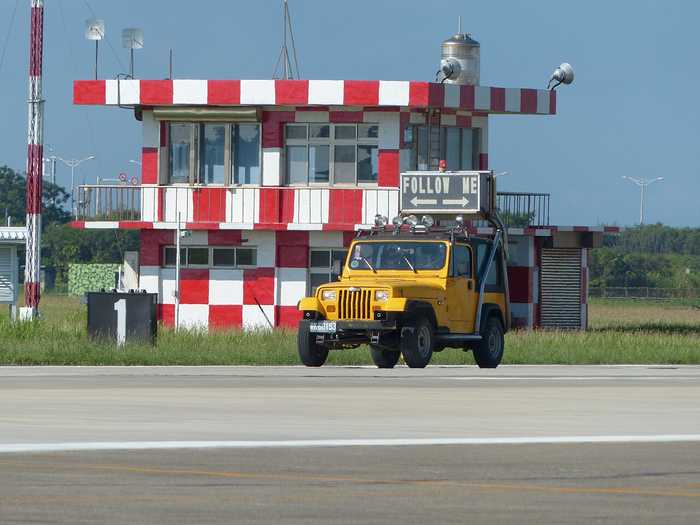
Chihhang Air Base sits near Taitung on Taiwan's southeastern coast, backed by the Central Mountain Range and associated with hardened infrastructure designed to preserve aircraft through attack. Its geography makes it a logical arrival point and a strategic reminder: Taiwan's air force is structured not only to fly, but to survive missile strikes long enough to keep flying.
The 25-year gap since the last factory-new fighter delivery is more than a ceremonial statistic. Taiwan has upgraded existing aircraft, maintained a mixed fleet and invested in indigenous systems, but airframes age even when avionics improve. New-build Block 70s add service life, modern sensors and commonality with the upgraded F-16 force. They also reduce the danger that fleet modernization becomes a sequence of life-extension projects without enough new metal.
Taiwan air force vs China: what 66 jets can and cannot do
When all 66 aircraft arrive, Taiwan's F-16 fleet is expected to exceed 200 jets. That is a substantial force for an island Taiwan's size and creates efficiencies in pilot conversion, maintenance, mission planning and weapons integration. A larger common fleet is easier to disperse and regenerate than a small collection of unrelated types.
It is not numerical parity with China. Beijing can draw on a much larger combat-aircraft inventory, extensive land-based missile forces and bases spread across the mainland. Taiwan also has to protect runways, fuel, shelters, command networks and maintenance crews. A fighter that survives the first strike but cannot refuel or receive targeting data is not a usable sortie.
The operational pressure exists before any declared war. Taiwan's air force has had to respond almost daily to Chinese military activity near the island. “Scramble” is sometimes used broadly in public discussion: not every PLA sortie produces the same Taiwanese response, and ground-based sensors or patrol aircraft may do part of the work. The underlying burden is real, however. Repeated alerts consume flying hours, maintenance capacity and pilot attention.
The F-16V's value lies in making each response more informed and more networked. The Block 70 configuration brings an advanced active electronically scanned array radar, a modern mission computer and digital cockpit, along with improved data links and structural life. Those features can increase detection, tracking and coordination. They do not make the aircraft invisible, immune to missiles or independent of tankers, bases and command networks.
Putting the $8 billion price in regional context
An $8 billion fighter purchase is enormous in procurement terms, but it is spread across years and includes more than bare airframes. It should not be compared casually with a single year's headline defense budget. Training, spares, support equipment and sustainment determine the usable cost, while weapons and base protection often sit in separate packages.
Regionally, the purchase is best understood as a bet on quality and continuity rather than scale. China can spend across fighters, missiles, ships, space systems and cyber forces. Taiwan must concentrate resources on systems that can survive, communicate and impose uncertainty. Sixty-six modern fighters serve that strategy only if paired with hardened shelters, runway repair, air defenses, dispersed logistics and enough munitions for sustained operations.
The opportunity cost is therefore central. Every dollar committed to high-end fighters is a dollar unavailable for drones, mobile missiles, mines, stockpiles or civil defense. Taiwan does not face a choice between “good” and “bad” weapons; it faces a portfolio problem under severe time pressure. The F-16V program makes sense as part of a layered defense. It would be a weak answer if treated as the whole answer.
How Beijing is likely to read the delivery
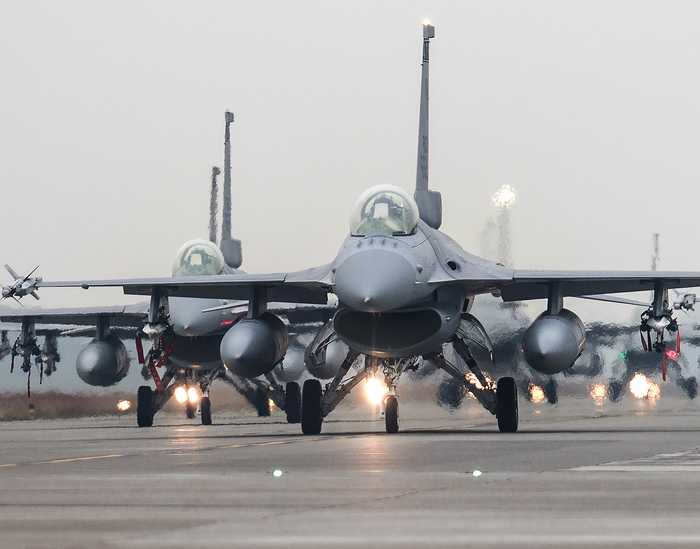
Beijing opposes U.S. arms sales to Taiwan and is likely to frame the arrival as foreign interference rather than routine contract fulfillment. The most probable immediate responses are rhetorical condemnation, diplomatic pressure and military signaling around the island. The exact scale is uncertain. China can choose a visible exercise to impose political cost, or avoid elevating two deliveries into a larger event.
From Beijing's perspective, the important number is not two but 66, and beyond that the credibility of the wider U.S. pipeline. A slow program can still alter China's planning if it reliably produces aircraft, spares and trained crews over time. Conversely, highly publicized arrivals followed by long pauses could reinforce the judgment that Western production is too slow for a fast crisis.
Escalation risk will depend less on the aircraft themselves than on the surrounding political story. If Washington announces the held-back $14 billion package soon, Beijing may treat the sequence as a deliberate post-summit rebuke. If deliveries continue quietly under an old contract, China may protest while calibrating its military response. Misreading intent remains possible in either scenario.
Lockheed Martin and the U.S. defense-industrial test
For Lockheed Martin, the Taiwan program is a test of whether a legacy fighter can remain a dependable export product at modern production tempo. The F-16 is mature, but Block 70 is not a museum aircraft: new radar, computing, software and customer-specific integration create real complexity. Mature designs can still be delayed by new code and fragile suppliers.
The broader U.S. defense-industrial lesson is uncomfortable. Arms sales are often announced as geopolitical decisions, yet their strategic effect depends on machine tools, skilled labor, component suppliers, testing capacity and software certification years later. Approval without delivery can buy diplomatic goodwill for a time; eventually it becomes evidence of a backlog.
Greenville's performance will now be measured in cadence. Two aircraft prove the route is open. They do not prove that dozens can move quickly enough to recover the schedule. Taiwan needs predictable batches, not occasional milestones, because it must build instructor capacity, maintenance pipelines and squadron readiness around actual arrival dates.
U.S. arms sale Taiwan 2026: the package problem
The contrast between the delivered 2019 contract, the $11 billion package approved in December 2025 and the $14 billion package held in abeyance since May defines Taiwan defense policy under Trump. Support has not stopped, but it appears more transactional and more exposed to summit diplomacy.
That ambiguity can be purposeful. Strategic uncertainty may make Beijing cautious if it cannot predict Washington's response. But procurement uncertainty is different: Taiwan cannot train crews or build stockpiles around a package that might remain bargaining leverage. Deterrence requires some ambiguity about wartime action and much less ambiguity about peacetime delivery.
Friday's arrival narrows one credibility gap. It leaves the package question open.
What happens next: acceptance, training and more arrivals
The first near-term step is technical acceptance. Taiwanese crews will inspect the aircraft, verify configuration, reconcile documentation and begin local test and training activity. Even experienced F-16 units need conversion work for new-build Block 70 aircraft, including maintenance procedures, simulator syllabi, mission-data preparation and weapons certification.
Koo's promise of more aircraft before year-end creates the next public benchmark. The important measure is not simply whether a third jet lands. It is whether arrivals become a repeatable stream and whether the air force can absorb them without creating a parking lot of aircraft awaiting parts, software or trained personnel.
Integration will also test Taiwan's ability to protect the force. New fighters need dispersal plans, hardened shelters, runway-repair teams, fuel and weapons positioned under threat. Exercises that demonstrate rapid turnaround and operations from alternate locations may matter as much as ceremonial delivery photographs.
The 2028 election and invasion-timing calculus
People familiar with U.S. official thinking told Reuters that an invasion before 2028 is increasingly considered unlikely. That is an assessment, not a guarantee. It may reflect China's risk calculations, U.S. intelligence judgments, Taiwan's improving defenses or Beijing's preference for coercion below the threshold of war. None of those factors removes the danger of blockade, quarantine, cyberattack or a crisis caused by accident.
Taiwan's next presidential election is due in early 2028. Elections can become focal points for Chinese pressure because campaign language, cross-strait policy and public identity are closely watched in Beijing. A delivery schedule that pushes significant capability into 2027 and 2028 therefore intersects with a political calendar, not just an industrial one.
Three broad scenarios deserve attention. In the first, deliveries accelerate, training proceeds and Beijing responds mainly with familiar military pressure; deterrence improves gradually. In the second, deliveries remain sporadic while China intensifies gray-zone operations, forcing Taiwan to spend readiness faster than it can regenerate it. In the third, a political trigger — a new arms package, an election statement or a maritime confrontation — produces a larger exercise or blockade rehearsal that tests whether the new aircraft can disperse and operate under pressure.
The least dramatic scenario is also the most strategically useful: batches arrive, crews train, bases harden and the program becomes routine. Deterrence is often built through boring repetition. The danger is that politics rewards the first landing while readiness depends on the fiftieth.
The meaning of two jets
Taipei is entitled to relief. After seven years, software delays and a month-long pause in Hawaii, its first new Block 70s are home. Washington can point to a concrete delivery. Lockheed Martin can point to an aircraft crossing the Pacific rather than another production forecast.
Beijing will also notice the limits. Two jets do not alter the regional balance, and a 66-aircraft order delivered slowly can be planned around. The strategic question is whether Friday was an exception or the beginning of cadence.
That makes the landing a test with three audiences. Taiwan's public needs proof that money spent becomes usable defense. The United States needs proof that its industrial promises survive presidential bargaining. China needs uncertainty about whether coercion can outrun Taiwan's modernization. Serials 6727 and 6728 provide the opening evidence. The rest of the fleet will decide the verdict.
Sources
- Reuters, October 2, 2026 — arrival, official statements, the 2019 sale and the Trump administration's Taiwan packages.
- The War Zone, October 2, 2026 — serial numbers, the 25-year delivery gap, Hawaii transit and integration phase.
- Weng Global, October 2, 2026 — program scope, delivery route and fleet expansion context.
Reporting cutoff: October 3, 2026 at 3:45 a.m. PDT. The number of aircraft expected before year-end was not disclosed. Assessments about signaling, deterrence and escalation scenarios are Signal Post News analysis, not statements of confirmed government intent.