Iraq militia disarmament deadline 2027
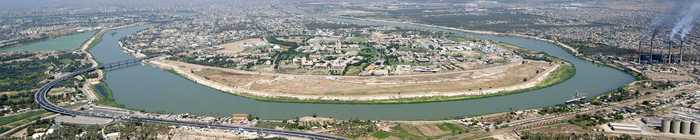
Baghdad has reset the clock on the most dangerous question in Iraqi politics. The Iraq militia disarmament deadline 2027 — announced Thursday by Prime Minister Ali al-Zaidi — gives the country's armed factions, including powerful Iran-backed militias, until June 30, 2027 to surrender their weapons or place themselves under state control. The announcement landed on what al-Zaidi called a “historic day”: the formal end of the U.S.-led coalition's anti-ISIS mission and the departure of the last American troops from Erbil, which the premier described as the “complete and definitive withdrawal” of foreign forces from Iraqi soil.
The roadmap comes in two phases. First, a 90-day ceasefire: the armed groups halt their attacks, and U.S. forces refrain from striking them. Then, the progressive surrender of weapons or the integration of the factions under state control — to conclude no later than June 30, 2027. It is the most explicit disarmament ultimatum any Iraqi government has ever issued. It is also, on the evidence of the first 48 hours, an ultimatum the most powerful militias have no intention of obeying.
Why this matters
The first deadline backed by full sovereignty
Every previous disarmament promise in Iraq has been issued in the shadow of foreign troops. This one is different: for the first time, a Baghdad government is demanding the militias disarm at the exact moment there are no American forces left in the country to serve as either excuse or shield. The twin justifications the factions have leaned on for a decade — resisting foreign occupation and fighting the Islamic State — both expired in the same week. What remains is the raw question this deadline forces into the open: is Iraq a state that happens to have militias, or a militia system that happens to have a state?
A signal the whole region will read
The announcement lands in the middle of the war between the United States and Iran, a conflict that has repeatedly spilled onto Iraqi soil. How Baghdad handles the next nine months will be read in Tehran as a measure of Iranian leverage, in Washington as a test of whether the orderly U.S. exit actually bought stability, and in Riyadh and Ankara as a preview of what a post-American Iraq looks like. The deadline is domestic policy with foreign-policy blast radius.
How we got here: the September 30 deadline that wasn't
The June 2027 date is a replacement, not a first attempt. Back in June, Baghdad set September 30 as the deadline for disarmament, deliberately tying it to the coalition's departure. The reasoning was elegant: once the Americans left, the militias' claim to be a “resistance” would collapse, and disarmament would follow as a matter of logic.
September 30 came and went. The coalition left on schedule; the militias stayed. According to a U.S. government report released this summer, only two prominent factions had agreed to surrender their weapons by the original deadline. The rest simply waited it out.
They waited it out during a shooting war. After the war with Iran began, Iran-aligned militias launched hundreds of attacks on U.S. forces and diplomatic facilities in Iraq, according to the Defense Intelligence Agency. Between February and April alone, more than 600 militia attacks drew repeated CENTCOM strikes on militia targets. When attacks resumed afterward — including strikes touching Saudi energy infrastructure — Saudi Arabia joined U.S. airstrikes on July 30. Iraq was not a bystander to the U.S.-Iran war; it was one of its battlefields.
Against that backdrop, October 1 was choreographed as a turning point. The coalition's anti-ISIS mission formally ended. The last American troops left Erbil — the base that had served as the main operational hub for the counter-ISIS mission and hosted most of the roughly 1,500 American and coalition personnel in the country. Italy had already completed its own pullout, ending a 12-year presence. And on the sidelines of the UN General Assembly, al-Zaidi met Turkey's Recep Tayyip Erdogan, with the two agreeing that Turkey would gradually hand over a key military base in northern Iraq — while the long-stalled unification of the Kurdish Peshmerga advanced in parallel. The disarmament deadline is one plank of a wider sovereignty project.
The plan on paper
Phase one: the Iraq 90-day ceasefire for militias
The opening move is a truce, not a surrender. For 90 days, the armed groups are to halt their attacks — and U.S. forces are to refrain from striking them. The symmetry is deliberate: each side's restraint is priced against the other's. For Washington, the incentive is an orderly end to the mission without a final round of casualties. For the militias, it is 90 days without American airpower overhead — and a seat at the table for what comes next.
Phase two: surrender or integration by June 30, 2027
After the ceasefire, the factions are to progressively surrender their weapons or be integrated under state control, with the process concluding no later than June 30, 2027. “Integration” is doing heavy lifting in that sentence: folded into formal state structures, the factions would keep their men, their salaries and much of their identity while surrendering operational independence. It is disarmament by absorption — the same playbook Baghdad has used before, and the outcome Tehran can most easily live with.
The constitutional argument
Al-Zaidi framed the plan in constitutional language: decisions of war and peace belong to Iraq's constitutional authorities, and military action outside that framework is prohibited. That sentence is aimed squarely at the militias' core claim — that their rockets are legitimate “resistance” rather than insubordination. Baghdad is not just asking for the guns; it is asserting a monopoly on the decision to use them.
The refusals
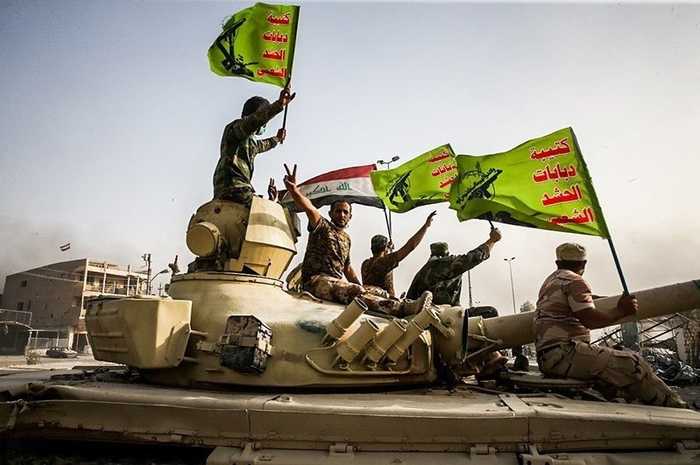
The ink was barely dry before the answer came back: no.
Kataib Hezbollah disarmament refusal
Jaafar Husseini, the military spokesman of Kataib Hezbollah — the most powerful of the Iran-aligned factions — said its fighters are “not bound by any timetable or agreement mentioned by the government.” It was not a rejection of one date; it was a rejection of Baghdad's authority to set dates at all.
Fresh negotiations, not deadlines
The group's leader, Ahmad al-Hamidawi, went further: he said no conclusion had been reached with the premier and demanded fresh negotiations — effectively demoting the prime minister's ultimatum to an opening bid.
The Islamic Resistance in Iraq timeline — rejected
The Islamic Resistance in Iraq, the umbrella grouping of Iran-aligned factions, declared it was not bound by any government timeline either. And in a telling aside, an adviser to the premier has been quoted in regional coverage suggesting there was never a fixed deadline at all — which, if accurate, would make June 30, 2027 less a deadline than an aspiration with a date stamped on it.
Read together, the refusals describe a parallel military authority that does not recognize the prime minister's writ. Baghdad's constitutional framing says war and peace belong to the state; the factions' response says the state does not get to decide that unilaterally. That contradiction is the entire crisis in miniature.
What the numbers say
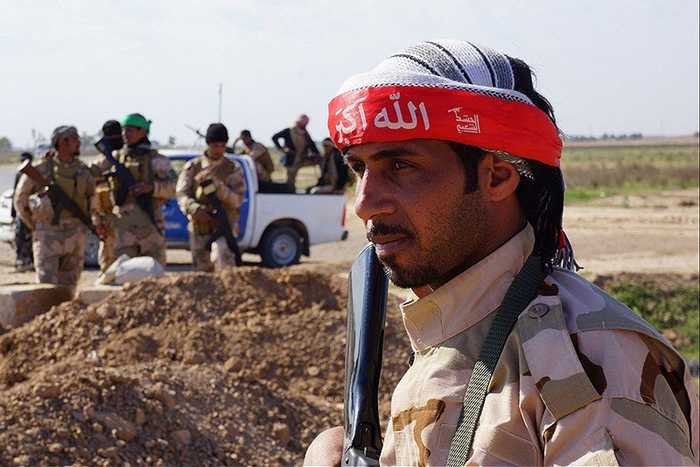
The figures attached to this story are more revealing than the deadline itself.
600+ attacks, February to April. That is the demonstrated tempo of the militia campaign earlier this year — the rate at which the factions can turn violence on and off at will. The 90-day ceasefire's first and only real test is whether that tap stays off. If attacks continue through the truce, the rest of the roadmap is fiction.
Hundreds of attacks since the Iran war began (DIA). The Defense Intelligence Agency's count of Iran-aligned militia attacks on U.S. forces and diplomatic facilities underscores that this is not a theoretical arsenal — it is a weapons system in active use, in an ongoing war.
Two factions agreed. Of all the armed groups in Iraq, only two prominent factions had agreed to surrender weapons by the original September 30 deadline, according to the U.S. government report. The compliance rate among the powerful is effectively zero — which is why the new deadline's credibility rests entirely on whether Baghdad has leverage now that it did not have in June.
Rockets, missiles, drones — and in some cases air-defense systems. U.S. military officials say the holdout factions retain exactly the weapons that can threaten American personnel and facilities. This is the crucial data point: disarmament here does not mean collecting rifles. It means dismantling a strategic arsenal — the same arsenal that buys the factions their seat at every table in Baghdad. No group surrenders its leverage voluntarily; the numbers explain the refusals better than the rhetoric does.
90 days, then nine months. The shape of the timeline is itself an admission. A 90-day freeze followed by a long, “progressive” implementation phase is not the schedule of a government preparing confrontation — it is the schedule of a government buying time to negotiate faction by faction. The deadline's architecture tells you the strategy: stop the shooting first, bargain later, and hope the bargaining outruns the calendar.
Who benefits, who loses
If it works: Baghdad, and the idea of Iraq
The winners would start with al-Zaidi himself, who would achieve what no predecessor managed: a state monopoly on force. Beyond him, the beneficiary is the constitutional order — an Iraq where war and peace are decided in parliament and the prime minister's office rather than in militia headquarters. The U.S. exit logic benefits too: an orderly withdrawal that ends with disarmament looks like strategy rather than retreat.
If it works: Iran loses leverage
The quiet loser in the success scenario is Tehran. Iran's influence in Iraq runs substantially through these factions; a genuine disarmament — or even a genuine absorption that breaks their independent command chains — would be the largest single reduction of Iranian leverage in Iraq in two decades. That is precisely why the factions' defiance and Tehran's interests point in the same direction.
The skeptics' case
Critics note the obvious: September 30 also came with a deadline, and it passed without consequence. Nothing in the new announcement describes an enforcement mechanism that did not exist then — no penalties, no seizure authority, no deadline-day consequences. Add the adviser's “never a fixed deadline” aside, and the skeptic's reading is straightforward: June 30, 2027 is a date chosen to sound serious while the serious work — compelling compliance — remains unattempted. And ordinary Iraqis, as ever, hold the downside risk: if the standoff curdles into escalation, it is their neighborhoods that absorb it.
What happens next: three scenarios
1. Quiet integration
The ceasefire holds. Faction by faction, commanders cut deals: weapons registered, fighters folded into formal Popular Mobilization Forces structures, payrolls regularized, independence quietly traded for status. The June 2027 deadline is met on paper and fudged in practice — the militias persist as institutions but lose the ability to act as independent armies. This is Baghdad's hoped-for outcome, and it has precedent: absorption has always been Iraq's preferred alternative to confrontation.
2. The long standoff
Kataib Hezbollah and the Islamic Resistance in Iraq simply ignore June 2027 as they ignored September 2026. Baghdad, lacking the means — or the will — to compel compliance, lets the date pass and sets another. The deadline becomes advisory, the sovereignty gap becomes permanent, and Iraq settles into the worst of both worlds: a government that claims a monopoly on force it does not possess, and militias that exercise force without claiming the responsibility. The parallel tracks — the Turkish base handover, Peshmerga unification — advance, making the militia question the conspicuous exception to the sovereignty story.
3. Escalation — and the Washington factor
Attacks resume during or after the ceasefire; the U.S., now headquartered in Jordan and continuing counter-ISIS operations in Syria alongside coalition partners, answers with strikes on militia targets — as CENTCOM did repeatedly earlier this year. Here the Trump-administration variable matters: Washington will read compliance with the June 2027 timeline as a test of Baghdad's word, and this White House has shown little patience for half-measures in the region. A failed deadline would not just embarrass al-Zaidi; it would invite the kind of direct pressure — economic, military, or both — that makes the current standoff look gentle.
The honest assessment is that all three scenarios share the same hinge: the 90 days. If the guns stay silent through the ceasefire, scenario one becomes plausible. If they don't, scenarios two and three are already underway — and the only question is which one Baghdad chooses to call it.
The bottom line
Ali al-Zaidi has done something no Iraqi prime minister has done: paired a hard disarmament date with genuine, complete sovereignty — no foreign troops left to blame, no occupation to resist, no ISIS to fight. The logic is impeccable. The problem is that the logic was also impeccable on September 30, and the militias ignored it then too. June 30, 2027 will be decided not by the elegance of Baghdad's roadmap but by a cruder question: what happens to the first faction that says no. Until Baghdad can answer that, the deadline is a statement of intent wearing the costume of an ultimatum — and Kataib Hezbollah, at least, can see the costume.
Sources
- Fox News: US faces major Middle East troop withdrawal, threat remains — citing a U.S. government report, U.S. military officials and the Defense Intelligence Agency
- Foundation for Defense of Democracies: Iraq Agrees to Turkish Base Deal as Militia Disarmament Timeline Debated — analysis citing the New York Times and Arab Weekly
- Demócrata: Iraq extends the deadline to disarm the militias, including pro-Iranian factions, until 2027 — citing the statement from the prime minister's office
- Zark News: Iraq militia disarmament deadline June 2027
Related coverage
Reporting draws on the October 1, 2026 statement from the office of Iraqi Prime Minister Ali al-Zaidi and coverage from Fox News, the Foundation for Defense of Democracies, Demócrata and Zark News. Claims by governments and armed groups are attributed to their speakers; figures on militia attacks are drawn from U.S. government and Defense Intelligence Agency reporting cited above.