US forces exit Iraq
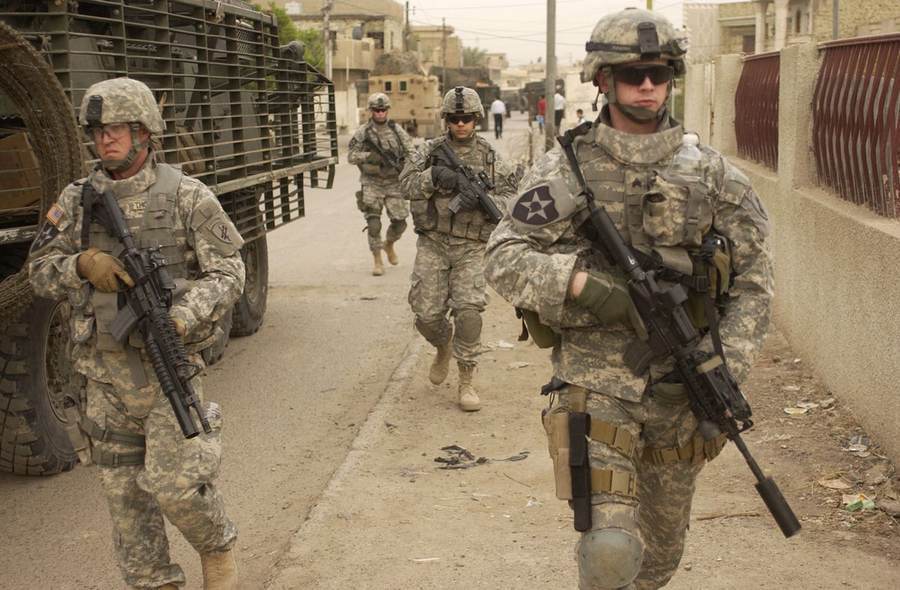
BAGHDAD — US forces are set to pull out of their last bases in Iraq by Wednesday, ending a military presence that began with the 2003 invasion and closing the final chapter of America’s post-9/11 ground wars in the country. The departure — agreed in 2024 under President Joe Biden and carried out by Donald Trump’s administration even as it wages war against Iran — is being celebrated as a victory by Tehran and its allies, who now stand as the deepest foreign influence in the country where 4,500 Americans died over more than two decades of war.
The announcement came in layers. Iraqi Foreign Minister Fawad Hussein said on Monday that American forces had withdrawn from Iraqi territory under the Baghdad-Washington agreement, two days ahead of the previously scheduled September 30 deadline. Iraqi security spokesman Saad Maan told Al Jazeera that the US-led coalition had handed over all of its military bases and command posts to Iraqi authorities, that no foreign combat or training units of the coalition remained in the country, and that coalition operations would finally cease after September 30. The handover of the last facilities in northern Iraq — the Erbil-area infrastructure that remained the coalition’s final center of presence — marked the end of the agreements reached in 2024 on winding the mission down.
What was announced
The sequence matters, because each announcement closed a door behind it. In August, the Associated Press reported that the US military was on track to withdraw all of its forces from Iraq by the end of September. Iraqi Prime Minister Ali al-Zaidi affirmed September 30 as the “fixed and final date for ending the military mission of the Global Coalition to Defeat ISIS in Iraq and completing the departure of its forces.” A US official confirmed to AP that Washington expected to complete the pullout by September 30, while declining to say how many troops remained or where they would be redeployed.
On September 23, the US State Department said Washington remained on course to finish the withdrawal by September 30 as part of the agreed transition away from Operation Inherent Resolve, the international campaign against the Islamic State group. Hundreds of US troops were still in northern Iraq as the deadline approached; US officials said most would be redeployed to Jordan and other countries in the region, with military equipment — including air defense systems — removed as well. A “normal bilateral security cooperation” agreement could then be negotiated with the central government in Baghdad, though officials say it remains unclear what form that would take.
President Trump, standing alongside al-Zaidi at the White House in July, put it bluntly: “we don’t think we need the military there anymore.” Speaking through an interpreter, al-Zaidi said US forces would be out of Iraq by September 30 — “while US companies will be inside Iraq.”
Why this matters
Strip away the ceremony and three things are happening at once. First, the United States is ending its last military footprint in a country where it fought for 23 years, spent trillions, and lost 4,500 service members — at the precise moment it is waging a war against Iran, the power most likely to benefit from the departure. That is the paradox of this withdrawal: Trump is pulling the tripwire out of the country closest to the enemy he is fighting.
Second, the departure removes the one thing that has, for years, acted as a counterweight to Tehran’s influence in Iraq. “Iran stands to benefit strategically from the coalition’s departure because it removes a military presence that for years acted as a counterweight to Tehran’s influence in Iraq,” Iraqi security analyst Jasim al-Bahadli, who studies the armed Shi’ite groups aligned with Iran, told Reuters. The militias themselves are not shy about saying so. Abu Mojtaba al-Yasiri, a commander in the Islamic Resistance in Iraq, an umbrella group of Iran-backed armed factions, described the withdrawal as “a historic victory for the Iraqi Islamic resistance groups and honorable Iraqis, and a crushing defeat for the American project.” “On September 30, we will celebrate the turning of a black page in Iraq’s history,” he said.
Third, the withdrawal detonates a domestic Iraqi question that Baghdad can no longer postpone: the weapons. The Iraqi government has linked the US departure to an ultimatum for non-state armed groups to lay down their arms — and most have signaled they have no plans to do so. The militias that once justified their arsenals as resistance to the American occupation now face a government demanding a monopoly on force, and their answer, so far, is no. That standoff will define Iraqi politics for years.
How we got here
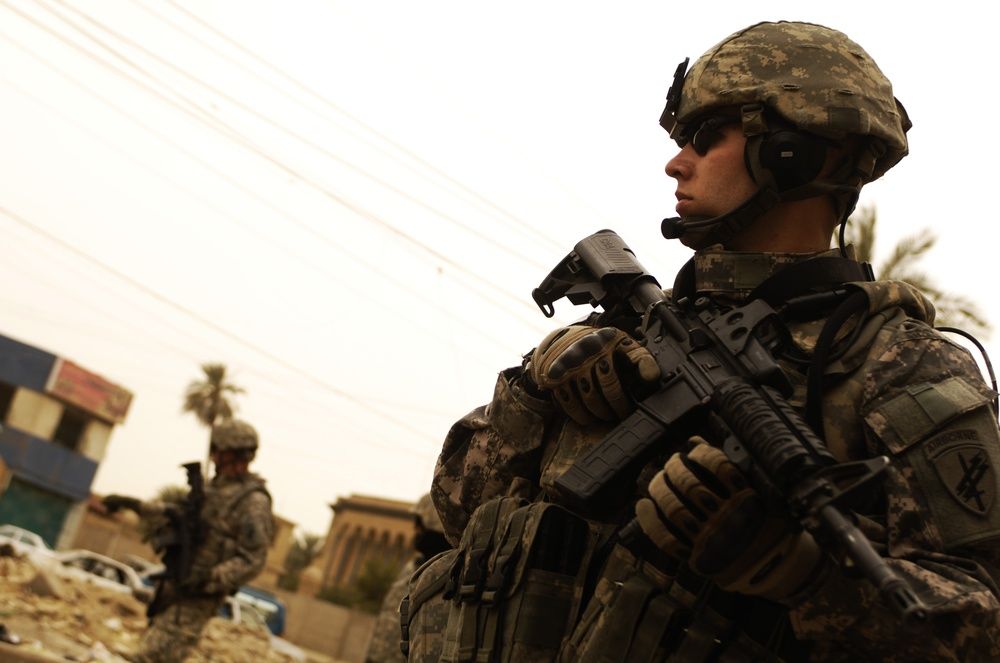
The American story in Iraq runs in three acts. The first began in March 2003, when the United States invaded to topple Saddam Hussein on what turned out to be faulty claims that he had secretly stashed weapons of mass destruction — weapons that never materialized. The “shock and awe” bombing campaign gave way to an occupation that, at its 2007 peak, held more than 170,000 American troops. The first act ended in December 2011, when the last combat troops left.
The second act began three years later. In 2014, with the Islamic State rampaging across Iraq and seizing vast territory, Baghdad invited a smaller US-led mission back — this time as the core of the Global Coalition to Defeat ISIS. Iraq declared in December 2017 that it had retaken all of its territory from the group, and in 2021 the coalition formally ended its combat mission, shifting to an advisory role. ISIS was reduced to scattered sleeper cells — a result, it should be said, of both the US-led coalition and the Iran-backed militias that fought the group on the ground.
The third act — this one — was written in 2024, when Washington and Baghdad agreed to wind the mission down in two phases: most areas last year, the semi-autonomous northern Kurdish region this year. Bases in the north have regularly come under attack since the United States and Israel launched their war on Iran on February 28, 2026, turning the remaining American positions into targets rather than assets. A US military official told AP that the counterterrorism base in Erbil had lost its importance with the Islamic State threat receding — and that pulling troops out “will reduce our risk,” since US forces in northern Iraq had increasingly been targeted by Iran and Iran-aligned Iraqi militias. September 30, 2026, is the fixed and final date of that agreement. October 1 begins whatever comes next.

The numbers, in context
23 years. From the March 2003 invasion to September 30, 2026 — longer than the US involvement in Vietnam, and nearly as long as the war in Afghanistan. An Iraqi who was ten when American tanks rolled into Baghdad is now in their thirties. The entire adult political life of Iraq’s current leadership has unfolded with American troops somewhere in the country.
170,000 to a few hundred. The surge-era peak of more than 170,000 US troops in 2007 is the scale against which to measure the few hundred who remain in northern Iraq — a presence that was already, in practical terms, an advisory and air-defense mission, not a fighting force. The withdrawal’s military significance is smaller than its symbolic weight. But symbolism is the currency of the region.
4,500. The American dead across more than two decades of Iraq war — a number that gives the departure its gravity in Washington, where every president since George W. Bush has promised to end the “forever wars” and every one has left troops behind. Trump is the first to actually close the last base.
$107. The price of Brent crude per barrel this week, up more than 1.5% on concerns over Middle East energy supply disruption driven by the US-Iran conflict. Iraq’s government funds itself on oil; the withdrawal happens against an economy simultaneously enriched and destabilized by the same war that is reshaping the region around it.
Who wins, who loses — and what the critics say
Iran and its allied militias win the narrative outright — they are already celebrating — and quite possibly the substance. The US departure removes the obstacle the militias cited for years to justify their arms, and hands them a story of victory they will convert into political capital in Baghdad. Tehran’s strategic depth in Iraq, built over two decades, no longer has an American counterweight sitting on top of it.
Baghdad’s government wins sovereignty and inherits risk. The militias’ justification is gone, which strengthens the government’s hand in demanding disarmament — in theory. In practice, as analyst Sajad Jiyad put it at an Atlantic Council panel: “There will be no disarming of any groups by the 30th of September. I think that’s probably clear to anybody who watches Iraqi politics.” The weapons stay; only the excuse changes.
The Kurds may be the quietest losers. The US presence in Erbil was a security guarantee the Kurdistan Region counted on, and American positions there absorbed attacks that might otherwise have landed on Kurdish forces. With the troops redeployed to Jordan and the region, Erbil stands more exposed — to Baghdad’s pressure, to militia harassment, and to the unresolved question of who controls disputed territory.
The United States wins force protection and loses leverage. Pulling troops out of range of Iranian and militia attacks “will reduce our risk,” as the US military official said — a real and legitimate gain when bases were being struck regularly. But Washington is also concerned, per the same officials, about the militias’ ability to keep launching attacks on targets elsewhere in the region — Saudi Arabia, Jordan, Israel — and about the presence of Houthi rebel forces in Iraq. Leaving does not end the threat; it ends the proximity to it.
The critics will say what was said in 2011: that the vacuum will be filled by the worst actors available. The honest counter is that the 2011 parallel is imperfect — this withdrawal is negotiated, phased, and leaves behind a bilateral security relationship (intelligence sharing, equipment programs, Baghdad’s planned air-defense purchases from South Korea, Turkey and the United States) rather than a slammed door. The more precise worry is not ISIS’s sleeper cells, which Iraqi and Kurdish forces have contained before, but the militias: an armed, Iran-linked political ecosystem that no longer needs the Americans as its reason to exist, and must now find a new one.
What happens next
Four things to watch. First, the militia disarmament standoff: the government has tied the withdrawal to its demand that all weapons come under state control, but the mechanism and timing remain subjects of political negotiation. The militias’ refusal sets up the defining Iraqi political fight of the next year — whether sovereignty means the state’s monopoly on force, or merely the absence of foreigners.
Second, the shape of the new bilateral relationship. Baghdad describes the end of the coalition mission as a transition toward a new phase, not the end of cooperation: intelligence sharing, security coordination, weapons programs. Whether that becomes a durable partnership or a polite fiction depends on the first crisis that tests it.
Third, the regional chessboard. With US forces redistributed to Jordan and elsewhere rather than eliminated, Washington’s footprint is shifting, not vanishing. But Tehran will read the map its own way — and so will Riyadh, Jerusalem and Amman, all watching whether Iraq becomes a freer hand for Iranian power projection at the exact moment the US-Iran war is redrawing the region’s lines.
Fourth, the precedent. If a future crisis — an ISIS resurgence, a militia power grab, a Kurdish-Baghdad confrontation — forces an American return, the 2014 invitation will be the template and the 2026 departure the warning: that in Iraq, leaving is a decision you may have to make twice. For now, though, the black page has turned. What is written on the next one is up to Iraq.
Sources
- Reuters: US forces exit Iraq after two decades, leaving opening for Iran
- Associated Press (via SRN News): Officials say US forces on track to complete Iraq pullout by Sept. 30
- Associated Press: As last US troops leave Iraq, militias signal their weapons will stay