US troops leave Iraq
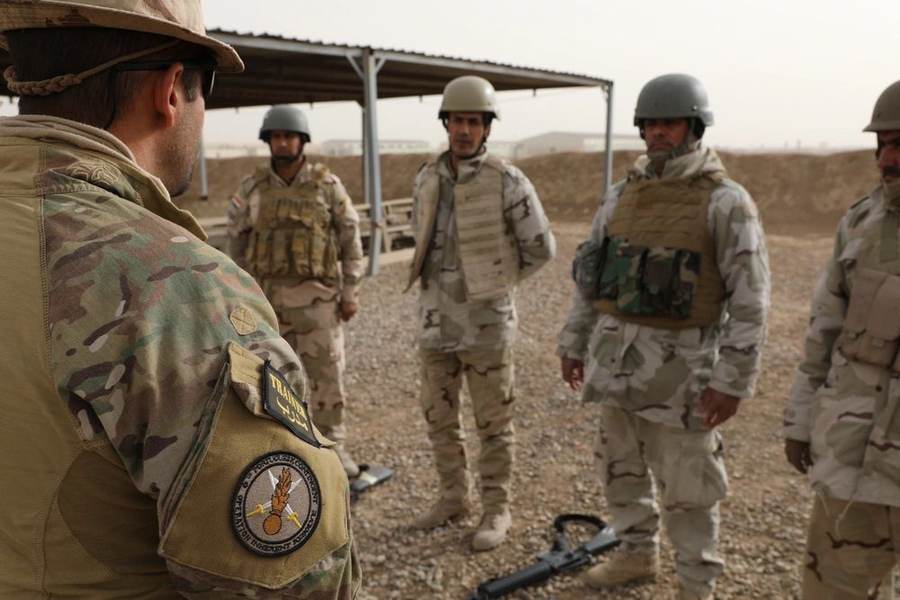
US troops leave Iraq after the final American service members and equipment departed Erbil Air Base on Wednesday, September 30, completing a withdrawal negotiated two years earlier and ending the U.S.-led coalition’s formal mission inside the country. The Pentagon described an orderly transfer. Baghdad described a sovereign milestone. Iran-aligned armed groups claimed a victory.
All three descriptions capture a piece of the same event, but none answers the question that now matters: whether Iraq can keep Islamic State contained, protect the Kurdistan region and bring militias under state authority without the military backstop that shaped its security system for more than a decade.
Pentagon spokesperson Sean Parnell said the departure marked the transition from a wartime coalition campaign to an Iraqi-led security effort supported by a more conventional bilateral relationship. U.S. training and intelligence assistance can continue, but American troops will no longer be stationed in Iraq to provide it.
The last departure from Erbil
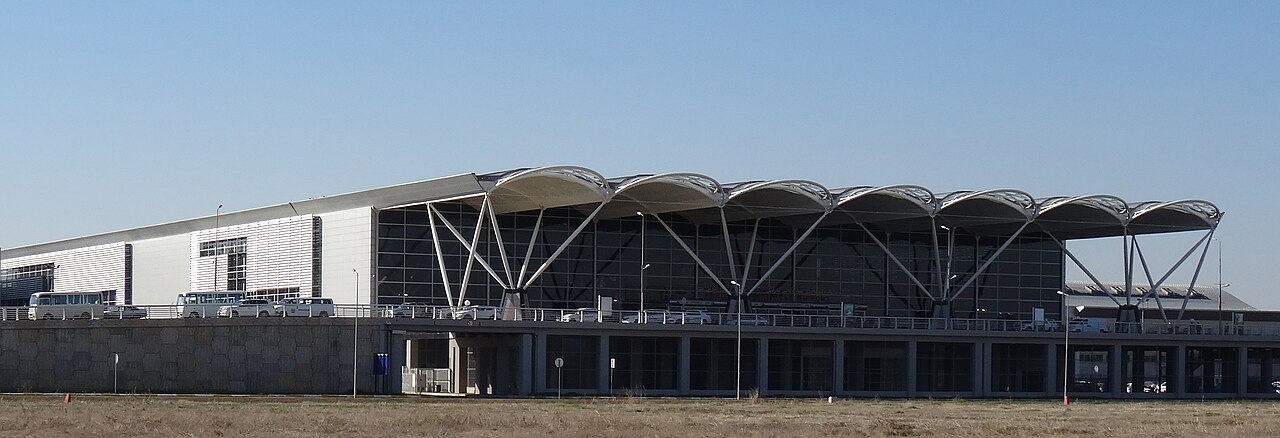
The withdrawal’s final stage centered on Erbil, the capital of Iraq’s semi-autonomous Kurdistan region. Hundreds of U.S. personnel had remained there after earlier drawdowns elsewhere in the country. Their departure closes the last fixed American military position in Iraq and transfers the installation and its responsibilities to Iraqi and Kurdish authorities.
Iraqi Prime Minister Ali al-Zaidi presided over the handover and said the country was entering “a new phase, one defined by Iraq’s sovereignty, the strength of its institutions, the readiness of its forces, the unity of its decision-making, and balanced partnerships based on mutual respect.” Baghdad said October 1 would begin with no foreign military presence on Iraqi soil.
The Pentagon framed the same moment around mission completion. Parnell said the milestone reflected a campaign that defeated ISIS as an organized military threat in Iraq and across the region. The careful wording matters. It does not say Islamic State has disappeared; it says the group no longer holds the military structure and territory that allowed it to declare a caliphate in 2014.
Why this matters
The end of a deployment is not the end of the forces that deployment restrained. Iraq now has clearer formal sovereignty, but less direct access to U.S. air defense, logistics, intelligence and command infrastructure. The withdrawal therefore removes a political grievance and a military insurance policy at the same time.
That trade-off is sharpest in the Kurdistan region. Kurdish officials had warned that the removal of Patriot and C-RAM defenses would leave Erbil more exposed during the wider U.S.-Iran conflict. The Peshmerga Ministry says the region has faced more than 1,000 drone and missile attacks during that confrontation. Those figures have not been independently verified, but the strategic problem is plain: a base can attract attacks while the defenses around it protect more than the base itself.
The timing also complicates the idea of a quiet postwar transition. The United States and Israel launched their war against Iran on February 28, 2026. Iran-backed factions subsequently struck U.S. positions, and Washington attacked militia strongholds. A drawdown designed in 2024 is now concluding in a more dangerous regional environment than the one in which it was negotiated.
How the mission changed from invasion to advisory war
The American military presence in Iraq began with the March 2003 invasion that removed Saddam Hussein. U.S. troop levels reached about 170,000 during the 2007 surge. President Barack Obama withdrew the remaining forces in 2011, only for the United States to return three years later after Islamic State seized Mosul and large areas of Iraq and Syria.
Operation Inherent Resolve was built around a different premise from the occupation that preceded it. American and coalition forces supplied air power, intelligence, training and advice while Iraqi forces and Kurdish Peshmerga carried most of the ground fight. More than 250,000 local personnel were trained or advised over the campaign. Iraq declared territorial victory over ISIS in 2017, though cells continued to conduct attacks.
The final exit follows the phased withdrawal agreement announced in 2024 during the Biden administration and executed under the Trump administration. Coalition partners had already been leaving: Poland drew down in March 2026, Germany in August, and Italy completed its 12-year Iraq withdrawal on September 29. The task-force headquarters shifted to Jordan, while coalition operations in Syria continue.
The numbers behind the exit
About 2,500 troops. That was the size of the U.S. force before the final phase. It was a fraction of the surge-era peak but large enough to support intelligence, protection, training and coordination functions that Iraqi institutions must now replace or receive from outside the country.
Roughly 4,500 American deaths. The human cost of the Iraq war was about twice the U.S. military death toll in Afghanistan. The comparison does not include Iraqi civilian and military losses, which were far larger and remain central to how Iraqis judge the full 23-year arc.
June 30, 2027. Baghdad has pushed its deadline for militia disarmament to that date. The extension reveals the gap between state sovereignty as a diplomatic achievement and state monopoly on force as a domestic reality. Foreign soldiers can leave on schedule; armed factions answer to a more contested timetable.
Zero permanent U.S. troops in Iraq. That is the formal result. It does not mean zero American security involvement. Washington says targeted training and intelligence support will continue, and U.S. regional surveillance and strike capabilities remain available beyond Iraq’s borders.
Who wins, who loses
Baghdad wins the argument over sovereignty
Iraq’s government can now say that a negotiated timetable was honored and that foreign forces left without a collapse in state authority. That strengthens Baghdad’s standing with voters who saw the U.S. presence as an occupation or as an infringement on Iraqi decision-making. It also removes the central public justification many militias used to preserve armed wings outside the state.
Iran-aligned militias gain a victory narrative
As’hab al-Kahf congratulated Iraqis on what it called the “humiliating withdrawal of the American occupier under the strikes of the Resistance’s drones and missiles.” Abu Mojtaba al-Yasiri of the Islamic Resistance in Iraq separately called the exit a historic victory and a crushing defeat for the American project. Those claims overstate the role of militia pressure in a withdrawal set by a 2024 agreement, but narratives can produce political power even when they simplify cause and effect.
The paradox is that militias lose their most useful rationale while gaining their most useful symbol. With foreign troops gone, Baghdad can argue that weapons outside state control no longer serve a resistance purpose. Armed groups can answer that those weapons forced the departure. The unresolved contest will shape whether sovereignty becomes institutional power or merely ceremony.
Kurdistan loses an immediate security guarantee
For Kurdish leaders, the withdrawal carries the clearest downside. U.S. troops were both a partner against ISIS and a visible signal that attacks on the region could draw a wider response. That signal is now weaker. Erbil will have to rely more heavily on coordination with Baghdad, its own forces and whatever remote support Washington supplies.
Washington reduces exposure and gives up leverage
The United States removes personnel from the range of Iranian missiles and militia drones, a substantial gain during an active regional war. It also loses the influence that comes from being physically embedded with partner forces. Intelligence support delivered from elsewhere can help identify threats; it cannot reproduce every relationship, judgment or response time built through daily presence.
What happens next: three tests
1. Can Iraqi forces suppress an ISIS resurgence?
U.S. Central Command says ISIS no longer presents a systemic military threat. The phrase sets the right benchmark: the immediate question is not whether scattered attacks cease, but whether militants can rebuild finance, command, recruitment and territorial control. Iraqi forces have years of combat experience. The risk lies in intelligence gaps and political fragmentation more than in a return of the 2014 battlefield overnight.
2. Can Baghdad impose one chain of command?
The militia question is the deeper sovereignty test. A government that controls its borders but cannot control armed factions inside them remains strategically constrained. The 2027 disarmament deadline gives Baghdad time, but also gives groups time to reorganize and bargain. Celebration of the American exit may make voluntary disarmament harder, not easier.
3. Can Washington support Iraq without remaking the old mission?
The new bilateral relationship must deliver useful training and intelligence without quietly reconstructing Operation Inherent Resolve under another name. That requires clarity about where assistance occurs, who requests it and what would trigger a renewed deployment. Operations from Jordan and continued coalition activity in Syria give Washington options, but distance creates friction.
The broader regional picture will keep pulling Iraq in opposite directions. Iranian missile attacks have already injured U.S. Marines in the Hormuz conflict, while Tehran has rejected pressure for nuclear concessions and kept the Strait of Hormuz closed. Iraq will have to manage its ties with both capitals without becoming their battlefield.
The bottom line
September 30 is a genuine ending. The last U.S. troops have left Erbil; Operation Inherent Resolve’s Iraq mission is over; the military presence that began in 2003 has closed. But the withdrawal is not proof that every threat the coalition fought has been solved. It is a transfer of responsibility under pressure.
If Iraqi and Kurdish forces contain ISIS, if Baghdad brings armed groups under one authority and if the U.S.-Iraq relationship becomes durable without foreign bases, this departure will look like the overdue conclusion of a successful transition. If any of those conditions fail, the absence of American troops will not be the cause of every problem, but it will expose how much unfinished security work the 23-year presence left behind.
Sources
- CNN, September 30, 2026: U.S. military says withdrawal from Iraq is complete
- USA Today, September 30, 2026: U.S. military leaves Iraq after 23 years
- Associated Press via Military.com: The U.S. military says its withdrawal of troops from Iraq is complete
- Reuters, September 30, 2026: U.S. forces exit Iraq, emboldening Iran’s proxies
- International Crisis Group: The U.S.-led anti-ISIS coalition is leaving Iraq: what happens next
Related coverage
Reporting draws on public statements and coverage from CNN, USA Today, the Associated Press, Reuters and the International Crisis Group. Claims by governments and armed groups are attributed to their speakers.