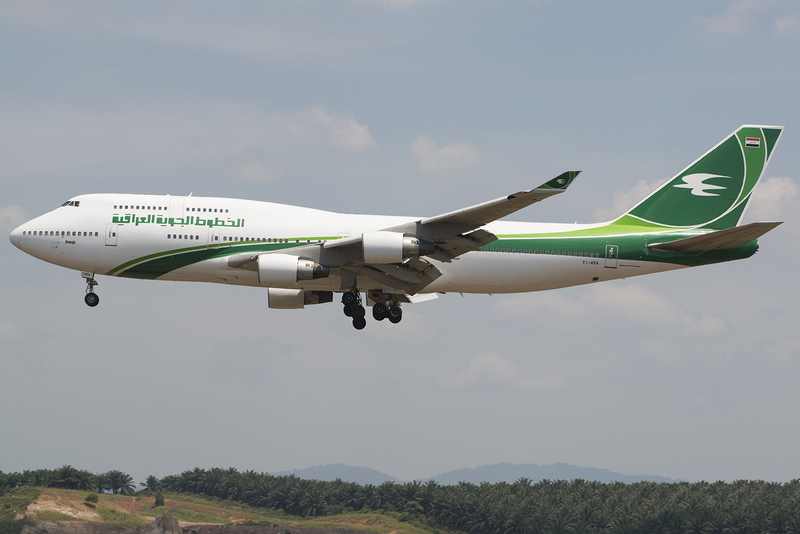
Iranian airlines — every carrier except Mahan Air — may now operate up to 40 flights a day to and from Najaf International Airport, after the United States granted Iraq an exemption from its sanctions on Iran's aviation sector. The Iraqi prime minister's office announced the deal on Friday, ending a suspension that began last week and stranded thousands of religious pilgrims bound for Shia Islam's holiest city.
The Iranian flights Najaf waiver is narrow by design but politically large. Washington has not relaxed its broader pressure campaign, Baghdad has not chosen Tehran over the United States, and Iranian aviation has not returned to business as usual. What has reopened is a carefully fenced pilgrimage corridor — enough to restore movement, calm anger around Najaf and give each government a way to claim that it defended its core interests.
The announcement
Prime Minister Ali al-Zaidi's office said the agreement followed Iraqi government efforts to restore the flights after the suspension tied to U.S. sanctions. “The Prime Minister appreciates the positive response shown by the US government to Iraqi efforts and its cooperation in granting the requested exemption,” the statement said, according to Reuters.
Zaidi framed the deal in the language of people-to-people ties. “Air travel does not merely represent transportation between two airports, but rather a bridge of communication between peoples,” he said, adding that Iraq conducts its foreign relations based on the interests of its people and seeks balanced, positive ties with different countries. The announcement came a day after Tehran publicly urged Baghdad to lift restrictions it said were hurting pilgrims, patients, students and businesses.
That language was more than ceremony. Baghdad needed to present the exemption not as a concession extracted by Iran, but as an Iraqi diplomatic achievement. Washington, meanwhile, needed the carve-out to look humanitarian rather than strategic. The formulation gives both sides political cover: Iraq can say it protected mobility and religious life; the United States can say the sanctions architecture remains intact.
Why this matters
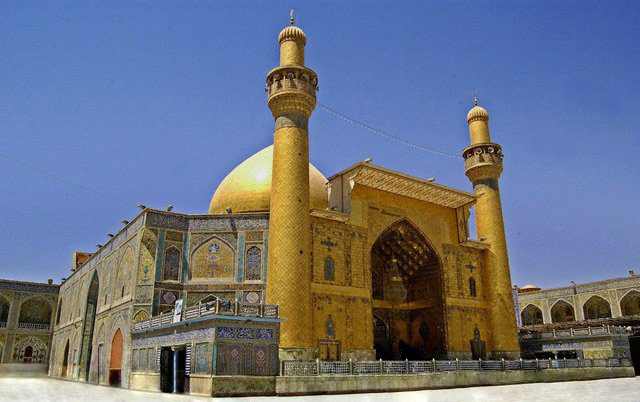
Sanctions meet the shrine. Washington's maximum-pressure campaign on Iran has just met the one force it cannot sanction away: faith. Millions of Shia pilgrims travel to Najaf and Karbala every year. Severing the air bridge stranded the elderly, the sick and students — not generals. A sanctions regime that blocks pilgrims from prayer risks manufacturing its own opposition in Baghdad and beyond.
The paradox of pressure. The waiver lands even as the United States sends a third aircraft carrier group and roughly 9,000 additional troops toward the Middle East amid warnings of new strikes on Iran. Coercion and carve-outs are now running in parallel: a squeeze on the regime, an open door for its people. That duality is deliberate. It lets Washington argue that pressure is aimed at the state and its military networks, not at ordinary Iranians, while keeping every military option on the table.
Baghdad's balancing act, vindicated. Iraq is the hinge state of this crisis: dependent on U.S. security cooperation, bound to Iran by geography, trade and religion, and home to shrine cities whose economies run on pilgrims. Zaidi converted street protests into negotiating leverage with Washington and came home with a deal his predecessors would have envied.
Midterm optics. The White House did not need images of stranded pilgrims and Iraqi street anger five weeks before the November 3 midterm elections. A waiver costs Washington nothing militarily and buys quiet on a second front. It is not détente. It is crisis management calibrated to keep an avoidable humanitarian dispute from swallowing the larger strategy.
How we got here: a one-week timeline
September — Washington sanctions Iran's aviation sector, tightening the pressure campaign seven months into the U.S.–Iran war.
September 25, 2 a.m. — Najaf International Airport suspends flights to and from Iran. Ground-handling companies withdraw services, fearing U.S. secondary sanctions. Airlines cancel.
September 28 — Demonstrators gather outside Al-Najaf Al-Ashraf International Airport, demanding the facility reopen for flights from Iran. The protest was photographed by AFP and reported by Al Jazeera.
September 29 — Iraqis rally nationwide against the suspension, according to PressTV, the Iranian state broadcaster. That provenance matters: the demonstrations were real, but Tehran also had every incentive to magnify them as proof that U.S. pressure was punishing Iraqis.
This week — Reuters reports the United States is set to grant a one-month Treasury waiver for pilgrim flights. The Treasury then issues a temporary license letting Iraqi Airways operate Iran–Najaf services through October 28. Passengers are restricted to Iranian-national religious pilgrims; cargo is limited to personal baggage and flight-safety items.
October 1 — Tehran urges Baghdad to lift the restrictions.
October 2 — The 40-flights-a-day deal is announced, taking the route from a near-total stop to a large, regulated reopening.
The speed of that reversal is important. In sanctions disputes, uncertainty can be more powerful than the formal rule. Ground handlers and carriers stopped first because the risk of touching a prohibited transaction was greater than the revenue from flying. Once Washington supplied a license and Baghdad supplied political backing, the same market could restart just as quickly.
Who benefits, who loses
The winners: Iranian pilgrims and medical travelers; Najaf's pilgrimage economy — hotels, transport operators and shrine donations; Zaidi, who defused a domestic crisis without breaking with Washington; and Washington itself, which avoided an Iraqi street backlash and kept Baghdad cooperative just as the last U.S. troops depart.
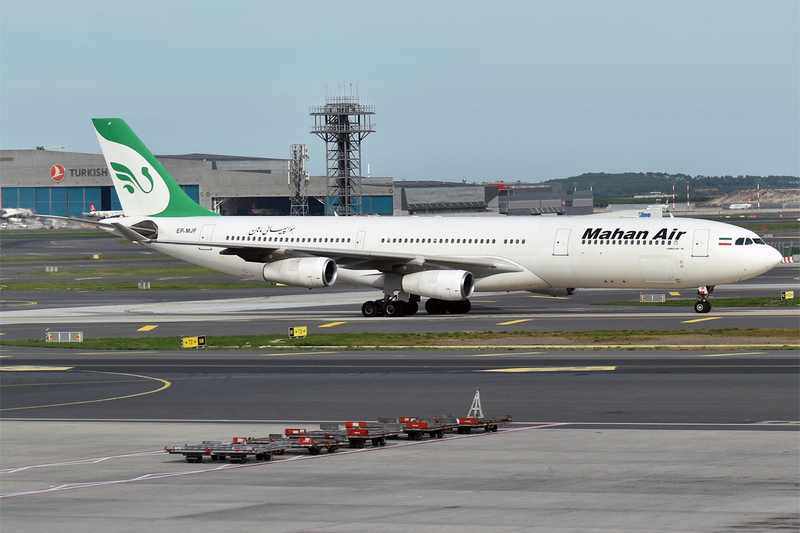
The pointed exclusion: Mahan Air. Washington accuses the privately owned carrier of ferrying Islamic Revolutionary Guard Corps personnel, weapons and drones. The waiver's message is precise: pilgrims may fly; what Washington regards as the IRGC's logistics arm may not. By naming one airline rather than blacklisting the route, the United States turned the exemption into a distinction between civilian movement and alleged military transport.
The critics: sanctions hawks in Washington will call any waiver a leak in the pressure campaign. Hardliners in Tehran will call it humiliating that Baghdad needs Washington's permission for Iran–Iraq flights at all. Both critiques reveal the same uncomfortable truth: American financial power reaches deeply into the daily operation of an airport inside Iraq, while Iran's religious and commercial ties give Tehran influence Washington cannot simply switch off.
The immediate losers are Mahan Air and any business that expected the suspension to become a longer rupture in Iran–Iraq travel. But the broader loss belongs to the fiction that sanctions can remain neatly separated from civilian life. Aviation is an ecosystem of insurers, handlers, fuel suppliers, banks and spare-parts providers. Pressure applied to one link can stop the whole chain.
The numbers
Forty flights a day is not a token gesture. At typical narrowbody loads of 150 to 180 seats, that is roughly 6,000 to 7,000 seats daily in each direction; widebodies push the theoretical capacity higher. For scale, the Arbaeen pilgrimage draws more than 20 million participants in peak years. The vast majority travel overland, but the air bridge carries many who cannot make the road journey — the elderly, the ill and the time-pressed.
Note the fine print. The Treasury's Iraqi Airways license runs only through October 28 and restricts passengers to Iranian-national pilgrims and cargo to personal baggage plus flight-safety items. That is a narrow corridor, not an open sky — and it is the corridor the broader 40-a-day deal now formalizes.
Compare the new ceiling with the starting point. From September 25, scheduled Iran service at Najaf fell toward zero within days as handlers walked away. Forty a day is therefore a full-scale restoration, not a symbolic partial reopening. Yet “up to” remains the operative phrase: authorized capacity is not the same as flights actually operated. Demand, aircraft availability, handling capacity and continued legal confidence will determine how many departures reach the board.
The October 28 expiration creates its own countdown. Airlines can schedule around a one-month license, but they cannot plan a durable network on it. Pilgrims may book; carriers and airport contractors will still price in the possibility that the legal runway closes again.
What happens next
Scenario one — the waiver holds. Baghdad pushes to make the pilgrimage carve-out permanent, extends it to medical and education travel, and other airports — Baghdad, Basra and Erbil — seek similar deals. In that version, Najaf becomes a limited but repeatable channel insulated from the broader confrontation.
Scenario two — escalation. Renewed U.S. strikes on Iran would likely freeze the waivers overnight and ground the route again. The exemption survives only as long as the military track stays quiet enough for civilian aviation to remain politically defensible.
Scenario three — the template. The Najaf deal becomes a model for humanitarian corridors through sanctions regimes, the way food-and-medicine exemptions once were: pressure on the state, passage for the people. The difficulty is enforcement. Every exception needs definitions, documentation and monitoring, and each new layer creates another point where ordinary travelers can be delayed.
Watch three things: whether Mahan Air tests the exclusion, whether the October 28 license is renewed, and whether Tehran treats the waiver as a goodwill signal or an insult. Also watch the actual departure boards. The difference between a diplomatic announcement and a working air bridge will be measured not in statements, but in aircraft pushed back from the gate with pilgrims aboard.
For now, Baghdad has bought breathing room. Washington has preserved the architecture of pressure while conceding that an indiscriminate shutdown was politically unsustainable. Tehran has recovered access to a sacred destination without winning relief for the one carrier the United States most wanted to isolate. That is what a modern sanctions compromise looks like: nobody calls it surrender, everyone claims principle, and the public finally gets to fly.
Sources
Image sources: Aircraft and shrine photographs were downloaded from Wikimedia Commons and are credited individually under each image.