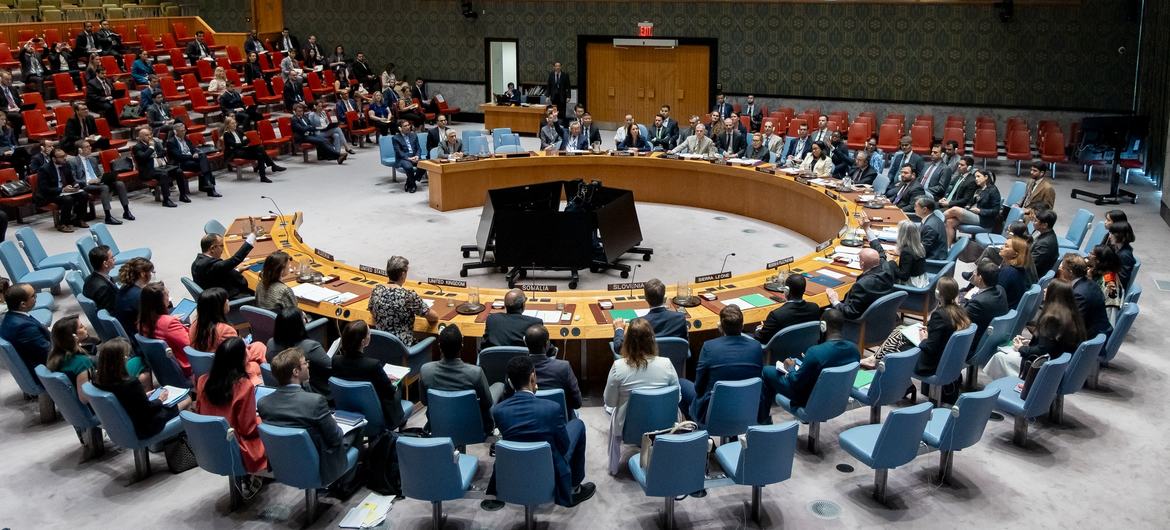
Russia and China vetoed a resolution on Thursday that would have extended the monitoring mandate. Eleven members of the 15-member Security Council voted in favor, while Pakistan and Somalia abstained.
The panel of experts is designed to examine alleged sanctions violations and provide evidence-based reporting and recommendations to the council. The council had already been operating without an appointed panel for the past year because appointments require consensus.
Why the vote matters
Without an independent panel, council members lose a dedicated mechanism for gathering and assessing information about how sanctions are being implemented or evaded. Supporters of the resolution argued that this leaves a significant monitoring gap.
Russia and China have maintained that the council should not revive the sanctions committee or its expert panel, arguing that the relevant United Nations measures were removed under the 2015 nuclear agreement. Western members dispute that interpretation and say the sanctions framework was restored after accusations that Iran had not met its nuclear obligations. Iran denies seeking nuclear weapons.
What the expert panel actually does
A United Nations sanctions panel is not a court and does not impose penalties by itself. Its job is investigative: it gathers information from governments, shipping records, public documents and technical specialists, then reports patterns that may point to sanctions breaches. That creates a common evidentiary record for council members that otherwise approach Iran from sharply different political positions.
The distinction matters because sanctions are only as credible as their enforcement. A written restriction can be weakened by front companies, indirect transport routes, mislabeled cargo or financial intermediaries. Independent experts help the council compare claims against documentation instead of relying entirely on statements from interested governments.
Why a veto changes the picture
Substantive Security Council resolutions require nine votes and no veto from any of the five permanent members: China, France, Russia, the United Kingdom and the United States. The reported 11 votes in favor therefore showed broad support, but the two permanent-member vetoes were decisive.
The immediate consequence is institutional rather than a new penalty or military step. The council loses a standing team dedicated to monitoring, while member states and other organizations may continue to collect information through their own channels. Those separate efforts, however, do not carry the same shared United Nations mandate or reporting process.
The dispute is not only about sanctions. It is also about who gets to establish the facts when the major powers disagree.
The argument over the 2015 nuclear deal
The veto exposes a deeper legal and diplomatic disagreement over how the 2015 nuclear agreement and later Security Council actions should be interpreted. Russia and China say the earlier United Nations restrictions should not be revived. Western governments argue that the sanctions framework returned after they concluded Iran had failed to meet nuclear commitments.
That dispute affects more than procedure. If governments do not agree on whether a sanctions regime is valid, they are also unlikely to agree on what counts as a violation, how evidence should be assessed or what remedy should follow. The collapse of a monitoring mechanism can therefore widen the distance between the competing interpretations.
What happens next
Diplomatic attention now shifts to three questions. First, whether council members pursue a narrower monitoring arrangement that could avoid another veto. Second, whether individual governments increase their own reporting and enforcement. Third, whether renewed negotiations with Iran create a political basis for restoring a broadly accepted framework.
Readers should be cautious with claims that the veto either removed every Iran-related sanction or settled the nuclear dispute. It did neither. The vote concerned the mandate of an independent monitoring mechanism. National sanctions, other legal measures and the larger disagreement over Iran’s nuclear program remain separate issues.
The larger stakes
Sanctions monitoring rarely produces dramatic images, but it shapes the quality of future decisions. Verified findings can support enforcement, expose weak points or show that an allegation lacks evidence. Without a common investigative process, governments may publish competing claims that are harder for the public — and other council members — to evaluate.
The result is a less transparent system at a moment when trust among the major powers is already thin. Whether diplomacy can replace that lost transparency will depend on negotiations that have not yet produced a shared approach.
Why this matters
Ending independent monitoring weakens the shared factual basis on which sanctions debates depend. Governments can still make claims, but without a common panel the Security Council loses a mechanism for testing violations. In contested security policy, information infrastructure is often as consequential as the sanction itself.
How we got here
UN sanctions regimes typically pair legal restrictions with expert monitoring because enforcement occurs across borders, shipping networks and financial systems. Great-power disagreement has increasingly blocked renewal of those technical mechanisms. The historical parallel is institutional erosion by veto: rules may remain on paper while verification becomes more political and fragmented.
Who benefits, who loses and what critics say
States seeking greater freedom from scrutiny benefit when monitoring lapses. Sanctions enforcers, neighboring governments and independent analysts lose a shared reference point. Critics of panels argue they can become politicized or outlive their mandate; supporters answer that imperfect scrutiny is better than competing intelligence claims that the public cannot inspect.
What the comparison implies
A blocked renewal does not automatically remove every sanction, but it changes enforcement quality. Before, one panel could collect and synthesize evidence; after, states rely more heavily on national intelligence and ad hoc reporting. The measurable consequence will be fewer public findings, slower attribution and greater disagreement—not necessarily an immediate visible change in trade.
What happens next
Countries may create informal coalitions or national reporting systems to replace part of the lost function. That produces a fragmented scenario in which allies share evidence and rivals reject it. Restoring a UN mechanism would require a new political bargain, so the near-term question is whether enforcement can remain credible without universal monitoring.
Sources: Reporting on the vote, its 11–2–2 result and the competing positions was published by Reuters on September 17, 2026. The accompanying chamber image is a credited United Nations file photograph; it does not depict the September 17 vote itself.