Hamas commander killed Gaza
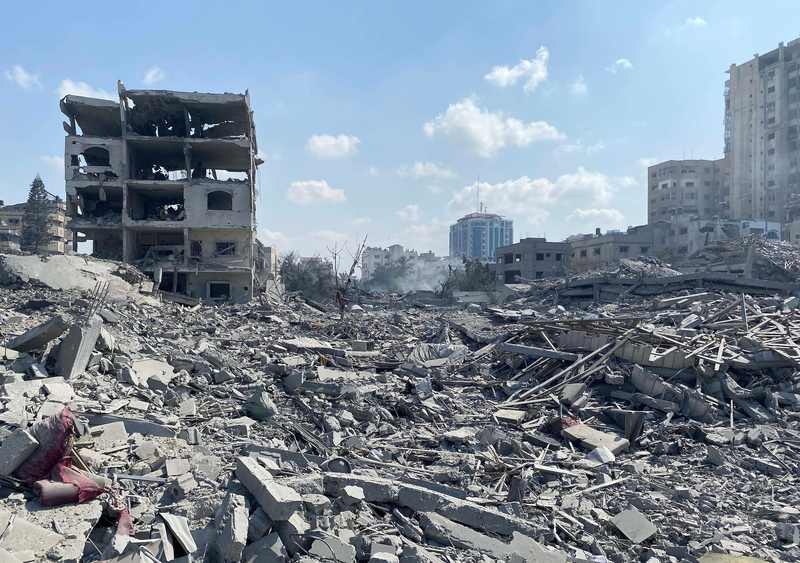
The Israel Defense Forces said Thursday that an airstrike earlier this week killed Muhammad Muhsen Nimr Yazji, a commander in Hamas's Shati Battalion who the military says helped hold Emily Damari, Romi Gonen and Matan Angrest in Gaza City. The announcement arrived one day after the third anniversary of the October 7 attacks and amid widening arguments over what the ceasefire permits.
The IDF also announced the death of a second Hamas operative, Muhammad Fawzi Muhammad Awad Gamal, in a separate Tuesday strike in Gaza City's Sabra area. The military's accounts, including its claims about Yazji's hostage role and both strikes' civilian-harm precautions, could not be independently verified. Hamas had not publicly commented at the time of publication.
Why this matters
Israel's pursuit of people it says guarded or held hostages is not simply a campaign against command structures. It is also an effort to impose personal accountability for October 7, connecting a military target to the experience of an identifiable captive. That gives these announcements an emotional force that an ordinary battlefield update does not carry. For freed hostages and their families, the death of a former captor may feel like recognition or closure; it cannot restore the lost time or undo the captivity.
The timing adds another layer. The announcement came a day after the third anniversary of the 2023 attacks, when, according to Reuters, about 1,200 people were killed in Israel and 251 were taken hostage. An anniversary turns a tactical action into a message: Israel is presenting the campaign as unfinished even after the surviving hostages returned and the October 2025 ceasefire took effect.
That makes the strike a stress test for the truce. Israel describes targeted attacks as enforcement against Hamas operatives it says are rebuilding military capacity and preparing violence. Hamas denies rearming and says Israeli strikes undermine the agreement. The more each side frames its own action as a response to the other's violation, the easier it becomes for a ceasefire to survive on paper while lethal operations continue.
The strikes: what the IDF says happened
IDF kills Hamas commander Gaza City, military says
The IDF identified Yazji as a commander in the Shati Battalion and said he had been involved throughout the war in holding hostages in the Gaza City brigade area. The military named Damari, Gonen and Angrest. It also alleged that Yazji had recently been advancing attacks against Israeli troops and civilians and helping restore Hamas's capabilities in breach of the ceasefire.
The statement did not publicly provide the kind of underlying intelligence that would allow an outside assessment of those allegations. JFeed, YnetNews and The Jerusalem Post reported the October 8 announcement, but their publication of the IDF account does not independently confirm the target's wartime role or the circumstances of the strike.
Sabra airstrike Gaza October 2026
In a second case, the IDF said a Tuesday strike in Gaza City's Sabra area killed Muhammad Fawzi Muhammad Awad Gamal, whom it described as an operative in Hamas's Daraj Tuffah Battalion. The military said both operations used precise munitions and that it took steps intended to reduce harm to civilians.
Those descriptions are IDF claims. Signal Post News could not independently verify the identities, deaths, targeting process or civilian impact. Hamas had not issued a public response to the two announcements when this report was published.
Damari's reaction — and the captivity behind it
Emily Damari “screams of joy” report
Damari was held for 471 days. Wikipedia's account of her kidnapping, citing people close to her, says she responded to news of Yazji's death with “screams of joy” and called him “very, very evil.” Those are secondhand descriptions attributed to her associates, not comments independently obtained by Signal Post News.
Around the October 7 anniversary, Damari released disturbing footage from the early period of her captivity, including material she said came from Shifa Hospital. She described being kept in a room marked by blood, a body and armed men. The footage places the public announcement about Yazji beside an individual memory of confinement, which is why the news can register as more than the removal of another commander.
The phrase “Emily Damari hostage 471 days” compresses a long ordeal into a number. In practice, closure is less tidy. The reported reaction suggests relief and vindication; trauma, recovery and the absence of a judicial accounting remain separate questions.
How we got here
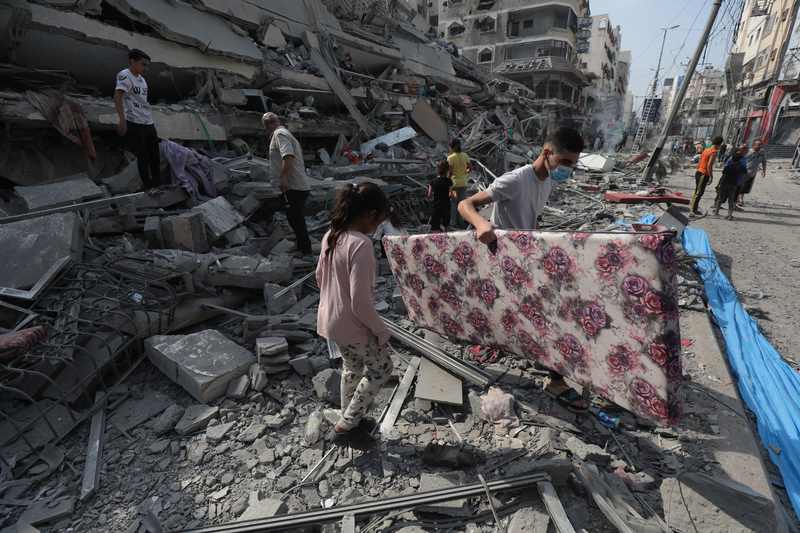
The October 7, 2023 Hamas-led attack killed about 1,200 people in Israel and resulted in 251 people being taken hostage, according to Reuters. Israel's subsequent campaign in Gaza produced devastation and mass displacement. Palestinian authorities say the war's overall death toll has risen above 74,000; that figure cannot be independently verified in full and does not by itself distinguish combatants from civilians.
A ceasefire with a missing middle
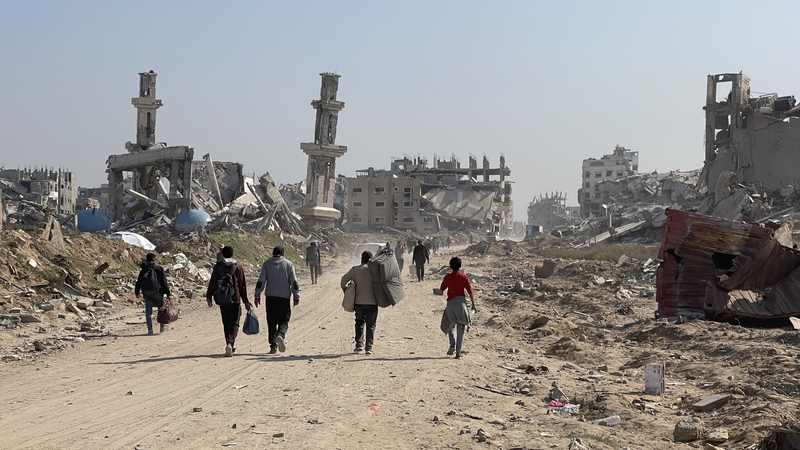
The US-brokered ceasefire took effect on October 10, 2025, as part of President Donald Trump's 20-point plan. Reuters reported that the last remaining hostages were released. Yet the later stages — Hamas disarmament and an Israeli withdrawal — stalled. The agreement therefore achieved the most immediate humanitarian exchange while leaving the central security and sovereignty questions unresolved.
That unresolved middle is the context for today's Israel Hamas ceasefire October 2025 deal dispute. Israel says operations against named militants are necessary because Hamas is rebuilding. Hamas says continuing Israeli fire shows that Israel is hollowing out the truce. Both narratives rely on facts and intentions that outsiders cannot fully test in real time.
Israel has also publicized what it describes as a systematic campaign against Gaza hostage captors killed after October 7. Recent examples cited in Israeli announcements include Adham Ibrahim Sha'aban Nasman, described as the Hamas Gaza City Brigade operations chief; Mahmoud Abd al-Fattah Awad, whom Israel said held seven hostages in a tunnel; and Hassan Mahmoud Ziyam, whom Israel said held hostages including Amit Soussana and Keith Siegel. These identifications and roles remain Israeli military claims unless corroborated independently.
What both sides agree on — and what they don't
Gaza ceasefire violations: two accounts
Both Israel and Hamas publicly treat the ceasefire as a continuing framework, and both accuse the other of violating it. That is where agreement ends. Israel says Hamas has been rearming, restoring command capacity and launching attacks. Hamas denies those Hamas rearming claims and argues that Israeli strikes and restrictions are the real breach.
The disagreement is not merely rhetorical because it determines what each side calls legitimate. Israel labels targeted strikes enforcement. Hamas labels them violations. Without a mutually accepted monitoring and adjudication mechanism, the same incident can be presented as proof of opposite conclusions.
The shared incentive to avoid full-scale war
Neither side's public case necessarily means it wants an immediate return to the war's highest-intensity phase. Israel recovered the remaining hostages under the deal and benefits from reducing the demands of a major ground campaign. Gaza's population remains exhausted and displaced, and Hamas faces pressure to preserve its organization and governing influence. Those incentives can keep the framework alive even when violence continues inside it.
What the numbers say
At least 1,400 Palestinians have been killed by Israeli fire since the ceasefire, according to Gaza health officials cited by Reuters. Four Israeli soldiers have been killed by militants over the same period, according to Israel. The figures come from parties to the conflict and should be read with their sourcing attached.
471 days measures Damari's captivity. Three named hostages — Damari, Gonen and Angrest — appear in the IDF's allegation about Yazji. One day separates the October 7 anniversary from the announcement of his reported death. These smaller numbers explain the story's personal and symbolic weight; the 1,400 and 74,000 figures show the much wider human cost surrounding it.
Numbers clarify scale but not legality or intent. A casualty total cannot establish whether a particular strike complied with international law. A count of named hostages does not independently verify who held them. The useful discipline is to preserve the attribution and avoid making the statistic carry more certainty than the evidence supports.
What happens next
Targeted strikes continue inside a nominal ceasefire
One scenario is a durable but violent ceasefire in which Israel keeps conducting selective strikes it calls enforcement while Hamas avoids actions that trigger a broader campaign. That could limit the geographic and operational scale of fighting, but each unverified target and each civilian casualty would continue to erode trust.
An escalation spiral hardens both positions
A second path begins when one side's enforcement becomes the other's justification for retaliation. A militant attack on Israeli troops, a strike with high civilian casualties or a disputed claim of rearmament could widen the response. Because both sides already accuse the other of bad faith, political space for restraint could shrink quickly.
Pressure builds around disarmament and withdrawal
The third scenario is renewed diplomatic pressure to define the plan's stalled phases. Hamas disarmament, Israeli withdrawal, outside verification and Gaza's future governance are the missing terms. The Yazji strike does not resolve any of them, but it illustrates why leaving them vague permits armed actions to continue under competing interpretations of the same agreement.
These are analytical scenarios, not predictions. The immediate facts remain narrower: Israel says it killed two Hamas figures, one tied to three hostages; the claims have not been independently verified; and the ceasefire's unresolved obligations continue to shape what happens after every strike.
Sources
- JFeed — IDF announcement on Muhammad Yazji and the hostages
- JFeed — second report on the Gaza City strikes
- Reuters, October 6 — ceasefire, casualty and disarmament context
- Wikipedia — Kidnapping of Emily Damari, including the reaction attributed to her associates
Additional reporting: YnetNews and The Jerusalem Post also reported the IDF announcement on October 8. Signal Post News could not independently verify the military's operational or intelligence claims, and Hamas had not publicly commented at publication time.