IDF destroys Gaza tunnel network
A 1.5-kilometer route was demolished east of the Yellow Line as Israel presses an underground campaign that military officers say could take years to complete.
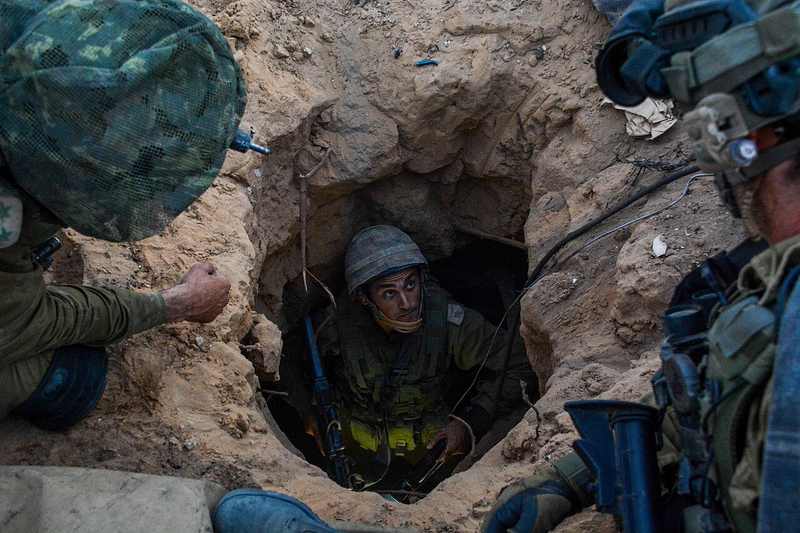
IDF destroys Gaza tunnel network: Israel's military said its Northern Brigade, operating under the 99th Division with Southern Command engineering forces, demolished a 1.5-kilometer underground route in northern Gaza, east of the ceasefire's Yellow Line. The route was destroyed in segments, according to the military, which said work to clear tunnel infrastructure in the north is continuing. The claim and the route's full configuration could not be independently verified.
The announcement is tactical: one route, one sector, one engineering operation. Yet it lands at a strategic moment. Israel this week marked three years since the October 7, 2023 attack, while the ceasefire remains in force but contested, Hamas's required disarmament remains unresolved and an Israeli election is about 20 days away. A tunnel demolition therefore carries more than military meaning. It is evidence offered by Israel that the underground threat endures, and a reminder to Palestinians that even a truce has not ended destructive operations inside Gaza.
Why this matters
Underground warfare compresses the conflict's hardest questions into concrete and earth. Israel argues that tunnels allow Hamas fighters to move, store weapons, command units and approach troops while avoiding surveillance. From that perspective, leaving a route intact can preserve the capacity for another attack even when conventional fighting has slowed. Hamas and Palestinian critics, by contrast, say Israel uses broad security claims to justify continued military control, demolitions and restrictions that deepen civilian suffering.
The location matters as much as the length. The Yellow Line Gaza ceasefire mechanism divides territory where Israeli forces remain from areas under Palestinian administration. Israel says its forces act east of that line against militants and immediate threats. Hamas says it is not preparing attacks or rebuilding its arsenal and accuses Israel of using the boundary to hollow out the peace agreement. Both positions contain claims that are difficult for outside observers to test in real time.
The military value is also asymmetric. Destroying a tunnel can remove a local threat, deny a supply corridor or force fighters into more exposed movement. But the political cost of demolition may rise when the work happens near displaced communities or amid uncertainty over precisely where the boundary runs. That makes verification—not only of tunnels, but of the line itself—central to whether a ceasefire can be enforced rather than merely asserted.
What the IDF says it found and destroyed
IDF tunnel demolition northern Gaza, east of the boundary
According to the military account reported by the Washington Examiner, the Northern Brigade and engineering forces dismantled the nearly mile-long route in sections. Segment-by-segment destruction is common because a tunnel is not one empty pipe: shafts, side rooms, junctions and reinforced stretches can require separate mapping and charges.
That distinction is important when headlines say a Hamas tunnel Gaza destroyed. A route can be rendered unusable without every chamber being excavated, while a damaged branch may remain accessible from another entrance. Conversely, a short measured distance can be operationally significant if it links command sites or crosses beneath a sensitive corridor. Without an independently released map, route length alone cannot establish strategic value.
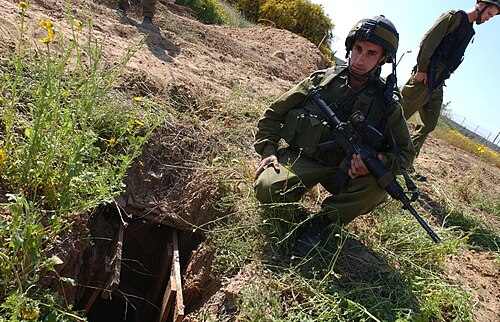
Inside the network: what an escorted visit can and cannot show
A New York Post reporter embedded with the IDF was taken into a wider tunnel system that Israeli officials say helped launch part of the October 7 attack and may have held hostages during the war. The visit offers firsthand observations of physical scale, but it was organized and controlled by one belligerent. It can show that a structure exists; it cannot independently prove every account of how each chamber was used.
An IDF commander told the reporter that forces under his watch had destroyed at least 32 miles of tunnels, while estimating that more than 300 miles remain and saying dismantlement could take years. Days before the tour, according to the report, a roadside bomb struck an engineering vehicle. The group also visited an IDF position overlooking Deir al-Balah and Kibbutz Kfar Aza, where 64 residents were killed on October 7, 2023.
An officer said no Palestinian civilians remain in territory controlled by the IDF, which he described as nearly 70% of Gaza. That sweeping assertion was not independently verified. It also underlines the humanitarian stakes: if civilians have left, questions follow about displacement, return and access to homes and land; if some remain, military activity carries obvious protection risks.
Background: Gaza tunnels map October 7 and a network built over decades
Tunnels in Gaza long predate the current war. Early routes near Egypt were associated with smuggling under border restrictions. Over time, Hamas built a more extensive military system for movement, storage, communications, command and cross-border raids. Israeli estimates have often placed the prewar network above 500 kilometers, though no public Gaza tunnels map October 7 provides a complete, independently verified inventory.
The phrase Hamas tunnels length kilometers sounds precise, but the base number is not. Networks change: routes collapse, are repaired, overlap on different levels or are counted differently by branches and main lines. Israel may know many entrances without knowing the full topology. Hamas has strategic reasons to conceal it. That uncertainty is not a minor footnote; it is the reason estimates can coexist with years of operations.
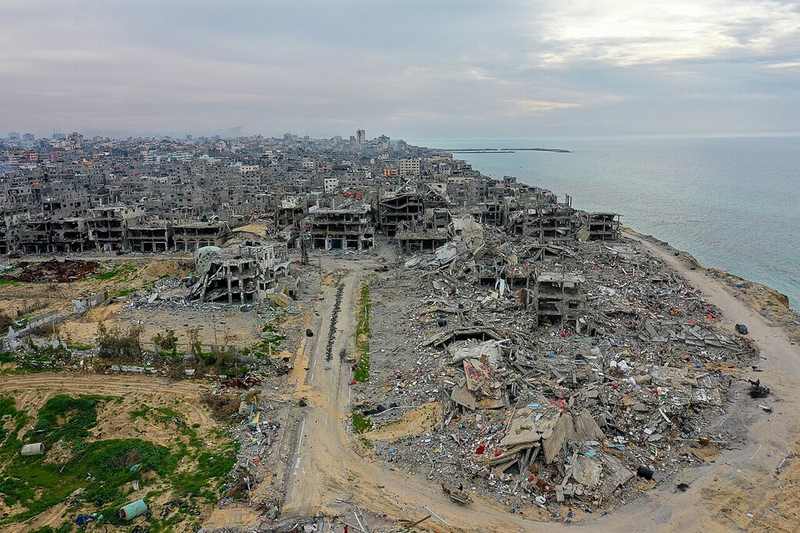
How the Yellow Line works
The U.S.-brokered ceasefire that took effect last October uses the Yellow Line as an interim military boundary rather than a final border. Israeli forces remain on one side; the agreement's later stages contemplate further withdrawals tied to security arrangements and Hamas's disarmament. Israel has expanded the line in recent weeks, while Palestinians and mediators dispute the practical consequences of those changes.
The IDF says it has destroyed more than 26 kilometers of tunnels east of the Yellow Line since the truce began. That figure is an official military total, not an independent survey. It nevertheless shows why the boundary is becoming a system of control rather than a simple line on paper: movement, excavation and demolition on one side can alter conditions far beyond it underground.
How many Gaza tunnels destroyed? The math behind the claim
Start with the announced 1.5 kilometers. Against a network estimated above 500 kilometers, it equals roughly 0.3% of the total. Even if the comparison uses the commander's estimate of more than 300 miles—about 483 kilometers—this operation represents only about three-tenths of 1%. That does not mean it is irrelevant; a single junction can matter more than many dead-end passages. It means the headline cannot be read as completion.
The ceasefire-period figure provides another lens. More than 26 kilometers in roughly a year averages a little above two kilometers a month. At that constant rate, dismantling 483 kilometers would take about 18 years. Subtract the 32 miles, or approximately 51.5 kilometers, that the commander says his forces already destroyed and the crude timeline is still around 16 years.
This is not a forecast. The numerator and denominator are contested, destruction may accelerate or slow, routes may overlap, and a negotiated disarmament could change the task entirely. The calculation simply explains why an officer can report substantial progress and still say the campaign may take years.
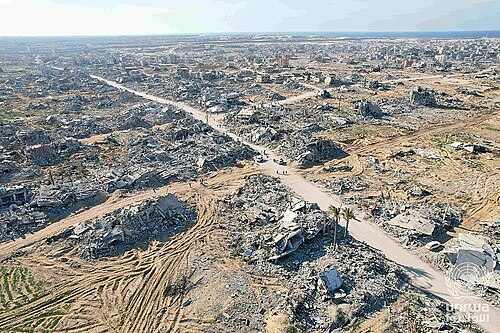
Who benefits, who loses and what critics argue
Israel's security case
For Israel's military and government, tunnel demolitions show enforcement and reduce risks to troops and nearby communities. The third anniversary gives the argument added force: the state is under pressure to demonstrate that the vulnerabilities exposed in 2023 are being addressed. Supporters say allowing Hamas to retain a concealed military network would turn the ceasefire into a pause for rearmament.
The Palestinian cost
For Palestinians, the same operations can mean more destruction, displacement and uncertainty in a territory already devastated by war. Gaza's Health Ministry says more than 74,000 Palestinians have been killed since the conflict began and about 1,145 since the ceasefire. The ministry does not distinguish civilians from combatants in its headline total; Israel disputes aspects of Gaza's accounting while saying its operations target militants and imminent threats.
The international concern
Mediators and international critics focus on proportionality, civilian protection and whether unilateral changes around the Yellow Line undermine the sequence of the agreement. Their dilemma is practical: a ceasefire that ignores armed infrastructure may be unstable, but enforcement without trusted monitoring can look like open-ended occupation. The party most clearly losing is the civilian population, which bears the consequences when security claims and political negotiations fail to converge.
The anniversary, Katz's claim and Israel's election
The Gaza October 7 anniversary 2026 is the first since the remains of the last hostage were recovered in January, meaning no hostages are believed to remain in Gaza. That changes the public debate without ending it. Families who spent years demanding recovery now press for accountability, while the security establishment is judged on whether the conditions for another mass attack still exist.
Defense Minister Israel Katz said this week that 4,000 Palestinians who entered Israel during the October 7 attack had been killed and about 2,000 remain alive, adding that Israel had a duty to eliminate all of them. The Katz eliminate Hamas invaders claim is an official assertion; the figures have not been independently verified, and the category he used does not itself establish the identity or conduct of each person counted.
With Israel's election scheduled for October 27, military announcements will inevitably be read through a political lens. The government can point to demolitions as evidence of resolve. Opponents can ask why hundreds of miles may remain after three years and whether tactical achievements amount to a coherent end state. Neither reading proves the operation was timed for politics, but both will shape how it is received.
What happens next
The durable exit is not an engineering calculation alone. It requires an enforceable answer to disarmament: what weapons and tunnels Hamas must surrender, who verifies compliance, what happens to fighters, and when Israeli forces withdraw. Hamas has accepted disarmament language in talks while disputing Israel's implementation and denying current rearmament attempts. Israel says disarmament must be real before the next phase advances.
The ceasefire's viability will therefore be measured by incidents at the boundary and progress away from it. If demolitions continue while negotiations stall, each side will say the other is exploiting the truce. If a monitoring system gains access above and below ground, disputed claims can be tested. Without that, the Yellow Line risks becoming permanent by default.
For broader context, Signal Post News has examined why strikes continue despite the ceasefire, the IDF's anniversary alert posture and why the U.S.-backed Gaza plan remains stalled. Together they point to the same conclusion: tactical activity is visible; the political sequence that would make it unnecessary remains incomplete.