War · World Court · Rohingya
Seven years after The Gambia sued Myanmar under the Genocide Convention, the World Court has set down what it found happened in Rakhine State in 2017: around 10,000 Rohingya violently killed, some 815,000 people targeted, systematic military hate speech, and state measures intended to stop the group reproducing — in only the third genocide merits ruling in the Court's history.
Track it live: follow the wars and conflicts shaping this story on our live war tracker.
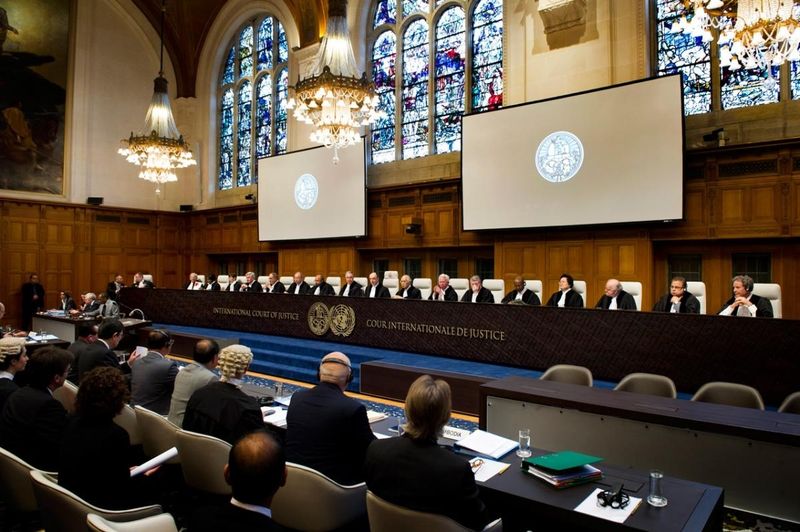
THE HAGUE — The International Court of Justice ruled on Thursday that Myanmar's security forces killed thousands of Rohingya civilians during the 2017 "clearance operations" in Rakhine State, perpetrated widespread sexual violence and extreme violence against children, and attacked families as they fled toward Bangladesh — the factual core of the most consequential genocide judgment the World Court has ever delivered against a state.
Reading the judgment at the Peace Palace, Court President Yuji Iwasawa said the bench had determined, on the evidence before it, that around 10,000 Rohingya were violently killed during the operations. The Court found that approximately 815,000 Rohingya who lived in northern Rakhine State before the crackdown were targeted — a number the judges called "clearly significant," and a "substantial" part of the group for the purposes of the 1948 Genocide Convention. The judgment in The Gambia v. Myanmar, seven years in the making, is final and cannot be appealed.
What the Court found
The findings read out on Thursday went well beyond the killings themselves. The Court held that Myanmar's military "actively disseminated and promoted hate speech in a systematic and coordinated way" during the operations, portraying the Rohingya as "sub-human" and a violent threat, in a campaign that overlapped with the clearance operations and helped create "a climate conducive to targeting a group for destruction."
The judges also examined Myanmar's own population measures. A regional order imposed special marriage-permission requirements on people described as "Bengalis" and limited couples to two children. Myanmar accepted the measure's purpose was to slow the Rohingya birth rate, and the Court said it was "convinced that the order was a coercive measure directed at the Rohingya group, which was intended at the very least to reduce birth within the group." Alongside the use of sexual violence — which the Court said was intended to impair the population's willingness and ability to procreate — the judges treated the measures as indicative of an intent to stop the group reproducing.
The Court further noted that Myanmar had failed genuinely to investigate the alleged atrocities and had refused to facilitate access to evidence and witnesses, and it found The Gambia's witnesses — including four survivors of the final week of August 2017 — credible, with many key statements unchallenged under cross-examination. The Rohingya, the Court observed, had lived in Myanmar for generations before discriminatory laws and restrictions progressively eroded their rights and left them marginalised and particularly vulnerable.
How the case reached judgment day
The case began with the violence of August 2017. After attacks by the Arakan Rohingya Salvation Army on security posts on August 25, Myanmar's military launched operations across northern Rakhine that drove more than 730,000 Rohingya into Bangladesh within weeks. A United Nations fact-finding mission later concluded the campaign included genocidal acts. Myanmar has always denied genocide, insisting its forces were conducting a legitimate counter-insurgency operation.
The Gambia — a small, mostly Muslim West African state with no direct connection to the Rohingya — filed the case on November 11, 2019, backed by the 57-member Organisation of Islamic Cooperation, arguing that every party to the Genocide Convention has a legal interest in preventing genocide. In January 2020 the Court ordered Myanmar to take urgent measures to protect the Rohingya and preserve evidence. In July 2022 it rejected Myanmar's objections and confirmed it had jurisdiction. Public hearings on the merits ran from January 12 to 29, 2026, and on November 3 the Court announced it would deliver its judgment on November 19.
Why this matters
This is only the third time in its history that the World Court has ruled on the merits of a genocide case, and it has never before held a state responsible for committing genocide. In 2007, in Bosnia's case against Serbia, the Court found a failure to prevent and punish the Srebrenica genocide but stopped short of finding Serbia itself responsible for the crime. The legal question that has defeated claimants for three decades is intent: genocide requires proof of a specific intent to destroy a protected group, in whole or in part, and the Court has historically set that bar at the level of the only reasonable inference from the evidence.
That is why Thursday's reasoning matters as much as its conclusions. The judges worked through the pattern of conduct — the scale of the targeting, the systematic hate speech, the birth-prevention order, the sexual violence — as evidence from which intent could be assessed, rather than demanding a single written order. How the Court handled the UN fact-finding record, and the weight it gave survivor testimony that Myanmar declined to challenge, will be studied line by line in The Hague, in Naypyidaw, and in every capital with a stake in the other great pending case: South Africa's genocide case against Israel over Gaza, where a merits ruling is not expected before 2029.
The numbers, in context
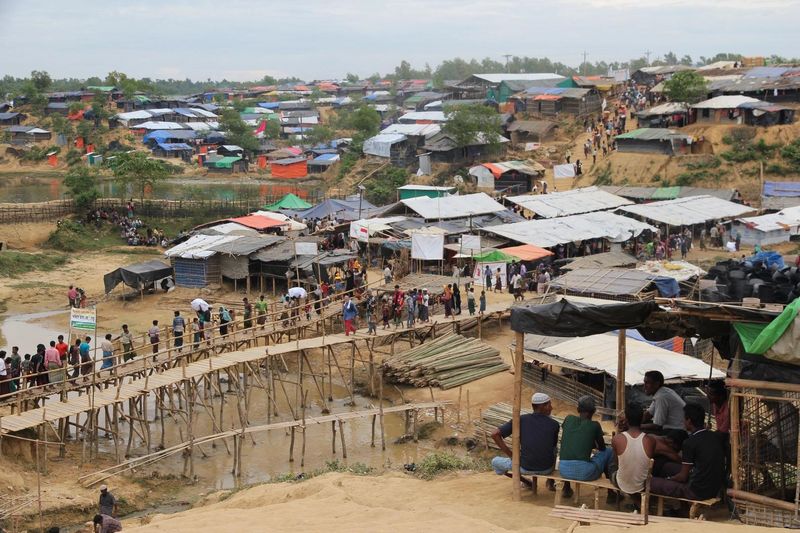
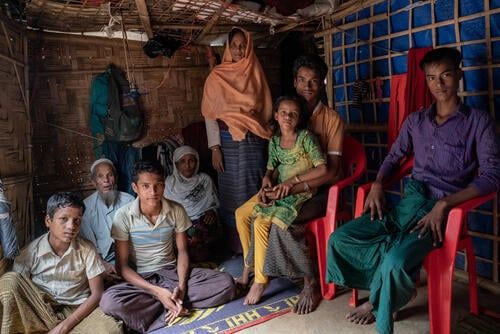
The Court's figure of around 10,000 violently killed sits within the range of earlier estimates but carries a different authority: it is a judicial determination, not an advocacy estimate. The roughly 815,000 people the Court found were targeted represent most of the Rohingya population of northern Rakhine before 2017. More than 1.3 million Rohingya remain displaced across South and Southeast Asia, including about 1.2 million in the sprawling camps of Cox's Bazar in Bangladesh — still the world's largest refugee settlement — while several hundred thousand remain inside Myanmar, most of them stateless, confined, and, as the Court noted in its earlier orders, extremely vulnerable. Nearly a decade on, no safe conditions exist for large-scale return: Rakhine is once again a battlefield, this time between Myanmar's junta and the Arakan Army, and Rohingya civilians have been attacked by both sides.
What the judgment cannot do
For all its moral weight, the judgment's practical reach is limited, and the Court's critics and supporters agree on that much. The ICJ settles disputes between states; it cannot convict individual generals, issue arrest warrants, or send anyone to prison — individual accountability runs through the separate International Criminal Court investigation and cases such as Argentina's universal-jurisdiction proceedings. Its judgments are binding, but it has no police force: if Myanmar refuses to comply, The Gambia's remedy is to take the matter to the UN Security Council, where Myanmar's partners hold vetoes.
The Gambia asked the Court for declarations of breach, guarantees of non-repetition, accountability for those responsible, and reparations — including conditions for the safe and dignified return of the refugees. The operative orders the bench attaches to its findings, and Myanmar's response to them, will decide whether Thursday becomes a turning point for the people in the Cox's Bazar camps or another landmark that changed the law more than it changed their lives. What cannot be taken back is the record itself: the world's highest court has now said, as a matter of law and evidence, what Myanmar did in 2017 — and said it in the language of the Genocide Convention.
Related coverage: Myanmar's civil war death toll passes 100,000 · Malaysia's Rohingya deportation warning · ASEAN reviews Myanmar's ban in Manila
Sources: Reuters, "World Court finds Myanmar forces killed thousands of Rohingya, ruling ongoing," November 19, 2026; BBC live coverage of the judgment via The Business Standard, November 19, 2026; International Court of Justice, The Gambia v. Myanmar case record and November 3, 2026 judgment announcement; Reuters previews and Rohingya crisis timeline, November 18–19, 2026.