World / Politics
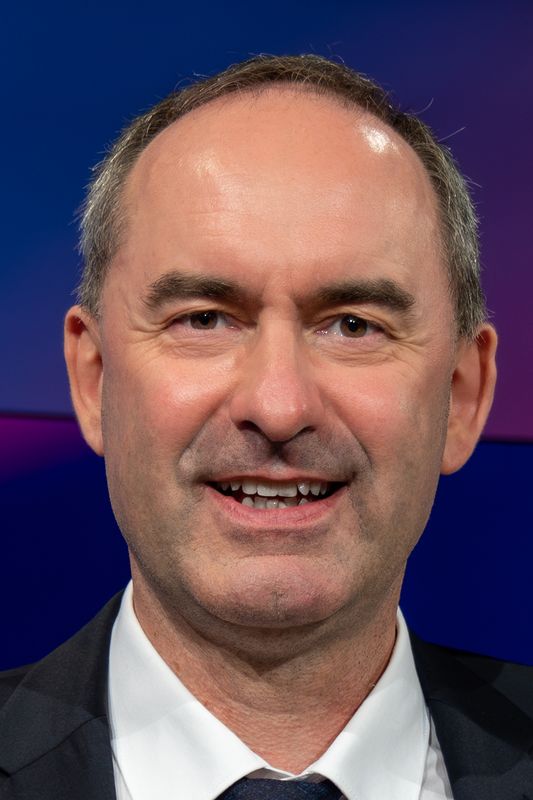
Hubert Aiwanger found dead in a Berlin hotel room at 55 — that is the fact German politics woke up to on Thursday, and for now it is almost the only established fact there is. Aiwanger, the deputy minister-president of Bavaria, the state’s minister for economic affairs, regional development and energy, and the leader of the Free Voters (Freie Wähler), was found dead on Wednesday evening, November 4, 2026, in his room at the Hotel Neuer Fritz on Friedrichstrasse in Berlin-Mitte, near Friedrichstrasse station. Berlin police and prosecutors have opened a death investigation, and they have been explicit about the limits of what they know: no cause of death has been established, and none should be reported until the inquest establishes one.
He was in Berlin for his party, not for Bavaria: the Free Voters were opening a new capital office, and Aiwanger was due to speak at the event on Wednesday afternoon. He never made the speech. According to reporting by Bild and the dpa news agency, he pulled out after feeling unwell. Hours later, colleagues who had been unable to reach him asked hotel staff to open his room, German media reported — and found him dead.
What happened in Berlin
The trip was meant to be a statement of intent. The Free Voters, a party rooted in Bavarian local politics, were opening a new office in the capital — the kind of move a regional party makes when it wants to be taken seriously as a national one — and their leader was the draw. Aiwanger had led the party in Bavaria since 2006 and nationally since 2010, according to the Associated Press, and a capital-office opening was his kind of stage: the farmer-politician from Lower Bavaria planting a flag in Berlin.
The cancelled speech
Instead, the first sign that something was wrong was an absence. Aiwanger had been scheduled to speak on Wednesday afternoon, but he withdrew after feeling unwell, Bild reported via the dpa agency. Feeling unwell is one of the most ordinary phrases in political life — engagements are cancelled for it every week, in every capital — and nothing in the reporting suggests anyone treated the cancellation as an emergency at the time. What turned an unwell politician’s quiet evening into a death investigation was the silence that followed: he could not be reached.
How he was found
German media reported that colleagues, unable to contact him, asked the staff of the Hotel Neuer Fritz to open his room on Wednesday evening. The hotel stands on Friedrichstrasse in Berlin-Mitte, a short walk from Friedrichstrasse station, in the government quarter’s hotel belt. Inside the room, Aiwanger was found dead. Beyond that sequence — the cancelled speech, the unanswered calls, the opened door — the authorities have released almost nothing about the discovery itself, and, as the next section explains, they have said plainly that the omission is deliberate.
The investigation
The Hubert Aiwanger Berlin hotel investigation is, in formal terms, a death inquest of the kind German authorities open whenever a death is sudden and unexplained. Berlin police and the public prosecutor’s office set out its purpose in a single sentence: “The aim of the inquest is to establish the specific cause of death and the circumstances surrounding it, and to rule out any possible third-party culpability.” Every clause of that sentence is doing work. The cause is to be established — meaning it has not been. The circumstances are to be clarified — meaning they are not yet public. And third-party culpability is to be ruled out — the standard formulation that neither asserts nor excludes anything at this stage.
No cause of death has been established
Anyone searching for the Hubert Aiwanger death cause in the first days after his death will find reports, speculation and fragments — but not an official answer, because there isn’t one yet. Prosecutor spokesperson Michael Petzold told Bild that there is no initial suspicion of a crime, while stressing that nothing has been ruled out either. He also said the circumstances in which Aiwanger was discovered would not be disclosed, for investigative reasons. An autopsy is expected, according to German media reports; until it and the inquest report, any stated cause would be a guess wearing the clothes of a fact.
Two details circulating in German coverage deserve to be labelled precisely. Bild has reported references to gastrointestinal problems and to an absence of external injuries. Those are media reports attributed to a tabloid’s sources — not findings announced by the prosecutor’s office, not an autopsy result, and not a cause of death. They may prove relevant, irrelevant or wrong. The discipline the inquest is applying — say what the process is, say nothing about its conclusions — is the same discipline readers should apply to everything published before the process finishes.
Reaction
The political reaction began with the man who had kept Aiwanger in office through the worst crisis of his career. Bavarian premier Markus Söder, whose CSU governs Bavaria in coalition with Aiwanger’s Free Voters, responded within hours. The Markus Soder Hubert Aiwanger tribute was short and stunned: “The sudden death of Hubert Aiwanger is a terrible tragedy. We are all deeply shocked.”
The brevity is itself information. Coalition partners of eight years, Söder and Aiwanger had been rivals, allies and occasional antagonists in roughly equal measure, and the coalition’s survival had more than once depended on Söder deciding that Aiwanger stayed. A death at 55, alone in a hotel room in another city, on a trip meant to showcase his party’s ambitions, lands differently from a resignation or a defeat: there is no opponent in the story, no argument to answer — only the shock Söder described, shared across a Bavarian political class that had expected to spend the coming years negotiating with Aiwanger, not mourning him.
Who Hubert Aiwanger was
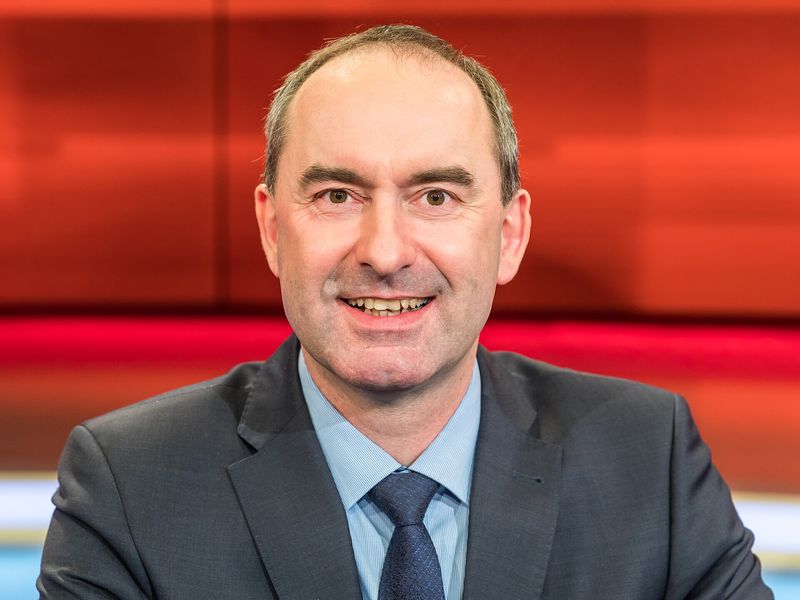
For readers outside Germany asking who was Hubert Aiwanger, the shortest honest answer is: the man who turned a Bavarian voters’ association into a governing party and himself into its indispensable centre. He was born on January 26, 1971, in Ergoldsbach in Lower Bavaria, and studied agricultural sciences at Weihenstephan — a formation that never left his politics. He spoke as a farmer and a hunter, in a Bavarian idiom that Munich and Berlin commentators sometimes mocked and his voters plainly recognised as their own.
He entered the Bavarian state parliament in 2008 and, on November 12, 2018, became deputy minister-president of Bavaria and minister for economic affairs, regional development and energy, when the Free Voters entered coalition with the CSU — a partnership that has governed Germany’s largest state by area ever since. Per the Associated Press, he had led the Free Voters in Bavaria since 2006 and at national level since 2010: two decades in which the party’s strategy, tone and personnel choices ran through one office and one man. He was a father of two.
The 2023 leaflet affair and his survival
No account of Aiwanger’s career is complete without the scandal that nearly ended it — and that, in the cold arithmetic of the election that followed, appeared to strengthen him. In August 2023, the Süddeutsche Zeitung reported that a typewritten leaflet mocking the Holocaust had been found at the school Aiwanger attended in 1987/88, when he was 17. The allegation, in Germany, was about as grave as one against a senior politician can be.
Aiwanger denied writing it, in terms he repeated until they became his signature sentences of that autumn: “I did not write the paper in question and consider the content disgusting and inhumane,” and “I was never an antisemite.” His brother Helmut came forward to say that he had written the leaflet. Söder, rather than dismissing his deputy, required him to answer 25 questions in writing — a public examination as the price of survival — and then kept him in office. Weeks later, Bavarian voters delivered their own verdict: the Free Voters won their best-ever result in the October 2023 state election, finishing second with 37 seats, up 10 on 2018, and the coalition continued. The affair remains contested ground — critics argue the questions it raised were never fully answered; supporters argue a teenage allegation, denied and attributed to another, was prosecuted in the press rather than proven. What is not contested is the political fact: Aiwanger survived it, and emerged, by the seat count, stronger.
Why this matters
A coalition loses its second figure without warning
When a Bavaria deputy premier dies in office, the loss is personal first and institutional immediately after. The CSU–Free Voters coalition has run Bavaria since 2018 on a simple architecture: Söder’s CSU as the senior partner, Aiwanger as the junior partner’s sole front man — its negotiator, its campaigner and its public face. That architecture now has a vacancy at its second-highest point, in both of Aiwanger’s government jobs at once: deputy premier and economics minister. Coalitions are built to survive elections and scandals; they are rarely designed to survive the sudden death of one of their two principals, and the improvisation that follows will say a great deal about how much of the partnership was institutional and how much of it was the Söder–Aiwanger relationship itself.
A party built around one personality faces its succession question
The Free Voters’ strength and their vulnerability are the same fact. A party led in Bavaria since 2006 and nationally since 2010 by the same man, whose 37-seat 2023 result was won in the middle of a scandal about that man personally, does not have a succession plan so much as a succession problem: there is no second figure with Aiwanger’s profile, his rural credibility or his demonstrated ability to turn attacks into votes. Whoever follows him inherits the offices but not the authority, and will have to answer, in Bavaria and in the national organisation he was in Berlin to build out, the question every personality party eventually faces: was the party the man, or can it outlive him?
An unexplained death is where rumour outruns fact
The third reason this story matters is about the information environment it now sits in. A senior politician found dead alone, an inquest that will not describe the discovery, an autopsy whose result is days away at best: these are the ideal conditions for rumour, and the first 48 hours of coverage have already supplied the fragments — a cancelled speech, feeling unwell, second-hand medical details in tabloid reports — from which a hundred narratives can be assembled. The prosecutors’ restraint is not a cover story; it is the normal German procedure for exactly this situation, and it has a purpose: the cause of death of a 55-year-old public figure should be a medical finding, announced once, not a rolling consensus of speculation. Until the inquest speaks, the honest headline remains the one Söder’s statement and the police release share: a sudden death, a tragedy, an investigation — and a cause that nobody yet knows.
The moment it lands in
Aiwanger’s death also lands in the middle of a crowded, unsettled German political autumn, and the week’s other stories sketch the backdrop. In Berlin, the federal government has this week proposed an extra €100 million to keep Ukraine’s power, water and schools running through winter — a reminder that the capital Aiwanger travelled to was absorbed, as it has been for years, with a war that dominates its budgets and its diplomacy. At home, the cost of living has been putting people on the streets: cost-of-living protests spread across Germany on Halloween, and the same nights saw Gen Z protests reach Germany as France braced again — the restless, economically squeezed Germany that Aiwanger’s party, with its pitch to small-town and rural voters, claimed to speak for. His death removes, overnight, one of the most recognisable voices making that claim.
What happens next
The sequence from here runs on two tracks. On the investigative track, the Berlin inquest proceeds and the expected autopsy is carried out; its findings, when prosecutors release them, will either close the question of how Aiwanger died or open a different kind of investigation. The prosecutor’s office has given no timetable, and the refusal to discuss the discovery means the next confirmed fact in this story will arrive when the authorities choose, not when the news cycle demands it.
On the political track, Bavaria cannot leave the offices vacant. The coalition will have to settle interim and then permanent arrangements for the deputy premiership and the economics ministry, and the Free Voters — in Bavaria and in the national party Aiwanger led for a decade and a half — will have to begin a leadership transition nobody had scheduled. Three scenarios cover most of the plausible ground. In the first, the coalition absorbs the shock procedurally: a Free Voters successor steps into Aiwanger’s government roles, the partnership holds, and the party fights its next campaign on his legacy. In the second, the succession becomes a contest — between regions, generations or wings of a party that contains multitudes its leader held together by personality — and the coalition’s junior partner weakens at exactly the moment its bargaining power matters most. In the third, the inquest produces findings that reframe the death itself, and the political story is overtaken by the investigative one. Which of these Bavaria gets depends, in the first instance, on facts that do not yet exist in public. That is where the story stands: a party opening an office in the capital has lost the man the office was for, a coalition has lost its second figure, and an inquest in Berlin-Mitte holds the only answers that count.
Related coverage
Cost-of-Living Protests Spread to Germany on Halloween as ‘Gen Z Regelt’ Marches in 34 Cities
Gen Z Protests Reach Germany as France Braces Again for Halloween Night
Sources
Reuters, “Deputy premier of German state of Bavaria dies suddenly,” November 4, 2026 — https://www.reuters.com/world/deputy-premier-german-state-bavaria-dies-suddenly-2026-11-04/ · Associated Press, November 2026, on Aiwanger’s party leadership and career · Bild, reporting via Reuters and dpa, November 2026, on the cancelled speech, the discovery and prosecutor spokesperson Michael Petzold’s statements · Berlin public prosecutor’s office, statement on the death inquest, via German media reports, November 2026 · Süddeutsche Zeitung, August 2023, original reporting on the 1987/88 school leaflet.