War / Ukraine
Track it live: Ukraine war map — follow the front lines and strike reports on our live tracker
Germany’s finance ministry has proposed an extra €100 million ($113 million) to restore Ukraine’s water, energy and transport infrastructure and to harden the country against intensified Russian attacks, in a letter to the Bundestag’s budget committee reported by Reuters on Thursday. The money would come on top of the Ukraine funding already written into Germany’s 2026 budget. The letter’s central figure explains the urgency: by the ministry’s own account, up to 80% of Ukraine’s power generation capacity has been lost since Russia launched its full-scale invasion in 2022 — a figure that frames this winter not as another repair season but as a fight to keep basic services running at all.
The proposal is, for now, exactly that — a proposal. It has been put to the budget committee in writing, not approved, allocated or paid. But the letter’s language, as reported, is unusually blunt for a budget document: the ministry says the need was unforeseen when the 2026 budget was adopted — the formal justification, in German budget practice, for asking parliament to release supplementary money mid-year.
What Berlin is proposing
The letter, reported by Reuters’ English and German services on November 5 and also covered by European Pravda the same day, asks the Bundestag budget committee to approve an additional €100 million, supplementary to the Ukraine lines already in the 2026 budget, for restoring water, energy and transport infrastructure and for bolstering Ukraine’s resilience against intensified Russian attacks. Because the money sits outside the adopted budget, the committee — the Bundestag body that controls supplementary spending — is the gatekeeper: without its sign-off, the proposal goes no further.
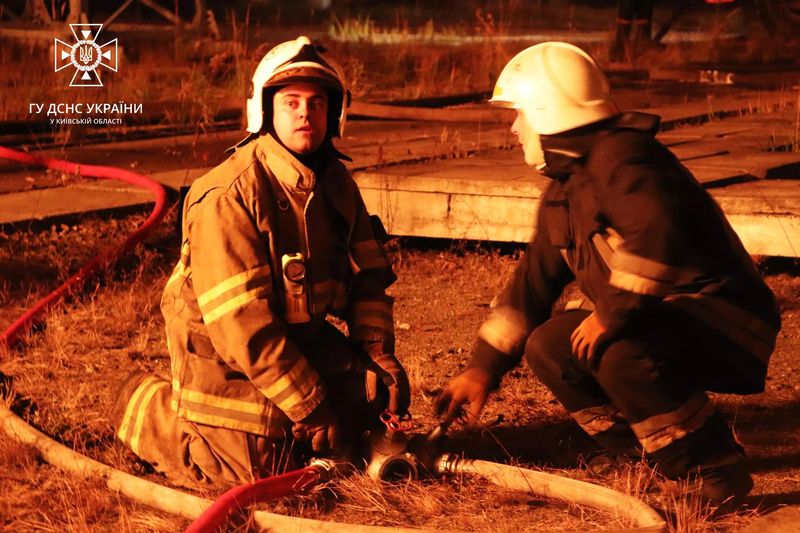
The planned uses, as set out in the letter, read less like a reconstruction programme than like a winter survival kit. The money would buy decentralised power generation equipment and battery storage; pay for repairs to damaged water and power infrastructure, including facilities run by Kyiv’s utilities; supply firefighting equipment; provide special equipment for Ukraine’s civil-protection and disaster service; winterise up to 2,000 schools and kindergartens; and support agricultural businesses. Each item maps to a failure mode of a grid under attack: when a large plant or substation is knocked out, small generators and batteries keep a pumping station, a clinic or a school running anyway; and when temperatures fall, a school without heat or power simply closes.
The school figure is worth pausing on. Winterising up to 2,000 schools and kindergartens — insulating, heating and giving them independent power — is the largest countable commitment in the letter, and it signals where Berlin thinks the social pressure will bite hardest: a power station can be rationed, but a school system closed by cold, repeated across a second and third winter, is the kind of slow disruption that pushes families to leave.

The numbers in context
Three numbers carry the story, and all three come from the finance ministry’s letter itself, so they should be read as Berlin’s official accounting rather than as independently verified measurements. The first is the 80%: the letter says up to 80% of Ukraine’s power generation capacity has been lost or destroyed since the 2022 full-scale invasion. The second is fresher: according to the letter, Russia’s October attacks created blackouts in more than a third of Ukraine’s regions — a grid that no longer fails in one place at a time, but across the map simultaneously. The third is the tempo behind both figures: the letter says that since July 2026, Russia has carried out increasingly frequent and intense attacks on critical and civilian infrastructure in big cities, transport routes, logistics centres and companies.
Set against that scale, €100 million is best understood as triage money, not rebuilding money. It is a separate, additional step from the €250 million Germany had already set aside in September through the Ukraine Energy Support Fund — the two sums belong to different announcements, different months and different mechanisms, and the September fund was already committed before this letter was written. The comparison that matters is not €100 million against €250 million, but €100 million against the replacement cost of a power system of which, on the letter’s own figure, four-fifths of generation has been lost. By that measure the proposal covers a small fraction of the damage — which is precisely why its shopping list is dominated by small, fast, distributable equipment rather than power stations: it is designed to be spent and installed within one winter, not across a decade of reconstruction.
Why this matters
Winter is the decisive front
For three winters, Ukraine’s energy system has been a battlefield in its own right, and each year the contest has narrowed to one question: can repairs outpace destruction before the coldest weeks arrive? This year, on the finance ministry’s own numbers, Ukraine starts that race from its weakest position yet — with, the letter says, up to 80% of generation already gone and October’s attacks having blacked out more than a third of the country’s regions in a single month. Electricity in this war is not a comfort good: it is water pressure, heating circulation, hospital function, rail signalling and the mobile networks that carry air-raid warnings. A package aimed at power, water and schools is aimed at the systems whose failure would do what front-line offensives have not.
Decentralised power is a resilience strategy, not a stopgap
The most consequential line in the proposal is the first item on its shopping list: decentralised generation and battery storage. A centralised grid built around large plants is efficient in peacetime and brittle in war — a handful of successful strikes can remove a city’s supply. Thousands of small generators and battery units invert that geometry: individually insignificant, they are collectively very hard to knock out, because no single target’s destruction darkens a district. Berlin’s proposal, in effect, funds the continued rewiring of Ukraine’s power supply from a system that must be defended as a whole into one that degrades gracefully, building by building — the same logic that makes a winterised school, with its own heat and power, an island that keeps functioning when the grid around it does not.

Europe carries more of the load
The letter also lands in a shifting transatlantic argument. Reuters notes that Merz’s government is already the biggest European contributor to Ukraine; a supplementary civilian package, proposed by Berlin rather than through a joint fund, reinforces Germany’s position as the ally Kyiv can most reliably budget around. That matters more this week than most: the proposal arrives days after the U.S. midterm elections, with Ukraine’s president publicly hoping a Democratic-controlled Congress brings more help for Kyiv (see below) and Washington’s next steps still being argued over. European governments cannot control that debate, but they can decide whether Ukraine’s winter planning depends on its outcome — and Berlin’s answer is to put European money on the table first.
How we got here
Russia’s campaign against Ukrainian infrastructure is as old as the full-scale invasion itself: the first winter of the war established the pattern of strikes on generation and transmission timed to cold weather, and each subsequent autumn has renewed it. What changed this year, according to the finance ministry letter, is intensity and breadth — since July 2026, it says, attacks have grown increasingly frequent and intense, ranging across big-city utilities, transport routes, logistics centres and companies rather than concentrating on the grid alone.
The last week has illustrated the letter’s argument in real time. In our reporting of the 433-drone barrage that cut power across Ukraine, a single night’s launches darkened region after region as the heating season opened; days earlier, the 310-drone strike on power stations in Kyiv and Zhytomyr hit the capital’s electricity and water systems directly — the same Kyiv utility facilities whose repair now appears as a line item in Berlin’s letter. Read together, the strike reports and the budget letter are two views of one process: salvos measured in hundreds of drones, and a repair bill arriving, itemised, in a European finance ministry.
Both sides describe that process in incompatible terms, and both descriptions belong in the record. Moscow says its strikes target military and logistics infrastructure and denies deliberately targeting civilians. Ukraine and its allies say the campaign targets civilian energy systems — the power, water and heating networks on which ordinary life depends. The finance ministry’s letter is written from the second of those positions; the strikes’ effects on blackouts and utilities, as the letter records them, are the ground on which the argument is fought.
Who gains, who pays, what critics say
Kyiv gains the most tangible benefit: equipment that can be installed this winter, repairs to named systems including the capital’s utilities, and the signal that its largest European backer is adding money mid-budget rather than waiting for the next cycle. Ukraine’s need, as Kyiv has framed it all autumn, spans air defence and energy alike — in the pitch covered in our report on Zelenskyy’s offer to pause refinery strikes in exchange for Patriots, the two asks appear side by side: interceptors decide how much damage lands, repair money how fast it is undone.
Berlin’s government gains standing and spends political capital at the same time. Every supplementary Ukraine line must pass a budget committee in a country where the cost of the war is a live domestic argument and the coalition’s own budget politics leave little slack. Proposing the money anyway — framed, as the letter frames it, as a response to an unforeseen emergency — is a deliberate choice to keep Ukraine funding ahead of that argument rather than hostage to it. Chancellor Friedrich Merz’s government is, per Reuters, already the biggest European contributor to Ukraine, with billions in military assistance; this proposal extends that role from weapons into the civilian systems the weapons are meant to protect.
The critics’ case is mostly about scale. On the letter’s own figures — up to 80% of generation lost, blackouts across more than a third of regions in a single month — €100 million is a fraction of the need, and sceptics will ask whether a package built from generators, batteries and repairs is a strategy or an admission that the larger reconstruction bill is one no single ally will underwrite mid-war. Supporters answer that the fraction is the point: money that arrives in December as installed equipment is worth more to a school in January than a larger pledge scheduled for a post-war conference. Both arguments will be tested by the same evidence — whether the systems this money buys are actually running when the coldest weeks arrive.
Diplomacy in parallel
The proposal was not the only Ukraine file moving on Thursday. Reuters also reported that Italy is finalising its 13th military aid package for Ukraine — its first of this year — with Defence Minister Guido Crosetto due to brief parliament’s COPASIR committee on November 10. The contents are classified; sources told Reuters it could include Aster interceptors for the SAMP/T air-defence system, a detail that remains source-reported rather than confirmed. Taken with Berlin’s letter, European governments are working the problem from both ends at once: interceptors to keep strikes from landing, and repair money for the ones that do.
The diplomatic track is moving on the same calendar. U.S. envoy Steve Witkoff has said Ukrainian and Russian delegations will meet in Abu Dhabi on November 10–11 to discuss ending the war, post-war security arrangements, de-escalation and humanitarian measures, Reuters reported on November 4. Al Jazeera’s November 5 coverage added the political weather around the talks: President Zelenskyy, in an interview with Germany’s ZDF, expressed hope that a Democratic-controlled U.S. Congress would bring more help for Kyiv, while Kremlin spokesman Dmitry Peskov said Russia hopes President Trump continues his peacemaking efforts. A winter in which Ukraine’s grid holds is also a negotiating asset — a country whose cities stay lit and heated bargains from endurance, not desperation — one more reason a €100 million infrastructure letter belongs in the same story as a summit in Abu Dhabi.
What happens next
The immediate step is procedural: the Bundestag budget committee must decide whether to approve the extra €100 million the finance ministry has proposed. Approval would convert a letter into spendable money, after which the test becomes logistical — how fast generators, batteries, firefighting and civil-protection equipment and school winterisation work can be delivered and installed while the strike campaign the letter describes is still running. The September €250 million through the Ukraine Energy Support Fund runs on its own track, unaffected by the committee’s decision either way.
Three scenarios follow. If the committee approves quickly and deliveries land early in the winter, the package does what it is designed to do: it raises the floor of Ukrainian daily life — water pressure maintained, schools open, districts riding through blackouts on local power — even if the grid above it keeps taking damage. If approval or delivery drags, the same money arrives after the coldest weeks and its value drops sharply, because winter aid is perishable in a way reconstruction money is not. And if strikes outpace repairs — if the tempo the letter dates from July keeps climbing — this package becomes the first of several such letters rather than a one-off, and Berlin’s argument shifts from whether to top up Ukraine’s winter funding to how large the standing mechanism for doing so should be.
Related coverage
Russia Fires 433 Drones in One Night, Cutting Power to Hundreds of Thousands Across Ukraine
Zelenskyy Offers Trump a Swap: Patriots for One Month, and Ukraine Pauses Refinery Strikes
Russia's 310-Drone Barrage Hits Kyiv and Zhytomyr Power Stations as Winter Nears
Sources
Reuters, “Germany proposes extra 100 million for Ukraine infrastructure,” November 5, 2026 — https://www.reuters.com/world/germany-proposes-extra-100-million-ukraine-infrastructure-2026-11-05/ · Reuters (German service), November 5, 2026, on the finance ministry letter to the Bundestag budget committee · European Pravda, November 5, 2026, on the same letter · Reuters, November 4–5, 2026, on Italy’s 13th military aid package and the Abu Dhabi meeting announced by U.S. envoy Steve Witkoff · Al Jazeera, November 5, 2026, including President Zelenskyy’s ZDF interview and Kremlin spokesman Dmitry Peskov’s remarks.