War in Ukraine
Kyiv / Ready to talk about any topic, not ready to pay any price — Ukraine’s president pairs an accelerated timetable with the starkest air-defence arithmetic of the war
Track it live: Live war tracker · Ukraine war map
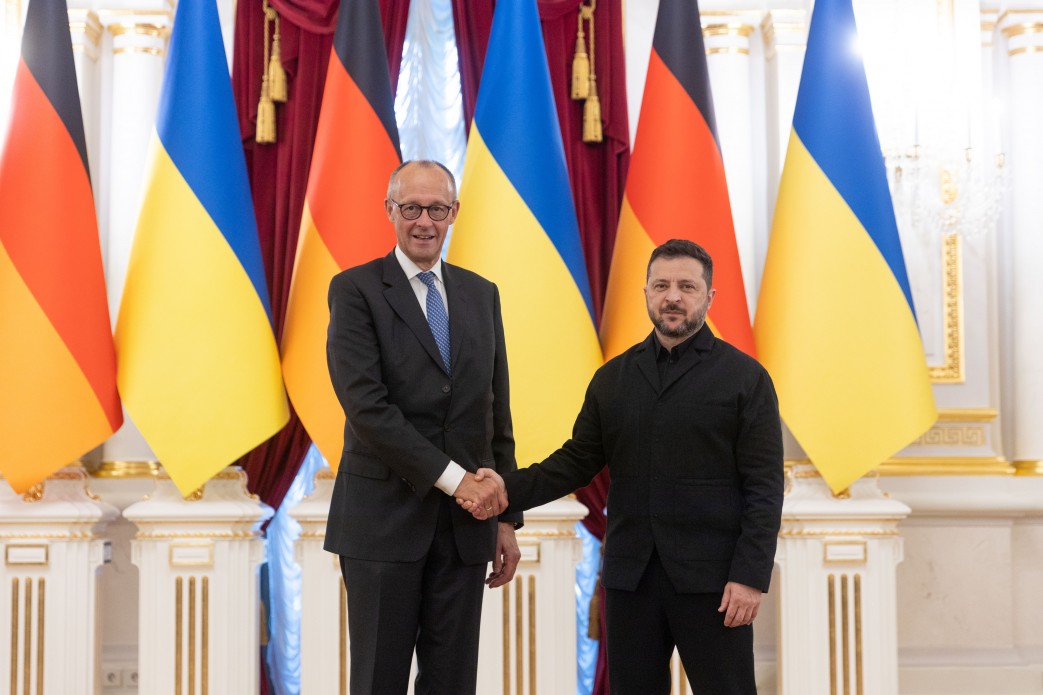
The Zelenskyy Abu Dhabi peace talks could happen far sooner than planned. Ukraine’s president told The Sun in Kyiv that the US-led trilateral summit in Abu Dhabi — originally pencilled in for the end of November — could take place as early as this Sunday, November 1, and that Kyiv is pushing to bring it forward. In a separate briefing for reporters, Volodymyr Zelenskyy dismissed Donald Trump’s calls for him to stand aside, warned that Moscow’s price for ending the war now extends to restructuring the security system of Europe and the world, and set out the air-defence arithmetic driving his urgency: Ukraine is receiving an average of 12 American Patriot interceptor missiles a month, about 150 a year, while Russia fires roughly 150 ballistic missiles at Ukraine every month.
“We are ready to speak — about any kind of topics”
Speaking to The Sun’s special correspondent Paul Sims at his fortified Kyiv headquarters, in the second part of an interview published on Wednesday, Zelenskyy framed Ukraine’s position as openness without capitulation. “Of course, without hope, nobody can live. We are ready to speak, we are ready for negotiations, any kind of format, we are even ready to speak about any kind of topics, sensitive topics for us. It may not be fair even to discuss some topics, but we are ready, because I don’t want to show that we are stopping the negotiation process.”
But he was equally clear that Ukraine will not pay a heavy price for peace, and that the United States, while remaining neutral in form, must see Russia as the aggressor. “If the United States, our strong partner, understands that Putin’s goal is to occupy us and to destroy us, they can’t be on Putin’s side.” Asked whether the war is closer to escalation or to peace, he answered: “Very hard to answer… everything in this war depends on the will of different countries or leaders.”
The Sun reported that the summit is expected to be led by a US team in Abu Dhabi and would be the first face-to-face talks since the Trump administration’s sanctions relief for Moscow. Trump told reporters overnight that he plans to make Putin and Zelenskyy meet “very soon,” The Sun reported. Zelenskyy posted excerpts of the interview on his official X account on October 28.
“Trump can say what he wants about me — not about Ukraine”
In a separate briefing for reporters on Wednesday, Zelenskyy dismissed Trump’s calls for him to stand aside and let someone else negotiate. “How do I feel about it? I’m calm. Freedom of speech exists not only in Ukraine, but in the US as well. President Trump can say whatever he wants about me personally, but not about Ukraine. When he says something about Ukraine, I respond because I have a responsibility to defend our country.”
He said he has not spoken directly to Trump since the president told reporters last week that “Russia, frankly, has been fine on Ukraine. They haven’t been doing much.” Ukraine, he argued, reads Moscow better than Washington does. “We understand Russians more clearly than the United States,” he said, describing Putin as “a deeply Soviet person… When Putin is lying, we feel it.” The Sun contrasted that with envoy Steve Witkoff addressing Putin as “Sir” in St Petersburg and calling him a “humanitarian.” Zelenskyy also urged other world leaders to be more direct with Trump, thanking UK Prime Minister Andy Burnham for reacting quickly, and said speaking honestly is “one of our weapons.”
The Brussels meeting that never happened
Zelenskyy accused the United States of derailing talks in Brussels on Monday, saying Washington invited a Ukrainian delegation and then postponed at the last minute to focus on the Middle East. “We decided to have a meeting in Brussels. The Americans invited us. They invited, now they postponed it. Why? Because there are some tensions around the Middle East… if you already decided that the priority is the Middle East, you have to know that you will make this peace process slow.” The United States is focusing on the Middle East, he added — a distraction Kyiv blames for the drift it now wants the Sunday timetable to correct.
What Abu Dhabi would actually discuss
The Associated Press, reporting Zelenskyy’s remarks to reporters on Tuesday that were embargoed until Wednesday, said the November Abu Dhabi talks have not yet been scheduled because Washington is awaiting developments in the Middle East. Finland’s Alexander Stubb and Norway’s Jonas Gahr Støre, who spoke to Putin by phone on Tuesday — the call covered in our report on Finland’s Stubb and Norway’s Støre calling Putin directly on Ukraine — told Zelenskyy that Russia is “serious” about de-escalation steps: a pause in attacks on energy infrastructure and commercial sea traffic, further prisoner exchanges, and discussion of formats for a leaders-level meeting.
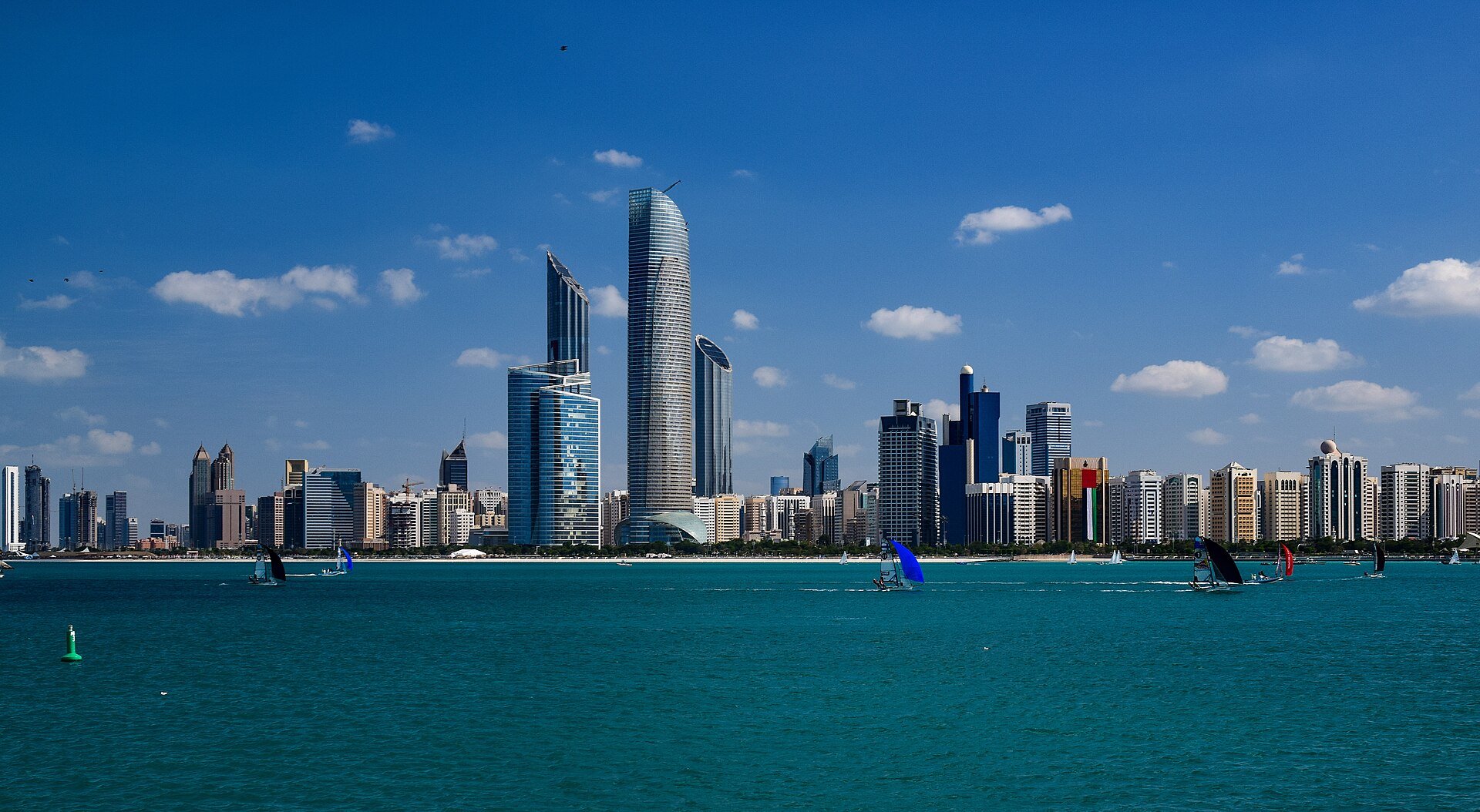
In a Ukrainian media briefing reported by Kyiv24 on October 28, Zelenskyy said Russia is ready to take part in a trilateral meeting of delegations in Abu Dhabi and that a leaders’ meeting is not excluded. The agenda, on his account, covers an energy and maritime ceasefire and prisoner exchanges, and — raised by the US side — a Donbas demilitarised zone, the Zaporizhzhia nuclear plant (an exchange for other areas), and a demilitarised Kinburn Spit under limited Ukrainian control. All of that is attributed to Zelenskyy’s account; Moscow has not published its own agenda. Foreign Minister Andrii Sybiha, speaking in Helsinki on Wednesday, drew Kyiv’s red line for the AP: Kyiv “will never accept any formula at the cost of our sovereignty or territorial integrity.”
Moscow’s widening price, as Kyiv tells it
Zelenskyy said the Kremlin now wants not only territorial concessions and “non-aggression guarantees” but a complete restructuring of the security system in Europe and the world. On October 26, Kyiv24 reported, it became known that Putin is demanding NATO’s borders in Europe be withdrawn to their 1997 positions — a step that would strip the Alliance’s post-Cold War members, including the Baltic states and Poland, of the infrastructure that protects them. “If you want security guarantees for Ukraine, then we want them for Russia,” he quoted the Russian side as arguing, via the Kyiv Post. Such decisions rest with NATO members, not Russia or Ukraine, he said.
He warned against a possible Trump–Putin–Xi meeting dividing spheres of influence, saying he does not want a “Yalta 2, 3, 4,” and stressed that Abu Dhabi should happen before any such “global division”: “Without Europe, it is impossible to discuss security guarantees and post-war reconstruction of Ukraine.” He also described what he called an “economic marriage” taking shape between Washington and Moscow: the US–Russia diesel deal “opens the door” to further steps — fertilisers, gas, frozen assets, sanctions lifted on specific individuals and entities — and sanctions have already been lifted on Russian oligarchs close to Putin, he said. “Russia… could genuinely propose a sort of ‘economic marriage’ to America — as unpleasant as that may sound… Every deal involving Russia contains some unpleasant element that isn’t immediately apparent,” he said, in remarks reported by the Kyiv Post quoting Ukrainian media.
The Patriot arithmetic: 150 a year against 150 a month
Ukraine has received an average of 12 US Patriot interceptors per month throughout 2026, according to the Kyiv Independent and AP reporting of Zelenskyy’s remarks; Kyiv24 reported that Zelenskyy put Ukraine’s need at 35 a month. “Imagine this: you can count on getting 150 missiles a year from America, while you have to shoot down 150 ballistic missiles a month.” Even 150 a year leaves a significant gap: at a one-for-one rate, a year’s supply covers roughly one month of Russia’s ballistic fire — and real-world interception often uses more than one interceptor per target.
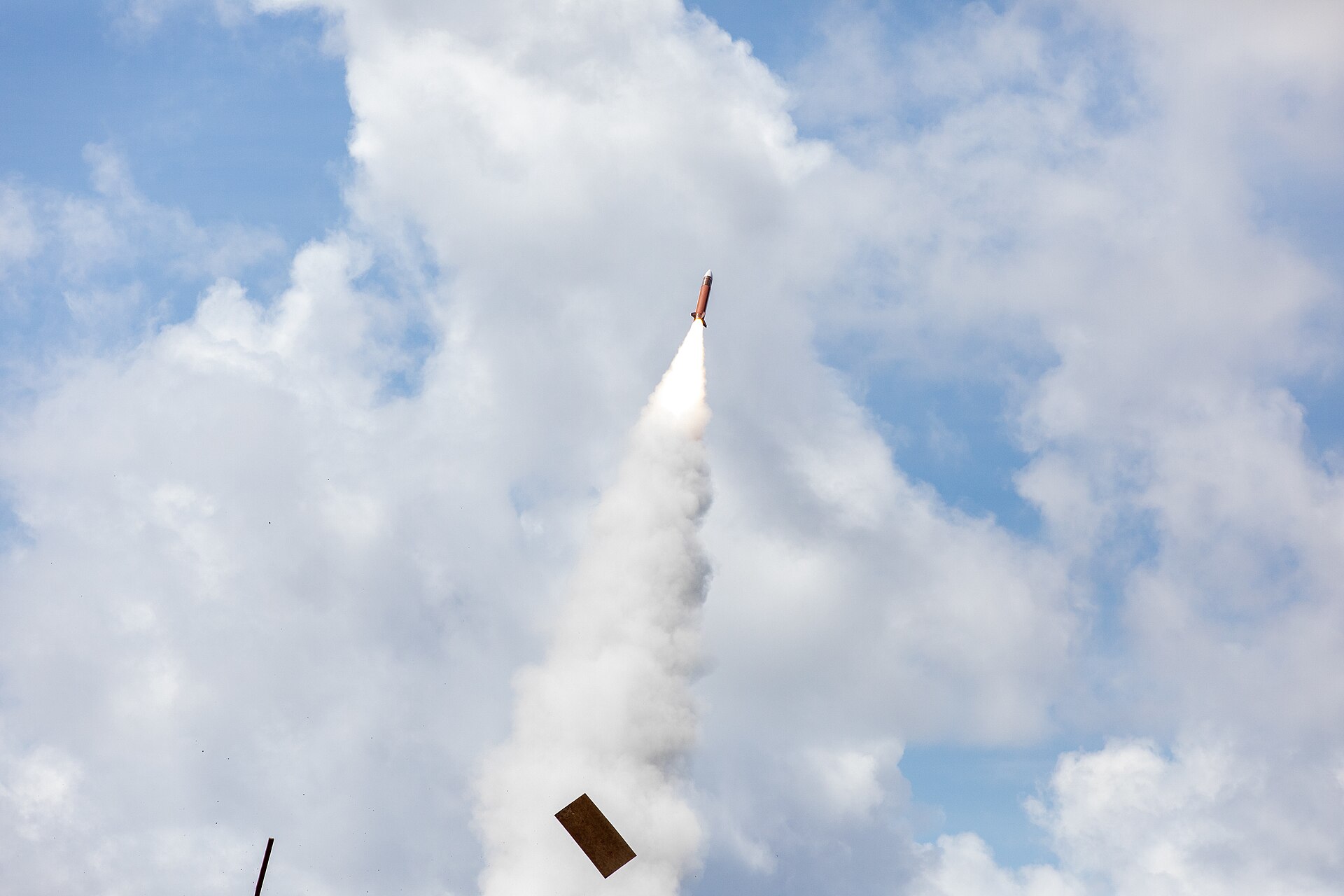
The Iran war has depleted US Patriot stocks, AP reported. European countries have agreed to transfer interceptors from their own stockpiles, but transfers of US-made missiles need US Defense Secretary Pete Hegseth’s approval. “We want the Americans to start signing off… Because without Hegseth’s signature, it’s simply impossible,” Zelenskyy said, via the Kyiv Independent. The shortage also affects NASAMS missiles bought through NATO’s PURL mechanism. It is the same figure he first put on the table on October 19, in the remarks covered in our report on Zelenskyy’s Bloomberg interview, the Patriot offer and the refusal to capitulate.
The pressures, as Zelenskyy listed them, are converging — Starlink and Starshield disruptions, intelligence sharing, interceptor supplies and the diesel deal. “We understand where things are heading. It’s like the next installment of Home Alone. It is a challenge — a tough challenge,” he said, via the Kyiv Post. Separately, he confirmed that US–Ukraine intelligence sharing has resumed and thanked Trump and US military officials. He also said Ukraine has assisted Middle East partners at their request, including support related to bases hosting American personnel in Saudi Arabia and the UAE.
The war does not pause for the diplomacy
On the ground, AP reported, the planned six-day local ceasefire in and around Russian-occupied Oleshky held for its first day and night: both sides’ ombudspersons, Ukraine’s Dmytro Lubinets and Russia’s Yana Lantratova, said on Wednesday there had been no violations for 30 hours. About 2,000 residents remain in the area; doctors, medicines, food and water are to go in before evacuation corridors open, and the truce is due to run through Sunday — the same day Kyiv wants the Abu Dhabi talks — as we reported in the expanded Oleshky ceasefire report.
Elsewhere the exchange continued: a Russian jet-powered drone strike on Kharkiv wounded five people including a four-year-old, and Russia’s defence ministry said its air defences downed 531 Ukrainian drones overnight, with eight people wounded in three regions — the night’s fighting covered in our report on the reported strikes on the Novolipetsk steel plant and the Azot chemical factory. Wednesday was day 1,708 of the full-scale invasion, per Ukraine’s General Staff daily update.
Why this matters
The Sunday push is, first, a timetable tactic: by demanding speed, Kyiv makes Washington’s Middle East distraction — not Ukrainian reluctance — the visible bottleneck, answering Trump’s charge that Zelenskyy is the one blocking a deal. Second, three clocks now run against each other: Washington’s attention, Ukraine’s winter air-defence stocks — 12 interceptors a month cannot mathematically cover 150 ballistic missiles a month — and Europe’s quiet re-engagement with Moscow in the Stubb–Støre call, which Kyiv welcomes as pressure but fears as a channel it does not control. Third, the widening Russian price — territory plus a 1997 NATO rollback plus a great-power “division” — is, on Kyiv’s account, designed to be undeliverable, shifting blame for failure onto Ukraine; Moscow’s stated position is that its security demands are legitimate and that talks impose no halt to military operations. And fourth, the gains and losses are asymmetric: a Sunday meeting gains Kyiv momentum and a path to a leaders’ format, while delay gains Moscow time to fire another month of ballistic missiles at a grid defended, on Zelenskyy’s numbers, by a month’s worth of interceptors per year.
What happens next
Three scenarios frame the days ahead. (a) Washington confirms a Sunday or near-term Abu Dhabi technical meeting — watch for a US announcement, and whether energy and maritime pauses and prisoner exchanges headline the agenda. (b) The meeting slips toward late November as Middle East events dictate, with the Oleshky truce, due to end Sunday, as the test of whether local truces can scale. (c) A leaders-format discussion emerges, where territory — the issue Zelenskyy insists only leaders can touch — meets Sybiha’s red line on sovereignty. Also watch Hegseth’s pending interceptor-transfer signatures, and any Kremlin response to the Sunday proposal; Moscow had not publicly answered it as of publication.
Sources
- The Sun, October 28, 2026: interview with President Zelenskyy (second part, special correspondent Paul Sims). the-sun.com
- Associated Press, October 28, 2026: “Local Ukraine ceasefire holds for second day,” via Naharnet / Europe Says. europesays.com
- Kyiv Post via Europe Says, October 28, 2026: “Zelensky Warns of Russia’s ‘Economic Marriage’ With US.” europesays.com
- Kyiv Independent via Europe Says, October 28, 2026: “Ukraine receives 12 Patriot missiles per month from US, Zelensky says.” europesays.com
- Kyiv24, October 28, 2026: “Zelensky reveals Russia’s new conditions for ending the war.” kyiv24.com
- President Zelenskyy’s official X account, @ZelenskyyUa, October 28, 2026 (interview excerpts).
Note: figures and demands attributed to officials above are reported as their accounts. Russia had not published its own agenda for the Abu Dhabi talks or answered the Sunday proposal as of publication.