Aden airport missile attack: two missiles struck the grounds of Aden International Airport on Friday evening, landing roughly 500 metres from a Yemenia Airways jet preparing to depart for Cairo — the second attack on the airport in under ten days, on the same day Saudi air defences intercepted a ballistic missile bound for the oil port of Yanbu.
500 Metres From a Passenger Jet — Aden Is Hit Again, and Yanbu Is Targeted
Track it live: Live Global Wars Tracker · Middle East Conflict Map
The Aden airport missile attack unfolded in two acts on Friday, October 16, on opposite sides of the region — one over Saudi Arabia in the afternoon, one over Aden in the evening — and together they describe a campaign widening faster than the defences built to contain it.
In the afternoon, the Saudi-led coalition announced a string of interceptions: a ballistic missile destroyed as it headed toward Yanbu on Saudi Arabia's Red Sea coast, two cruise missiles brought down over the Red Sea, and three drones destroyed over the kingdom's southern region and the Riyadh region, according to coalition spokesman Turki al-Malki. Earlier in the day, Saudi civil-defence alerts had sounded in Jazan and Khamis Mushait in the south — the familiar prelude to incoming fire.
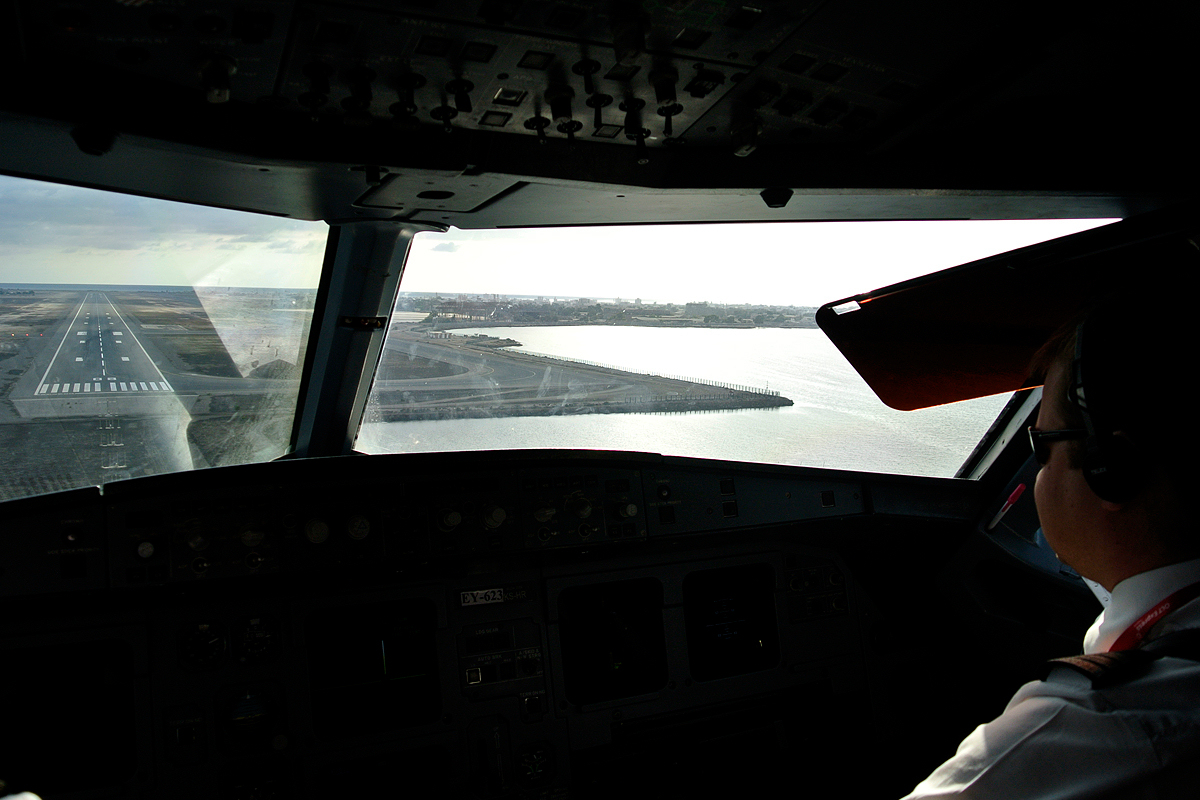
Then, in the evening, came Aden. Two missiles landed on or near the grounds of Aden International Airport, the main air gateway for Yemen's internationally recognised government. Aden's police and security department blamed the Houthis. Yemen's information minister said the missiles came down about 500 metres from a Yemenia Airways aircraft that was preparing to depart for Cairo; a security official said passengers were evacuated quickly. No casualties were reported.
The second time in ten days
The airport has now been attacked twice in under ten days. The first strike came on October 7, when missiles hit the airport as the Houthis simultaneously fired on targets inside Saudi Arabia — an attack we covered in our report on the first Aden airport strike. On Thursday, five ballistic missiles and drones struck Al-Maashiq Palace, the seat of Yemen's government in Aden, killing five people and wounding 16 — the palace attack we reported on October 15. Friday's airport strike makes three major Aden targets in ten days: the airport, the palace, and the airport again.
Yemen's transport ministry characterised Friday's strike as part of a systematic escalation against vital facilities — a pattern, in the government's telling, not an incident. The information minister's account stressed how close the missiles came to a civilian airliner full of passengers boarding for an international flight.
The Houthi account is different, and it matters that both are on the record. A Houthi military source, speaking through the group's Saba outlet and reported by AFP, said the intended target was not the civilian airport but an adjacent military site at Badr Camp in Aden — described as a command headquarters and weapons depot for Saudi-led forces. On that telling, the airport was collateral geography: the camp sits next to it. Neither account can be independently verified from outside a closed war zone, and the distance between them — a deliberate strike on civilian infrastructure, or a military target struck imprecisely — is precisely the argument now being fought over in public.
Yanbu: the port that cannot be allowed to burn
The afternoon's interceptions deserve as much attention as the evening's strike, because of where the ballistic missile was going. Yanbu, on Saudi Arabia's Red Sea coast, is the western terminus of the East–West pipeline, which carries crude from the kingdom's eastern oilfields across the peninsula to the Red Sea. From Yanbu, tankers can load and sail for Europe and Asia without passing through the Strait of Hormuz — which is why, with Hormuz disrupted since February, Yanbu has become the single most important bypass in the world oil market. Loadings there have already risen this year far above the port's normal pace, even though they remain well below the pipeline system's multi-million-barrel-per-day capacity.
Yanbu has been targeted before: an aerial attack set part of its oil terminal ablaze on October 1, as we reported in our coverage of the Yanbu port attack. Friday's missile never arrived — the coalition says it was intercepted and destroyed. But the message of the trajectory is the point. Whoever fired it was aiming at the infrastructure that keeps oil flowing when Hormuz cannot.
Markets heard it. Brent crude briefly reached $110 a barrel on Friday, its first time at that level since May, as traders priced the risk that the bypass itself is now in range. Follow the price on our live oil price tracker. Iran, for its part, denied involvement in or backing for the Houthi attacks on Saudi Arabia — a denial issued the same day, and one that the coalition's statements conspicuously did not answer by naming Tehran: the coalition's account of Friday's interceptions did not formally name the attacker at all.
A ground war moving at the same time
The missile war is not the whole war. On the ground, Yemen's government said on Friday that its forces had advanced in eastern Marib province and inflicted very large losses on Houthi forces over the previous 24 hours — figures that have not been independently verified and should be read as claims. Government forces also said they had repelled large Houthi attacks around Taiz and captured a Houthi drone team there. Taiz's main road south to Aden has been cut in recent weeks, and the humanitarian consequences are compounding: as we reported today, fighting has cut off aid to some 800,000 people.
Fighting between the government and the Houthis resumed in earnest last month after a long, fragile lull, and each week since has added a new category of target: airports in Saudi Arabia, the palace in Aden, the oil terminal at Yanbu, and now Aden's airport for a second time. The sequence suggests a deliberate logic — pressure on the government's symbols and lifelines in the south, pressure on the kingdom's economic arteries in the north — whether or not any single strike was aimed exactly where it landed.
Why this matters
Three risks run through Friday's events, and they compound. The first is civilian aviation. A missile landing 500 metres from a passenger jet is a near-miss by any definition, and it happened at an airport that has now been struck twice in ten days. Airlines and insurers do not need a direct hit to make decisions: they need a pattern. If Yemenia — one of the few carriers still serving Aden — suspends operations, Yemen's south loses its main air link to the world, and with it a channel for medical travel, remittances and aid workers.
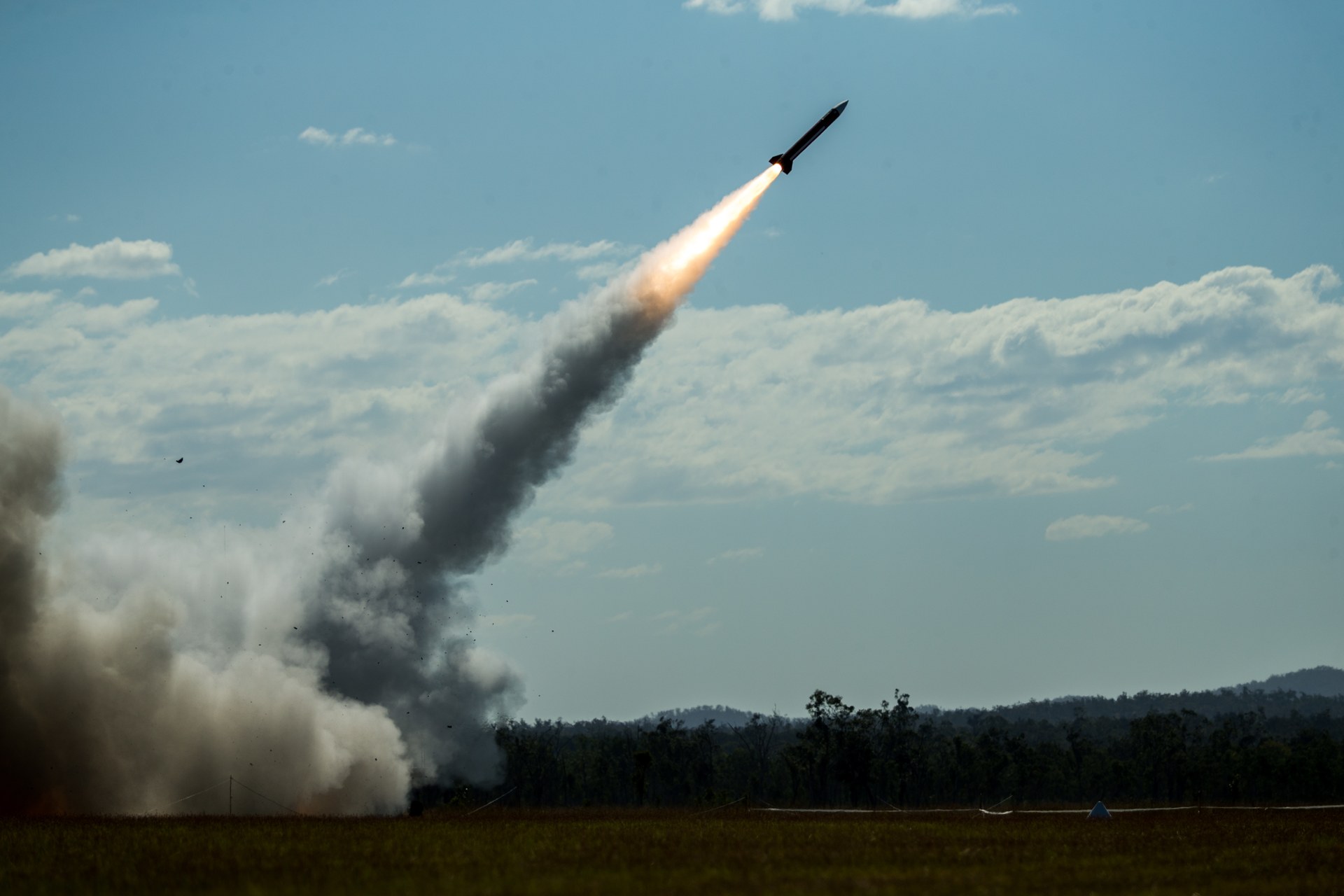
The second risk is saturation. Saudi air defences intercepted everything fired at the kingdom on Friday: one ballistic missile, two cruise missiles, three drones. That is the system working. But interceptor magazines are finite and expensive, and the arithmetic of this kind of war favours the side firing cheaper weapons in larger numbers. Every salvo is also a reconnaissance: it maps response times, radar coverage and stockpile draw-down for the next one.
The third risk is the oil pass-through. Brent at $110 is not only a number for traders; sustained prices at that level feed into fuel, food and shipping costs worldwide within weeks. Yanbu exists, strategically, to cap that risk — to guarantee that even a closed Hormuz cannot strangle supply. A missile campaign that credibly threatens Yanbu attacks the cap itself. That is why a single intercepted missile, which damaged nothing, moved the world's benchmark oil price to a five-month high.
What each side says it is doing
Yemen's government frames the strikes as a systematic campaign against vital civilian facilities — the airport twice, the palace once — and points to the passenger jet as evidence that civilian life itself is the target set. The Houthi framing, offered through the Badr Camp claim, is that their fire is aimed at the military infrastructure of the Saudi-led coalition operating from Aden, and that the airport's proximity to that infrastructure is the coalition's choice, not theirs. Saudi Arabia, through the coalition, frames Friday as a defensive success: threats detected, intercepted, destroyed, with no damage to Yanbu. Iran denies involvement altogether. Each account contains the piece of the picture its teller most needs believed — and the independently verifiable core is narrow: missiles fell near a passenger aircraft in Aden, a missile bound for Yanbu did not arrive, and oil touched $110.
What happens next
Watch three things. First, Yemenia and Aden airport: whether flights continue on schedule this weekend is the fastest test of whether the near-miss changes behaviour — a suspension would be its own escalation, stranding the government's capital. Second, the tempo over Saudi Arabia: if salvos grow larger or arrive on consecutive days, the question shifts from whether the defences work to how long they can be asked to. Third, Yanbu's loadings: any sign that tanker traffic or insurers are hesitating at the Red Sea terminal would show up in the oil price before it shows up in any statement. The war that restarted last month has now, in a single Friday, touched a civilian airport, a seat of government already still smoking from Thursday, and the oil market's insurance policy against Hormuz. None of those threads has an obvious way back to quiet.
Sources: Reuters, October 16, 2026 (missiles hit Aden airport; coalition intercepts missile headed for Yanbu); Associated Press, October 16, 2026; AFP reporting via Al Jazeera, October 16, 2026 (information minister statement; Houthi Badr Camp account; Marib and Taiz claims); Arab News, October 16, 2026 (Yemeni government account). Battlefield claims are attributed to their sources and have not been independently verified.