Houthi attack Shabwa camp: 73 people were killed on Monday, October 19, 2026, when three ballistic missiles hit a Yemeni government military training camp — the al-Alam camp — in Shabwa province during morning training, according to the provincial authorities’ latest official count, reported by the Associated Press. The toll rose in successive counts of the same attack: at least 18 killed (Reuters) and at least 20 soldiers killed (AP) on Monday morning, then 53 and 58 later on Monday, 60 and then 73 on Tuesday — with the Wall Street Journal reporting at least 75 on October 25.
Three Missiles Struck a Camp at Morning Training — and the Count of the Dead Rose for Two Days
Track it live: signalpostnews.com/tracker/wars — live maps and updates for the wars and armed conflicts covered by Signal Post News.
What happened in Shabwa
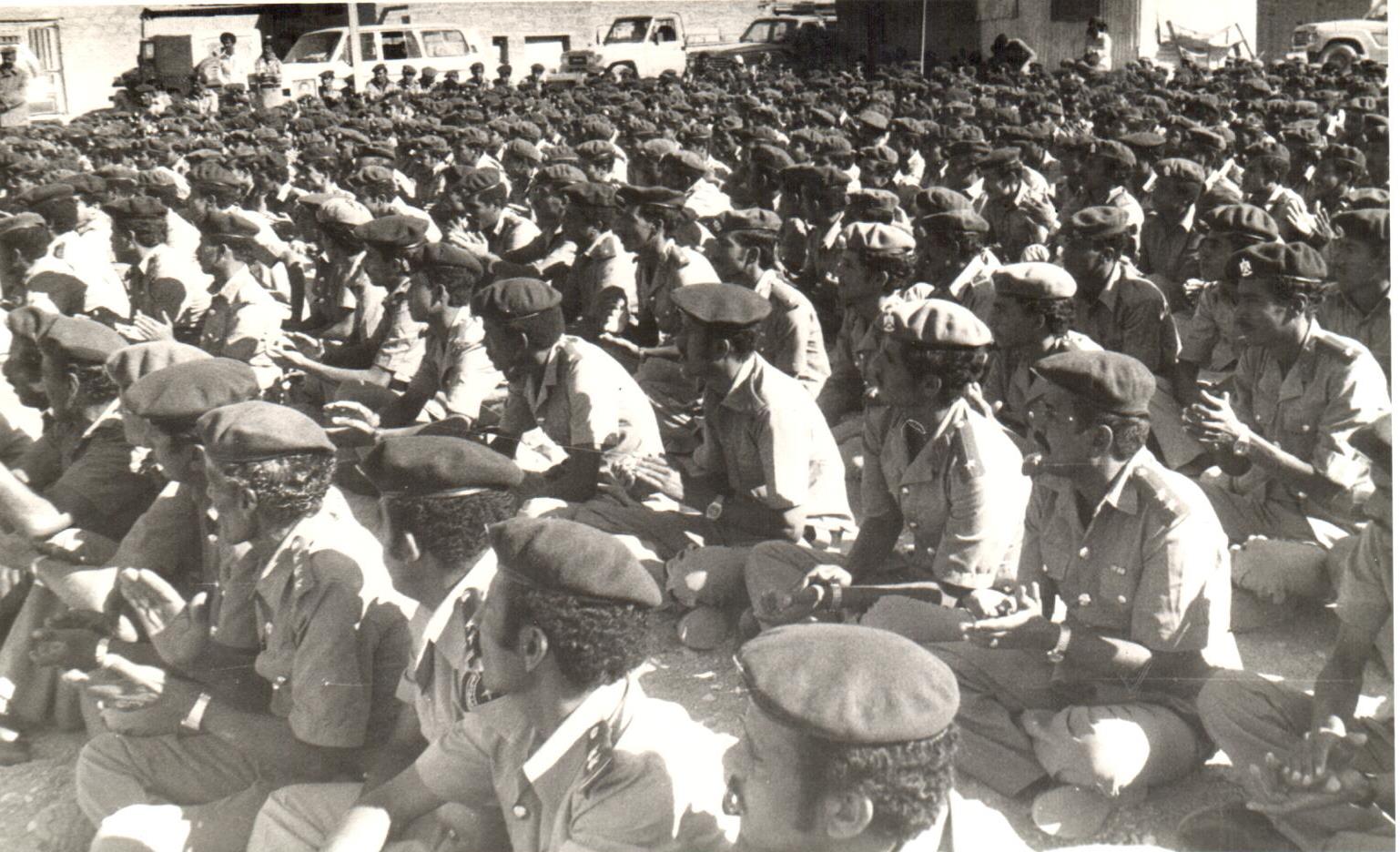
SHABWA, Yemen — The attack struck on Monday morning, during morning training, at a military camp for Yemeni government forces in Shabwa province in southern Yemen. Four government and medical sources told Reuters that at least 18 people were killed when the Houthis attacked the camp with three ballistic missiles, targeting soldiers as they trained.
The Associated Press, reporting from Cairo and citing two Yemeni military officials, gave the camp a name and a higher toll: the rebels fired ballistic missiles on the al-Alam military camp in Shabwa province on Monday, killing at least 20 soldiers and wounding at least two dozen troops. AP described it as one of the deadliest attacks in a recent surge of fighting that has shattered the ceasefire agreed in 2022.
The two wire accounts agree on the essentials — the day, the province, the weapon, the target type, and that this was a mass-casualty strike on government soldiers at training — and they were gathered independently, from different officials and sources, which is why the tolls do not match exactly. Early in a mass-casualty event in a remote province, that kind of gap is normal. It is also why this article keeps both numbers attached to the news organisations that reported them, rather than picking one and presenting it as settled.
A caution on the toll: 18, 20 — and claims of 40
Readers searching this story on Monday will meet a third, much larger figure, and it needs to be handled plainly. Local and aggregator reporting, citing Erem News, put the toll at 40 killed and around 150 wounded, named the camp as "Al-Ilm Camp" in the Jarudan district, and identified the unit hit as a newly formed Rapid Intervention Battalion. Middle East Eye, in its early framing, spoke of "40 killed and wounded" combined — a very different claim from 40 killed.
None of that larger figure was confirmed by Reuters or AP in their Monday reporting. Al-Alam and Al-Ilm are transliteration variants of the same camp name as reported — Arabic names pass into English spelling in more than one way, and two spellings do not mean two camps or two attacks. The Jarudan district detail and the battalion name may yet prove correct, and the toll may yet rise as the wounded are counted and the dead are identified. But as of Monday morning, the verified floor is this: at least 18 killed (Reuters, four government and medical sources) and at least 20 soldiers killed with at least two dozen wounded (AP, two Yemeni military officials). Anything above that, in this article, is labelled what it is — an unverified early claim, not a fact.
There is a second, related caution. This story was held through the early hours of Monday under a simple newsroom rule — never publish a death toll on one source alone — because for hours it rested on Reuters and verbatim syndication of Reuters. AP's independent report, with its own officials, its own toll, the camp name and a wounded count, is the second source that lifted that hold. The discrepancy between the two wires is not a weakness in the story. It is the evidence that two separate reporting chains reached the same event.
The toll kept rising: the updates, in sequence
Update — later on Monday, October 19 (53 killed, 200 wounded). Later on Monday, Reuters reported that 53 people were killed and 200 injured in the attack, citing the Shabwa local authority; the Associated Press, citing Yemeni military officials and the provincial government, likewise put the toll at at least 53 soldiers killed and 200 recruits wounded, and reported that the Houthis had acknowledged targeting the camp. Agence France-Presse, via Shabwa Deputy Governor Fahad al-Khalifi, reported at least 50 killed and more than 100 injured, some of them critical, with hospitals overwhelmed and the seriously wounded transferred to other provinces. Reuters said it had verified video from Shabwa showing injured people and bodies on the ground. The camp was identified as the al-Alam camp in the Jardan district, north of Ataq, and the recruits were lining up for training when the three ballistic missiles struck; government spokesman Majed al-Nuzaili described the site as a training centre for police and security recruits — a Rapid Intervention force. Houthi military spokesperson Yahya Saree said on X that the group had targeted the camp, which he said was run by Saudi forces — a claim carried here as Saree’s. Presidential Leadership Council head Rashad al-Alimi promised a “firm response”. In Saudi Arabia, AP reported, the kingdom on Monday cancelled a global investment conference scheduled for the following week and extended remote schooling in and around Riyadh — a measure of how the Houthi campaign was unsettling Saudi society.
Update — Monday night, October 19 (58 killed, 14 missing). In a later updated Reuters report on Monday, Shabwa Governor Awad al-Wazir put the toll at 58 people killed and more than 200 injured, and said 14 other people remained missing after the bombardment of the al-Alam camp. The 58 figure is Governor al-Wazir’s updated count, reported by Reuters; it superseded the same day’s 53 local-authority figure in sequence. The two numbers are successive counts of the same attack, not separate incidents, and they are not added together.
Update — Tuesday, October 20 (60, then 73 killed). On Tuesday, AP reported in a first filing, citing three Yemeni officials speaking anonymously, that the toll had risen to 60 — primarily new recruits — calling it the deadliest strike since fighting began escalating three months ago; at least a dozen people were still missing a day after the strike, more than 200 recruits were wounded, several of the seriously injured had been transferred to hospitals in other provinces in life-threatening condition, and at least 15 of those killed were from a single Yemeni tribe. In a later AP filing the same day, a senior Yemeni government official and Shabwa Governor Awad Ibn al-Wazir, speaking directly to AP, put the toll at 73 — all of them new recruits aged between 18 and 20, with some still missing a day after the Iranian-backed Houthis hit the al-Alam training camp with ballistic missiles. Governor al-Wazir has characterised the dead as recruits from across Shabwa who were being trained to provide security in the province, not for combat operations. The 73 figure — the provincial authorities’ count — is the latest wire count, and it is the figure this article’s headline carries.
Update — Sunday, October 25 (Wall Street Journal: at least 75 killed). On Sunday, October 25, the Wall Street Journal reported that the strike killed at least 75 people and wounded more than 200. That count rests on the Journal’s own reporting — Saudi and Yemeni officials briefed on the incident, and witnesses; the Saudi government did not respond to the Journal’s request for comment. The Journal also reported that the casualties included Saudi troops. That composition detail is the Journal’s alone, and it is kept separate here from the earlier accounts: AP’s filings and the governor described the dead as Yemeni new recruits aged 18 to 20, and the two composition claims are not merged. The Journal further reported that Houthi drones had surveilled the desert base for days while Saudi officers prepared to train newly enlisted local forces, and that the three ballistic missiles hit within minutes as training got under way. Mohammed al-Basha of the Basha Report told the Journal the Houthis are “systematically targeting military reinforcements and redeployments”, including troop concentrations and recruitment centres. A recheck of the wires at publication found no AP or Reuters filing after the Journal’s report confirming or correcting the 75 figure; Reuters’ latest wire toll remains 73, which is why the headline carries 73 and the Journal’s higher count is reported here, attributed, in sequence.
Context: a war that began in 2014 and never really ended
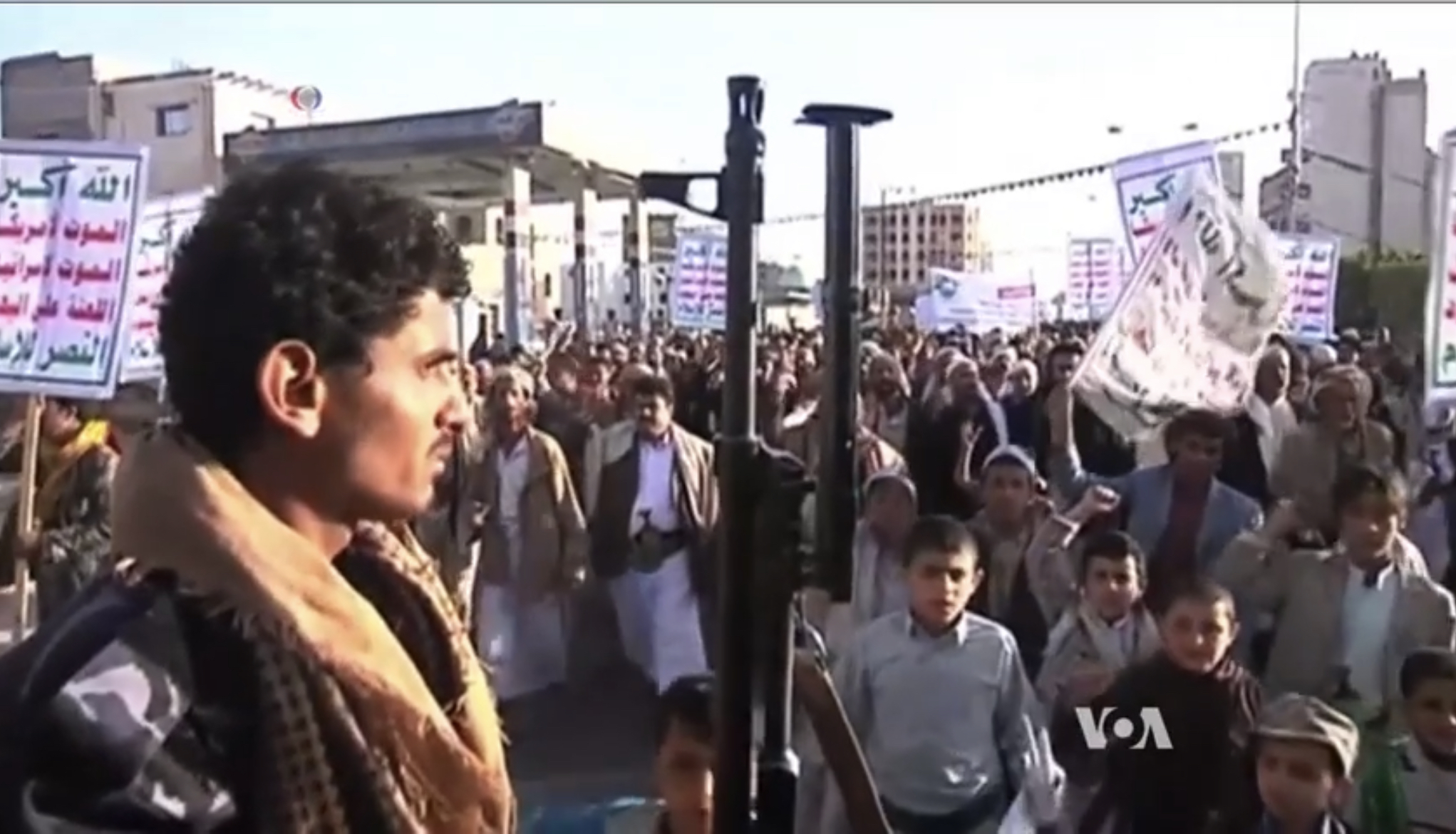
Yemen's war began in 2014, when the Houthis — the Iran-aligned movement also known as Ansar Allah — seized the capital, Sanaa. A Saudi-led coalition intervened in 2015 on the side of the internationally recognised government, and the war settled into the pattern that has defined it ever since: intense campaigns, shifting front lines, and a bloody stalemate in which neither side could impose an outcome on the whole country.
A truce agreed in 2022 changed the temperature, if not the map. It held, in Reuters' phrase, until this year — years in which large-scale fighting eased even though nothing fundamental was settled: not control of the capital, not the division of the country, not the grievances that started the war. What has happened in 2026, step by step, is the unmaking of that pause. AP's Monday report placed the Shabwa strike inside "a recent surge" that has shattered the 2022 ceasefire, and Reuters noted that fighting has escalated in recent weeks — Shabwa is one front in a wider regional conflict that, in Reuters' framing, began with U.S. and Israeli strikes on Iran in late February.
The immediate military sequence matters. Earlier this month, Reuters reported, government forces launched a campaign to recapture Houthi-held areas, recovering ground near the Bab el-Mandeb Strait — the narrow waterway at the mouth of the Red Sea whose far shore the Houthis have used, for years, to threaten one of the world's most important shipping lanes. A government offensive moving toward Houthi territory, and a Houthi ballistic strike on a government training camp in the south, are not separate stories. They are the two halves of a war restarting: one side advancing on the ground, the other answering with the long-range weapons it has spent a decade refining.
The weekend before the Shabwa strike supplied the other half of the cycle. AP reported that the camp attack followed a weekend airstrike blamed on Saudi-led forces that killed at least nine people in Saada, in Yemen's north — a toll the fuller AP account attributed to the Houthi-run Health Ministry, which said the dead included children and women. Saudi Arabia offered no comment on that claim in AP's reporting, and it is presented here exactly as AP presented it: a claim by the Houthi-run ministry about an airstrike blamed on the Saudi-led forces, not an independently confirmed account. Saada on the weekend, Shabwa on Monday — each side's deadliest recent blow answered, within days, by the other's.
And beyond Yemen's internal fronts, the Houthis have increasingly targeted Saudi airports and oil and military facilities in recent weeks, as AP noted — the campaign this site has been covering as it reached Riyadh's airport and grounded flights. Related coverage: the second Houthi attack on Riyadh's airport, the Houthi warning of a long conflict as the Riyadh escalation grew, and airlines suspending Riyadh flights after the airport attacks. Shabwa is what that same missile force does when it turns from airports abroad to a camp at home.
Why this matters
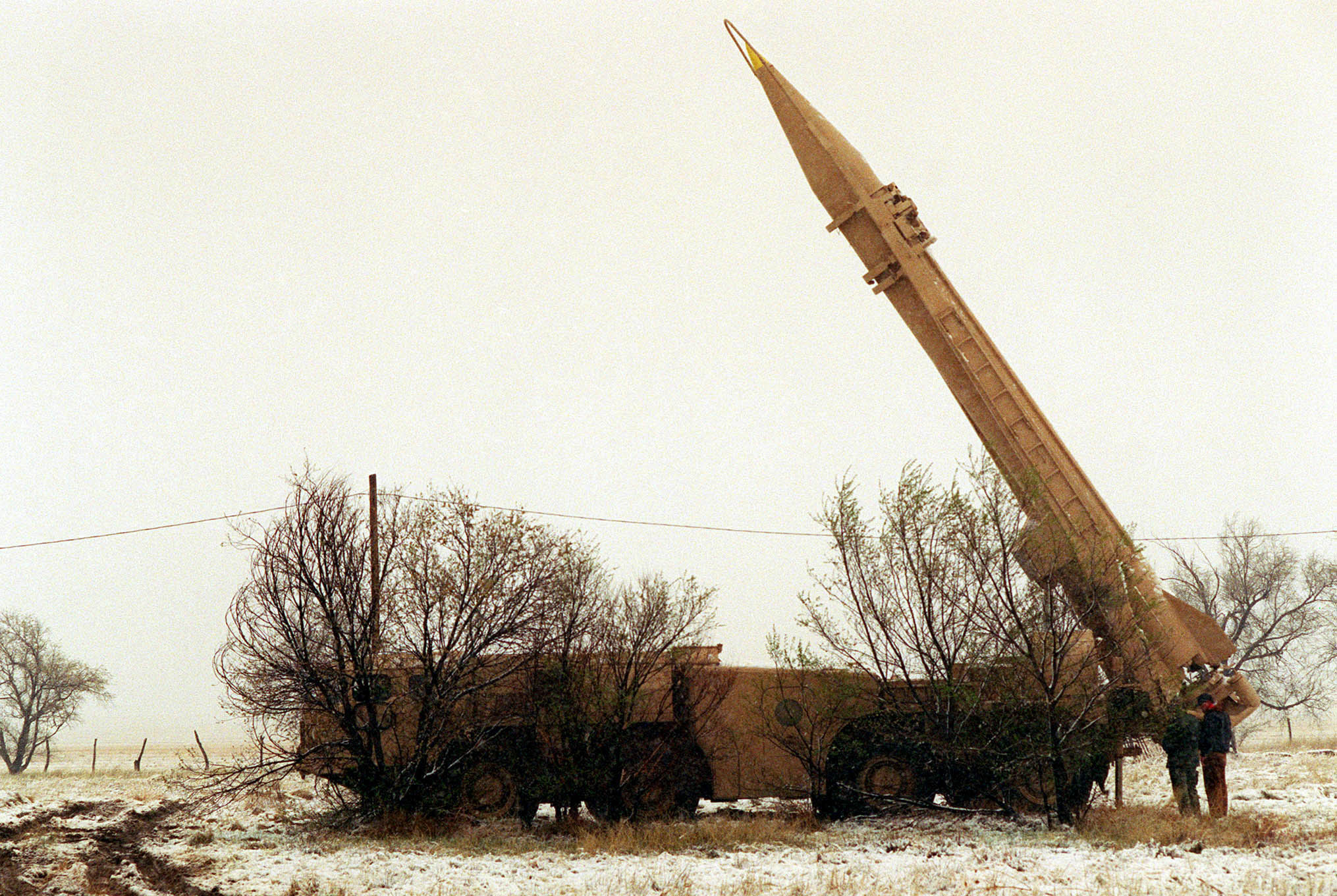
First, the target. A training camp at morning training is not a front line, a checkpoint or an advancing column. It is a concentration of soldiers in a predictable place at a predictable hour — which is precisely what ballistic missiles, weapons too inaccurate for point targets and too powerful to waste, are used against. Three missiles, in Reuters' account, against men at training says the aim was not to stop an advance but to inflict casualties at scale, in one blow, on a unit being prepared for the war's next phase. If the unverified local claim that the unit was a newly formed battalion proves true, that reading sharpens further — a strike on a force before it ever reaches the field — but the verified facts already support the core of it: this was a blow against the government's capacity to generate new combat power, not a clash between forces already engaged.
Second, the timing. The strike lands after the government launched its campaign to recapture Houthi areas and recovered ground near Bab el-Mandeb. In a stalemate, an offensive is a bet that the other side cannot make you pay more than you gain. Monday's missiles are the Houthi answer to that bet, delivered in the government's southern heartland rather than at the front: you may advance in the west, the message runs, but your rear areas, your camps and your recruits are within range. Whether that deters the campaign or hardens it is the central military question of the coming weeks — and Yemen's history cuts both ways, because every previous cycle of escalation in this war has been justified by each side as the response that would finally restore deterrence.
Third, the geography of the widening war. Shabwa sits in southern Yemen, far from Sanaa and far from the Saudi border. A conflict that in recent weeks has reached Riyadh's airport, Saudi oil and military facilities, the Red Sea's edge at Bab el-Mandeb and, by claim, Saada in the far north has now produced one of its deadliest single strikes in the south. Reuters explicitly frames the fighting as another front in the wider regional conflict that began with the strikes on Iran in late February. Shabwa is evidence for that framing: Yemen is no longer a frozen local war with occasional external echoes, but an active theatre whose tempo is being set by a regional confrontation far beyond its borders.
Who benefits, who loses — and what critics say
The Houthis gain a demonstration. At a moment when government forces are advancing and recovering ground, a three-missile strike deep in government territory shows reach, intelligence — a training camp's morning routine is not found by accident — and a missile stockpile that a decade of war and a Saudi-led air campaign did not eliminate. For a movement that has built its standing, at home and with its backers, on outlasting richer enemies, that demonstration has value beyond the casualties it caused.
The government loses soldiers it could not spare and faces the harder, quieter cost: every camp, depot and parade ground in the south must now be treated as a target set, which disperses forces, complicates training and slows exactly the campaign the strike answered. Its backers in the Saudi-led coalition face the mirror-image problem — the weekend Saada airstrike claim, attributed to the Houthi-run Health Ministry and unanswered by Riyadh in AP's reporting, will be used, as such claims always are in this war, to frame Monday's strike as retaliation rather than escalation, whoever fired first in this particular cycle.
Critics of the wider campaign — and of the regional war Reuters ties this front to — will make a structural point: a conflict system in which a truce can hold for years and then shatter everywhere at once was never resolved, only paused, and the civilians of Saada and the conscripts of Shabwa pay for the pause ending in the same week. Supporters of the government offensive will answer that the Houthis' missile force, used against Saudi airports and now a Yemeni camp, is itself the argument for pressing the campaign rather than returning to a truce that left that force intact. Both arguments were available before Monday. Monday gave each side its freshest evidence, which is how this war has sustained itself for twelve years.
What we know and what we don't
Known: a Houthi ballistic missile attack struck a Yemeni government military camp in Shabwa province on Monday, October 19, 2026, during morning training; Reuters, citing four government and medical sources, reported at least 18 killed and three ballistic missiles; AP, citing two Yemeni military officials, reported the al-Alam camp by name, at least 20 soldiers killed and at least two dozen wounded, and called it one of the deadliest attacks in the recent surge; the attack followed a weekend airstrike blamed on Saudi-led forces in Saada that the Houthi-run Health Ministry said killed at least nine people, with no Saudi comment in AP's account; and it comes weeks into an escalation in which government forces have advanced near Bab el-Mandeb and the Houthis have targeted Saudi airports and oil and military facilities. The toll then rose in successive official counts — 53 and 58 later on Monday and 73 on Tuesday — and the Wall Street Journal later reported at least 75; the full sequence is set out in the updates above.
Not known: a final, reconciled death toll — the successive official counts reached 73, and the Wall Street Journal’s later count of at least 75 has not been confirmed or corrected by AP or Reuters; the unverified local claim of 40 killed and around 150 wounded from Monday morning was overtaken by those later official counts; the identity and unit of the dead, beyond the unverified battalion claim; the full wounded count, beyond AP's "at least two dozen"; whether the Houthis have formally claimed the Shabwa strike and in what terms; and how the government and the Saudi-led coalition will respond. Each of those gaps can move the meaning of Monday's attack, and this article's verified core — place, weapon, target, and two independently sourced tolls — is what will still stand when they close.
What happens next
Expect, first, a numbers fight: funerals, official statements and Houthi and government media will each press their own toll, and the test for readers is whether any figure above the official 73 — or the Journal’s 75 — arrives with named sources and a reporting chain behind it, as theirs did. Expect, second, a response cycle — the pattern of the past weeks, from Saada to Shabwa, is blow and counter-blow within days, and a strike of this size on a training camp is unlikely to be left unanswered by a government in the middle of an offensive it has staked credibility on.
The strategic question is the Bab el-Mandeb campaign. If the government presses on toward Houthi-held ground, Shabwa will be read as the price of advancing — steep, but not decisive. If the offensive slows while camps are dispersed and air defences repositioned, Monday's missiles will have done exactly the work they were fired to do. And behind both calculations sits the regional frame Reuters identified: as long as the wider conflict that began in late February keeps supplying Yemen's war with momentum, weapons and justification, the 2022 truce is not coming back — and Shabwa, a camp at morning training in a province most of the world could not find on a map a week ago, is what its absence looks like up close.
Sources
Reuters, October 19, 2026 (09:32 UTC), "At least 18 killed in Houthi attack on Yemeni government military camp in Shabwa, sources say" (four government and medical sources; three ballistic missiles; morning training; Bab el-Mandeb campaign; 2014/2015/2022 background) — reuters.com. Associated Press, October 19, 2026, Cairo, AP News Summary 8:08 a.m. EDT and fuller AP account (two Yemeni military officials; al-Alam military camp, Shabwa; at least 20 soldiers killed, at least two dozen wounded; weekend Saada airstrike claim attributed to the Houthi-run Health Ministry, no Saudi comment; Houthi targeting of Saudi airports and oil/military facilities). Local and aggregator claims flagged as unverified in the text: Erem News via aggregators (40 killed / ~150 wounded; "Al-Ilm Camp," Jarudan district; Rapid Intervention Battalion) and Middle East Eye early framing ("40 killed and wounded" combined) — neither confirmed by Reuters or AP as of Monday morning. Updates: Reuters updated reports, October 19, 2026 (53 killed and 200 injured, Shabwa local authority; 58 killed, more than 200 injured and 14 missing, Governor Awad al-Wazir; Houthi spokesperson Yahya Saree’s claim; President al-Alimi’s promised “firm response”); Associated Press, October 19, 2026 (at least 53 killed; Saudi investment-conference cancellation and extended remote schooling around Riyadh); Agence France-Presse via DW, October 19, 2026 (Deputy Governor Fahad al-Khalifi; hospitals overwhelmed, seriously wounded transferred); Associated Press, October 20, 2026 (toll rises to 60, then to 73 — all new recruits aged 18 to 20, Governor Awad Ibn al-Wazir speaking directly to AP); Wall Street Journal, October 25, 2026, “Saudi-Led Troops Had Just Gathered When a Houthi Missile Left Dozens Dead” (at least 75 killed and more than 200 wounded; Saudi troops among the casualties; Houthi drones surveilled the base for days; Mohammed al-Basha, Basha Report) — wsj.com.