United States · Texas · Houston
Houston police ICE cooperation narrowed sharply on Friday. Mayor John Whitmire signed an executive order directing the Houston Police Department to contact ICE only when a person is already going to jail on new charges or other warrants and also has a federal immigration warrant in the national database — three days after Texas voters swept Democrats into statewide office, and on the same day Washington moved in the opposite direction.
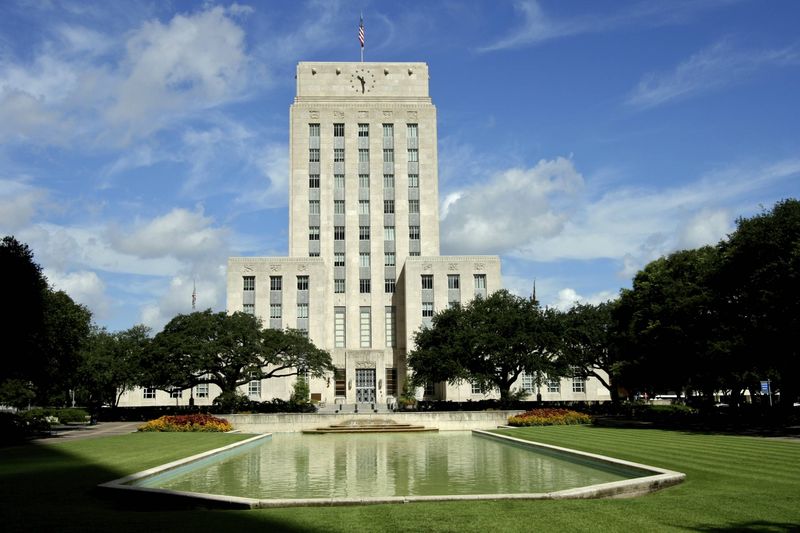
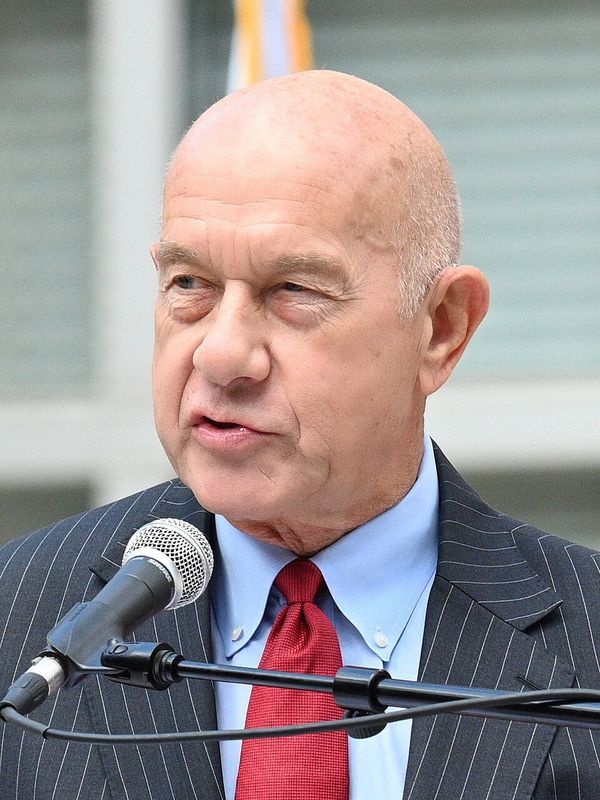
HOUSTON, November 6, 2026 — Days after elections that swept Democrats to statewide leadership in Texas, Houston Mayor John Whitmire on Friday ordered the Houston Police Department to curtail its cooperation with federal immigration officers, signing an executive order that bars officers from alerting U.S. Immigration and Customs Enforcement solely because a person has a civil immigration warrant, Reuters reported. Whitmire, a Democrat who as a state senator voted against the 2017 state law at the centre of the fight, said he acted after consulting the newly elected governor, lieutenant governor and comptroller to “reduce fear and anxiety” across Texas’s most populous city. “As I’ve said many times, elections matter,” he said at a news conference, joined by Police Chief J. Noe Diaz, who said he supports the change and that implementation has already begun.
“This is the right thing to do at the right time,” Whitmire said. “I do this to begin a healing process.” He said the policy is about “reducing fear and anxiety, not just within certain communities, but across all of Houston,” and that he hopes it becomes a model for other Texas cities. “We don’t want people to worry about their workers, their family members, their students,” he said. In a separate statement, the mayor summarised the order this way: “I have signed an executive order directing HPD to no longer contact ICE for nonviolent offences, helping reduce fear in our communities.”
What the order actually says
The order’s operative language, published by Houston Public Media, is precise about both the permission and the prohibition. “Department personnel shall contact ICE regarding a person only if that person is already going to jail on new charges or other warrants and has a positive National Crime Information Center (NCIC) hit for an ICE administrative warrant,” it reads. And: “The fact that a person is, or is suspected to be, subject to immigration enforcement shall not, by itself, be a basis to contact ICE, to prolong any detention, or to take any person into or hold any person in custody.”
Chief Diaz translated that into street-level terms. A routine traffic stop for a minor infraction now ends the way it would for any other driver: a citation, and the person goes about their day. “HPD will no longer contact ICE if they have an administrative warrant and they are not arrested,” Diaz said, in remarks reported by USA Today. Two boundaries of the order deserve emphasis, because early reactions have blurred both. First, the order does not end cooperation: a person arrested on a jailable offence who also has an ICE administrative warrant can still be reported. Second, it governs the police department’s side of the encounter only — once a person is booked into jail, subsequent decisions rest with Harris County, which runs the jail, rather than with HPD. ICE agents themselves remain free to operate in Houston; what has changed is whether the city’s own officers will summon them to encounters that would otherwise end at the kerb.
How Houston got here: SB 4, the April retreat, and the price tag
A 2017 law the mayor voted against
The legal backdrop is Texas Senate Bill 4, the 2017 law that bans so-called sanctuary-city policies and requires local cooperation with federal immigration enforcement. Whitmire voted against it as a state senator. As mayor, he does not claim Friday’s order defies it. His argument is subtler: he says the order enforces SB 4 in line with its supporters’ stated goal — cracking down on people in the country illegally who commit crimes. “We’re taking an interpretation of the law today, working with the newly elected members of the state leadership, in implementing this policy,” he said. Whether that interpretation survives contact with the law’s defenders in Austin is one of the open questions the order creates, and it is a question the incoming state leadership, not the outgoing one, will largely answer.
April: the ordinance that died under a funding threat
Houston tried a version of this once already this year, and backed down. In April, the city council moved toward an ordinance that would have given officers discretion and barred detention on civil immigration warrants alone. Governor Greg Abbott threatened to revoke more than $110 million in state public-safety grants, and the council and the mayor retreated: the city instead required officers to detain people for a “reasonable” time when ICE asked. A memo from Whitmire’s own staff at the time underlined what was at stake financially — more than $260 million in direct state appropriations flowed to Houston in 2025. One element of the April package survived the retreat: a requirement that HPD report its ICE contacts. That reporting rule is a large part of why Friday’s announcement landed with the force it did — because, for the first time, the city had published numbers.
The data behind the debate
Those numbers reframed the argument. HPD’s first reports under the disclosure rule showed officers contacted ICE nearly 200 times between April and September, including at least 36 direct handoffs of people into ICE custody, Houston Public Media reported. And the records showed something else: some of those encounters did not begin with an arrest at all. According to records obtained by Houston Public Media, some ICE contacts followed calls for help — including a call about a suicide attempt and a domestic-violence call. For the order’s supporters, those cases are the argument in miniature: if calling the police for help can end with a federal immigration referral, people stop calling, and everyone in the city is less safe. For enforcement supporters, the counter-argument is that a warrant is a warrant, and that nearly 200 contacts across six months in a city of Houston’s size shows a system working narrowly, not indiscriminately. Both readings use the same dataset; Friday’s order is, in effect, the mayor choosing between them.
Houston’s immigration-enforcement debate has a sharper edge than statistics, too. In September, an ICE officer’s fatal shooting of Lorenzo Salgado Araujo during an enforcement encounter became a citywide controversy; the agent was identified this autumn as Gregory Feathers, in reporting Signal Post News covered in its investigation of the ICE agent identified in the Houston shooting. Friday’s order does not govern ICE’s own operations — but it was announced in a city where the difference between local policing and federal enforcement has been a live, sometimes lethal, question all year.
Why this matters
Analysis, clearly labelled. Start with the timing, because the timing is the policy. On Tuesday, Texas voters ended Greg Abbott’s tenure: the governor lost his bid for a fourth term to Democrat Gina Hinojosa, whose victory Signal Post News reported in Gina Hinojosa beats Greg Abbott for Texas governor, and Democrats swept the state’s top offices. Whitmire consulted the incoming governor, lieutenant governor and comptroller before signing, and said the quiet part aloud: “elections matter.” The April version of this policy died because a Republican governor could credibly threaten $110 million; the November version exists because that governor is now a lame duck who leaves office in January. Houston is therefore the first big-city test of a question the whole country will spend 2027 answering: how much of the immigration-enforcement architecture built at state level survives a change of management?
The same Friday supplied the contrast that makes the test vivid. In Washington, President Donald Trump promoted Stephen Miller — the architect of his toughest immigration policies — to White House chief of staff, a move Signal Post News covered in Trump names Stephen Miller chief of staff. Two governments, two opposite directions, one day: the federal administration elevating the official most identified with maximal enforcement, while the largest city in the largest Republican-governed state until Tuesday instructs its officers to make fewer immigration referrals. Immigration policy in America is often described as federal; Friday was a reminder that much of it is actually decided at traffic stops, in booking rooms and in mayor’s offices — and that those decision points just changed hands in Texas.

Who benefits, who loses — and what each side says
The intended beneficiaries are specific. Immigrant families for whom a traffic stop carried a deportation risk it no longer carries; employers and schools, in the mayor’s own framing — “We don’t want people to worry about their workers, their family members, their students”; and, supporters argue, Houston residents generally, if victims and witnesses who feared an ICE referral become more willing to call the police. HPD’s leadership has aligned itself with that logic publicly: Chief Diaz stood beside the mayor, endorsed the order and said implementation had begun.
The other side’s case rests on law and on enforcement. SB 4 was written precisely to prevent Texas cities from limiting cooperation with federal immigration authorities, and critics of Friday’s order — including, in Washington, the Department of Homeland Security, whose spokesperson criticised the move in comments to Fox News — argue that narrowing the circumstances in which officers may act on a federal warrant frustrates both the statute and public safety, and that people with outstanding immigration warrants who are released at a traffic stop may not be encountered again. Governor Abbott’s office and the Texas Attorney General’s office had not immediately responded on Friday, so the state’s formal position — acquiescence under new management, or a legal challenge before the new management arrives — remains unstated. Whitmire’s pre-emptive answer is his SB 4 interpretation: the law’s stated target was criminals in the country illegally, and his order, which preserves ICE contact for everyone already going to jail on charges, claims to aim at exactly that target and no wider.
What happens next
The calendar now does the arguing. In January, Gina Hinojosa takes office as governor, alongside the newly elected lieutenant governor and comptroller Whitmire consulted — at which point the state government that threatened Houston’s funding in April will be replaced by one that blessed Friday’s order in advance. A new Congress also arrives in Washington in January, with immigration oversight high on its agenda. Before then, watch three things. First, whether Abbott’s administration or the outgoing attorney general moves against the order in its remaining weeks — a lawsuit or a grant threat would test whether the April playbook still works for a lame-duck government. Second, whether other Texas cities follow: Whitmire said he hopes Houston becomes a model, but hope is not adoption, and no other city had announced a similar order as of Friday. Third, the jail door: the order governs HPD’s street encounters, while booking-stage decisions belong to Harris County, so the full picture of Houston’s cooperation with ICE will only be visible once county practice is measured against the city’s new rule. The mayor has placed his bet that Tuesday’s voters meant what they said. The next two months will show who else is willing to bet alongside him.
Sources
Reuters, “Houston mayor curtails police cooperation with ICE, saying ‘elections matter’” (Nov 6, 2026); Houston Public Media via KEDT, “Houston Mayor John Whitmire announces HPD will reduce ICE cooperation following midterm results” (Nov 6, 2026); USA Today, “Houston reduces police cooperation with ICE after Democrats flip Texas” (Nov 6, 2026). Photos: Wikimedia Commons, as credited in the captions.