U.S. · Politics · Elections 2026
The Texas governor election results 2026 delivered the upset of the midterm cycle: an Austin state representative who was outspent more than four to one beat a three-term governor seeking a record fourth term — and the governor conceded before the night was out, promising to help her take over.
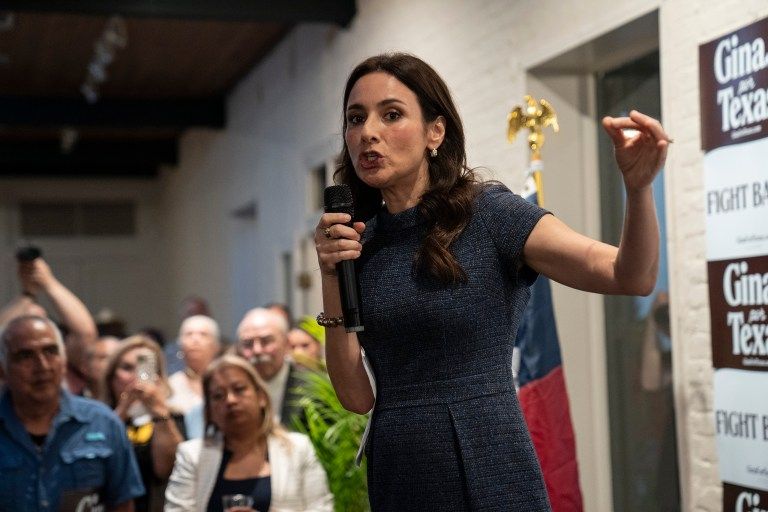
AUSTIN, Texas — The Texas governor election results 2026 are in, and they have redrawn the political map of the largest Republican state in the country. The Associated Press called the race for Democrat Gina Hinojosa on Tuesday night (AP Race ID 45901), defeating Republican Gov. Greg Abbott, who had held the office since 2015 and was seeking a record fourth term. With 90.69% of precincts reporting in the AP tally checked late Tuesday night Pacific time, Hinojosa had 4,943,104 votes to Abbott's 4,294,580, with Libertarian Pat Dixon at 136,757 — a lead of 648,524 votes that no remaining count could close.
Abbott did not wait for the final precincts. At his election-night watch party in Austin, the governor conceded and told supporters he had already made the call: “After looking at all the details of every county in the entire state, I made the decision to go ahead and call Gina Hinojosa and congratulate her on winning this race for governor of the state of Texas.” He said he would assist her team in the transition, according to the USA Today / El Paso Times election-night live blog that carried the concession as it happened. The full results are published by the Associated Press (Race 45901).
The call was not the AP's alone. NBC News and CNN also projected Hinojosa the winner, and CBS News and ABC News projected the same result, as the Texas Tribune reported in its election-night coverage. When Hinojosa takes office in January 2027, she will be the first Democrat elected governor of Texas since Ann Richards won in 1990 — Richards left office in 1995 — ending more than 30 years of Republican control of the governor's mansion. She will be the first Latina governor in Texas history and the third woman to serve as the state's governor.
The concession: a twelve-year governorship ends in one phone call
Concessions are the hinge on which election nights turn, and Abbott's was notable for its completeness. He did not question the count, promise litigation, or ask supporters to wait for certification. Standing before his own watch party in the capital he has governed from for nearly twelve years, he described reviewing the details of every county in the state, concluding the race was lost, and telephoning the woman who beat him — then pledging his own help to her transition. That is the orderly transfer of power working exactly as designed, and it matters beyond courtesy: a defeated incumbent who concedes cleanly and offers transition assistance removes any doubt about who will sit in the governor's office in January, in the second-largest state in the union.
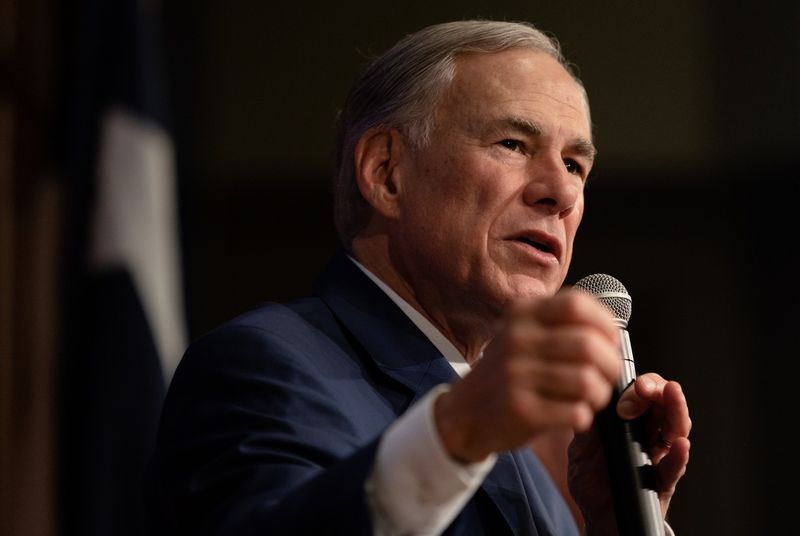
The reaction from the governor's own party's national leader was colder. President Donald Trump criticized Abbott on social media after the loss, as USA Today reported on November 4. The post is reported here in general terms only: the president blamed the defeated governor for the defeat rather than the party or its message, a reaction that sets up an intraparty argument — about whether Texas was lost by the candidate or by the coalition behind him — that will run alongside Hinojosa's transition.
What the numbers say
Start with the arithmetic, because it disciplines every other claim about this race. At 90.69% of precincts reporting, the AP counted 9,374,441 votes across the three candidates. Hinojosa's 4,943,104 votes are about 52.7% of that total; Abbott's 4,294,580 are about 45.8%; Dixon's 136,757 are about 1.5%. A margin of roughly 6.9 percentage points, with less than a tenth of precincts still out, is not a recount scenario and not a late-night mirage: it is a decisive statewide win, in a state the winning party had not carried for governor in 36 years.
Second, read the governor's race next to the other statewide result of the night. The AP also called the Texas U.S. Senate race for Democrat James Talarico over Republican Ken Paxton, with Talarico at 5,111,862 votes to Paxton's 4,183,818 at 90.19% reporting — a wider margin, and a higher raw vote total, than Hinojosa's. Two facts follow. Texas Democrats did not sneak a single office on a split ticket; they won the state's two biggest races on the same night, which is why Texas Tribune and national coverage described a statewide Democratic sweep taking shape as returns came in. And Talarico running ahead of the Democratic governor candidate suggests the Senate result was not merely a down-ballot echo of the governor's race — each campaign appears to have built its own coalition. We tracked the Senate contest all cycle, from the president's San Antonio rally for Paxton to the night a member of the Bush family publicly crossed over to back Talarico.
Third, the money did not predict the outcome. The Texas Tribune reported that Hinojosa was outspent more than four to one by Abbott, whose campaign machinery, built over three terms and a decade of statewide races, was supposed to be one of his structural advantages. A challenger can survive a spending gap when the race's central questions — here, public education and the cost of running a household — are the ones voters are already asking. When the questions are set by the incumbent's record instead, money usually talks. Tuesday's result says the questions were Hinojosa's.
Who Gina Hinojosa is
Hinojosa, 52, is a state representative from Austin who grew up in McAllen, in the Rio Grande Valley — a biography that spans the two Texases her campaign needed to unite: the fast-growing, heavily Latino South Texas border region where she was raised, and the capital city whose politics she has worked in as a legislator. According to the Texas Tribune, she built her campaign on public education, household costs, and criticism of Republican leadership — arguing that after more than three decades in power, the state's governing party owned the state's problems, from school funding fights to the price of groceries, housing and insurance.
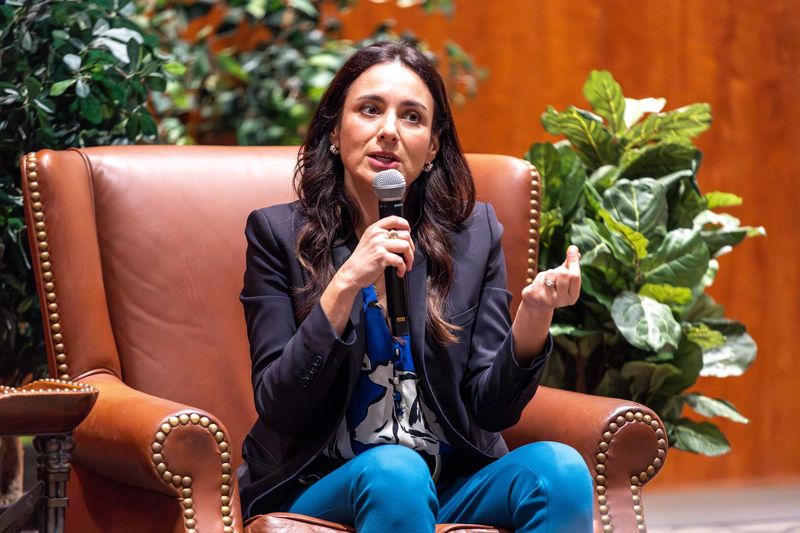
Her road to Tuesday also ran through the Texas House's most dramatic recent fight. When House Democrats broke quorum and left the state to resist a mid-decade congressional map drawn to improve the Republican Party's House position, Hinojosa was among the first wave out the door — a walkout that ultimately collapsed amid legal fights and threats of retaliatory map changes elsewhere, but that made her a statewide name among Democratic voters long before her name was on a governor's ballot. That backstory is part of why her nomination never looked like a placeholder: she arrived at the general election with a defined public identity as a fighter on education and redistricting, in a party that has spent decades searching Texas for a candidate with exactly that profile.
The long Republican era she just ended
To measure what happened Tuesday, remember how normal the opposite result had become. Ann Richards, the last Democrat elected to the office, won in 1990 and lost her reelection bid four years later; she left office in January 1995. George W. Bush followed, then Rick Perry, whose tenure made him the longest-serving governor in state history, then Abbott, who took office in 2015 and turned the job into a national platform — on border enforcement, on fights with the federal government, and on the conservative policy agenda he carried from the attorney general's office into the governor's mansion. Across those three decades, Texas Democrats ran famous names, wealthy self-funders and rising stars for governor, and lost every time, usually by margins that made the next attempt harder to finance than the last.
Abbott was seeking something no Texas governor had ever won: a fourth term. He had never been beaten in a statewide race. That is the incumbent Hinojosa defeated — not a caretaker or a scandal-weakened placeholder, but the dominant Texas politician of his generation, in a state his party had treated as the bedrock of its national map. As recently as October 1, the Cook Political Report still rated the race Lean Republican — a rating we examined in our coverage of the Florida and Texas governor ratings — which makes Tuesday less a story of a collapsing incumbent than of a late-breaking state.
Why this matters
Analysis, labeled as such: the first-order consequence is governmental, not symbolic. Texas is the largest state governed by Republicans, the center of the country's energy industry, the front line of its border politics, and home to nearly a tenth of its population. Switching its governor changes who sets the agenda in Austin on schools, abortion enforcement, border operations, disaster response and the state budget's enormous surplus politics — and it removes, at a stroke, one of the Republican Party's most reliable national messengers, a governor whose pronouncements were treated as party doctrine from Austin to Washington.
The second consequence is psychological, and it runs in both directions. For Democrats, a generation of “Texas is the future, eventually” organizing now has a proof of concept: the state was winnable at the top of the ticket, in a midterm, against a funded and entrenched incumbent. That changes donor math, candidate recruitment and national strategy for 2028 — a Texas that elects a Democratic governor is a Texas national campaigns must budget for. For Republicans, the loss invites the opposite conclusion with equal force: if Texas can be lost on a night when the party's national leader is not on the ballot, the coalition questions — suburban drift, Latino voters, education politics — cannot be blamed on one candidate's campaign. The president's public criticism of Abbott is the first move in that argument, not the last word in it.
The third consequence is the honest limit on both readings. One election is not a realignment. Hinojosa won a governorship; she did not win a legislature, a judiciary, or the state's other statewide offices as a set, and she will govern a state whose machinery below her remains largely in the other party's hands. Richards herself won the office in 1990 and lost it four years later. Whether Tuesday was a door opening or a door swinging is a question only the next two election cycles can answer — but it is now a real question, which it was not on Monday.
Who benefits, who loses — and what each side's critics say
The clearest beneficiaries are Texas Democrats down the ballot and in the legislature, who gain a governor's veto pen, a bully pulpit, and the fundraising gravity of an incumbent for the first time in three decades; public-education advocates, whose issue headlined the winning campaign; and the national Democratic Party, which acquires its most valuable new governorship of the cycle. Hinojosa's supporters argue the result vindicates a discipline her campaign kept all year: talk about schools and household costs, criticize the governing party's record, and refuse to let the race be fought on the incumbent's chosen ground.
The losers begin with Abbott himself, whose twelve years in office end in the defeat he sought a record term to avoid, and with the Texas Republican establishment that must now explain a statewide loss it rated as leaning its way a month out. Critics of Abbott within his own party, the president's social-media reaction among them, argue the governor drifted from the coalition that elected him. His defenders answer that midterm electorates punish the president's party, that the national environment was beyond any governor's control, and that a candidate-specific indictment ignores twelve years of statewide wins. Critics of Hinojosa, meanwhile, argue her mandate is narrower than the celebration suggests — roughly 53% of the vote in a good Democratic year, won against the headwinds of divided government she has yet to navigate — and that her education and spending promises will collide with a Republican legislature. Her supporters answer that a 648,524-vote margin is a mandate by any normal standard, and that divided government is a problem for January, not a qualification on November.
What happens next
The calendar is fixed and short. Hinojosa takes office in January 2027, and the transition Abbott promised to assist begins immediately: agency briefings, budget handover, and the staffing of a governor's office her party has not run since 1995. The Texas Legislature she will face is Republican-led, which sets the defining condition of her governorship from day one — she cannot pass her program alone, and the legislature cannot enact its own program over her veto without her. Three broad scenarios follow, and they are not mutually exclusive.
In the first, divided government produces transactional bargaining: education funding and household-cost relief — the two themes she ran on — are also the issues on which a Republican legislature can most plausibly deal, and early wins there would define her term's opening chapter. In the second, the relationship hardens quickly over the veto pen and special sessions, with the governor using the threat of vetoes to shape bills she cannot write, and legislative leaders daring her to use them. In the third, both sides govern toward 2028 and 2030 from the start — every fight in Austin reframed as evidence for the argument each party will make when Texas voters next render a verdict. Which scenario dominates will be visible within the first hundred days, in the tone of the inauguration, the first budget proposal, and the first bill she signs or kills.
What is already certain is narrower and, for one night in Austin, sufficient: the Associated Press has called the race, the governor has conceded it in his own words, and in January a Democrat — the first Latina to hold the office, and the first of her party to hold it since Ann Richards left it in 1995 — will be sworn in as governor of Texas.
Sources
Associated Press, Texas Governor election results, Race ID 45901 — the race call and the tally at 90.69% precincts reporting checked late Tuesday, November 3, 2026 (Hinojosa 4,943,104; Abbott 4,294,580; Dixon 136,757), and the Texas U.S. Senate call for James Talarico over Ken Paxton at 90.19% reporting (5,111,862 to 4,183,818). USA Today / El Paso Times election-night live blog — Abbott's concession remarks at his Austin watch party, quoted verbatim, and his pledge to assist the transition. The Texas Tribune (Kayla Guo), election-night report — the NBC News, CNN, CBS News and ABC News projections, Hinojosa's biography and campaign themes, and the more-than-four-to-one spending gap. USA Today, November 4 — history and reaction coverage; and USA Today, November 4 — President Trump's social-media criticism of Abbott after the loss, described in general terms. Vote totals are unofficial election-night figures and will move as remaining precincts report and results are canvassed.