War · Ukraine · Air Defence
The missiles exist. The allocation was agreed. Allies have paid for them, and some are already sitting in European arsenals. What the package does not have, the Financial Times reports, is the one signature that releases it — and winter is coming to Kyiv's power grid.
Track it live: Ukraine war — live tracker and map
WASHINGTON / KYIV, November 23, 2026 — The schedule is the most damning document in the story, and it is simple. Under the PAC-3 interceptors Ukraine September December plan, Ukraine was to receive eight PAC-3 interceptors in September, ten in October, ten in November and twelve in December — 40 rounds across four months. Per the FT's reporting, none of that scheduled PAC-3 tranche has been cleared. Add roughly 20 PAC-2 interceptors also awaiting approval, and the held package reaches the headline figure of about 60. These are not weapons Ukraine is asking the United States to pay for. Under the allied financing arrangements — the PURL Patriot missiles allies paid model, in which European allies buy US weapons for Ukraine — the money side of the ledger is settled. What is missing is authorisation, and authorisation, in this system, is a person.
What the FT reported — and what the Pentagon said
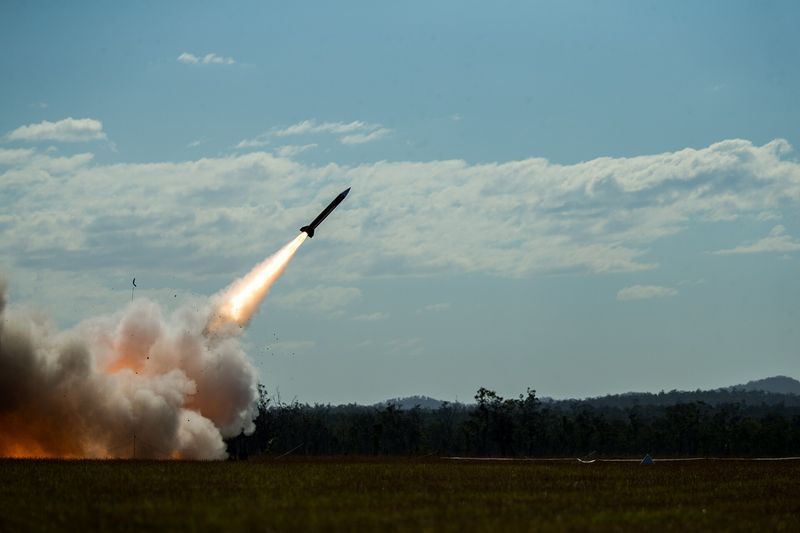
State the claims precisely, because precision is the difference between a hold and a rumour. The Financial Times reported on Tuesday, November 24, that Hegseth has yet to approve the transfer of about 60 Patriot interceptors already agreed for Ukraine, citing people familiar with the matter; Reuters reported the FT's account the same day and stated plainly that it could not immediately verify it. The package, per the FT, mixes PAC-3 interceptors — the modern hit-to-kill rounds Ukraine uses against Russian ballistic missiles — with PAC-2 rounds, and some of the missiles are physically in European arsenals, financed by allies. US authorisation is required for their export or re-export regardless of who paid or where they sit, which is why a decision in the Pentagon, and only there, can release them.
The Pentagon's answer, given to the FT by a spokesperson, was that there is no change in US policy on support to Ukraine, with no further comment on the weapons themselves. Both halves of that sentence matter. “No change in policy” is compatible, in the narrow bureaucratic sense, with a transfer awaiting approval — policy can be unchanged while paperwork is unsigned. It is also the only thing the department was willing to say, and it neither confirms the FT's schedule nor disputes it. Signal Post News reports the FT's figures as reported figures throughout this article, and the Pentagon's position alongside them; readers should hold both.
A second delay in the same building: the Ukraine Patriot production licence Pentagon file
The transfer hold is not the only Patriot file reportedly stalled. A plan for licensed Ukrainian production of Patriot interceptors — a Ukraine Patriot production licence Pentagon arrangement that would let Kyiv build the rounds itself — has also been delayed, per the FT. Hegseth signed off on the plan, the FT reported, but it was then referred to Under Secretary of Defense for Acquisition Michael Duffey for further review, for reasons that remain unclear. Defense News, reporting on November 14, corroborates the process picture: after an October agreement involving Secretary of State Marco Rubio and Hegseth, the paperwork is pending with Duffey. Even on the fastest realistic timeline, licensed production would take roughly 18 months to three years to establish — which makes the licence a strategic answer, not a winter one, and makes the 60 held interceptors the only Patriot supply question that matters for the cold months immediately ahead.

Background: a month of waiting that Kyiv has been describing since October
None of this arrived without warning. The Kyiv Independent first reported the held batch on October 19, from its own sources. On October 26, President Volodymyr Zelenskyy said publicly that Ukraine had been waiting nearly a month — the wait Signal Post News covered at the time in our report on Zelenskyy's complaint that Hegseth's sign-off on Patriot missiles was delayed. Zelenskyy has said Ukraine received about 12 interceptors a month from the United States in 2026 — the Zelenskyy Patriot missiles 12 a month figure that frames the whole shortage: at that rate of supply, a held package of 60 is not a rounding error. It is roughly five months of the country's entire reported Patriot income, frozen at the border of a signature.
Then there is the bigger number that solves nothing soon. On October 30, the State Department approved a potential $2.1 billion sale of 500 PAC-3 MSE interceptors for Ukraine, funded by Canada, Germany and Norway — the 500 PAC-3 sale Ukraine 2.1 billion package covered in our report on the $2.1 billion Patriot sale and Zelenskyy's warning that the interceptors may come years too late. Deliveries under that sale are not expected until the early 2030s. So the architecture of Ukraine's Patriot supply now has three tiers, and the tiers tell the story: a licensed-production line that is 18 months to three years away even after its paperwork clears; a 500-round sale arriving in the next decade; and 60 rounds, allocated, financed and partly warehoused in Europe, that could move this winter if one approval is given. The tiers furthest away are approved. The tier that is closest is not.
Why this matters
Patriot interceptors are not generic munitions, and the Ukraine air defence interceptor shortage winter now approaching is not a generic shortage. PAC-3 rounds are effectively the only interceptors in Ukraine's inventory that reliably engage Russian ballistic missiles — the Iskanders and Kinzhals aimed at Kyiv and at the energy grid. Russia has conducted near-continuous air attacks since September, and on November 23 Zelenskyy warned that Russia is preparing new strikes. Air defence, at this level, is arithmetic performed under fire: every ballistic missile that a Patriot battery cannot engage because its magazines are empty is a missile that lands on a substation, a heating plant or an apartment block, and every interceptor expended is one that cannot be in two places at once. A delay measured in months of paperwork is therefore also measured, on the other end, in megawatts and in warmth.
Allied money, American keys
The PURL Patriot missiles allies paid structure was designed to solve the politics of US support: European allies pay, American industry supplies, Ukraine fights. What the FT's reporting exposes is the structure's hidden term — the keys stay American. Export and re-export authorisation means Washington retains a veto over weapons it did not fund and does not hold, exercisable not by vote or announcement but by the simple non-arrival of an approval. That may be a deliberate instrument of policy, a backlog, or a review with a genuine technical basis; the reporting does not establish the reason, and this article does not invent one. But the effect is the same in all three cases, and allies pricing future purchases will price the effect, not the intention. A financing model whose deliveries can pause silently at a single desk is a different model from the one its name advertises.
The licence delay compounds the transfer delay
Finally, the two delays multiply each other. The licensed-production plan was Ukraine's hedge against exactly this dependency — a way to convert allied money and Ukrainian industry into interceptors no foreign signature could hold. Referring that plan for further review, after the secretary's own sign-off and an October agreement at cabinet level, extends the dependency it was meant to end, by a timeline measured in years. If the FT's account is right, the Pentagon is simultaneously the bottleneck for this winter's interceptors and for the factory that would make future winters safer. That is a concentration of decision — in one building, and on the acquisition side in one under secretary's review pile — that neither Ukraine nor its funders can route around.
The data in context
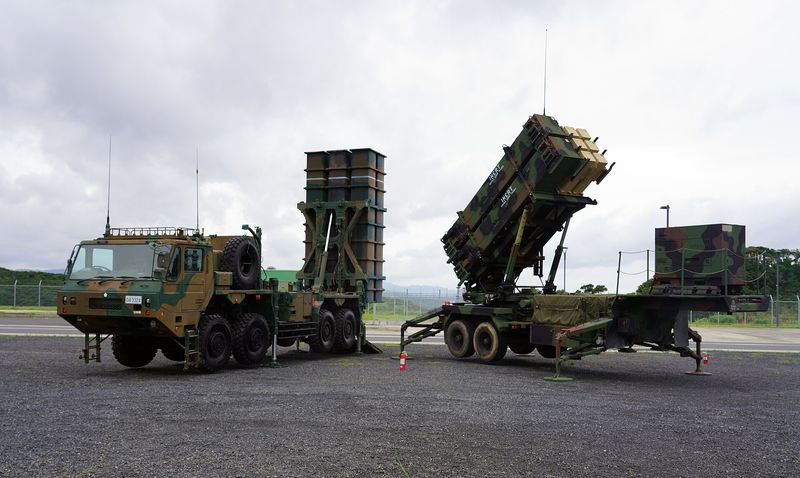
The numbers, assembled in one place with their sources. Held now, per the FT: about 60 interceptors — a scheduled PAC-3 tranche of 8 in September, 10 in October, 10 in November and 12 in December (40 rounds, none cleared per the FT), plus roughly 20 PAC-2 rounds awaiting approval. Ukraine's reported income, per Zelenskyy: about 12 interceptors a month from the US in 2026 — so the held package equals roughly five months of supply. Approved but distant: 500 PAC-3 MSE in a potential $2.1 billion sale approved October 30, funded by Canada, Germany and Norway, with deliveries not expected until the early 2030s. Licensed production: 18 months to three years to establish, once paperwork clears. Allied reinforcement continues on other tracks — see our report on Britain's 1,000 long-range strike drones for Ukraine in the £260 million Berlin package — but strike drones do not intercept ballistic missiles. Only Patriots do the job the held 60 were allocated for, and the production lines that make them run years behind global demand. In that market, 60 rounds is not a lot of metal. It is, however, an entire winter's margin for the cities they were assigned to protect.
Who benefits, who loses — and the critics
The balance sheet depends on facts not yet public, starting with the reason for the hold — which no party has stated. The Pentagon's defenders can point to its on-record line: no change in policy, and a department is not obliged to narrate the movement of individual munitions packages; approvals in this war have often arrived quietly and late rather than never. Critics in Kyiv and among Ukraine's funders answer that a schedule is a commitment, that September's eight and October's ten are already in the past tense, and that “no change in policy” is a strange description of interceptors that were due two months ago. European allies who paid under PURL occupy the most exposed position: their money bought missiles their arsenals hold and cannot release, which is a difficult sentence to say to their own parliaments. Russia, meanwhile, benefits from the delay whatever its cause — every week of thin Patriot magazines is a week in which ballistic strikes on the grid face fewer counters, at the exact season when the grid matters most. That benefit requires no conspiracy and no intention. It requires only a calendar.
What happens next
Four markers will resolve this story, and they are listed here so readers can test the reporting against events. First, the December tranche: 12 PAC-3 interceptors are scheduled for December under the reported plan; whether any part of the 40-round PAC-3 schedule clears in December is the single clearest signal of whether the hold is ending. Second, any Pentagon movement from “no change in policy” to a specific statement on the transfer — a confirmation, a denial of the FT's schedule, or an announcement of delivery — each of which would rewrite this article's central uncertainty in a different direction. Third, the Duffey review: a decision on the licensed-production file would start an 18-month-to-three-year clock that changes Ukraine's long-term position even if it cannot change this winter. Fourth, the strikes themselves: Zelenskyy warned on November 23 that Russia is preparing new attacks, against a campaign of near-continuous air assault since September; the performance of Ukraine's air defence in the next large ballistic raid will be read, fairly or not, as the field test of everything reported here. Until one of those markers moves, the verified position is the narrow one: about 60 allocated interceptors are reported by the FT to be awaiting approval, the Pentagon says policy is unchanged, and Kyiv is counting.
Reporting based on the Financial Times report of Tuesday, November 24, 2026 (Hegseth has yet to approve about 60 allocated Patriot interceptors; the PAC-3 schedule; the licensed-production referral to Under Secretary Michael Duffey), as reported by Reuters on November 24, 2026 — Reuters stated it could not immediately verify the FT's reporting, and the Pentagon told the FT there is no change in US policy on support to Ukraine and offered no further comment on the weapons. The licensed-production process is corroborated by Defense News (November 14, 2026). The October history is as reported by the Kyiv Independent (October 19) and in President Zelenskyy's October 26 remarks. Analysis is Signal Post News' own and is labelled as such.
Sources
Sources: Reuters, November 24, 2026 — US defense chief has yet to approve Patriot missiles already allocated to Ukraine, FT reports (the FT's account, citing people familiar with the matter; Reuters could not immediately verify; the Pentagon's no-change-in-policy response) — reuters.com. Clash Report, November 2026 — Pentagon delays Patriot interceptors for Ukraine, per FT (the held PAC-3/PAC-2 package and the licensed-production delay) — clashreport.com. Defense News (The Defense News), November 14, 2026 — Pentagon delay holds up Ukraine's licence to produce Patriot interceptor missiles (the paperwork pending with Under Secretary Michael Duffey after the October Rubio–Hegseth agreement) — thedefensenews.com. Related Signal Post News coverage: Zelenskyy: Ukraine has waited nearly a month for Hegseth to sign off on Patriot missiles, the $2.1 billion sale of 500 PAC-3 missiles, and Britain's 1,000 long-range strike drones for Ukraine.