Harmanpreet Kaur steps down as captain
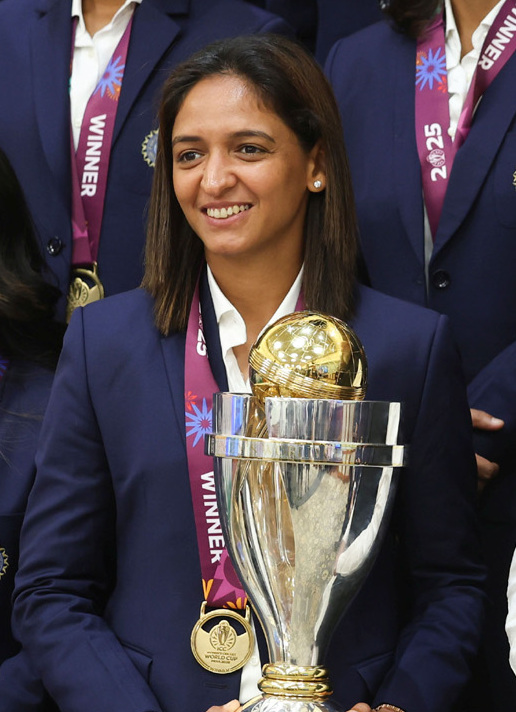
Harmanpreet Kaur has stepped down as captain of the Indian women's cricket team across all formats, closing the most successful leadership era the side has ever known. The 37-year-old announced the decision on Tuesday in an emotional Instagram post, insisting she will keep playing: "Captaincy ends. The journey continues."
"Today, I step down as captain of the Indian Women's Cricket Team across all formats," Kaur wrote. "This is not an easy decision. It carries years of memories, emotions, sacrifices, and moments that will stay with me for the rest of my life. I have given everything I had to this team and to Indian women's cricket — my blood, my sweat, my time, and many times, a part of my own game and personal ambitions."
It is the rarest of things in Indian cricket: a captain leaving at the top, voluntarily, with the trophies still warm.
The Guwahati meeting: why now
The announcement came a day after Kaur, vice-captain Smriti Mandhana and head coach Amol Muzumdar met BCCI secretary Devajit Saikia in Guwahati on Monday to discuss the roadmap for the women's team. The meeting was billed as a review of the past few months — and the past few months have not all been golden.
India suffered a second successive group-stage exit at the T20 World Cup in June 2026, and Kaur's leadership came under real questioning for the first time in years. Her own batting returns have been inconsistent, even as Mandhana — her longtime deputy — has soared, including a starring role in the Women's Premier League and a 45-ball 79 in the Asian Games final against Sri Lanka last month.
According to reporting around the meeting, Kaur was given the option of retaining the captaincy in one format — the 50-over side — and continuing to lead the ODI team a while longer. She declined, choosing instead to give up all three formats at once. Her statement struck a valedictory note: "I leave the captaincy today with a heart full of emotions, but also with peace. Because I genuinely believe my team is in a good place. I feel I have done my duty."
Was she pushed, nudged, or acting entirely on her own? Honest answer: the line is blurry, as it always is when a board "reviews" a captain on a Monday and the resignation lands on a Tuesday. What is not blurry is the timing — deliberate, controlled, and, as former India captain Diana Edulji put it, coming "at a time when the question is 'why' rather than 'why not'."
Why this matters
Indian cricket does not do graceful exits. The men's game has a long, bruising history of captains clinging on until the selectors pry the armband away. Kaur has done the opposite: she has read the room, the calendar and her own form, and walked away with her legacy untouched — months before anyone could credibly demand it.
The calendar is the tell. India hosts Zimbabwe from October 16 — the first-ever bilateral visit by the Zimbabwe women's team, three T20Is in Raipur followed by three ODIs in Baroda that count toward the ICC Women's Championship. A new captain gets a soft launch at home against developing opposition. Beyond that lies a clean four-year runway: the next Women's T20 World Cup in 2028 and, crucially, cricket's return to the Olympics at Los Angeles 2028. The BCCI, by all accounts, wants to build the team around the 30-year-old Mandhana for both. Transitions don't get tidier than this.
There is a deeper significance too. Kaur's captaincy coincided with — and drove — the professionalization of the Indian women's game: central contracts with real money, the WPL, packed home crowds, and finally a global title. She leaves the team, in her words, "in a good place." That is not sentiment. It is a measurable fact, and it is the standard by which her successor will be judged.
The numbers behind the era
Strip away the emotion and the record is staggering. Kaur led India in 211 international matches across formats: five Tests (one defeat), 51 one-day internationals (30 wins, a 58.82% win rate — the second-most ODIs as India captain) and 155 Twenty20 internationals (92 wins at 59.35%). That T20I figure — 155 matches as captain — is the highest of all time, by a distance, in either the men's or women's game.
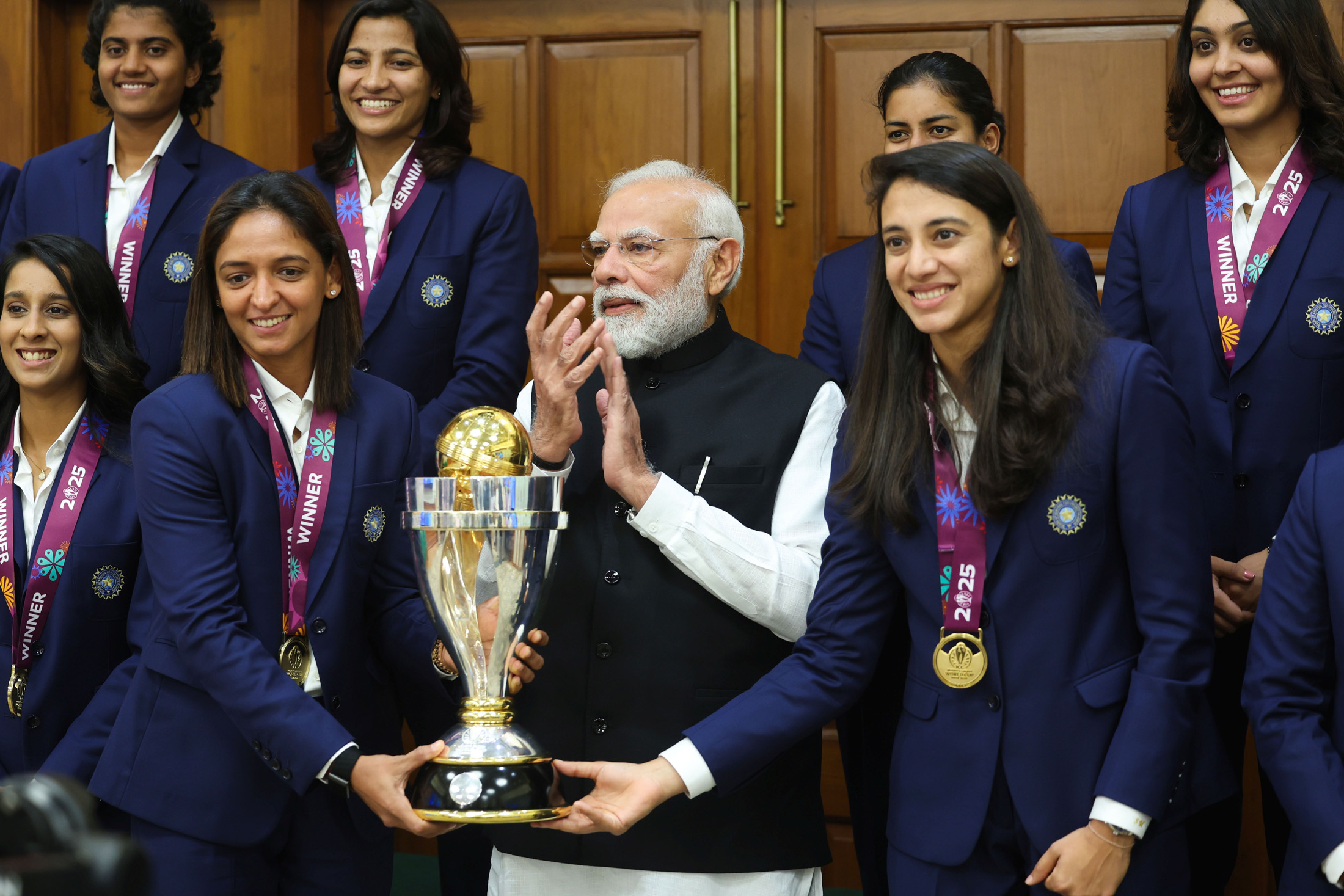
Under her, India won their first-ever women's global title, the ODI World Cup on home soil in 2025 — she remains the oldest captain, at 36, to lift the Women's World Cup — plus two T20 Asia Cup titles and back-to-back Asian Games gold medals, the latest defended at Nisshin last month.
As a player, the ledger is just as heavy: 4,541 ODI runs, 4,346 T20I runs, 304 Test runs and 75 international wickets. This year she became the highest-capped player in women's international cricket history. And one innings towers over everything.
The 171 not out that changed everything
Derby, July 2017. World Cup semi-final against Australia. Kaur walked in with India wobbling and produced an unbeaten 171 off 115 balls — then the highest individual score in a Women's World Cup knockout, an innings of such clean, violent hitting that it is still the first thing mentioned whenever her name comes up. India reached the final; more importantly, a generation of girls watching at home saw what was possible. Everything that followed — the contracts, the WPL, the crowds, the 2025 triumph — traces back, in some measure, to that afternoon in Derby. Captains are remembered for trophies; transformative players are remembered for moments. Kaur is both.
Who wins, who loses, what the critics say
The winners are obvious. Smriti Mandhana, the frontrunner to take over across formats, inherits a settled, confident squad rather than a rebuilding project — the best possible start for a new captain, with a formal announcement expected when the selectors meet to pick the Zimbabwe squad. The BCCI gets a clean, controversy-free transition aligned to the LA 2028 cycle. Young players get a leadership group with a four-year horizon instead of a year-to-year guessing game.
The critics have two lines of attack, and both deserve air. First, the ambiguity of the Guwahati meeting: some coverage holds she was effectively asked to step down after the review, which would make the "own terms" framing partly ceremonial. Second, the ODI question: with her experience, some argue she could have carried the 50-over captaincy through the next World Cup cycle while handing over the T20I side immediately — the split option she reportedly turned down. There is also the blunt cricketing point: her batting has dipped, and no captain survives a prolonged form slump plus a World Cup group-stage exit without questions.
And Kaur herself? She loses the armband but keeps the thing she says she wants most: the game itself. "Now, I'm ready to play for the love of the game again." Freed from captaincy, several greats have enjoyed late-career batting renaissances. At 37, with her power game intact, that is not a fantasy.
What happens next
The selectors, under chief selector Amita Sharma, are expected to meet imminently to pick the Zimbabwe series squad — and the new captain is likely to be named then, possibly within 24 hours. All signs point to Mandhana, who has been Kaur's deputy for years and already captains Royal Challengers Bengaluru in the WPL.
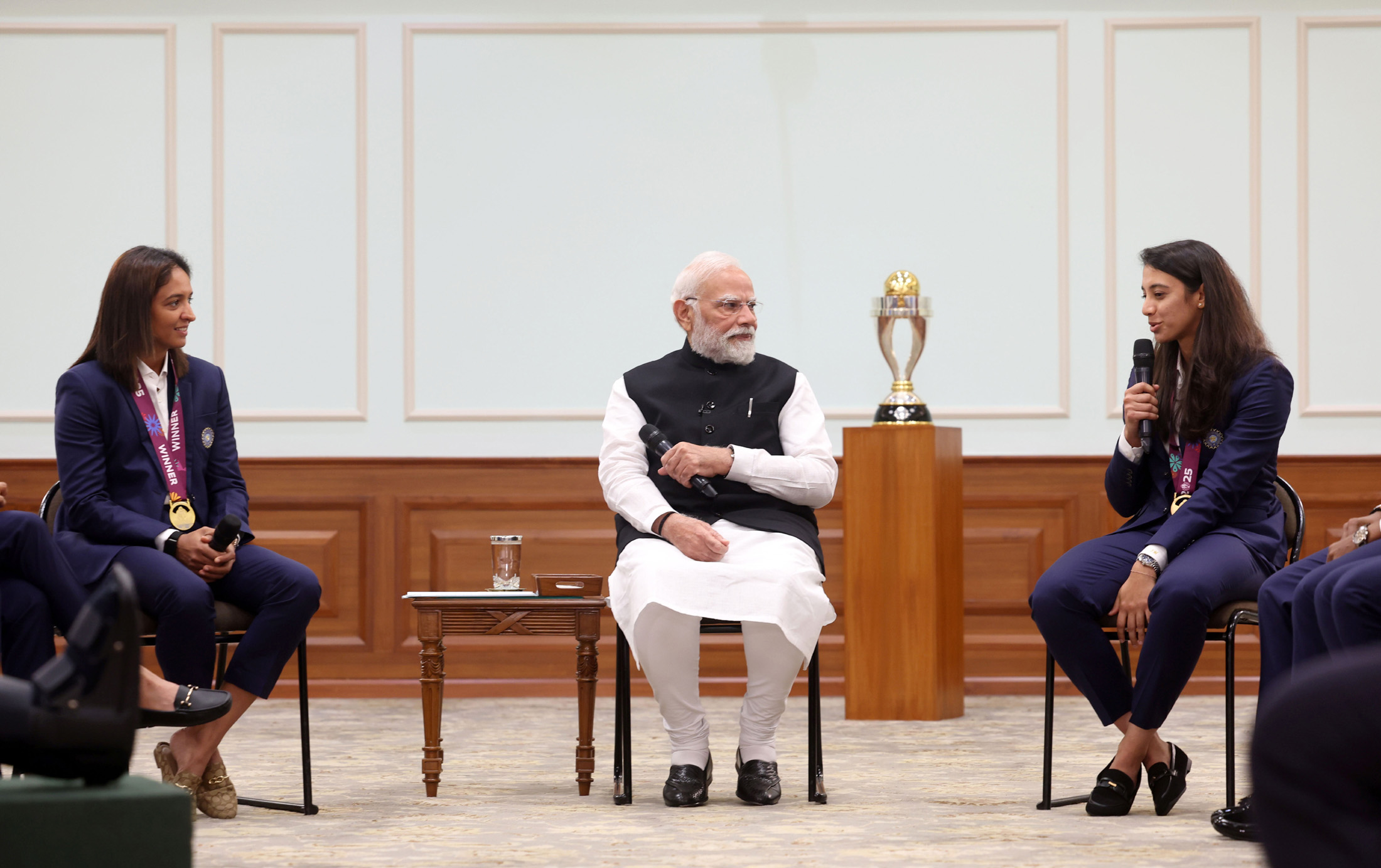
The Zimbabwe tour itself is historic regardless: three T20Is in Raipur on October 16, 18 and 20, then three ODIs in Baroda on October 23, 26 and 28, with the ODI leg counting toward the ICC Women's Championship 2025–29. It will double as the first look at India 2.0.
Longer term, the shape of the next era is already visible: Mandhana's team, built for the 2028 T20 World Cup and the LA Olympics, with Kaur the senior pro — the enforcer in the middle order, the mentor in the dressing room, the living proof of what the armband can mean. If that sounds familiar, it should. It is exactly how the great transitions are supposed to work. They just rarely do.
Harmanpreet Kaur's did.