U.S. · Terrorism Trial
BROOKLYN — A federal jury has convicted Halima Salman, 27, of receiving military-type training from the Islamic State in Syria, closing a case that prosecutors, the Justice Department and the reporters who covered it all describe the same way: the first time a woman accused of joining ISIS has ever stood trial in an American courtroom. She faces up to 10 years in federal prison.
Track it live: Syria war map

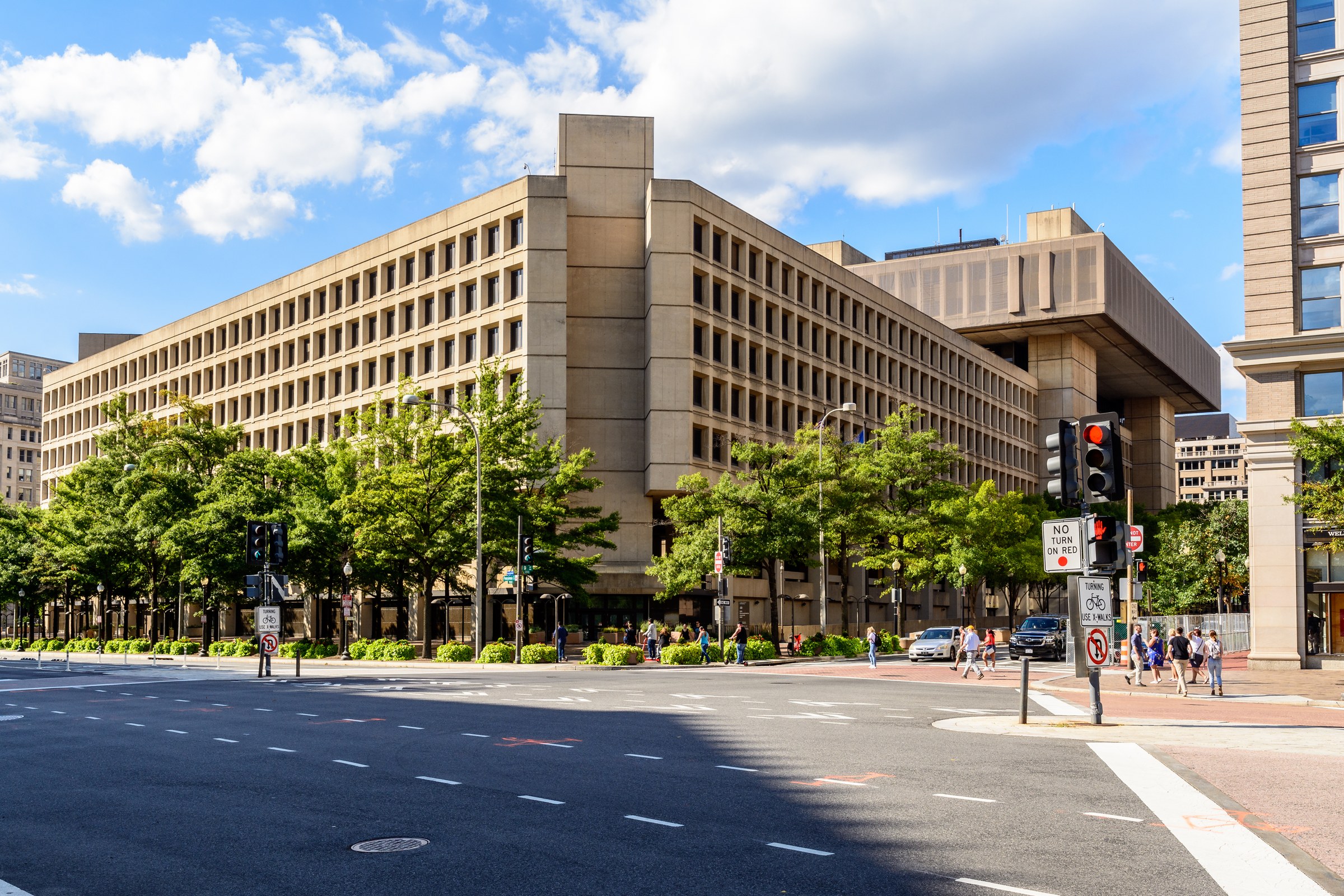
The Halima Salman ISIS conviction arrived on Tuesday, October 27, 2026, in a Brooklyn courtroom, at the end of a seven-day trial before U.S. District Judge Natasha C. Merle. The jury found Salman — a U.S. citizen, a former Brooklyn resident, and a woman the Islamic State knew by the name Umm Khattab al-Muhajir — guilty of receiving military-type training from ISIS in Syria. The New York Post reported that jurors deliberated for three days before returning the verdict. The Justice Department’s defendant listing gives her current residence as Woodstock, New Hampshire; the case is docketed as No. 24-CR-206 (NCM) in the Eastern District of New York.
The verdict matters beyond its facts because of the empty space around it. Americans who travelled to join the Islamic State have been prosecuted in federal court for a decade, and women who made that journey have been among them — but until this week, every woman’s case had ended in a plea, a cooperation agreement or a file that never reached a courtroom at all. Salman’s did. She went to trial, testified in her own defence, and lost. That makes her case, as the Post and Fox News both reported, the first of its kind: the first time a woman accused of joining ISIS has stood trial in a U.S. federal court.
U.S. Attorney Joseph Nocella Jr. said after the verdict that Salman had been held accountable for joining forces with a terrorist organization. Assistant Attorney General John A. Eisenberg, in the Justice Department’s national release, placed the case against the backdrop of the atrocities ISIS committed across the territory it once ruled. And James C. Barnacle Jr., the FBI’s assistant director in charge in New York, summarised the government’s theory in a single clause: Salman, he said, “knowingly sought out terrorist training.” That word — knowingly — was the whole trial.
What the jury heard
The government’s case, as the Justice Department summarised what was proved at trial, begins with a family journey. In September and October 2016, prosecutors showed, Salman’s parents travelled out of the United States with her and her eight siblings, on a trip whose ultimate destination was ISIS-controlled territory in Syria. She was a teenager. What the government then had to prove was what happened after she arrived — and whether the choices that followed were hers.
On the prosecution’s account, they were. After her marriage in July 2017 to an ISIS fighter, Salman — then 18 — voluntarily sought out military-type training with the Khatiba Nusaybah, an all-female battalion of the Islamic State. ISIS authorised her to carry an assault rifle and ammunition. She completed the training and received a certificate documenting that she had done so. In the taxonomy of terrorism prosecutions, that certificate became the single most important piece of paper in the case: it converted an argument about intent into a document with her training literally written on it.
The rest of the evidence arrived the way so much ISIS evidence has arrived in Western courtrooms — off a battlefield, by way of a phone. A copy of the training certificate, photographs of Salman including one with an ISIS flag visible in the background, and a video of her brandishing an AK-47 were all recovered from her husband’s cellphone after the device was retrieved from the battlefield, the Justice Department said. Jurors did not have to take a cooperator’s word for what Salman did in Syria. They could watch her holding the rifle, see the flag behind her, and read the certificate the organisation issued when she finished its course.
The prosecution was led by Assistant U.S. Attorneys Amanda Shami and Adam Amir of the office’s National Security and Cybercrime Section — the unit that handles the Eastern District’s terrorism docket, in the courthouse that sits a short walk from the Brooklyn streets where Salman grew up.
Two stories of one teenager
Salman’s defence did not dispute the geography. She testified herself, and in her account — as reported by the New York Post — the journey began with a deception: the family went first to Turkey, she said, on what she understood to be a family trip, and her father, an ISIS supporter, tricked them into Syria. He then forced her, she testified, into marriage with the fighter known as Abu Ali. Her father was later killed in a 2018 airstrike. She spent two years inside ISIS territory and, after the caliphate’s collapse, five years in a Kurdish-run detention camp in northeast Syria, before the United States repatriated her in 2024 and arrested her at JFK Airport.
So the jury was handed two incompatible portraits of the same teenager. In the government’s, she is a recruit: a young woman who, once married, walked toward the Khatiba Nusaybah, asked for its training, accepted authorisation to carry a rifle, earned its certificate and posed with its flag. In her own, she is cargo: taken across the world by a father who lied to her, married off by force to a fighter, and carried along by events she never chose. Both portraits agree on the itinerary. They disagree on the only question the charge actually asked — whether the training was something done to her or something she did.
The verdict says the jury believed the paper over the portrait. That is not an irrational reading of the evidence, and it is worth being precise about why. A coercion defence asks jurors to find that a defendant’s will was overborne; a certificate of completed training, a video of the defendant brandishing the weapon she was trained on, and photographs taken against the group’s flag ask them to find enthusiasm, or at least willing participation. Prosecutors did not have to prove she fired the rifle in combat, or that she harmed anyone. They had to prove she received the training from the organisation, knowing what it was. The exhibits proved the receiving; the defence’s burden was to make the knowing disappear, and on the evidence the jury saw, it could not.
Why this matters
A precedent where there was none. Every previous American prosecution of a woman who joined ISIS was resolved without a jury. That left an open question hanging over the entire category of cases: would twelve ordinary citizens convict a woman who said she had been taken, tricked and married off as a teenager? Brooklyn has now answered it. Future prosecutors weighing whether to offer a plea or proceed to trial in a returnee case will cite this verdict; future defence lawyers will study exactly how the coercion argument failed, exhibit by exhibit.
The agency question, decided case by case. The debate over the women of the caliphate has often been conducted as if “bride” and “fighter” were the only two categories, and as if a whole population had to be sorted into one or the other. A trial does something cruder and better: it asks what this person did. Salman’s jury heard the strongest available version of the coercion story — from her own mouth, under oath — and still convicted, because the documentary record described choices. That does not settle the question for the next defendant, whose record may look entirely different. It does establish that in an American courtroom, the argument will be won or lost on evidence, not on category.
Repatriation with prosecution attached. Salman’s route home is itself a policy statement. The United States brought her back in 2024 and arrested her on arrival, then prosecuted her for what the government says she did before she left Syria’s camps. Contrast the best-known allied alternative: Britain stripped Shamima Begum — who left London for ISIS territory as a 15-year-old schoolgirl — of her citizenship and left her in a northeast Syria detention camp, a decision that kept her case out of a British criminal court entirely. Washington’s approach accepts the risk and the burden of a trial in exchange for a verdict with evidence behind it. Tuesday’s conviction is what that policy looks like when it works as designed.
The camps, the phone and the road home
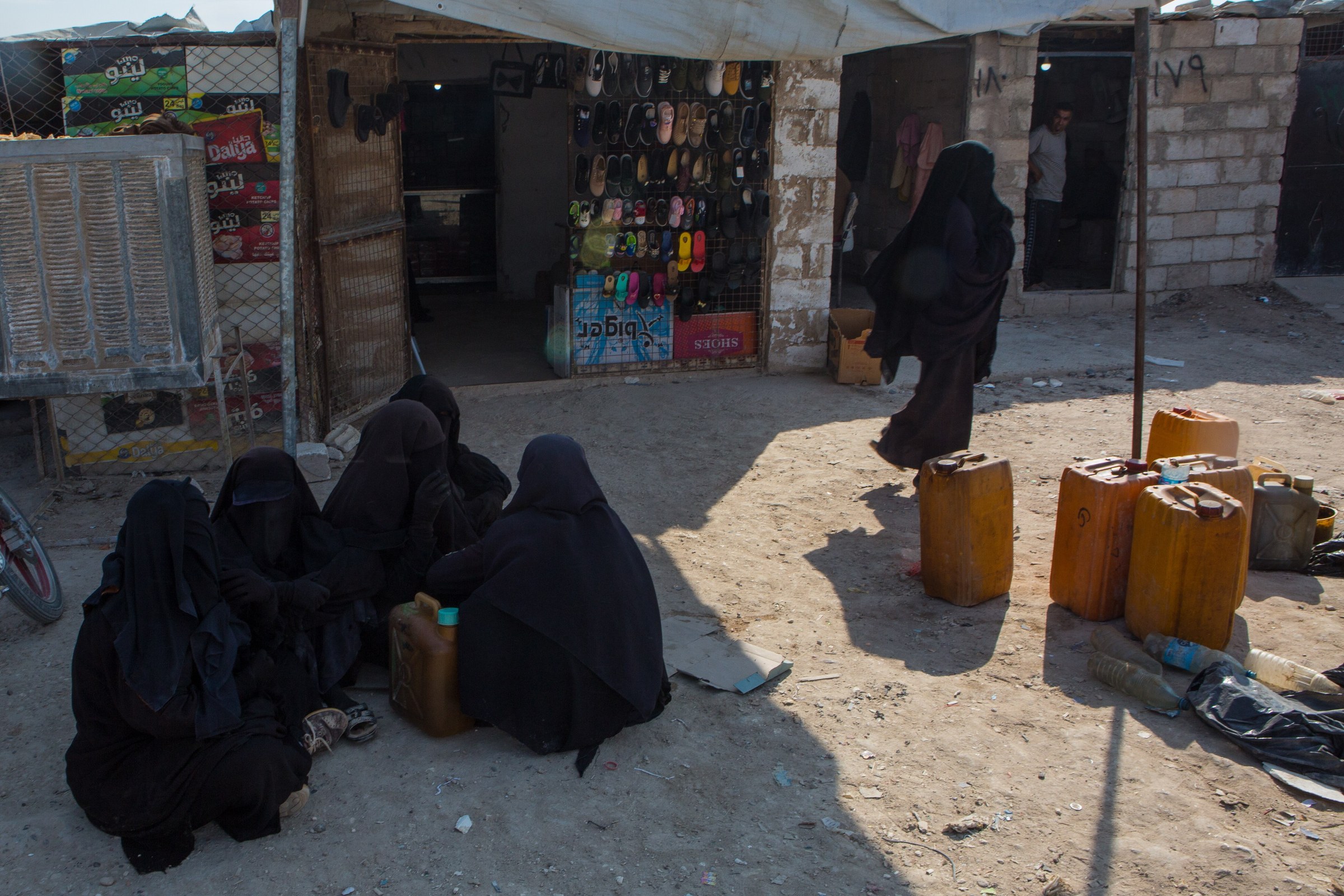
Salman’s five years in detention belong to a system most Americans have never had to picture. When the ISIS caliphate collapsed in 2019, Kurdish-led forces in northeast Syria inherited tens of thousands of people — fighters’ wives, widows and children among them — and confined them in camps such as al-Hol and Roj, where many remain years later in legal limbo: not charged, not released, not repatriated. Salman’s account, given in her own testimony, placed her inside that system for half a decade. The women in the annexes of those camps include both the coerced and the committed, which is precisely the sorting problem her trial was asked to solve in a single instance.
The case also belongs to a quieter evidentiary revolution. A generation ago, proving what a defendant did inside a terrorist group’s territory depended on defectors and intercepted calls. The ISIS prosecutions have been built, again and again, on the group’s own documentation and its fighters’ own devices — certificates, photographs, videos, recovered from battlefields and border crossings and carried into courtrooms years later. Salman’s husband’s phone, recovered from a battlefield in Syria, became the spine of a prosecution in Brooklyn. The caliphate documented itself compulsively; its paperwork has outlived it, and it keeps testifying.
Her conviction lands, too, in a month when the domestic side of the ISIS threat has been in the same headlines. Signal Post News has covered the FBI’s disruption of an alleged ISIS-inspired plot in Texas and the arrests in an alleged plot targeting the Mall of America — cases about people accused of moving toward the group from inside the United States. Salman’s is the mirror image: the threat that travelled out, was trained, and came home. Counterterrorism officials have worried about the returnee pipeline for as long as they have worried about the inspired one, and this verdict is the returnee pipeline’s first full-dress courtroom test for a woman defendant.
Ten years, in context
Salman faces up to 10 years in federal prison — the maximum the training offence carries, and a ceiling worth comparing carefully with the rest of the terrorism docket. The workhorse charge of the ISIS era, providing material support to a designated terrorist organisation, carries a maximum of 20 years, and American courts have handed down a wide spread of sentences under it, from probation-adjacent outcomes for cooperators to decades for defendants who planned attacks. Congress set the ceiling for receiving military-type training at half that level, a legislative judgement that the training, standing alone, sits a rung below support and attack-planning on the ladder of culpability. Whatever Judge Merle imposes will be measured against that ceiling — and against the fact that Salman has already spent roughly seven years in ISIS territory and detention camps combined, a history her lawyers can be expected to press hard at sentencing, even though none of it counts formally as time served on this conviction.
The other number that frames the verdict is how few cases like it exist. The population of American women who travelled to ISIS territory, survived, were repatriated and were then prosecuted is small — small enough that each case has been individually negotiated rather than processed by any routine. Salman’s is the first to reach a jury. That scarcity cuts both ways: it makes the precedent powerful, and it makes it narrow, because the next case will arrive with different facts, a different phone, and possibly no certificate at all.
What happens next
Sentencing is scheduled for February 2, according to Fox News, before Judge Merle in the same Brooklyn courthouse. Between now and then, the familiar machinery turns: a presentence report, duelling memoranda — the government emphasising the voluntariness the jury found, the defence returning to the teenager who, on her account, was taken to Syria by a lie and married by force — and a judge deciding where, inside a ten-year frame, this defendant belongs. Expect the defence to ask for substantial credit for the years in the camps; expect the government to answer with the certificate.
An appeal is the other near-certainty, and its outlines are already visible. The battleground will likely be the line the trial court drew around the coercion evidence — what the jury was permitted to hear about her father, her marriage and the camps, and how the instructions framed duress against the documentary record. Appellate courts are deferential to juries who have watched the defendant testify, which is the steep hill any appeal here must climb.
The wider signal is for the cases that have not yet been filed. There are still Americans in the camps of northeast Syria, and every repatriation decision now carries a Brooklyn footnote: bring her home and a jury may convict her, on evidence the caliphate itself created. For a Justice Department that has argued for years that repatriation-plus-prosecution is the responsible path — safer than leaving citizens in camps where the next caliphate recruits — Tuesday’s verdict is the strongest exhibit yet. Halima Salman came home in handcuffs at JFK in 2024. This week, the system that brought her home finished making its case about why.
Sources
- U.S. Attorney’s Office, Eastern District of New York, October 2026: “American Woman Convicted of Receiving Military Training from ISIS in Syria” — justice.gov
- U.S. Department of Justice, Office of Public Affairs, October 2026: “American Woman Convicted of Receiving Military Training from ISIS in Syria” — justice.gov
- New York Post, October 27, 2026: reporting on the verdict, the three days of jury deliberations and Salman’s testimony about her father and the journey via Turkey — nypost.com
- Fox News, October 28, 2026: reporting on the conviction, the 10-year maximum and the February 2 sentencing date — foxnews.com
Note: Salman’s account of coercion — that her father tricked the family into Syria and forced her marriage — is her testimony as reported by the New York Post; the jury rejected the defence it supported. Facts described as “proved at trial” are as summarised by the Justice Department. Case: United States v. Salman, No. 24-CR-206 (NCM), E.D.N.Y.