Politics · Congress · House Democrats · Speaker Election
The Hakeem Jeffries speaker nomination is official: the incoming House Democratic Caucus chose Jeffries as its candidate for speaker on Wednesday by 251 votes to 11, a near-unanimous show of unity that leaves him one floor vote — on January 3, 2027 — from becoming the first Black speaker of the House and second in line to the presidency.
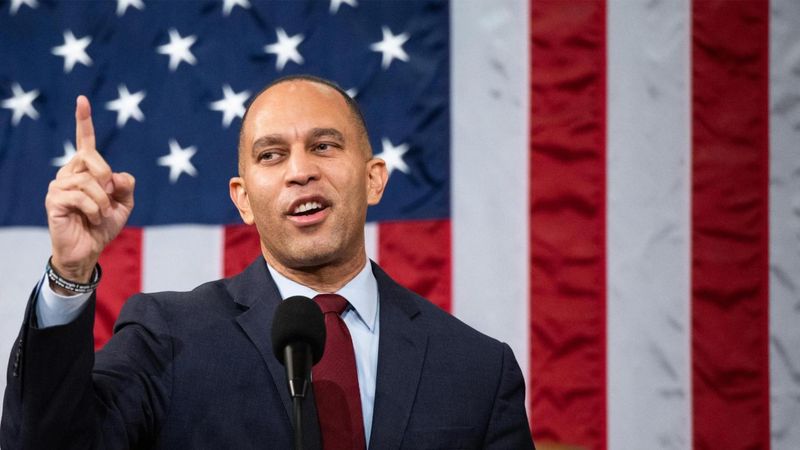
WASHINGTON, November 18, 2026 — The incoming House Democratic Caucus nominated Hakeem Jeffries as its candidate for Speaker of the House on Wednesday, voting 251-11 in a closed-door, secret-ballot leadership election, Reuters reported. The result was never in doubt — Jeffries, 56, ran unopposed — but the Hakeem Jeffries speaker nomination still carried two kinds of weight. It formalised the transfer of power that the November 3 midterms set in motion, when Democrats won back the House with at least 257 seats. And it moved Jeffries, the Brooklyn Democrat who has led his party in the House since succeeding Nancy Pelosi in 2023, to the threshold of a genuine first: if the full House elects him on January 3, he will become the first Black speaker in the institution’s history. Precision matters here, and this article will hold it throughout: Jeffries is the Democratic nominee for speaker, not yet the speaker. The gavel changes hands only when the new Congress convenes and the whole House — Democrats and Republicans together — votes.
What happened: an uncontested race, a counted vote
The mechanics of Wednesday’s vote are the first fact to fix. The Democratic Caucus — the incoming members who will sit in the new Congress — met behind closed doors and cast secret ballots. A total of 262 ballots were cast: 251 for Jeffries, 11 against. He faced no rival candidate. The Associated Press, in reporting carried by NPR, and USA Today both reported the nomination the same day, and CNN reported the contours of the small dissent that preceded it. Representative Jim Clyburn of South Carolina, the party’s elder statesman and a pivotal figure in its modern leadership history, endorsed Jeffries ahead of the vote, according to CNN.
The counted ballot was itself a choice, and a deliberate one. Jeffries could have been nominated by acclamation — a voice vote with no tally recorded and no dissent measured. Instead, he changed course on Tuesday and asked for a recorded ballot, the New York Post reported, following the precedent set in 2018, when Nancy Pelosi submitted her candidacy for speaker to a counted conference vote and won it with 203 votes and more than 30 cast against her. The parallel is instructive. Pelosi in 2018 wanted the size of her opposition on the record so she could spend the weeks before the floor vote shrinking it, in public view. Jeffries, by asking for the count, accepted the same exposure: whatever discontent existed inside his caucus would now have a number attached to it. The number came back small — 11 — and because he asked for the count himself, the smallness of it reads as a measurement he chose to publish rather than a verdict imposed on him.
The rest of the leadership slate took shape alongside the top job. As reported by the New York Post, Katherine Clark was chosen for majority leader, Pete Aguilar for majority whip, Joe Neguse for assistant speaker and Ted Lieu for caucus chair. That team — attributed here to the Post’s reporting of the closed-door elections — is the group that would run the House floor operation under a Speaker Jeffries: Clark as his floor partner, Aguilar counting votes as whip, Neguse in the assistant speaker’s role that traditionally bridges the leadership and the rank and file, and Lieu chairing the caucus itself.
The 11 votes against: what the dissent does and does not mean
Eleven is the number that will be quoted back at Jeffries for the next six weeks, so it is worth being exact about what is known of it and what is not. What is known: in the run-up to the vote, a small bloc of newly elected Democratic socialists and progressives declined to publicly commit to Jeffries, and, according to CNN’s reporting, sought concessions in exchange for their support, including floor votes on Medicare for All and on a ban on arms sales to Israel. Reuters separately noted that many incoming progressives declined to say beforehand how they would vote. What is not known: the identity of the 11. The ballot was secret, and no source reporting the vote has named any of the dissenters. This article does not name them either, because there is no verified basis on which to do so.
What the dissent does not mean is the more important half of the analysis. Eleven votes against in a conference ballot is not a challenge to Jeffries’ leadership in any operational sense: no rival stood, no alternative coalition formed, and the margin — 251 of 262 — is a 96 percent endorsement from a caucus that spans socialists to centrists. It is also, notably, a smaller rebellion than the one Pelosi absorbed in 2018, when more than 30 Democrats voted against her nomination and she still took the gavel the following January. Judged against that precedent, the 11 look less like a fracture and more like a marker: a newly elected left flank putting a price tag on the record — votes on Medicare for All and on arms sales to Israel, per CNN — early enough that the leadership cannot claim it was never told.
What the dissent does mean is narrower and more practical. It signals that the caucus’s newest progressive members intend to bargain as a bloc on policy, not on personnel. Their demands, as CNN reported them, were about what the House votes on, not about who leads it. That distinction will matter in January and after: a speaker can survive dissent about his agenda far more easily than dissent about his legitimacy, and Wednesday’s count suggests Jeffries faces the first kind, in modest size, rather than the second. The wider mood music is real, though. Protesters heckled Jeffries at a Democratic conference in Denver last week, and this newsroom’s polling coverage — Trump’s approval at 32 percent in a Reuters/Ipsos poll that also found Democrats souring on their Senate leader, Chuck Schumer — documents a base that is winning elections and still impatient with its leaders. The 11 votes sit inside that impatience. They do not threaten the gavel; they annotate it.
Why this matters
Analysis: three things make Wednesday’s caucus vote more than a formality. The first is the history. The speakership is the only office in American government, besides the presidency and vice presidency, named in the line of succession at the very top: the speaker stands second in line to the presidency, behind only the vice president. No Black American has ever held it. Jeffries — born in Brooklyn, representing New York’s 8th congressional district since 2013 — would be the first, and the fact that the barrier falls, if it falls, on a routine January roll call rather than after a crisis says something about how the institution changes: slowly, then by acclamation of arithmetic.
The second is the governing reality behind the symbolism. A Speaker Jeffries would control the House floor: what gets voted on, what never does, which committees investigate and which subpoenas fly. For the Trump administration, that converts two years of one-party Republican government into a divided Washington for the remainder of the president’s term — every spending bill, every debt-limit increase, every must-pass measure routed through a chamber run by the opposition. The third is the discipline question the 251-11 count answers. Speaker elections are lost in the gap between a caucus nomination and a floor majority; the recent history of the House, including the Republicans’ multi-ballot turmoil of 2023, is a standing warning that a nomination is not an election. Jeffries’ margin, and the fact that he asked for it to be counted, is his opening evidence that his caucus will not reproduce that chaos. The evidence is strong. It is not, until January 3, conclusive.
Context and background: the Pelosi succession and the midterm wave
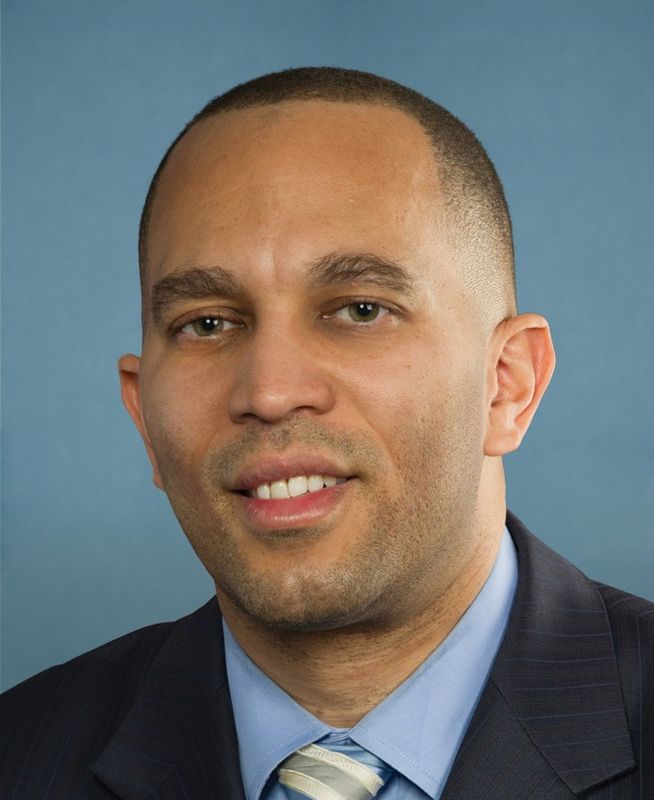
Jeffries’ path to Wednesday began in the wreckage of a lost majority. When Democrats lost the House in the 2022 midterms, Nancy Pelosi — speaker across two decades and the dominant Democratic figure of her generation — stepped down as leader, and Jeffries succeeded her in 2023, becoming the first Black American to lead a party in Congress. He then spent four years doing the job’s least glamorous version: holding a fractious minority together, negotiating from weakness, and waiting for the electoral wheel to turn. The 2018 precedent he invoked this week cuts both ways in that story. Pelosi’s counted ballot that year, with its 30-plus dissenters, was the act of a leader who had already won her majority and could afford to show her wounds. Jeffries’ version, with 11, is the act of a leader who has just won his.
The wheel turned on November 3. Democrats retook the House with at least 257 seats — a cushion of 39 above the 218 needed to elect a speaker and govern — and completed a sweep of Congress when Mary Peltola’s victory in Alaska gave them a 56-44 Senate, as this newsroom reported in Mary Peltola Wins Alaska Senate Race as Democrats Reach 56 Seats in Final Midterm Call. A Democratic Senate matters to the speaker story for a simple reason: it removes the last institutional ambiguity about January. Bills a Speaker Jeffries passes will have a friendly chamber waiting across the Capitol; the fight will be with the White House, not within the Capitol. What remains genuinely unresolved from the midterms is narrower — a handful of seats still being finalised inside that “at least 257” figure — and none of it threatens the majority itself.
The January 3 math
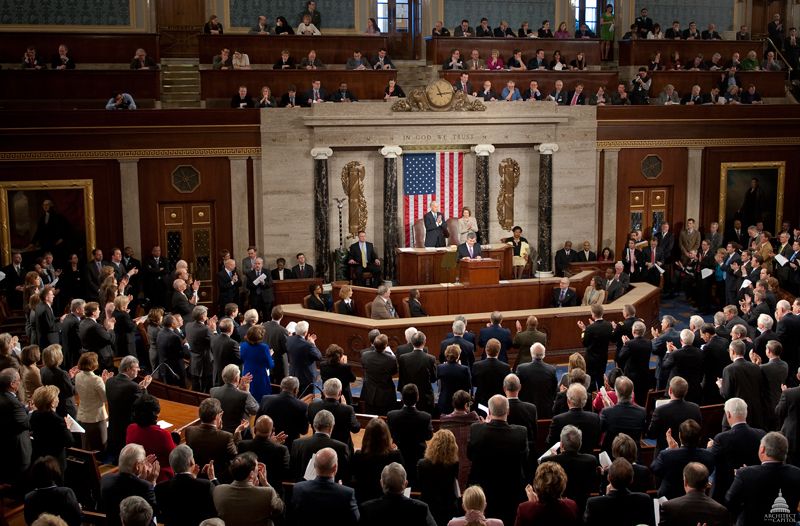
The Constitution and House practice fix the sequence. The new Congress convenes on January 3, 2027. Before it can do anything else — before members are even formally sworn in as a body — the House elects its speaker by roll call, and a candidate needs 218 votes, a majority of the full 435-member House, assuming every seat is filled and every member votes for a named candidate. Mike Johnson remains speaker until that moment; his tenure ends with the Congress that elected him, and the Republican nominee opposing Jeffries on the floor will be Jim Jordan.
Against that threshold, Jeffries’ arithmetic is forgiving. If Democrats hold 257 seats, he can lose 39 of his own members on the floor and still reach 218 without a single Republican vote. Wednesday’s 11 dissenters, even if every one of them repeated the protest on January 3 — an assumption the secret ballot makes impossible to test, and one the 2018 precedent argues against, since Pelosi’s conference dissenters overwhelmingly came home on the floor — would leave him 28 votes to spare. The realistic risks are of a different kind: vacancies, illness, a member-elect who does not take the seat, or a protest that grows between now and January because its organisers mistake a marker for a movement. Each is possible; none is visible in Wednesday’s count. The honest summary of the math is that January 3 is Jeffries’ vote to lose, by a wide margin, and that the burden of drama sits on the Republican side, where Jordan must explain a lost majority rather than win a chamber.
What a Speaker Jeffries would change for the Trump administration
The most immediate change is already visible, and it predates the gavel. On the same day as the nomination vote, Representative Robert Garcia — the incoming chair of the House Oversight Committee — sent document-preservation letters to figures across the Trump orbit, the opening move of the investigations a Democratic House intends to run. This newsroom’s report, Garcia Puts 13 Trump Allies on Notice: Preserve Everything, sets out the letters in full. Preservation letters are what oversight looks like before it has subpoena power; in January, under a Speaker Jeffries, the committees sending them would have it.
Analysis: beyond oversight, a Speaker Jeffries changes the administration’s legislative life in three concrete ways. First, the agenda veto: no bill reaches the floor without his approval, which ends any prospect of Republican-only legislation for the rest of the term and forces every negotiation into the open. Second, the money: appropriations originate in the House, and a Democratic speaker across the table from a Republican president is the classic recipe for shutdown brinkmanship — each side will spend the next two years pricing that risk. Third, the tempo of accountability: hearings, subpoenas and document fights would run continuously rather than episodically, and the White House’s legal and communications operations would have to staff for a permanent campaign. None of this requires Jeffries to be a radical; it requires only that he be a speaker of the opposite party, doing the job as speakers do it. The 251-11 caucus behind him suggests he would do it with his party intact — which, in the modern House, is itself the rarest governing asset.
What happens next
The calendar now runs in three stages. First, the interregnum: Johnson keeps the gavel, the incoming majority organises, and Jeffries’ team — Clark, Aguilar, Neguse and Lieu, per the New York Post’s reporting of the slate — negotiates the rules package and committee ratios that the new House will adopt on its first day. Watch, in this stage, for any public movement among the 11: if the progressive bloc’s demands are about floor votes on policy, the rules and scheduling conversations are where a quiet accommodation would surface.
Second, January 3 itself. The scenarios, in descending order of likelihood as the arithmetic now stands: Jeffries is elected on the first ballot with votes to spare, the historical milestone lands, and the House moves on to swear in its members; or a residual protest trims his margin without threatening it, producing a first-ballot win with an asterisk the size of Wednesday’s dissent; or — the tail risk — absences and defections compound into a second ballot, which would still end in a Jeffries speakership but would write the story of his first week for him. Jordan’s candidacy, on the Republican side, functions in each scenario as the minority’s statement of identity rather than a plausible path to 218: Republicans no longer hold the seats, and no reporting suggests Democratic defections toward him.
Third, the first hundred days, where the real questions wait. Can Jeffries convert a campaign majority into a governing one on the first hard vote — a funding bill, a debt limit, a rules fight — without spending the unity Wednesday displayed? Does the progressive bloc collect on its marker, and at what price in floor time? And does the oversight campaign that Garcia’s letters opened become the House’s defining product, or one track among several in a speaker’s portfolio that also has to keep the government funded? Wednesday’s vote answers none of those questions. What it settles is the identity of the man who will face them: 251 to 11, unopposed, and one January roll call from the gavel.
Related coverage: Garcia Puts 13 Trump Allies on Notice: Preserve Everything — Oversight Letters Target Trump Family Business, DHS and the Epstein Files · Mary Peltola Wins Alaska Senate Race as Democrats Reach 56 Seats in Final Midterm Call · Trump Approval Rating Today: 32% in New Reuters/Ipsos Poll, Near a Career Low, as Schumer Sours With Democrats
Sources
Sources: Reuters, November 18, 2026 — report of the incoming House Democratic Caucus’s closed-door leadership elections: that the caucus nominated Hakeem Jeffries as its candidate for speaker in a secret-ballot vote of 251-11 with 262 ballots cast; that Jeffries ran uncontested; that many incoming progressives had declined to say beforehand how they would vote; and the midterm results context, including Democrats holding at least 257 House seats. Associated Press, November 18, 2026, via NPR — report of the nomination confirming the vote and Jeffries’ position as the Democrats’ candidate for speaker ahead of the January 3, 2027 floor vote. CNN, November 18, 2026 — reporting that a small bloc of newly elected Democratic socialists and progressives had refused to publicly commit to Jeffries and sought concessions including votes on Medicare for All and a ban on arms sales to Israel, and that Representative Jim Clyburn endorsed Jeffries ahead of the vote. USA Today, November 18, 2026 — report of the nomination, Jeffries’ biography (56, of Brooklyn, New York, representing NY-08, in Congress since 2013, leader of House Democrats since 2023 after succeeding Nancy Pelosi) and that he would be the first Black speaker if elected by the full House. New York Post, November 18, 2026 — reporting that Jeffries changed course on Tuesday and asked for a recorded ballot rather than nomination by acclamation, following the 2018 precedent in which Pelosi won the conference nomination with 203 votes and more than 30 against; and the remainder of the Democratic leadership slate: Katherine Clark for majority leader, Pete Aguilar for majority whip, Joe Neguse for assistant speaker and Ted Lieu for caucus chair. The 11 votes against were cast by secret ballot; no source names the dissenters and none are named in this article. Photographs: file photographs from the Office of the Democratic Leader, the United States Congress and the Architect of the Capitol, all public domain via Wikimedia Commons and credited in the captions; none depicts Wednesday’s closed-door vote.