Politics · Congress · Oversight · Epstein Files
Twelve letters, thirteen names, four investigations. Robert Garcia, the California Democrat who takes the Oversight gavel in January, has told the Trump family, the president’s inner circle and the officials handling the Epstein files to preserve every document — a warning with no legal force today and subpoenas behind it tomorrow.
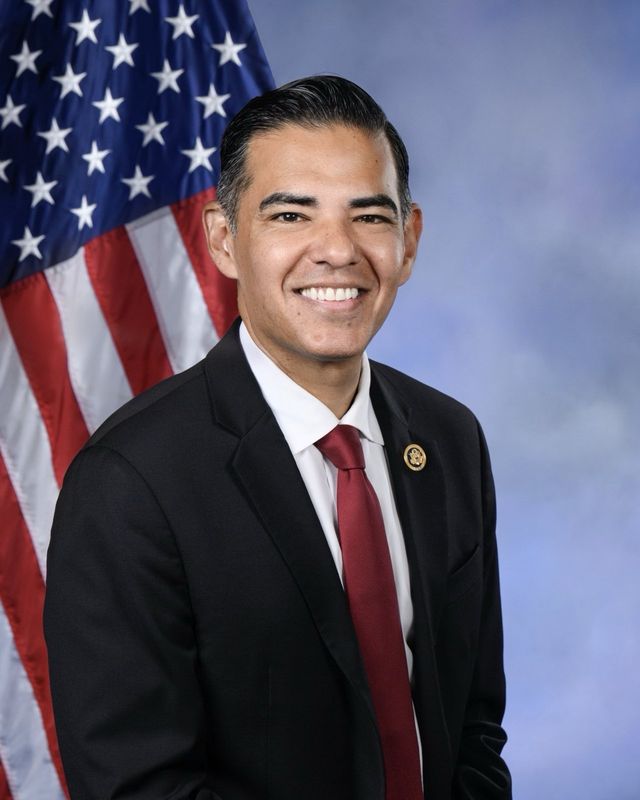
WASHINGTON, November 18, 2026 — The Trump family corruption investigation has an opening move, and it arrived by letter. Rep. Robert Garcia of California, the ranking Democrat on the House Oversight Committee and its incoming chairman after Democrats won control of the House in the November 3 midterms, sent 12 document preservation letters on Wednesday covering 13 people — the president’s sons, his son-in-law, his vice president, his chief of staff, his homeland security leadership and the Justice Department officials who handled the Epstein files. The letters, reported by Reuters, CNN and the Associated Press and announced by the committee’s Democrats, organise the coming majority’s oversight agenda into four tracks in Garcia’s own framing: Trump family corruption, corporate corruption, DHS misconduct, and what he calls the White House Epstein cover-up.
The mechanics matter as much as the names. A preservation letter compels nothing. While Democrats remain in the minority, every recipient is free to ignore Garcia entirely — and the letters say so, in effect, by their nature. What they do is establish notice: from the moment a letter lands, destroying, deleting or “losing” a covered document stops being housekeeping and starts looking like spoliation, with all the legal and political exposure that word carries once the committee issuing the warning holds subpoena power. Garcia does not hold that power today. In January, he will. That is the entire strategy in one sentence, and the rest of this article is its working out.
What Garcia actually sent: 12 letters, 13 people, four tracks
Start with the arithmetic, because the arithmetic is the message. Twelve letters, thirteen recipients — one letter, to the Bureau of Prisons leadership, covers two people jointly — and four investigative tracks that together describe how the incoming majority intends to spend its first year. The Robert Garcia Oversight letters are not a scattershot. Read name by name, they map the Trump operation as Democrats see it: the family business at the top, the corporate deals around it, the deportation and border apparatus inside DHS, and the Epstein files as the thread that runs through the White House itself.
The recipients, letter by letter
- Donald Trump Jr. — the family-business track, centred on his stake in World Liberty Financial and the alleged conflicts of interest Democrats say flow from a president’s son holding a position in a crypto venture while his father’s administration sets policy.
- Eric Trump — the family-business track, covering the Trump Organization’s dealings and the overlap between the family company and the presidency.
- Jared Kushner — the family and corporate tracks, covering the president’s son-in-law and the business interests built around his White House years.
- Kimberly Guilfoyle — named in the letters covering the family and corporate orbit around the president.
- Catherine Townsend — the corporate track, in connection with the $600 million ballroom matter and the Nvidia questions Democrats have attached to it.
- Stephen Miller — the DHS track, covering the architect of the administration’s immigration enforcement policy.
- Kristi Noem — the DHS track, as the secretary responsible for the department whose conduct Democrats intend to investigate.
- Corey Lewandowski — the DHS track, covering his role around the department’s leadership.
- Vice President JD Vance — the Epstein track, over alleged secret Situation Room meetings on the handling of the Epstein files; Garcia asked Vance to provide information by December 2.
- Susie Wiles — the Epstein track, as the White House chief of staff, over the same alleged Situation Room deliberations and the political management of the files.
- Todd Blanche — the Epstein track, at the Justice Department: the committee’s outstanding subpoena, compliance with the Epstein Files Transparency Act, the review and release of documents, and the Maxwell transfer decision.
- William K. Marshall III and Warden Tanisha Hall — a joint letter to the Bureau of Prisons director and the warden, on the decision to transfer Ghislaine Maxwell to a minimum-security prison camp.
Thirteen people is a deliberate number to sit with. It is small enough that each name is a choice, and large enough to cover the four tracks without diluting any of them. The Garcia preservation letters to Trump allies are, in that sense, a table of contents: whatever the January committee does, its chapters have now been announced in advance, with the recipients holding written notice of the page numbers.
The Epstein thread: Vance, Blanche and the Maxwell transfer
Of the four tracks, the Epstein files cover-up investigation carries the earliest deadline and the sharpest questions. Garcia’s letters to Vice President JD Vance and chief of staff Susie Wiles concern alleged secret Situation Room meetings at which the administration’s handling of the Epstein files — and the political fallout from them — was discussed. The allegation, as Democrats frame it, is that the most sensitive room in the White House was used to manage a scandal rather than a crisis. Garcia asked Vance to provide information by December 2 — a date chosen, plainly, to land while the request is still voluntary and to create a record of refusal or silence if it is not met.
The Todd Blanche Epstein files letter
The letter to Todd Blanche at the Justice Department is the most document-heavy of the twelve. It concerns the Oversight Committee’s outstanding subpoena, the department’s compliance with the Epstein Files Transparency Act, how the files were reviewed and what was released, and the decision to transfer Ghislaine Maxwell — Jeffrey Epstein’s convicted associate — to a minimum-security prison camp. Each element is a separate dispute. The subpoena is about whether the committee gets documents at all. The Transparency Act question is about whether the department obeyed a law about release. The review question is about who decided what the public would see. And the Maxwell question is about whether the system’s most notorious convicted trafficker received treatment no ordinary prisoner would.
The Ghislaine Maxwell prison transfer probe
That last question is why the thirteenth name matters. The joint letter to Bureau of Prisons Director William K. Marshall III and warden Tanisha Hall puts the prison system itself inside the investigation: who approved the transfer, on what basis, and with whose knowledge. A transfer to a minimum-security camp is, in bureaucratic terms, a paperwork decision — which is precisely why a preservation letter is the right instrument. Paperwork can be preserved, produced and read aloud at a hearing. The Maxwell thread also connects to the wider public argument over Epstein’s death and records that Signal Post News has followed throughout the autumn, including the forensic dispute in the Epstein forensic expert homicide claim and the collapse of the president’s defamation case in the dismissal of Trump’s $10 billion WSJ lawsuit over the Epstein birthday letter. Garcia’s contribution to that argument is procedural rather than rhetorical: preserve the records first, and let the records argue.
The family-business and corporate tracks
The Trump family corruption investigation — the first of Garcia’s four tracks, and the one Democrats intend as the spine of the January agenda — begins with the president’s adult children and son-in-law. Donald Trump Jr.’s letter centres on World Liberty Financial, the crypto venture in which he holds a stake, and the alleged conflicts that arise when the first family profits from an industry the administration regulates. Eric Trump’s letter covers the family company’s broader dealings. Jared Kushner’s reaches the business empire assembled around his time in government. Kimberly Guilfoyle’s places her inside the same family-and-corporate orbit the committee intends to map.
The corporate track runs alongside it, and its most specific item is Catherine Townsend’s letter, tied to the $600 million ballroom matter and the Nvidia questions Democrats have raised around it. The pairing is characteristic of the whole exercise: a ballroom is a building, Nvidia is a chipmaker, and the committee’s theory — as an allegation, attributed to Democrats — is that access, contracts and presidential projects now run through the same small circle of people. Whether that theory survives contact with documents is a January question. November’s question is narrower and, for the recipients, harder to dodge: the documents themselves must still exist when January asks for them.
Garcia is not the only Democrat laying track. In parallel, Rep. Jamie Raskin has pursued the Cantor–Lutnick–Nvidia–Megaspeed questions, and Rep. Gregory Meeks has issued his own preservation demands covering the Iran war, Venezuela oil, Caribbean strikes and USAID. Those efforts are context, not part of Garcia’s twelve letters — but they show a caucus building a preservation perimeter around the whole administration at once, committee by committee, so that no single agency or family office is the only copyholder of the record.
The DHS track
The third track, the DHS misconduct investigation Democrats have promised since the campaign, is addressed to the department’s political leadership rather than its career ranks: Stephen Miller, the policy’s architect; Kristi Noem, the secretary who owns it institutionally; and Corey Lewandowski, whose role around the department’s leadership has drawn its own scrutiny. The choice of recipients tells its own story about the theory of the case. A misconduct investigation aimed at line officers would start with field offices and incident reports. One that starts with Miller, Noem and Lewandowski starts with decisions — who ordered what, who approved what, and what the paper trail between the White House and the department actually says.
Preservation matters here for a practical reason as well. DHS generates records at industrial scale — directives, chat logs, deployment orders, detention paperwork — across components that do not naturally preserve in sync. A letter that lands in November, naming the department’s leadership, is the only realistic way to freeze that sprawl before the January committee even knows which component holds which file. As with the Epstein letters, the ask is modest and the implication is not: keep everything, because the people asking will soon be able to check.
Why this matters
Analysis, labelled as such. First, preservation letters are the opening move of every serious congressional investigation, and they are opening now for a reason. Oversight lawyers have a name for the gap between an election and a gavel: the spoliation window, the weeks in which records are most at risk because everyone knows scrutiny is coming and no one yet has the power to compel. Garcia’s letters are an attempt to close that window by declaration — to make any deletion after November 18 a knowing act done under written notice, rather than routine retention policy done in the ordinary course.
Second, the four-track structure is a governing choice, not just an investigative one. A single mega-investigation can be stalled, litigated and caricatured as a vendetta. Four tracks — family corruption, corporate corruption, DHS misconduct and the Epstein cover-up — can proceed on separate clocks, with separate document universes and separate hearings, so that a court fight over one does not freeze the other three. Third, the December 2 Vance deadline is a designed test. If the vice president’s office provides information voluntarily, the January committee inherits cooperation as the baseline. If it refuses or stays silent, that refusal becomes exhibit one for why subpoenas are necessary — an argument Democrats would rather make with a dated letter than with rhetoric.
Fourth, notice changes behaviour even without legal force. Every recipient now has to decide, with counsel, what preservation actually requires across personal devices, family offices, campaign accounts and government systems — and has to live with that decision later, under oath, if the documents do not match it. That is the quiet power of the instrument Garcia just used twelve times: it converts the next six weeks of other people’s document management into evidence, whichever way they choose.
Context and background
The immediate context is the midterm flip. Democrats won control of the House on November 3, which converts Garcia from ranking member — a title that comes with a podium but no gavel — into the incoming chairman of the committee with the broadest investigative jurisdiction in the House. Oversight chairs have used that jurisdiction in waves for a century, and the pattern is consistent: the majority that campaigns on accountability spends its first months on documents, because documents, unlike witnesses, cannot hold press conferences of their own.
The Epstein strand has its own legislative history behind it. The Epstein Files Transparency Act fight — over whether and how the Justice Department’s files would be reviewed and released — left the committee with an outstanding subpoena and Democrats with a standing argument that the department complied selectively. The Blanche letter is best read as the bridge between that fight and the next one: it preserves the Transparency Act dispute as a live claim while adding the Maxwell transfer, the one Epstein-adjacent decision that sits entirely inside the executive branch’s own paperwork and therefore cannot be blamed on courts, victims’ privacy or grand-jury rules.
What critics say
The White House response arrived before the letters did, which tells you how expected they were. In a November 9 letter, White House counsel Will Scharf warned against the “blatant criminality” framing, and the White House has dismissed the coming inquiries as sham investigations — partisan exercises dressed as oversight. That position, attributed here as the White House’s own, has two layers. The rhetorical layer is that a majority elected to investigate will find what it went looking for. The legal layer is harder to wave away, and Democrats concede it in the design of the letters themselves: right now, the letters have no legal force. Recipients cannot be compelled to preserve, produce or answer anything while Garcia is still the ranking member. A recipient who shredded a file tomorrow would face politics, not process — at least until January re-prices the act.
Critics make one further point worth stating plainly: preservation letters are also a press instrument. Announcing thirteen names generates a day of coverage in which the allegations travel further than the word “alleged,” and several of the letters’ claims — the Situation Room meetings above all — are at this stage Democrats’ characterisations, not established findings. The fair reading of November 18 is therefore double: a genuine procedural step that experienced oversight hands recognise as the real first move, and a public framing exercise whose factual premises remain to be tested against the very documents it demands be kept.
What happens next
The calendar now does the work. December 2 is the first checkpoint: Garcia asked Vice President Vance to provide information on the alleged Situation Room meetings by then, and the response — full, partial, defiant or silent — will set the tone for every other recipient’s calculation. January is the hinge: the gavel changes hands, the letters’ requests can be reissued as subpoenas, and the House Oversight January investigations move from announced intentions to compulsory process. Between those dates, watch the counsels. The letters’ real audience may be the lawyers now writing preservation instructions inside the Trump Organization, World Liberty Financial, DHS and the Justice Department — because those instructions, and whether they were followed, are what January’s first hearings will actually be about.
Three scenarios cover the plausible range. First, the orderly path: recipients preserve broadly, counsel negotiate productions, and the December 2 deadline produces at least a partial Vance response that lets both sides claim the process is working — investigations proceed, slowly and on paper. Second, the confrontation path: the White House extends its sham-investigations position into blanket non-cooperation, the January committee subpoenas immediately, and the four tracks spend 2027 in court — with the preservation letters returning as the centrepiece of spoliation arguments whenever a file turns up missing. Third, the document path, and the one Garcia is plainly betting on: the records themselves, preserved under notice and produced under compulsion, contain enough — on the family business, on DHS decisions, on the Epstein files and the Maxwell transfer — that the investigation’s centre of gravity shifts from allegation to archive, and the argument becomes about what the paper says rather than who sent which letter. Signal Post News will update this article as the December 2 deadline, the January gavel and the first subpoenas clarify which path Washington is on.
Sources
- Reuters, November 18, 2026 — reporting on Rep. Robert Garcia’s 12 document preservation letters covering 13 people, the four investigative tracks (Trump family corruption, corporate corruption, DHS misconduct and the Epstein cover-up), the recipient list, the December 2 request to Vice President Vance, and the letters’ lack of legal force while Democrats remain in the minority.
- Associated Press, via NPR Illinois, November 18, 2026 — reporting on the preservation letters, the incoming Democratic House majority following the November 3 midterms, and the White House response dismissing the inquiries.
- CNN, November 18, 2026 — reporting on the letters to Vice President JD Vance and Susie Wiles concerning alleged Situation Room meetings on the Epstein files, the Todd Blanche letter, the committee’s outstanding subpoena and Epstein Files Transparency Act compliance, and the Ghislaine Maxwell transfer questions.
- House Committee on Oversight and Government Reform, Democrats, press release, November 18, 2026 — oversightdemocrats.house.gov: the committee Democrats’ announcement of the preservation letters and Garcia’s four-track framing.
- White House counsel Will Scharf, letter of November 9, 2026 — the administration’s warning over the “blatant criminality” framing, as reported November 18; the White House position characterising the coming inquiries as sham investigations is attributed to the White House.
- Photos: Rep. Robert Garcia official U.S. House portrait, via Wikimedia Commons; the U.S. Capitol, via Wikimedia Commons — each credited in its caption.