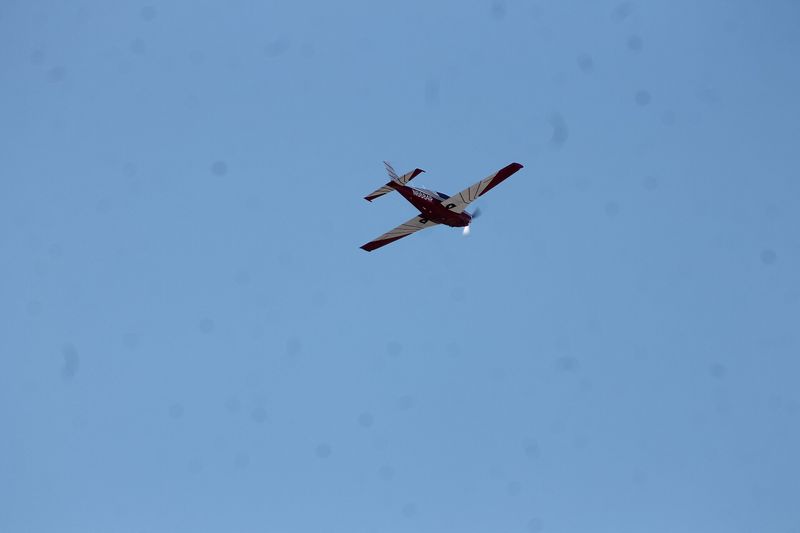
GRAND CANYON NATIONAL PARK, Arizona, November 17, 2026 — A Grand Canyon plane crash on the remote North Rim of Grand Canyon National Park killed all three people aboard a single-engine Piper PA-24 Comanche on Sunday night, the National Park Service said, and federal investigators are now working to determine what brought the aircraft down in some of the most inaccessible terrain in the American Southwest. There were no survivors.
The aircraft crashed at about 7:15 p.m. local time on Sunday, November 15, in the Basin area of the North Rim, according to the Park Service. It was reported missing to the Grand Canyon Regional Communications Center at about 11:30 p.m. that night, when its last known location was placed in the Basin area. What followed was an overnight search across dark, broken canyon country: the Arizona Department of Public Safety flew an aerial search in the early morning hours of Monday, November 16, using forward-looking infrared (FLIR) cameras and night-vision equipment, while Park Service crews worked the ground. At about 10:15 a.m. Mountain Time on Monday — after a search of nearly twelve hours — NPS search crews located the aircraft and a debris field in the Basin area.
The three people aboard were dead. The Park Service has not released their names, saying the identities are being withheld out of respect for the families’ privacy, and officials have not said where the flight began or where it was going. Preliminary data from the Federal Aviation Administration, reported by the Arizona Republic on Tuesday, indicated that one person aboard was crew and the other two were passengers. The cause of the crash is unknown, and no official has offered any theory for it.
What we know — and what we do not
The established record, drawn from the National Park Service and the FAA, is short and precise. A Piper PA-24 Comanche — a single-engine, low-wing general aviation aircraft produced by Piper Aircraft — crashed at approximately 7:15 p.m. on Sunday in the Basin area of the North Rim. Three people were aboard. The aircraft was reported missing roughly four hours later, at 11:30 p.m. An overnight aerial search by Arizona DPS using FLIR and night vision did not locate it in the dark. Park Service search crews found the wreckage and a debris field at about 10:15 a.m. on Monday. There were no survivors.
Everything beyond that skeleton is, at this stage, unknown — and it is worth being explicit about the gaps, because in the first days after a fatal crash the gaps are where speculation rushes in. Officials have not released the victims’ names. They have not said where the flight originated or where it was bound. They have not described the weather at the crash site as an official finding, the aircraft’s maintenance history, the pilot’s experience, or any communication from the aircraft before it went down. None of those questions has an official answer yet, and any account that supplies one today is guessing.
The National Transportation Safety Board is leading the investigation, with support from the FAA and the National Park Service. NTSB spokesperson Peter Knudson identified the aircraft as a Piper PA-24, and the board’s work will follow its standard method: examining the pilot, the aircraft and the operating environment. An NTSB investigator was due at the remote site on Tuesday. The board expects to issue a preliminary report within 30 days; a final report establishing probable cause typically takes 12 to 24 months.
Why the North Rim makes everything slower
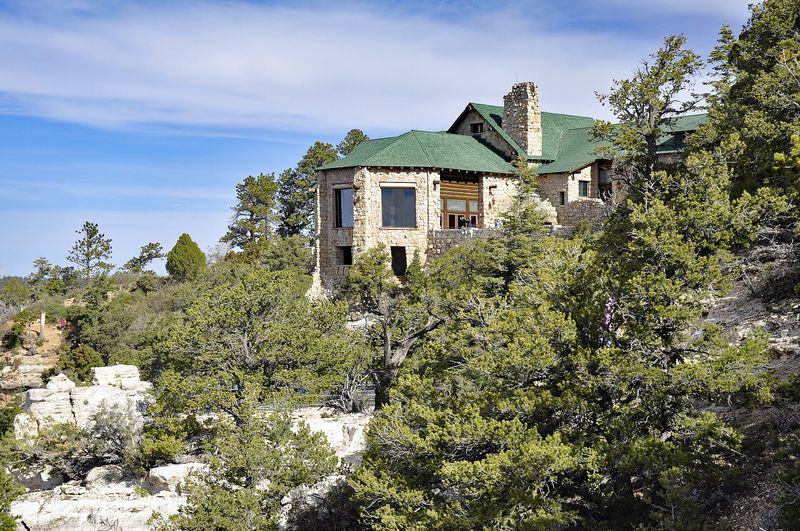
To understand why a missing aircraft took nearly twelve hours to find — and why the investigation will move at the pace it does — it helps to understand where the Basin area is. The North Rim of the Grand Canyon is the canyon’s far side: higher, colder, more heavily forested and far less visited than the South Rim, and separated from it by the canyon itself. The developed North Rim area is seasonal, and road access is limited for much of the year. There is no quick drive to a debris field in that country; there are long approaches on rim roads and forest tracks, and terrain that drops away in benches and side canyons where a small aircraft can be extraordinarily hard to see, even from the air.
That is why the search took the shape it did. An aircraft reported missing at 11:30 p.m. on a November night, with a last known location given only as the Basin area, presents searchers with a vast, dark search box. Arizona DPS flew with FLIR — thermal imaging that can pick out the heat signature of a recently crashed aircraft or a survivor — and night-vision equipment, the standard tools for exactly this problem. But thermal signatures fade, canyon walls shadow and confuse sensors, and a wreck that has scattered into a debris field among rock and timber can defeat even a careful aerial pass. In the end it was Park Service crews, working the search on the ground in daylight, who located the aircraft at 10:15 a.m.
The same geography now shapes the investigation. NTSB investigations are built on physical evidence: the wreckage itself, the distribution of the debris field, the state of the engine and propeller, control positions, and whatever recorded data can be recovered. In accessible terrain, that work begins within hours. In the Basin area, investigators must first reach the site, document it in place, and then decide what can be examined where it lies and what must be recovered and carried out. Remoteness does not change the method, but it stretches every step of it.
How an NTSB investigation actually proceeds
For the families of the three people who died, and for a public that will want answers quickly, the NTSB’s timetable can feel frustratingly slow. It is worth understanding what that timetable actually contains, because each stage answers a different kind of question.
The preliminary report, expected within 30 days, is a factual summary: the aircraft, the flight’s known parameters, the conditions as recorded, the wreckage as found. It deliberately contains no conclusions about cause. The long interval that follows — 12 to 24 months to a final report — is spent on the work that turns facts into a finding: laboratory examination of components, analysis of the debris pattern, reconstruction of the flight’s final minutes from whatever data exists, review of the pilot’s records and the aircraft’s maintenance history, and the drafting and board review of a probable-cause determination. When the final report arrives, it will state what the board believes happened and why, in the measured language of a safety investigation whose purpose is not blame but prevention.
Knudson’s framing — the pilot, the aircraft, the operating environment — is the board’s standard triad, and it maps onto the three families of explanation that investigators must test and eliminate one by one. Was there something about the human side of the flight: experience, fatigue, health, decision-making? Was there something about the machine: an engine, a control run, a structural failure? Was there something about the environment: terrain, darkness, weather, the peculiar demands of flying over a mile-deep canyon at night? A disciplined investigation holds all three open until the evidence closes them. Nothing released so far closes any of them.
The aircraft: a Piper PA-24 Comanche
The Piper PA-24 Comanche is one of the classic designs of American general aviation: a single-engine, low-wing, retractable-gear aircraft built by Piper from the late 1950s into the early 1970s, valued by private pilots for its speed and efficiency on cross-country flights. Thousands remain in private hands, flown by owners and clubs across the country. It is, in other words, an entirely ordinary aircraft of its class — the kind of machine that makes personal cross-country trips over the Southwest every day of the year.
That ordinariness matters for how this story should be read. There is no information in the public record — none — connecting this crash to any known defect of the type, and the NTSB has said nothing of the kind. General aviation in the United States operates at a scale that produces a steady background of accidents, most of them involving small private aircraft on personal flights, and the board’s files are full of cases whose causes turned out to be individual and specific: a decision, a failure, a condition that aligned badly on one particular night. Until investigators publish facts about this flight, the honest description of Sunday night is the narrow one: an aircraft came down in the Basin area at about 7:15 p.m., and three people died.
Flying over the canyon
The Grand Canyon occupies a singular place in American aviation. The canyon is flown over constantly — by air-tour operators working regulated routes, by commercial flights at altitude, and by private pilots crossing northern Arizona — and it is also terrain that punishes complacency. The plateau country around the rims sits at high elevation, where aircraft performance is thinner than at sea level. The canyon itself generates its own weather: winds that pour over the rims, turbulence in the gorge, and darkness that, away from any town, is close to absolute. A night flight over the North Rim country is a flight over a black landscape with few lights, few landmarks and few places to go if anything goes wrong.
None of that is a finding about this flight, and it should not be read as one. It is context for why investigators will examine the operating environment as carefully as the machine and the pilot — and for why the Park Service and the FAA treat aviation over the park as a discipline of its own. The history of flight over the canyon includes tragedies that reshaped American aviation safety as a whole, and the regulatory structure that governs canyon flying today was built in response to that history. Sunday’s crash, whatever its cause, now enters that record, and the NTSB’s work will determine what, if anything, it teaches.
Why this matters
Three people are dead, and the first reason this story matters is the simplest one: their families learned, sometime on Monday, that a flight had ended in a debris field in the Basin area, and they are now at the start of a process that will take one to two years to produce official answers. The discipline the Park Service has shown — withholding names out of respect for the families’ privacy, declining to speculate, stating the timeline plainly — is the correct posture for the first days of a fatal investigation, and it deserves to be matched by everyone covering it. There is no public interest served by naming the dead before their families are ready, or by dressing guesses about cause in the language of reporting.
Beyond the human fact, the crash is a case study in how aviation safety actually works in the American backcountry. A missing-aircraft report at 11:30 p.m. set in motion a layered response — a state police air search with thermal imaging through the night, park crews on the ground at first light, a federal investigation stood up within a day — across terrain that resists every part of that sequence. That the wreckage was found by 10:15 a.m. reflects a search system doing its work under hard conditions. What the investigation finds will feed, as every NTSB finding does, into the accumulated knowledge that governs how small aircraft are maintained, how pilots are trained, and how flights over remote terrain are planned.
It also matters because of where it happened. Grand Canyon National Park is one of the most visited landscapes on earth, yet its North Rim remains genuinely wild country — the kind of place where an aircraft can vanish for a night within a national park’s boundaries. The gap between the canyon’s fame and its remoteness is part of what the search exposed, and it is a reminder that the park’s scale exceeds the infrastructure that surrounds it.
What happens next
The NTSB investigator’s work at the site is the immediate next step: documentation of the wreckage and debris field, recovery of components for laboratory examination, and the first assembly of the factual record. The preliminary report is expected within 30 days and will establish the verified outline of the flight — its origin and destination, its timeline, and the conditions as investigators can document them. The victims’ names may be released by authorities once families have been notified and are ready; until then, they remain private.
The final report, with probable cause, is 12 to 24 months away. In the interval, the responsible course for anyone following this story is patience with a process designed to be slow because it is designed to be right. Signal Post News will update this story as the Park Service, the FAA and the NTSB release verified information.
Related coverage: a medical helicopter crash on Catalina Island; an American Airlines flight’s blown tire at O’Hare; and an Avianca flight’s turbulence emergency landing in Miami.
Reporting based on the National Park Service, the Federal Aviation Administration and the National Transportation Safety Board, as reported by USA Today, the Arizona Republic and AVweb. The cause of the crash is unknown; the victims’ names have not been released.
Sources
Sources: National Park Service statements as reported in full by USA Today (Nov. 17, 2026); Arizona Republic / AZCentral (Nov. 16–17, 2026), including FAA preliminary data; AVweb (Nov. 17, 2026), including NTSB spokesperson Peter Knudson via the Arizona Daily Star; GearJunkie (Nov. 17, 2026), corroborating the NPS timeline.