Avianca flight turbulence Miami emergency landing
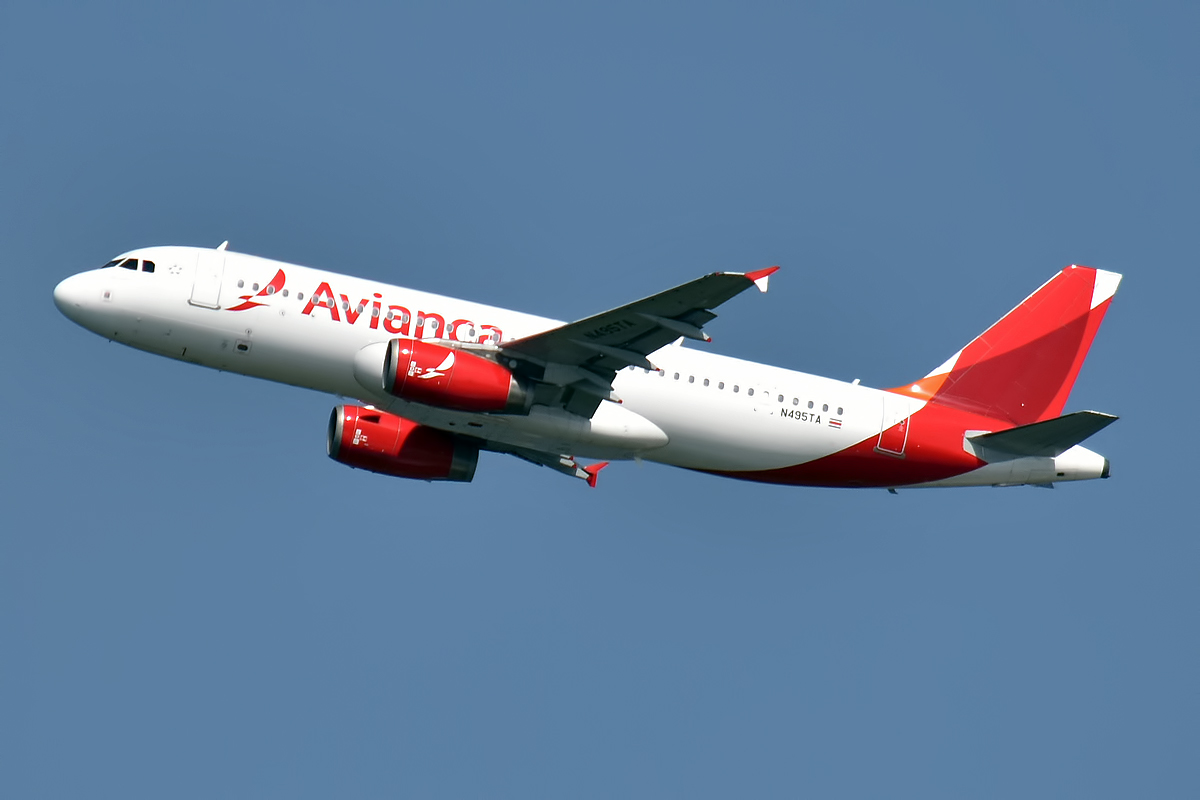
MIAMI — Avianca Flight 042 left Medellín for New York late Thursday and never reached JFK on schedule. Roughly three hours into the trip, severe turbulence sent passengers and crew against the cabin, pushed the pilots to divert, and turned the overnight flight into an emergency response at Miami International Airport.
The Airbus A320 departed at about 10:40 p.m. local time on October 8. Between Jamaica and Cuba, flight-tracking data showed a rapid descent of roughly 25,000 feet over a matter of minutes. The crew continued to Miami, landing at about 3:30 a.m. Friday, October 9, where ambulances were waiting on the ramp. The Federal Aviation Administration said it would investigate.
Miami-Dade Fire Rescue said eight people were transported to hospitals, at least one to a trauma center. Avianca's later statement counted nine people—three crew members and six passengers—taken to a medical facility. Those numbers are not necessarily contradictory: the fire department reported the patients it transported, while the airline described everyone ultimately sent for care.
Why this matters
Clear-air turbulence injuries turn ordinary cabin time into the danger zone
Turbulence rarely threatens a modern airliner's structural survival. It threatens the people and objects inside it. A passenger walking to the lavatory, a flight attendant handling a service cart, or anyone sitting with a loose belt can continue moving when the aircraft suddenly moves around them. The ceiling, armrests, carts and other occupants then become impact surfaces.
That is the deeper lesson of Flight 042. Commercial aviation has engineered away many catastrophic risks, but an invisible patch of unstable air can still produce serious injuries in seconds. Radar can reveal moisture and storm cells; it cannot directly display every region of clear-air turbulence. Forecasts, pilot reports and route changes reduce exposure without eliminating it.
Federal data put the risk in perspective. From 2009 through 2022, 163 people on U.S.-regulated operations were seriously injured in turbulence—meaning injuries severe enough to meet federal reporting thresholds, including hospital treatment of at least two days. Earlier FAA figures found that crew members accounted for 116 of 146 serious turbulence injuries from 2009 through 2021, or about 79 percent. The imbalance is not mysterious: flight attendants work while passengers are told to sit.
The Medellín-to-JFK turbulence timeline
Flight 042 departed Medellín at about 10:40 p.m. Thursday, scheduled to cross the Caribbean and continue up the U.S. East Coast to JFK. Reports place the severe encounter 2.5 to three hours later, around the airspace near Jamaica and Cuba. That timing matters because the cabin would have been deep into cruise, when some passengers may have been sleeping and others may have felt comfortable moving around.
Video broadcast by WTVJ/NBC6 showed the human aftermath: passengers held ice packs to their heads, one person wore a neck brace, and a flight attendant was taken out on a gurney. Passenger Maria Paula Jimenez told CBS Miami: “When we arrived, when we landed, we saw that very close to where we were going to disembark, there were more than five or six ambulances... Seven of them with their lights on as if they were waiting for something.”
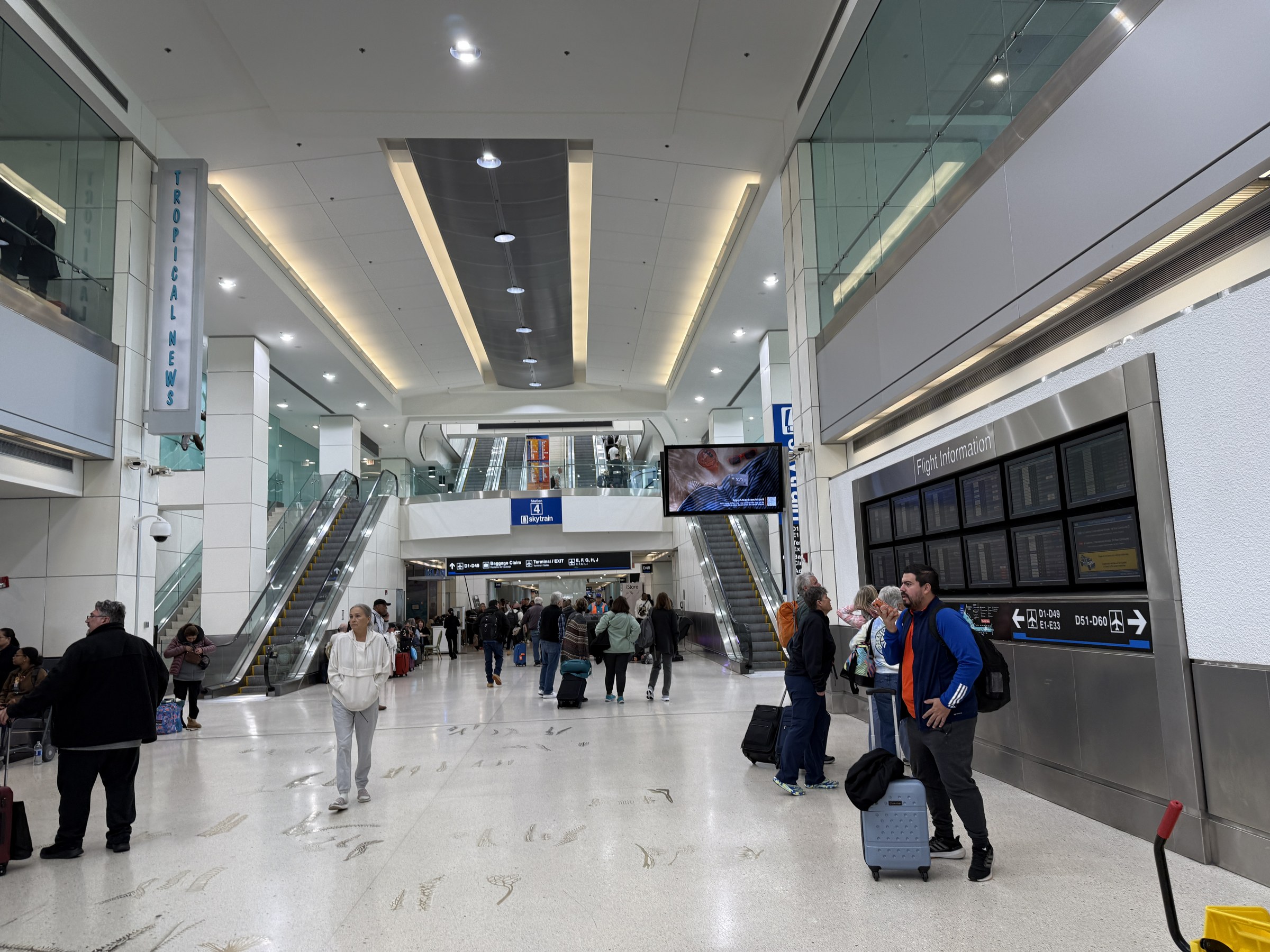
Emergency crews had the advantage of advance notice. A diversion gives the cockpit time to tell dispatch and air traffic control what medical help may be needed, allowing airport responders to stage before the aircraft arrives. That preparation explains why the tarmac scene looked large even though the reported hospital count remained in single digits.
Why one official said eight and the airline said nine
The “8 hospitalized turbulence flight” headline captured an early responder count
Initial reports focused on Miami-Dade Fire Rescue's operational number: eight patients transported from the airport, including at least one to a trauma center. Avianca later said three crew members and six passengers went to a medical facility, producing the nine-person total.
Several ordinary reporting differences can create that gap. One patient may travel by a different ambulance, seek evaluation later, or be counted by the airline even if fire rescue did not transport that person. “Taken to a medical facility” also does not necessarily mean admitted overnight. Until agencies publish patient-level records—which they generally should not—the responsible formulation is 8–9 people sent for hospital or medical evaluation, depending on the reporting authority and time.
The distinction matters because headline arithmetic can imply scandal where there may only be chronology. Both numbers should remain in the record, attached to their sources, rather than blended into a falsely precise total.
What the 25,000-foot descent does—and does not—show
The “25000 feet drop FlightRadar24” shorthand can overstate what trackers prove
FlightRadar24 data, as cited in reports, showed the aircraft descending approximately 25,000 feet in minutes. That is a large altitude change, but a flight-tracking trace alone cannot establish that the airplane fell uncontrolled through that entire distance. Pilots can initiate a rapid, controlled descent after an encounter to leave hazardous air, reach a lower altitude, prepare for a diversion, or address a cabin or pressurization concern.
The FAA turbulence investigation will need the aircraft's flight-data recorder, cockpit voice recorder, onboard weather information, pilot and controller communications, maintenance records and crew interviews to separate the initial vertical acceleration from the subsequent commanded descent. The difference is central: turbulence may have injured people without pushing the A320 outside its certified flight envelope.
An Airbus A320 is a transport-category jet designed with substantial structural margins and tested for loads well beyond normal cruise bumps. Severe turbulence can briefly impose sharp positive and negative accelerations, but cabin injuries do not by themselves show airframe damage. Investigators will look for exceedances, warning messages, inspection findings and the precise sequence of autopilot and pilot inputs rather than infer structural danger from passenger video.
Seatbelts, service carts and why crew members are especially exposed
A seatbelt works because it prevents a body from acquiring the same vertical separation from the seat that makes the next movement dangerous. Worn low and snug, it keeps the pelvis—the body's strongest belt-bearing structure—connected to the seat as the aircraft moves. A loose belt still helps, but it permits more travel and a harder stop.
The illuminated sign is a minimum instruction, not a prediction that unlit air will remain smooth. Pilots may receive reports from aircraft ahead, but clear-air turbulence can begin between reports or move with the atmosphere. The safest passenger habit is therefore simple: keep the belt fastened whenever seated, even when the sign is off.
Crew cannot follow that rule continuously. They secure bins, help passengers, check the cabin and manage hot liquids and heavy carts. The high share of crew injuries in federal data reflects occupational exposure. That is why airlines have shortened or suspended service in forecast rough air and why investigators pay close attention to how much warning the cabin received.
Flight 042 in the broader turbulence record
The comparison with Singapore Airlines Flight SQ321 in May 2024 shows both the rarity and the potential severity of these events. That Boeing 777 diverted to Bangkok after violent turbulence; one passenger died and dozens were injured. It was widely reported as the first turbulence death on a commercial airline in roughly three decades. Flight 042's injuries were serious enough to require emergency transport but, based on current reporting, no deaths were reported.
Researchers also see a longer-term signal. A University of Reading study found that the annual duration of severe clear-air turbulence at a typical point over the North Atlantic increased 55 percent between 1979 and 2020, from 17.7 hours to 27.4 hours. The mechanism identified is stronger wind shear in a warming atmosphere. That does not prove climate change caused this Caribbean encounter; it means airlines and regulators are planning for a background environment in which some forms of turbulence may become more frequent.
The flying public should resist two opposite errors. One is complacency: serious turbulence injuries are real and often preventable. The other is panic: 163 serious injuries over fourteen years are a very small number relative to the hundreds of millions of passenger journeys made in the United States alone. The risk is low, unevenly distributed and sharply reduced by a fastened belt.
The airline, the crew and the regulator
Avianca's immediate problem is care; its longer problem is reconstruction
Avianca said, “The safety of our customers and employees is, and will remain, the foundation of our operations.” The operational follow-through matters more than the statement: supporting injured passengers and crew, preserving records, inspecting the aircraft and arranging onward travel. Uninjured passengers were flown to New York Friday morning.
The crew's decision to divert should be judged with the information available in the cockpit at the time, not with hindsight. Miami offered a major airport, emergency medical capacity, long runways and airline support. Continuing to JFK would have meant hours more in the air with injured people and uncertain cabin conditions.
What the FAA turbulence investigation will examine
Investigators will reconstruct the weather field and route, compare forecasts with pilot reports, establish when the seatbelt sign was on, determine whether the cabin crew had time to sit, and map each injury to a location and activity. They will also examine the descent profile that appeared on public tracking sites and any inspections performed before the A320 returned to service.
The goal is not merely to label the air “severe.” It is to identify preventable links: Was useful information available but not shared? Did the encounter provide no warning? Were procedures followed? Did equipment become a projectile? The answers can lead to revised company guidance, better data sharing or different timing for cabin service.
Hurricane Isaias was nearby context, not an established cause
Flight 042 landed the same morning Hurricane Isaias, a Category 3 storm, was approaching Florida's Gulf Coast. The overlap is meteorologically relevant context, but no authority or outlet has established that the hurricane caused the turbulence near Jamaica and Cuba. Tropical systems can reshape broad wind patterns, while clear-air turbulence and convective turbulence have different signatures; only the investigation can identify what this aircraft encountered.
Signal Post News is separately tracking Hurricane Isaias and its potential disruptions. Linking the stories should not be mistaken for linking their causes.
What passengers should expect next
Passengers on future flights may notice earlier seatbelt warnings, longer periods without cabin service and more explicit requests to keep belts fastened throughout cruise. Airlines increasingly combine satellite weather, numerical forecasts, pilot reports and automated turbulence measurements. Better information narrows the uncertainty; it does not remove it.
For the people aboard Flight 042, the next phase is less technical: medical follow-up, baggage and itinerary recovery, and answers about what happened. The FAA's preliminary work may clarify the broad sequence quickly, but a complete finding can take months. The public flight path is evidence of where the aircraft went—not a substitute for recorder data.
Related aviation coverage includes Signal Post News's reports on the search for a missing air ambulance and new semi-private service between New York and Florida.
Sources
- Fox News — flight timeline, emergency response and FAA investigation
- New York Post — diversion, tracking data and passenger account
- People — injury counts, airline response and cabin video details
- Internewscast — emergency landing and hospital transports
- WUGA / NPR — FAA injury data and seatbelt guidance
- Scimex — University of Reading clear-air turbulence study
The cause of the turbulence and the reason for the full altitude change remain under investigation. Injury totals are attributed separately to Miami-Dade Fire Rescue and Avianca.