A REACH medical transport flight went down moments after leaving the island, turning a lifesaving mission into a deep-water rescue and a difficult aviation investigation.
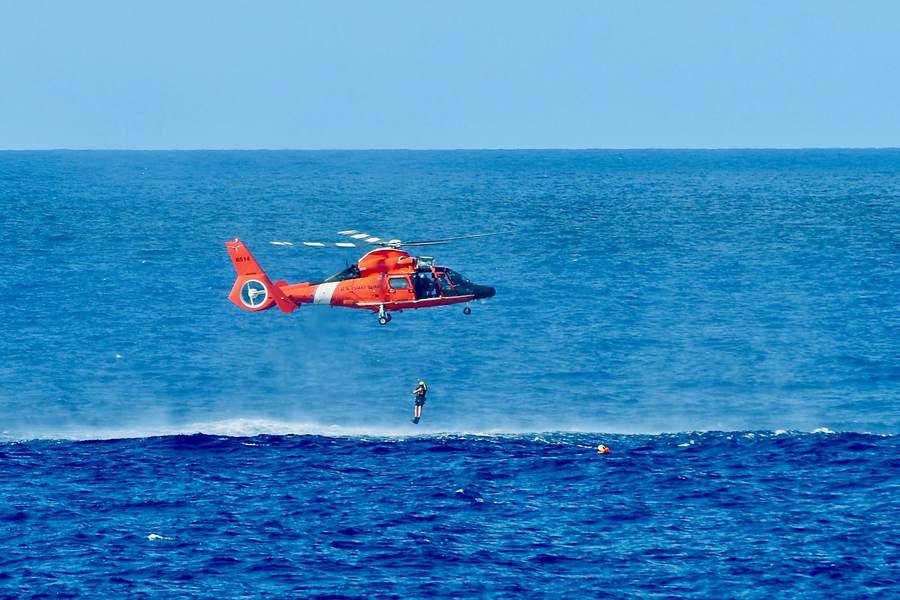
A Catalina Island helicopter crash killed two crew members, injured two other people and left the patient being transported to the mainland missing on Thursday, October 1. The medical aircraft went into the Pacific at about 7:50 p.m. Wednesday near Pebbly Beach on Santa Catalina Island's eastern shore, shortly after lifting from the island, according to the U.S. Coast Guard and preliminary information summarized by USA Today and The Desert Sun.
Five people were aboard. Four were recovered from the water: two crew members were pronounced dead, another crew member was seriously hurt, and a passenger sustained minor injuries. The fifth person — the patient on the medical transport — remained unaccounted for as search crews worked through Thursday. Authorities had not released the victims' identities or the medical reason for the flight.
The aircraft was an Airbus H-135, identified by the National Transportation Safety Board as a Eurocopter EC135 P2, and FAA records listed it to Sacramento-based REACH Air Medical Services. The flight had departed Oceanside in San Diego County at about 6:41 p.m., landed on Catalina at about 7:04 p.m., and later departed a helipad near Pebbly Beach, roughly a mile from Avalon. The cause is unknown, and no public evidence yet supports a conclusion about mechanical failure, weather or pilot action.
Why this matters: a rescue flight became a second emergency
The tragedy is unusually stark because the aircraft existed to shorten the distance between a vulnerable patient and definitive care. Island medicine depends on reliable transport when a local clinic cannot provide the treatment a patient needs. Catalina sits about 22 miles from the Los Angeles County mainland; a helicopter can turn that separation into minutes, but it also places crew and patient over water with few diversion options if something goes wrong.
That tension is the essential public-interest question. Air ambulances are not optional luxuries when geography and time threaten a patient's survival. Yet the urgency of the mission cannot become an excuse to treat operational risk as unavoidable. The best safety systems are designed precisely for high-pressure decisions: they make it easier to delay, divert or decline a flight when conditions, maintenance or crew readiness do not offer an adequate margin.
Coast Guard search Catalina: calm water, deep wreckage
The response brought together a Coast Guard helicopter and rescue boats, Los Angeles County Fire Department helicopters and divers, the Los Angeles County Sheriff's Department and Avalon Fire. Coast Guard Capt. Stacey Crecy said Thursday's operation had two tracks: continue the active search for the missing person while divers and a remotely operated vehicle examined the wreckage and what authorities believed could be the sunken fuselage.
The aircraft lay in roughly 240 feet, or 73 meters, of water. Coast Guard Cmdr. Mark Leahey described the sea state as calm and the search conditions as “ideal,” but said debris and fuel in the water complicated the work. That combination matters. A calm surface helps aircraft and boats hold search patterns, while the depth sharply limits ordinary diving time and makes remotely operated imaging, careful recovery planning and evidence preservation more important.
Dispatch audio captured the immediacy of the first minutes. A witness told an operator, “This is a helicopter crash by water. We do have survivors in the water.” The recording, reported by the New York Post, is evidence of what a witness saw and relayed; it is not an explanation of how the aircraft came down.
Catalina Island helicopter crash victims and the unanswered timeline
The preliminary casualty accounting distinguishes crew from passengers, an important point in a medical flight. Two crew members died, one crew member was seriously injured, one passenger had minor injuries, and the patient remained missing. The public record had not established which crew roles were aboard or whether the second passenger was a family member, medical escort or another occupant.
Investigators will need to reconstruct the short island stop and the final departure minute by minute. Fueling, weight and balance, patient loading, crew communications, weather observations, maintenance status and any change between the Oceanside leg and the outbound leg all matter. A timeline is not merely narrative. It determines which records, witnesses and equipment should be examined first.
Los Angeles County Supervisor Janice Hahn said on X that she had been informed the medevac helicopter crashed shortly after takeoff and listed the agencies on scene. REACH said it was gathering information and coordinating with responders, expressed condolences, and withheld additional details during the active response. That restraint is appropriate while families are notified and investigators secure evidence, but it cannot be the final level of transparency.
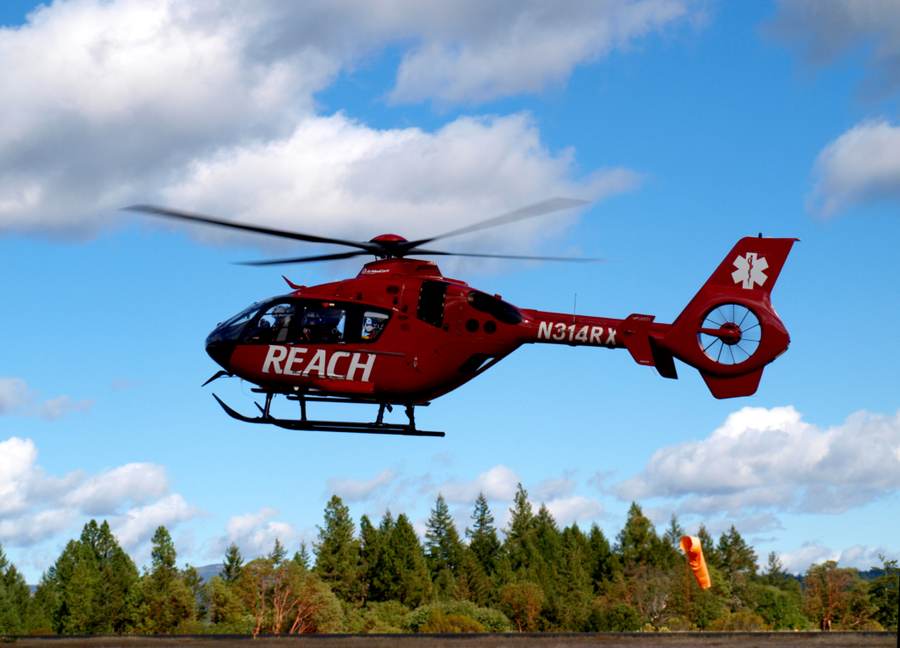
Airbus H135 crash puts operator and oversight under scrutiny
An NTSB investigation into a helicopter crash begins with facts, not a preferred theory. Investigators will examine the recovered EC135 P2 wreckage, rotor and drivetrain components, engines, flight controls, maintenance records, pilot qualifications, duty and rest history, dispatch decisions, weather and any available onboard or avionics data. At 240 feet, recovery itself can shape the pace and quality of the inquiry: saltwater exposure, separation of components and the need to document the debris field all complicate analysis.
REACH Air Medical Services bears scrutiny because it operated the flight and holds the records closest to the aircraft, crew and mission. The FAA bears a different kind of scrutiny: whether certification, operating rules and surveillance are calibrated to the real risks of emergency medical transport. Airbus can assist with the airframe and systems. The NTSB leads the independent fact-finding. None of those roles establishes blame, and an earlier accident involving the same operator does not prove a common cause.
Still, recurrence matters institutionally. Another REACH helicopter crashed on a Sacramento freeway in October 2025, critically injuring three crew members. The Catalina accident therefore raises a legitimate question for investigators and regulators: are the two events isolated, or do maintenance, training, dispatch or organizational patterns connect them? The evidence must answer that question; reputation alone cannot.
Medical helicopter crash Catalina Island: safety data in context
Historical NTSB work shows why helicopter emergency medical services have drawn sustained federal attention. In a 2006 special investigation covering January 2002 through January 2005, the board examined 55 EMS aviation accidents — 41 involving helicopters and 14 airplanes — that killed 54 people and seriously injured 19. The NTSB concluded that 29 of the 55 accidents could have been prevented by corrective actions identified in the report.
Those figures are historical, not a claim about today's accident rate, fleet or operator. Their value is diagnostic: they show that safety gains often come from repeating disciplines — risk evaluation, weather assessment, flight monitoring, terrain awareness and operational control — rather than from a single dramatic fix. They also warn against reading a cluster of crashes as proof of one cause. Rates must account for flight hours, mission conditions and the mix of operations, not merely raw totals.
Air medical crews operate under pressures ordinary passenger aviation usually avoids: urgent requests, unfamiliar landing sites, night departures and patients whose condition makes delay costly. Critics of the industry have long argued that financial and mission pressure can narrow the perceived option to say no. Operators answer that formal risk tools, dispatch oversight, training and modern aircraft have improved. The Catalina investigation should test what those safeguards looked like in practice on this flight.
California helicopter crashes create a pattern of grief, not yet a common cause
This was the third fatal California helicopter crash reported in recent weeks. A firefighting helicopter crash in Yosemite National Park killed two pilots, and a separate news helicopter crash in Los Angeles killed two people. The sequence demands attention because it places different public-service aviation missions — firefighting, news gathering and medical transport — under the same emotional spotlight.
But three accidents close together do not by themselves establish a statewide systemic failure. The aircraft, operators, missions, terrain and operating conditions differ. The useful comparison is not that all helicopters share one hidden defect; it is that specialized missions expose crews to time pressure, low-altitude work, difficult environments and high public expectations. Each investigation must identify its own causal chain before policymakers decide whether the cases support a broader response.
Pebbly Beach helicopter crash: what happens next
The immediate priority is finding the missing patient and recovering evidence without putting rescuers at unnecessary risk. If the fuselage is confirmed at depth, investigators will map the wreckage, document damage before lifting components and identify which systems can still yield usable information. Small helicopters do not always carry the crash-protected flight recorders familiar from commercial airliners, so investigators may rely on avionics memory, tracking data, radio transmissions, maintenance logs and physical signatures.
A preliminary NTSB report should establish the basic sequence but is not expected to determine probable cause. The deeper work will test mechanical integrity, fuel and engine performance, rotor behavior, flight-control continuity, pilot decision-making, weather and visibility, loading, and the design of the operator's risk controls. If evidence points toward an urgent fleet issue, the FAA or manufacturer can act before the final report. If it points toward procedure or oversight, changes may come through operator policy, inspections or regulation.
The hardest lesson is already visible. Emergency medical aviation exists because delay can be deadly, yet speed is useful only when the transport system protects the people inside it. The Catalina Island helicopter crash should not be reduced to a grim tally or folded casually into a trend. It should be investigated as a specific failure, with enough transparency to show patients, crews and island communities what will change.
Sources
- USA Today — 2 dead, 1 missing after California medical helicopter crash (October 1, 2026)
- CNN — California helicopter crash kills 2 people, leaves 2 hospitalized and 1 missing (October 1, 2026)
- The Desert Sun — 2 dead, 2 injured, 1 missing after Catalina medical helicopter crash (October 1, 2026)
- AVweb via Associated Press — Two killed in Catalina medical helicopter accident (October 1, 2026)
- New York Post — Rescue audio released after deadly Catalina Island helicopter crash (October 1, 2026)
- National Transportation Safety Board — Review of U.S. Civil Aviation Accidents, including helicopter air medical operations