Ghana BRICS membership application
Accra asks India to champion its bid to join the expanding bloc — a move President Mahama frames as diversification, not a break with the West.
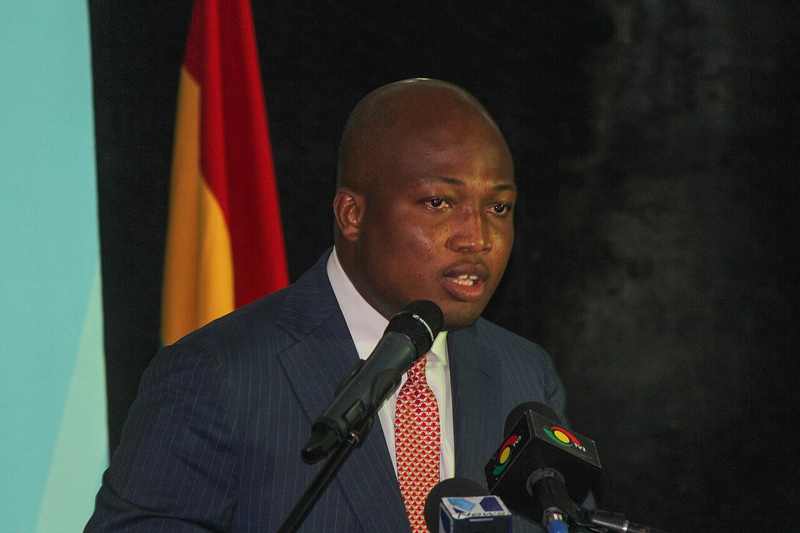
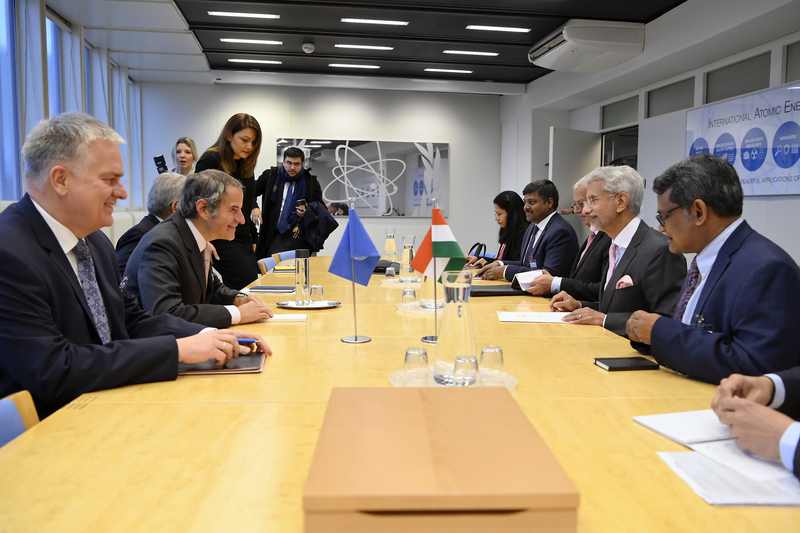
Ghana has formally moved to join BRICS. On Tuesday, October 6, 2026, Foreign Minister Samuel Okudzeto Ablakwa announced that the cabinet of President John Dramani Mahama had approved a Ghana BRICS membership application, disclosing it at a joint press briefing in Accra with visiting Indian External Affairs Minister S. Jaishankar. Accra has already asked New Delhi — a founding BRICS member — to support and guide the application through a bloc where membership decisions require the consensus of existing members.
What is known
- Ghana's cabinet has approved a formal application to join BRICS.
- Accra has asked India to support and help guide the bid through the bloc.
- India says it is supportive, but full admission requires consensus among existing members.
- Ghana frames the move as diplomatic and economic diversification, not a break with Western partners.
- Partner-country status may be a more likely first step than immediate full membership.
The announcement in Accra
The disclosure came on the first leg of Jaishankar's three-nation African tour, which also takes in Côte d'Ivoire and Ethiopia. Standing beside his Ghanaian counterpart, Ablakwa said: “The Cabinet of President John Dramani Mahama has decided that Ghana should put in a formal application to join BRICS.”
The two ministers also announced deeper bilateral cooperation — memoranda of understanding on agriculture and on science and technology, with railways, pharmaceuticals, information technology, defence and mining named as priority sectors. Bilateral trade with India has grown from about $3 billion in 2024 to roughly $7 billion, a figure Ablakwa cited as evidence that the economic relationship is already accelerating.
Jaishankar said India was “very sympathetic and supportive” of Ghana's aspirations, while cautioning that the decision rests with the wider BRICS grouping.
Why this matters
This is the most significant foreign-policy repositioning Ghana has attempted in years — and one of the clearest signals yet that the BRICS expansion story is entering its second wave. The bloc now accounts for roughly 45 percent of the world's population and around 40 percent of global output in purchasing-power terms, a larger share than the G7 on that measure.
If admitted, Ghana would be the first West African full member. Nigeria and Uganda currently hold partner-country status. That would plant the bloc's flag in a region that has historically been the exclusive diplomatic turf of Paris, London and Washington.
The announcement also crystallizes what might be called the “options doctrine” of emerging economies: refuse dependence on any single financial or political anchor, and keep every door open. Ablakwa was explicit that Ghana is not walking away from its traditional partners — it remains a member of the IMF and World Bank — but wants alternatives on the table. “We are not going to walk away from our traditional partners who value that relationship, but we must have new friends,” he said.
How BRICS got here
BRICS began in 2006 as a foreign-ministers' conversation on the sidelines of the UN General Assembly and held its first leaders' summit in Yekaterinburg, Russia, in 2009. South Africa joined in 2011, completing the original five.
The bloc's big bang came in 2024, when Egypt, Ethiopia, Iran and the United Arab Emirates joined, followed by Indonesia — and a new “partner country” tier was created to absorb the long queue of applicants without diluting full membership.
The group has built its own financial architecture, the New Development Bank in Shanghai and a Contingent Reserve Arrangement, precisely to offer members an alternative to Western-dominated lending. Ghana's application is the latest proof that the queue is getting longer, not shorter.
Who gains, who worries
The winners are easy to name. For Ghana, membership — or even partner status — means access to New Development Bank financing, diversified trade relationships and leverage in the resource-sovereignty agenda Mahama has championed. Ghana is a top global cocoa producer and one of Africa's leading gold producers, and Accra clearly believes a BRICS seat strengthens its hand in negotiating how those resources are developed.
The government frames the bid as the external pillar of its “New Economy” program, seven pillars meant to carry the country from IMF-supervised stabilisation to what it calls transformative growth. For India, championing Ghana's bid is a soft-power win and a foothold in West Africa that counters China's deep commercial presence there. For BRICS itself, a West African member adds geographic completeness and commodity weight.
The worriers are also real. Washington has repeatedly threatened punitive tariffs against countries aligning with BRICS, particularly over any challenge to the dollar's dominance — and Ghana, with its significant trade and security ties to the West, would feel that pressure acutely.
Critics also note that BRICS is an internally fractious club — India and China are strategic rivals, Iran's presence is radioactive in Western capitals — and that New Development Bank lending remains modest compared with the IMF and World Bank. Membership, in this view, buys symbolism first and cash later.
The numbers behind the Ghana BRICS bid
The economics frame the politics. Ghana-India trade roughly doubled from about $3 billion in 2024 to around $7 billion today. Ghana is now reported as Africa's eighth-largest economy and the second-largest in West Africa, behind only Nigeria.
Set against that: a BRICS bloc that, on purchasing-power measures, already outweighs the G7 — roughly 40 percent of global GDP versus the G7's roughly 30 percent. The direction of travel is unmistakable: the economic center of gravity that BRICS represents is growing faster than the institutions Ghana has traditionally relied on. That is the arithmetic behind Ablakwa's “options” — not ideology, but portfolio diversification at the level of a nation.
What happens next — three scenarios
Scenario one, the most likely: Ghana is offered partner-country status first, following the Nigeria and Uganda template, with full membership deferred to a future summit.
Scenario two: a fast track. With India's active sponsorship and the backing of the bloc's African members — South Africa, Egypt and Ethiopia — consensus could crystallize faster than skeptics expect, especially if Accra's application becomes a showcase of BRICS's African momentum.
Scenario three: the stall. Consensus cuts both ways; any single existing member wary of over-expansion can slow-walk the file indefinitely.
What to watch: the communiqué of the next BRICS summit, any public reaction from Washington, whether Ghana's parliament debates the bid, and whether the New Development Bank begins engaging Accra before membership is even settled. The application is the starting gun, not the finish line.
A short announcement with long geometry. Ghana is betting that the future of development finance is multipolar — and that the countries which secure their options early will pay less for them later.
Sources
- Zetta Ghana — “Ghana Set to Apply for BRICS Membership – Ablakwa,” October 6, 2026.
- Verily News — “Ghana To Apply For BRICS Membership.”
- Ghana Eye Report — Ghana News Agency reporting on the formal application.
- Kumasi City — “Ghana plans formal application to join BRICS, Foreign Affairs Minister says.”
- Amar Ujala Digital / ANI — India supportive of Ghana's aspirations, October 7, 2026.