War · Ukraine · United States
In a Fox News interview, President Volodymyr Zelenskyy put a price on the restraint Washington has been demanding: if the United States supplies Patriot interceptors covering a single month — drawn from stock now, not from a production line years away — Ukraine will stop striking Russian oil refineries for that month. The alternative he named is simpler: Russia stops attacking Ukraine’s energy system, and the strikes stop with it.
Track it live: Ukraine war map and live front-line data · Live war tracker
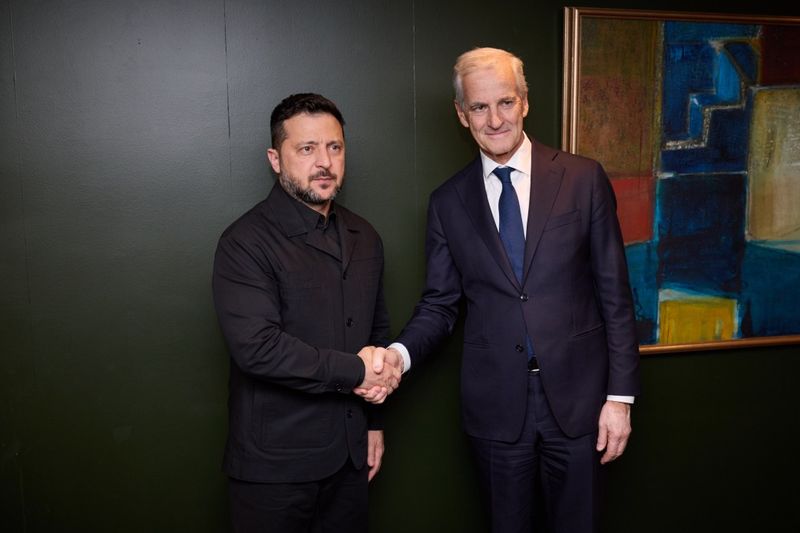
KYIV, November 2, 2026 — Ukraine will halt its strikes on Russian oil refineries if the United States provides Patriot air-defence missiles — and President Volodymyr Zelenskyy has now specified the shape of the bargain down to the month. In an interview with Fox News broadcast on Sunday, Zelenskyy said he had held “different and several” conversations with President Donald Trump and his team about the refinery campaign, and that Kyiv had put two routes to a pause on the table. “We said that if you want us not to attack Russia’s refineries, they have not to attack our energy system,” he said. “And other alternative – give us Patriot missiles, we will find money, not just aid. Yes, just deliveries and we will pay for it.” Pressed on the scale of what he is asking, he narrowed it deliberately: “For one month, if you need us not attack their refineries, for one month, give me Patriot [missiles] for one month.”
The framing matters as much as the offer. Zelenskyy did not present the refinery strikes as a lever Ukraine is eager to pull, but as a reply it cannot switch off while the blows it answers continue. “We asked that we can’t not respond after Russia’s attack on our energy, after Russia is killing our people, attacks on our electricity, gas, refineries, on everything,” he told host Trey Yingst, who had asked why Ukraine resumed the strikes despite the demands of the U.S. president. And he rejected, in advance, the suggestion that naming a price was pressure politics: he is not afraid to share the truth with partners, he said, and that truth is that “America can’t help Russia, the president can’t help Putin.” No public White House response to the specific one-month proposal had been reported by Monday afternoon.
An old argument, a new number
None of this is a new conversation — what is new is that it now has a quantity and a deadline attached. Zelenskyy said on October 16 that the United States had not agreed to an earlier compromise under which Ukraine could have stopped striking refineries, and the argument has run, in public and in private, through the autumn: Washington pressing Kyiv to spare Russian oil infrastructure, Kyiv answering that restraint is being demanded of the side whose power stations are being hit. The Wall Street Journal reported that Ukrainian long-range units informally suspended refinery attacks for roughly two weeks in mid-October under that U.S. pressure — and that the pause ended on Friday, October 30, when Ukrainian drones struck the Novokuibyshevsk refinery in Russia’s Samara region, despite advice from European allies to hold off until after the November 3 U.S. midterm elections. Ukrainian drones were back over Samara again on Monday, hitting the pipeline hub at Prosvet in the strike Signal Post News reported earlier today. The Fox interview, in other words, was not a hypothetical. It was an explanation, delivered to an American audience on the record, of why the campaign Washington wants stopped has restarted — and a priced offer to stop it again.
The sale that arrives in years, and the winter that arrives in weeks
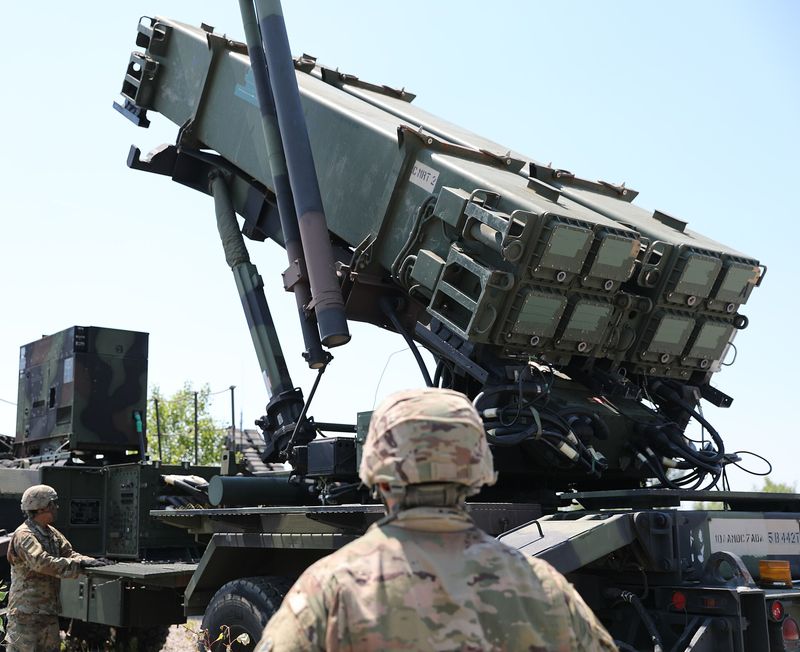
The offer lands three days after the largest single air-defence decision of the second Trump administration. On Friday, October 30, the State Department approved a possible sale of 500 Patriot PAC-3 MSE interceptors to Ukraine at an estimated $2.1 billion — a package Signal Post News covered in full when it was announced. The money is not America’s: Canada, Germany and Norway are paying through the JUMPSTART programme, alongside Ukrainian funds financed by the European Union’s Ukraine Support Loan, and Lockheed Martin is the principal contractor. Zelenskyy welcomed the approval publicly — “500 PAC-3 interceptors is a substantial number,” he wrote, and could form an effective defence package this winter. Then he stated the problem that produced the Fox offer. The interceptors in the sale have not been manufactured yet. Reuters reported, citing people briefed on the decision, that deliveries are not expected until a couple of years into the 2030s, and Zelenskyy himself warned they may begin only in a few years.
His counter-proposal, made on X alongside the welcome, is the bridge the Fox interview priced. Ukraine had asked its American partners for a winter support package at a rate of 100 Patriot interceptors per month; 500 missiles, he noted, would be enough to protect Ukrainian skies over precisely the coming months when protection matters most. Providing them to Ukraine now — in the winter of 2026–27 — from U.S. and allied inventories, and replenishing those partners’ arsenals later from the production already contracted and paid for, “would be the right approach,” he wrote. The Fox formulation simply converts that inventory swap into the currency Washington has been asking for: one month of interceptors in hand, one month of refinery strikes paused. It is also not the first time this linkage has been floated from Kyiv — the demand that refinery restraint be matched by air-defence deliveries runs through our earlier coverage of Trump urging Zelenskyy to ease the refinery strikes — but it is the first time it has been stated as a clean, time-boxed, payable transaction.
Why this matters
The significance of the interview is that it relocates the argument. Until now, the refinery dispute has been conducted as a quarrel about obedience: Kyiv striking targets its most important partner asked it not to strike, Washington reading defiance into each new plume of smoke over Samara or Ufa. Zelenskyy’s offer reframes it as a question of sequence and supply. On his account, Ukraine is not refusing restraint; it is refusing uninsured restraint — a month in which Russian ballistic missiles meet a Ukrainian grid defended by interceptors that exist, so far, as a contract line rather than as canisters. That reframing has an audience beyond the White House. Every European capital that urged Kyiv to wait until after the midterms now has Kyiv’s answer in quotable form, and every voter watching American fuel prices has been told, by the president of Ukraine on American television, exactly which decision in Washington connects to which fire in Russia.
There is also a harder strategic layer. Patriot interceptors are the scarcest class of munition in the Western arsenal, contested by the Iran war, by Gulf partners’ replenishment orders and by the U.S. military’s own stockpile floors — the same competition that runs through the Pentagon’s Patriot accounting in our coverage of the Iran war’s costs. Production of PAC-3 MSE rounds is measured in the hundreds per year, while Russia can expend ballistic missiles at a rate that, on the figures circulating in coverage of the interview, exceeds what Ukraine currently receives in interceptors in a single month. A one-month package is therefore not a token: it is a meaningful slice of annual world production, and granting it from inventory means some other theatre’s magazine runs thinner until the line catches up. Zelenskyy knows this, which is why the offer is one month and payable — sized, deliberately, to be the smallest version of the ask that still changes the military picture, and structured so that saying yes costs the United States money it has already been promised rather than money it has not.
The numbers behind the ask
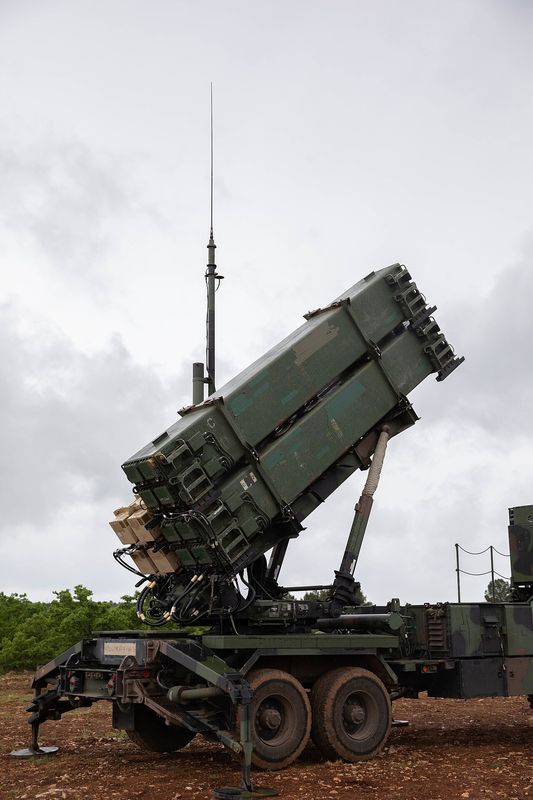
Set the figures side by side and the logic of the one-month frame becomes plain. The approved sale is 500 interceptors for an estimated $2.1 billion — roughly $4.2 million per missile including parts, support and logistics. Zelenskyy’s winter request is 100 interceptors a month: the entire 500-round package, delivered at the rate he asked for, covers about five months of winter. The gap he is protesting is not the size of the package but its position in time — the same 500 rounds are worth a defended winter if they arrive from stock in 2026 and a historical footnote if they arrive from the production line in the 2030s, after several more winters of Russian strike campaigns fought, on current trends, with whatever interceptors Ukraine can scrape together month by month. Against that, the value of what he is offering Washington is also concrete: the refinery campaign is Ukraine’s principal means of imposing costs deep inside Russia, it has repeatedly hit some of Russia’s largest plants — Novokuibyshevsk alone processes about 8.8 million tonnes of crude a year — and it is the campaign U.S. officials have pressed hardest to suspend, in the Journal’s account partly from concern about fuel markets in an election season. A verified month without it, bought with interceptors already paid for by allies, is the kind of transaction this administration ordinarily describes as a deal. Whether it describes this one that way is the open question.
What each side says
Ukraine’s position is now stated in full, on the record, by its president: the refinery strikes are retaliation for attacks on Ukrainian energy, they stop when Russia’s energy attacks stop, or they pause for a month if the United States supplies a month of Patriot coverage from inventory at Ukraine’s expense. The United States has made its underlying preferences equally plain over the autumn — it has pressed Kyiv to halt the refinery strikes, it approved the 500-missile sale on October 30, and its State Department has stressed that the sale is a new, allied-funded package unrelated to air-defence deliveries already in progress — but it had issued no public answer to the specific one-month swap by Monday afternoon, and nothing in the October 30 approval commits Washington to the inventory-first sequence Zelenskyy proposes. Russia, for its part, has not commented on the Fox proposal in the reporting reviewed on Monday; its answer, so far, is the campaign itself — the overnight strikes that cut power to hundreds of thousands of households in four Ukrainian regions on Sunday were the immediate backdrop to the interview, and Moscow has consistently described its energy attacks as strikes on military-linked infrastructure, a characterisation Kyiv and its partners dispute. Between those positions, the verifiable core is narrow and solid: the offer was made, in those words, on American television; the sale it builds on was approved, on those terms, on Friday; and the strikes it would pause resumed, over Samara, while the interview was still circulating.
What happens next
Three clocks now run on this proposal. The first is electoral: the informal restraint Washington sought was always tethered to the November 3 midterms, and whatever latitude the administration gains or loses at the ballot box on Tuesday will shape its appetite for a public bargain with Kyiv. The second is meteorological: the winter strike season is the entire premise of the 100-a-month request, and each week of negotiation is a week in which the interceptors, wherever they currently sit, are not over Ukrainian power stations. The third is industrial: an inventory release requires the Pentagon to judge which stockpile floor it can defend, ally by ally and theatre by theatre, and the JUMPSTART structure of the sale — allied money, American missiles — gives Canada, Germany and Norway a financial voice in that judgement. If Washington says yes, the test will be mechanical and immediate: interceptors visibly arriving, and refineries visibly not burning, for thirty days. If it says no, or says nothing, Zelenskyy has already told his audience what follows — Ukraine, in his words, cannot not respond. The Samara smoke on Monday morning suggests that, pending an answer, it is not waiting to be asked twice.
Sources: Fox News interview with President Volodymyr Zelenskyy (host Trey Yingst), broadcast November 1, 2026, as reported by Arab News, November 1, 2026, and by European Pravda, November 2, 2026; CNN, “Zelensky welcomes sale of crucial US Patriot missiles but warns delivery could take years,” October 30, 2026; Reuters, “US approves $2.1 billion Patriot missile sale to Ukraine,” October 30, 2026; U.S. State Department approval of the possible sale of 500 PAC-3 MSE interceptors, October 30, 2026; Wall Street Journal, “Ukraine Hits Russian Oil Refinery, Ending a Pause and Defying Trump,” October 30, 2026; Breaking Defense, updated November 2, 2026.