France School Shooting: 14-Year-Old Opens Fire at Aubagne Middle School, Wounding Principal and Teacher
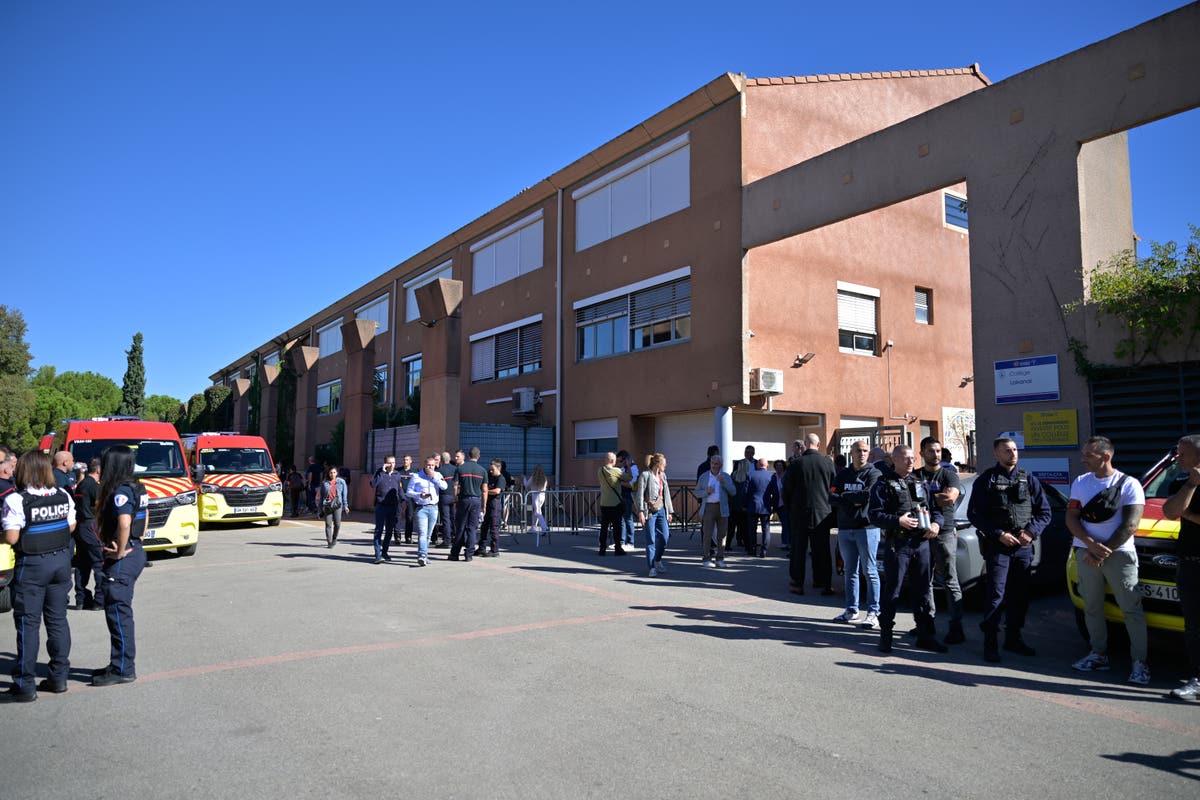
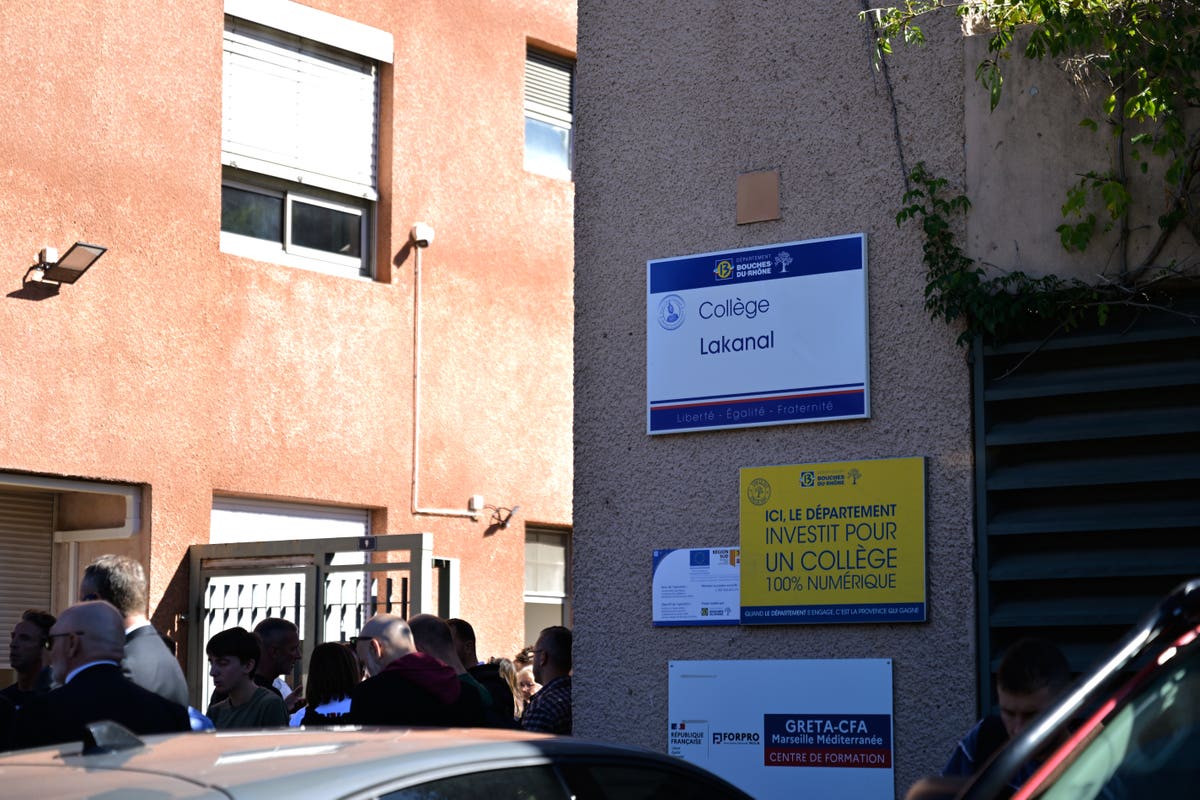
The France school shooting began shortly after 9 a.m. on Monday, October 12, at a school most local accounts describe the same way: ordinary, peaceful, attended by roughly 625 pupils, set on the edge of a shopping district in Aubagne, about nine miles (15 km) east of Marseille. Prosecutors say a ninth-grade pupil, aged 14, entered carrying a hunting shotgun concealed in a guitar case. On the first floor he fired once or twice. The principal, 53, was hit in the hip, and a 37-year-old mathematics teacher was wounded in her lower limbs. Both were struck by pellets from a 12-gauge shotgun, according to Marseille deputy prosecutor Audrey Jouaneton, and both were taken to hospital. Their injuries are not life-threatening.
What happened next is the reason this story is about two wounded teachers and not something far worse. The pupil set off the fire alarm and went up to the second floor, where prosecutors say he fired twice more — once toward the floor in front of a teacher, and once into an occupied classroom, where the shot hit the teaching board. No teacher or pupil in that classroom was hit, though prosecutors said the children were very shocked. In a stairwell, a member of the school staff — its education adviser, in Le Monde's account — intercepted the boy, overpowered him and took the gun, in what Jouaneton praised as an act of extreme courage. Police who had reached the scene then took the pupil into custody.
What prosecutors have confirmed — and what they have not
The confirmed core, from Marseille prosecutor Nicolas Bessone and his deputy, is narrow and should be kept separate from everything now circulating around it. Four shots in total across two floors. Two staff members wounded by shotgun pellets, neither in danger of death. No pupil shot. A staff member, not police, ended the attack. The boy is a pupil at the school, detained on Monday, and prosecutors have opened an attempted-murder investigation. His motive is unknown: Jouaneton said investigators do not yet have precise enough evidence to say he set out to target those two staff members, even though they were the ones hit. The BBC reported that the boy's father was also taken into custody after investigators searched the family home — a development prosecutors will have to clarify, because how a 14-year-old obtained a hunting shotgun is now a central question of the case, not a detail.
Equally important is what officials have ruled out, at least provisionally. Police said there was no immediate information linking the shooting to the wave of secondary-school protests that has shaken France for several weeks — walkouts and blockades over teacher shortages, overcrowded classrooms and school conditions that have closed hundreds of schools on protest days. Joseph Lakanal was not affected by those protests on Monday, police said. Classmates' accounts quoted in tabloid coverage — about bullying, about a break-up, about a boy in a difficult period — are, at this stage, unconfirmed by any prosecutor, and this report treats them as such: claims in circulation, not findings.
The morning, as parents lived it
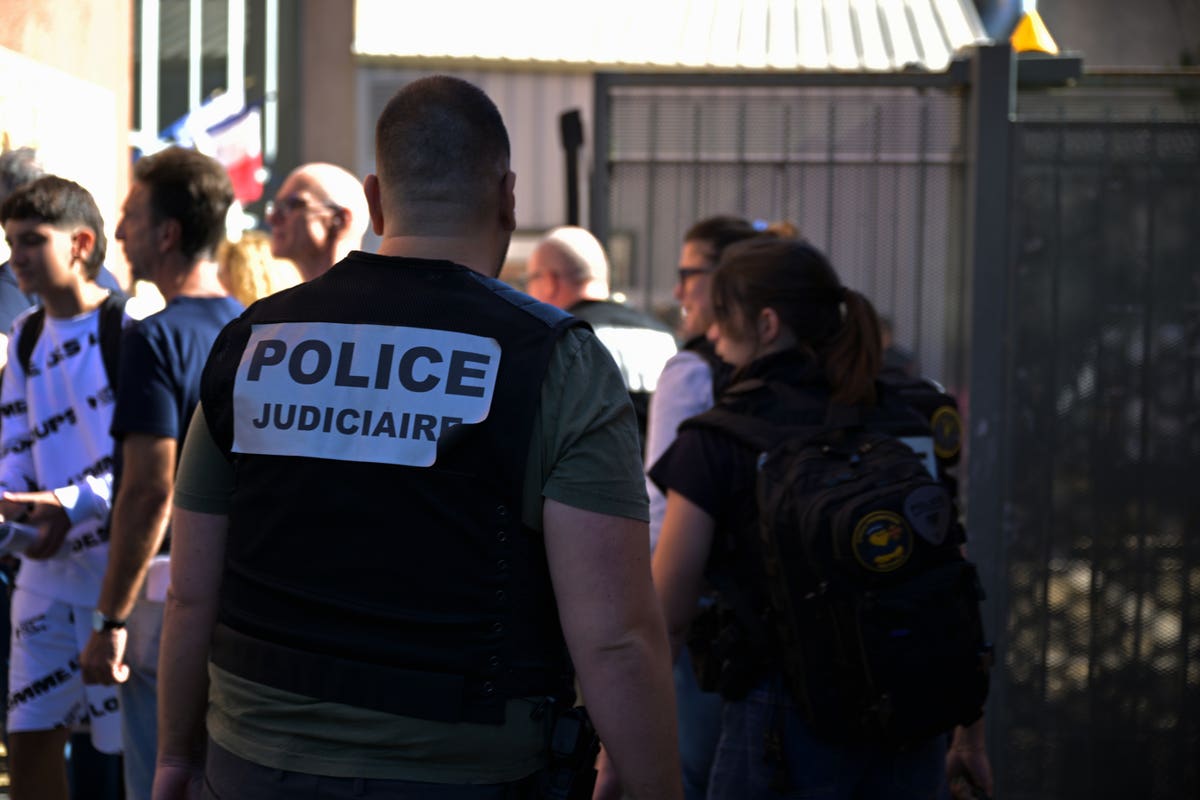
Le Monde's reporting from outside the school gates captured the other timeline of the morning: children confined inside within seconds, in the mayor's words, while hundreds of parents converged on the ochre-fronted building and waited as officers called out names and brought pupils out one by one. One mother described her ninth-grade daughter calling from a blocked number, running, saying there was a killer in the school. Aubagne's mayor, Jean-Pierre Squillari, arrived about fifteen minutes after the attack and spoke to the wounded teacher before she was taken away. Counselling was offered to pupils on Monday, and the town — a commune of some 47,000 people in the hills east of Marseille — spent the day absorbing an event that French parents associate, if they associate it with anywhere, with the United States.
Why this matters
School shootings by pupils are rare in France, and that rarity is precisely why a single morning in Aubagne has drawn the president of the republic, two cabinet ministers and the national press. President Emmanuel Macron posted his solidarity with the wounded principal and teacher and with pupils and parents in shock, praising the school team's composure and exemplary reaction for preventing a worse outcome. Education Minister Edouard Geffray, who travelled to Aubagne with Interior Minister Laurent Nuñez, called it an unacceptable act that again highlights a rise in violence and said schools cannot carry the burden of severe violence alone. When a head of state responds within hours to a school incident in which, mercifully, nobody died, the response itself is the measure of how abnormal the event is in the French context.
The second reason it matters is the weapon. France is not a country without guns: it has a large, legal hunting culture and millions of registered firearms held under a licensing regime far stricter than America's. A 12-gauge hunting shotgun is the most ordinary long gun in rural and semi-rural France. Which means the policy question Aubagne poses is not the American one — it is narrower, and in some ways harder: not what weapons exist, but how a child got access to one, how it was stored at home, and whether the adults around that storage failed a duty the law already imposes. The reported detention of the father, if confirmed and explained by prosecutors, will tell the country whether this was a failure of law or of compliance with law. Those are different problems, with different fixes, and conflating them would waste the lesson of the morning.
The third reason is timing, handled carefully. This shooting did not happen in a calm season for French schools. For weeks, pupils have blockaded lycées, hundreds of schools have closed on protest days, and the government has been fighting a rolling confrontation over the state of public education. Officials were right to state plainly, and early, that no link between Aubagne and the protests has been established — because the temptation, in a tense national argument, to fold a 14-year-old's shotgun into a story about protest movements would be strong and wrong. Supporters of the protests will note that distinction protects a lawful movement from an atrocity it did not cause. Critics of the government will note, just as fairly, that a school system already described by its own pupils as overwhelmed now has to answer for safety as well as staffing. Both can be true without the shooting being about the protests at all.
Background: rare, but no longer unthinkable
France's reference points for pupil gun violence are few enough to list. In 2017, a 16-year-old armed with a rifle, pistols and a small grenade opened fire at a high school in Grasse, in the south, wounding three students and the principal — the closest parallel to Aubagne in a generation. The attacks French schools have actually suffered more recently have been with blades: last year a middle-school employee in eastern France was stabbed to death by a 14-year-old pupil during a bag check, and in 2025 a 15-year-old in western France stabbed four fellow students, killing one. That pattern — edged weapons, not firearms — is part of why a shotgun inside a guitar case has landed so hard: it breaks the assumption, embedded in French school security debates about bag checks and gates, that the realistic threat is a knife a pupil can be stopped for carrying.
A guitar case defeats that assumption in a specific way worth naming. It is not a suspicious object in a school full of music lessons; it is the kind of thing that passes a gate, a corridor and a stairwell without a second look. Any honest post-Aubagne security review — and Geffray's presence in Aubagne on Monday signals there will be one — has to reckon with the limits of perimeter thinking: the pupils and staff who actually stopped this attack were inside the building, and the person who ended it was an unarmed staff member in a stairwell. Schools across France will be reading the prosecutor's account of those seconds closely, because that, and not a new fence, is what stood between two wounded teachers and a classroom shooting.
Who gains, who loses, what is really at stake
Nobody gains from Aubagne, but the arguments that follow will still sort winners and losers. Hunting and shooting federations will argue — reasonably, on the facts known — that a licensed hunting weapon misused by a child is a storage and supervision failure, not a case against lawful ownership. Gun-control advocates will answer that a system in which a 14-year-old can walk out of a house with a 12-gauge has a compliance problem whether or not the law on paper is strict. The government, already on the defensive over schools, must now fund and staff a safety response on top of a staffing crisis it has not resolved. And the pupils of Joseph Lakanal — 625 of them, escorted out past police tape on a Monday morning — carry the cost that no policy argument repays: a school that will not feel ordinary again for a long time.
What happens next
The investigation comes first: the attempted-murder inquiry, the boy's custody and questioning under the rules that govern minors in France, a court decision on how he is held, and prosecutors' clarification of his father's status and of how the shotgun was obtained and stored. Expect Bessone's office, which has been precise and sparing so far, to remain the only authoritative source on motive — and to resist naming one until evidence supports it. Politically, watch for two tracks: a school-security package or review from the Education and Interior ministries in the coming days, and a parliamentary argument about firearm storage enforcement that will test whether Aubagne moves French gun politics at all, or whether the country's consensus — strict law, hunting tradition, rare school gun violence — absorbs even this. The wounded principal and teacher, both expected to recover, will return to a school that France will be watching as the measure of whether, after the ministers leave Aubagne, anything actually changes.
Related coverage: France's schools crisis, explained · France student protests: a timeline
Sources: Associated Press / PA Media (prosecutor Nicolas Bessone and deputy prosecutor Audrey Jouaneton — four shots, two staff wounded with 12-gauge pellets, non-life-threatening injuries, no pupil shot, staff member's intervention, motive unknown, no established link to school protests); BBC News (teenager arrested, father's custody as reported); Al Jazeera; Sky News; Le Monde (school of about 625 pupils, mayor Jean-Pierre Squillari's account, the education adviser disarming the pupil, parents outside the gates); President Emmanuel Macron and Education Minister Edouard Geffray on X, October 12, 2026.