France pay protests returned to the streets on Tuesday, November 17, 2026, for a third united public-sector strike day since September — smaller than the November 5 peak on the government’s own count, larger than the November 14 mobilisation, and pointed squarely at two audiences: a prime minister whose pay talks collapsed on Friday, and whoever next occupies the Élysée after the April 2027 presidential election. The Interior Ministry counted 146,000 demonstrators nationwide, including 28,000 in Paris. The CGT, France’s largest public-sector union confederation, claimed more than 500,000 nationwide, including 175,000 in Paris. Both numbers are reported here, attributed, throughout — because in France the argument about how many people marched is itself part of the politics.
PARIS, France, November 17, 2026 — France pay protests drew crowds in more than 200 demonstrations across the country on Tuesday, Agence France-Presse reported, as the eight public-sector unions staged their third united strike and protest day since September. The mobilisation was called after pay talks with Prime Minister Sébastien Lecornu failed on Friday, when a boost to the private-sector minimum wage was not matched for the public payroll. France’s 5.8 million public-sector employees were urged to mobilise, and the day that followed was, by the standards of this autumn, strikingly calm: Le Monde reported almost no incidents in Paris or in Lille, Toulouse, Lyon and Marseille, and the Paris march ended festively at Place d’Italie. The calm did not soften the message. CGT general secretary Sophie Binet dismissed the government’s pay response as “too little, too late” and warned of “an unprecedented downgrading” of public servants, while protesters told reporters the day was a message to the next occupant of the Élysée. Our earlier reporting on the October unrest, its aftermath and President Emmanuel Macron’s address sets out how this autumn of protest began.
What happened on Tuesday: a festive Paris march and a quiet country
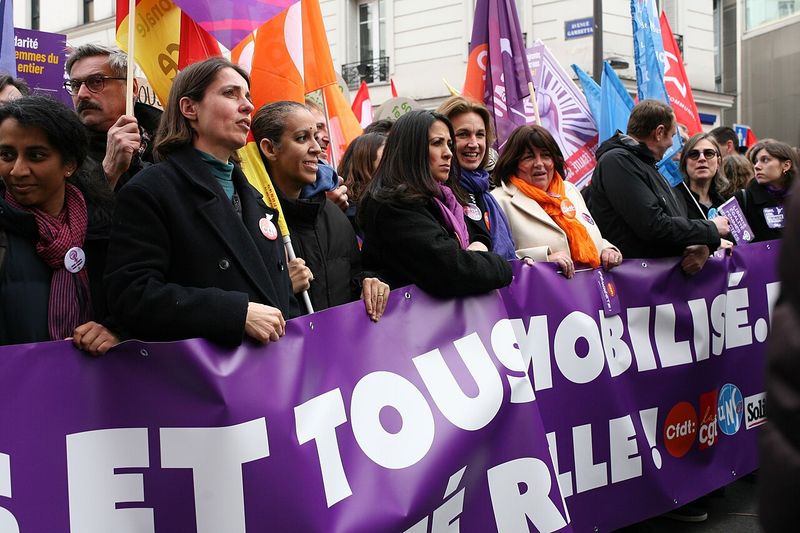
The Paris demonstration set the tone. Marchers set off from Boulevard Diderot and made their way to Place d’Italie, where the day ended, in Le Monde’s account, festively — including a Madison dance at the finish. Jean-Luc Mélenchon, the leader of La France Insoumise, marched in the capital. Private-sector employees and young people were strongly represented alongside the public servants the strike call was aimed at, Le Monde reported from the marches, a detail that matters: a dispute that began over the public pay index point is being carried, at least in part, by people who do not work for the state at all.
Beyond the capital, demonstrations were held in Lyon, Marseille, Lille and Toulouse, among the more than 200 gatherings organised nationwide, according to AnewZ. In Strasbourg, an AFP photograph showed a protester surrounded by smoke waving a French flag. In Saint-Brieuc, in Brittany, Le Monde put the turnout at about 800 people, against some 3,000 there on November 5 — a local snapshot of the national pattern, a movement that is shrinking from its peak without disappearing. Across the cities Le Monde covered, there were almost no incidents, a sharp contrast with the earlier November mobilisation, which had drawn hundreds of thousands and seen tear gas used in some cities, AFP reported. Tuesday’s story was not confrontation. It was persistence.
The strike itself: about 3 percent walked out
The street numbers and the strike numbers tell different stories, and both belong in this report. Strike participation among central-government civil servants was estimated at about 3 percent of roughly 2.5 million staff, according to the Ministry of Public Action and Accounts, as reported by Le Monde — down from nearly 10 percent on November 5. In other words, far fewer public servants stopped work on Tuesday than marched, or than stopped work a fortnight earlier. Union officials have long argued that the march, not the walkout, is the truer measure of a French protest day; the government, equally predictably, points to the participation rate. Tuesday gave each side the figure it prefers.
Two counts, one street: 146,000 or more than 500,000?
France has argued about demonstration counts for decades, and Tuesday added a textbook case. The Interior Ministry counted 146,000 people nationwide, including 28,000 in Paris, AFP and Le Monde reported. The CGT claimed more than 500,000 nationwide, including 175,000 in Paris. The gap is not a rounding difference: the union’s national figure is more than three times the ministry’s, and its Paris figure is more than six times the official one. Neither side’s method is independently audited on the day, and this report does not split the difference or crown a winner — it reports both, attributed, every time.
What can be compared like-for-like is the trend on a single counter’s own terms. On the Interior Ministry’s count, Tuesday’s 146,000 was a sharp fall from the 575,000 the ministry counted nationwide on November 5, including 65,000 in Paris, according to AFP. Le Monde characterised Tuesday’s turnout as rising against November 14 but in gradual decline against the November 5 peak. A police source had told AFP before Tuesday that 40,000 to 80,000 people were expected in Paris and 220,000 to 300,000 nationwide; the ministry’s eventual Paris count of 28,000 came in below even the low end of that expectation, while the CGT’s claim of 175,000 in the capital exceeded the high end. The honest summary is the one the numbers support: on every official measure the movement is smaller than it was on November 5, and on the unions’ measure it remains a mass movement of half a million people. Both of those sentences are true at once, which is precisely why the count itself has become a political contest.
The pay dispute in numbers: a frozen index point and a fourth year without a rise
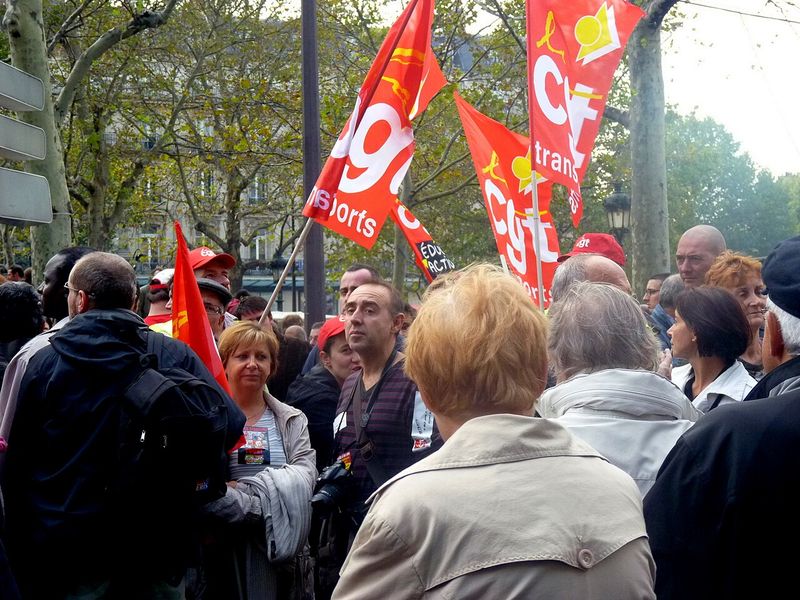
Underneath the flags is an unusually concrete grievance, and it can be stated in numbers. The index point that determines basic pay across the French public sector has been frozen for three years, AnewZ reported, leaving some lower-paid civil servants earning below the roughly €1,470 net monthly minimum wage before additional payments are counted. The unions put the loss of purchasing power for public servants at 16 percent since 2017 — a union figure, attributed as such, and the number on the banners. The draft 2027 budget, AFP reported, rules out a general public-sector pay rise for a fourth consecutive year. And the immediate trigger was comparative: on Friday, talks with Prime Minister Lecornu failed after a rise in the private-sector minimum wage was not matched for the public payroll, so the lowest-paid state employees could watch the private-sector floor move while their own index point stayed frozen.
The government’s answer, delivered by its spokesperson Mathieu Lefèvre, was targeted rather than general: proposed increases of up to €650 gross for more than 1.3 million civil servants, and a guarantee that no civil servant would be paid below the minimum wage, AnewZ reported. Laurent Escure of the UNSA union welcomed the minimum-wage boost as, in his words, the first time in 14 years, Le Monde reported — a reminder that the eight-union front is united on the strike call but not identical in tone. Binet’s response for the CGT was the day’s defining quote: the offer was “too little, too late,” and she warned of “an unprecedented downgrading” of the public service and the people who staff it. Between €650 for some and a frozen index point for all sits the whole argument: the government is buying relief for the lowest paid inside a budget it says cannot afford more; the unions are demanding the general rise the draft budget explicitly refuses.
Why this matters
First, because a shrinking movement that refuses to end is a different political problem from a shrinking movement that fades. Tuesday’s official turnout was roughly a quarter of the November 5 peak, and strike participation fell from nearly 10 percent to about 3 percent — yet the unions still put marchers on the streets of more than 200 towns and cities, kept all eight federations on a single call, and drew private-sector workers and young people into a public-sector pay dispute. A government can wait out a one-day spike. A durable, repeating, lower-level mobilisation that survives its own decline is harder to price, because it does not need to win on any given Tuesday; it needs only to still be there when the budget is voted and when the election campaign begins.
Second, because the protesters themselves have changed the addressee. Le Monde reported marchers framing the day explicitly as a message to the next occupant of the Élysée, ahead of the April 2027 presidential election, and Binet argued the protest must refocus the presidential debate on wages, the cost of living and public services. That is a significant shift in the movement’s own theory of change: from extracting a concession from this government, whose draft budget has already ruled out the general rise they want, to setting the terms on which the next president will be chosen. Mélenchon’s presence in the Paris march, and his proposal of an amnesty for high-school students convicted over the 2026 protests, reported by Le Monde, place the radical left physically and programmatically inside that frame. Our analysis of why France protests, from the Bastille to the 2026 rallies, explains why the street has so often been where French political arguments are first settled.
Third, because the space the unions do not occupy will not stay empty. Le Monde’s context places Marine Le Pen’s far right leading in the polls as the campaign approaches, and a cost-of-living grievance is the most portable grievance in politics: it can be carried by a union banner, a left alliance or a nationalist campaign promising to protect purchasing power by other means. The April 2027 contest is already being fought, in part, over who owns the anger of people whose pay has not kept up — and Tuesday’s marches were one bid in that contest. Our reporting on the poll that put Le Pen and Mélenchon on course for a runoff shows how narrow the road to the Élysée already looks.
Context: an autumn of protest, a peak on November 5, and a budget with no room
Tuesday was the third united public-sector strike day since September, but it landed in a much wider autumn. France has seen a rolling protest wave through the season, including blockades by high-school students — the movement whose convicted participants Mélenchon now proposes to amnesty — and a series of national mobilisations that reached their high-water mark on November 5, when the Interior Ministry counted 575,000 people nationwide. Since then the curve, on official numbers, has bent steadily downward, through November 14 to Tuesday’s 146,000, even as the unions’ own counts have kept the movement in the hundreds of thousands.
The fiscal backdrop explains the government’s rigidity and the unions’ fury in equal measure. France is trying to pass a 2027 budget under a heavy deficit and debt constraint, and a general public-sector pay rise for 5.8 million employees is one of the most expensive single lines any finance ministry can write. Ruling it out for a fourth consecutive year is, from the government’s side, a credibility signal to markets and to Brussels. From the unions’ side, it is a decision to make public servants carry a visible share of the consolidation in their pay packets, for a fourth year, after three years of a frozen index point and what they calculate as a 16 percent loss of purchasing power since 2017. Neither description is false. The strike days are what happens when both are true at once.
The other side of the picket line: workers who can no longer afford to strike
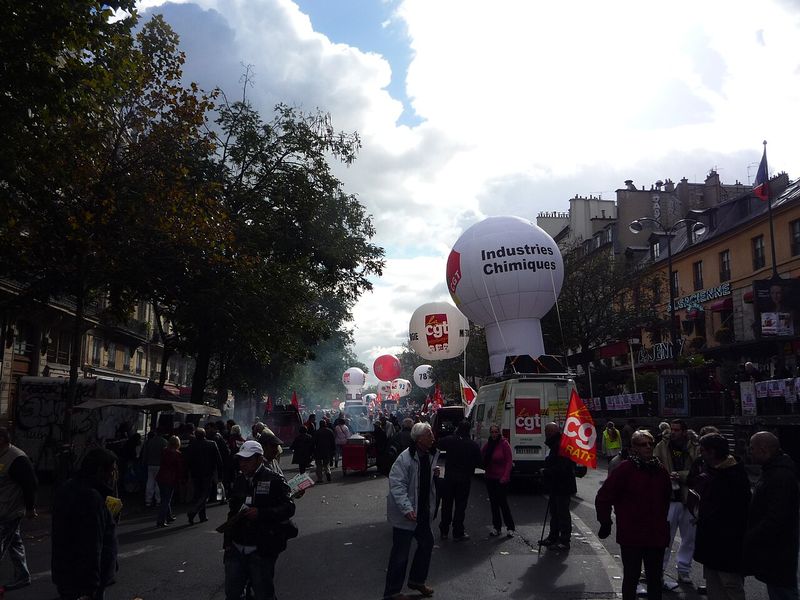
The fall in strike participation — about 3 percent on Tuesday against nearly 10 percent on November 5, on the Ministry of Public Action and Accounts’ estimate — has a human explanation that sits awkwardly beside the purchasing-power argument, because it is the same argument. A strike day in France is, for most public servants, an unpaid day. The workers with the strongest grievance about pay are, by definition, the workers least able to surrender a day’s wages to protest about it, and the longer a movement runs on repeated strike days, the more its cost concentrates on exactly the lower-paid staff whose below-minimum-wage basic pay started the dispute. That arithmetic does not weaken the unions’ case on the merits; it weakens their instrument. It is one reason the march has become the movement’s centre of gravity: an evening demonstration costs time, but a strike day costs rent money.
The government reads the same figures as vindication. Lefèvre’s targeted offer — up to €650 gross for more than 1.3 million civil servants, with a minimum-wage floor guaranteed — is designed to split the difference between the budget constraint and the most acute cases, and to let ministers argue that the lowest paid have been heard even as the general rise is refused. The unions read it as confirmation of the downgrading Binet described: a public service in which the state’s own floor has to be guaranteed by exception, because the standard pay scale no longer reaches it.
Forward look: budget votes, a possible fourth strike day, and the 2027 shadow
Three tests now follow in sequence. The first is parliamentary: the draft 2027 budget, with its refusal of a general public-sector pay rise for a fourth consecutive year, must survive its votes, and every amendment on the index point will become a proxy for Tuesday’s argument. The second is industrial: whether the eight unions, having watched official turnout and strike participation fall since November 5, judge that a fourth united strike day would rebuild momentum or expose its decline — and whether they shift further toward marches, targeted stoppages and the lowest-paid sectors where the government’s floor guarantee can be tested case by case. The third is electoral, and it is the one the protesters named themselves: with the April 2027 presidential election approaching, wages, the cost of living and the state of public services are moving from the street into the campaign, and every candidate — Mélenchon on the radical left, Le Pen’s far right leading in the polls in Le Monde’s context, and whoever carries the governing camp’s banner — will have to answer the question Tuesday posed in its simplest form: what is a day’s work for the French state worth?
On Tuesday night, the honest scoreboard read as follows. The Interior Ministry counted 146,000 people, including 28,000 in Paris. The CGT claimed more than 500,000, including 175,000 in Paris. The government offered up to €650 for some and a floor for all, and called it a response. The unions called it too little, too late, and danced at Place d’Italie. France’s pay argument is not finished; on the evidence of its third strike day, it has simply changed its venue — from the negotiating table that failed on Friday, to the budget votes ahead, and finally to the ballot box in April.
Sources
Sources: Agence France-Presse, November 17, 2026 — more than 100,000 took part in France pay protests; the Interior Ministry counted 146,000 nationwide including 28,000 in Paris; the CGT put the nationwide total at just over 500,000; France’s 5.8 million public-sector employees were urged to mobilise after Friday talks with Prime Minister Sébastien Lecornu failed; third united public-sector strike day since September; an earlier November mobilisation drew hundreds of thousands and saw tear gas in some cities; a police source told AFP 40,000–80,000 were expected in Paris and 220,000–300,000 nationwide; unions put public servants’ loss of purchasing power at 16 percent since 2017; the draft 2027 budget rules out a general public-sector pay rise for a fourth consecutive year; AFP photograph of a protester surrounded by smoke waving a French flag in Strasbourg, November 17. AFP comparison figure: the Interior Ministry counted 575,000 nationwide including 65,000 in Paris on November 5. Le Monde, November 18, 2026 — November 17 protests: from Paris to Lyon, a movement sends a message to the next occupant of the Élysée: demonstrations for higher wages called by the eight public-sector unions; 146,000 including 28,000 in Paris (Interior Ministry) against more than 500,000 including 175,000 in Paris (CGT); turnout up against November 14 but in gradual decline against November 5; almost no incidents; the Paris march from Boulevard Diderot ended festively at Place d’Italie; strike participation of about 3 percent of roughly 2.5 million central-government civil servants against nearly 10 percent on November 5 (Ministry of Public Action and Accounts); Sophie Binet warned of “an unprecedented downgrading”; Laurent Escure (UNSA) welcomed the minimum-wage boost; Jean-Luc Mélenchon marched in Paris; protesters framed the day as a message to the next occupant of the Élysée ahead of the April 2027 presidential election; Saint-Brieuc turnout of about 800 against some 3,000 on November 5. AnewZ, November 17, 2026 — France hit by nationwide strikes over wages: more than 200 demonstrations organised; the index point for public-sector basic pay frozen for three years, leaving some lower-paid civil servants below the roughly €1,470 net monthly minimum wage before additional payments; government spokesperson Mathieu Lefèvre pointed to proposed increases of up to €650 gross for more than 1.3 million civil servants and a guarantee of at least the minimum wage; Binet dismissed the response as “too little, too late.” Photographs are file photos from Wikimedia Commons and do not depict the events of November 17, 2026.