France protests arrests death toll — the numbers France woke up to on Sunday were not the numbers it went to sleep with. A day after 550,000 people marched nationwide over the cost of living and crumbling public services, the Interior Ministry's toll had climbed past 2,000 arrests and more than 600 injured police officers, gendarmes and firefighters, and the unrest had claimed two lives: a protester who died after a cardiorespiratory arrest just north of Paris, and — according to CNN, citing Interior Minister Laurent Nuñez — a 22-year-old police officer struck by a third-party vehicle in Nantes. President Emmanuel Macron addressed the nation on Sunday evening, in a broadcast that became the government's attempt to retake control of a weekend that began as a schools dispute and ended as the worst unrest in years.
France riots / Saturday's marches were the story France expected. Sunday's count — two dead, 600 officers hurt, a capital cleaning up — is the one it has to live with
PARIS — France reeled on Sunday from one of its most violent days of unrest in years, as the government published a steadily worsening account of Saturday's nationwide protests over high prices and public services and President Emmanuel Macron addressed the nation in a televised broadcast on Sunday evening.
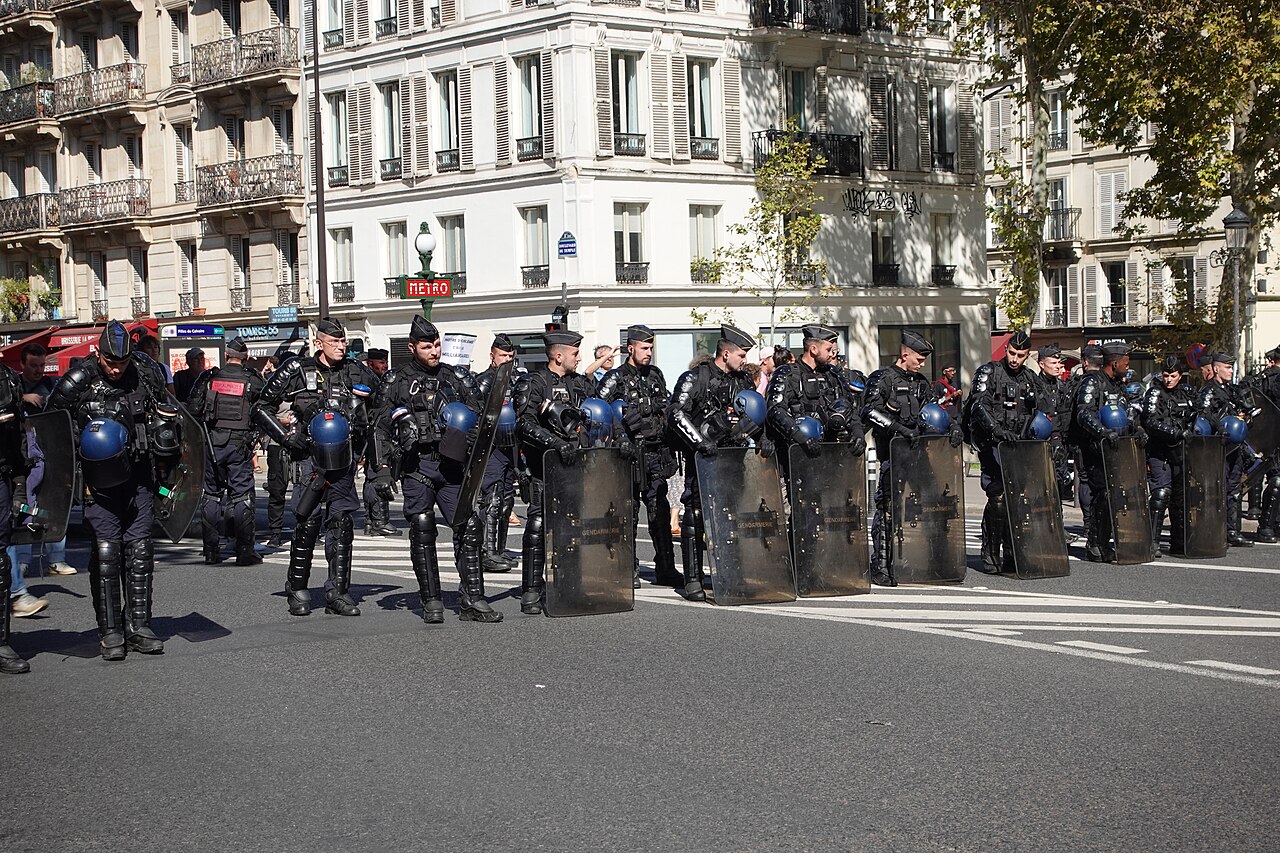
The toll moved in stages all weekend. The interior minister's Sunday statement, carried by Reuters, the Associated Press and AFP, put arrests at about 1,800 across France with more than 500 officers, gendarmes and firefighters injured — up from 1,200 arrests in Prime Minister Sébastien Lecornu's late-Saturday count and roughly 400 in the first evening briefings. Nuñez's later updated toll, carried by CNN, put detentions at more than 2,000 and the injured at more than 600, figures he described as provisional. Paris alone recorded 855 arrests on Saturday, a record for the capital.
Two deaths are now attached to the weekend. One protester died after suffering a cardiac arrest during demonstrations in Paris, Reuters reported; CNN, citing its affiliate BFMTV and the Paris Police headquarters, said the protester died just north of Paris following a "cardiorespiratory arrest." CNN also reported that a 22-year-old police officer died after being "struck by a third-party vehicle" in the western city of Nantes, about 250 miles southwest of Paris, attributing the information to Nuñez, and CNN was still carrying the officer's death in its updated reporting after the president's address. Reuters and the Associated Press had not listed the officer's death in their latest reports at the time of writing, and the circumstances in Nantes have not been detailed by officials; this article will be updated as the ministry confirms them.
What the wreckage looks like, city by city
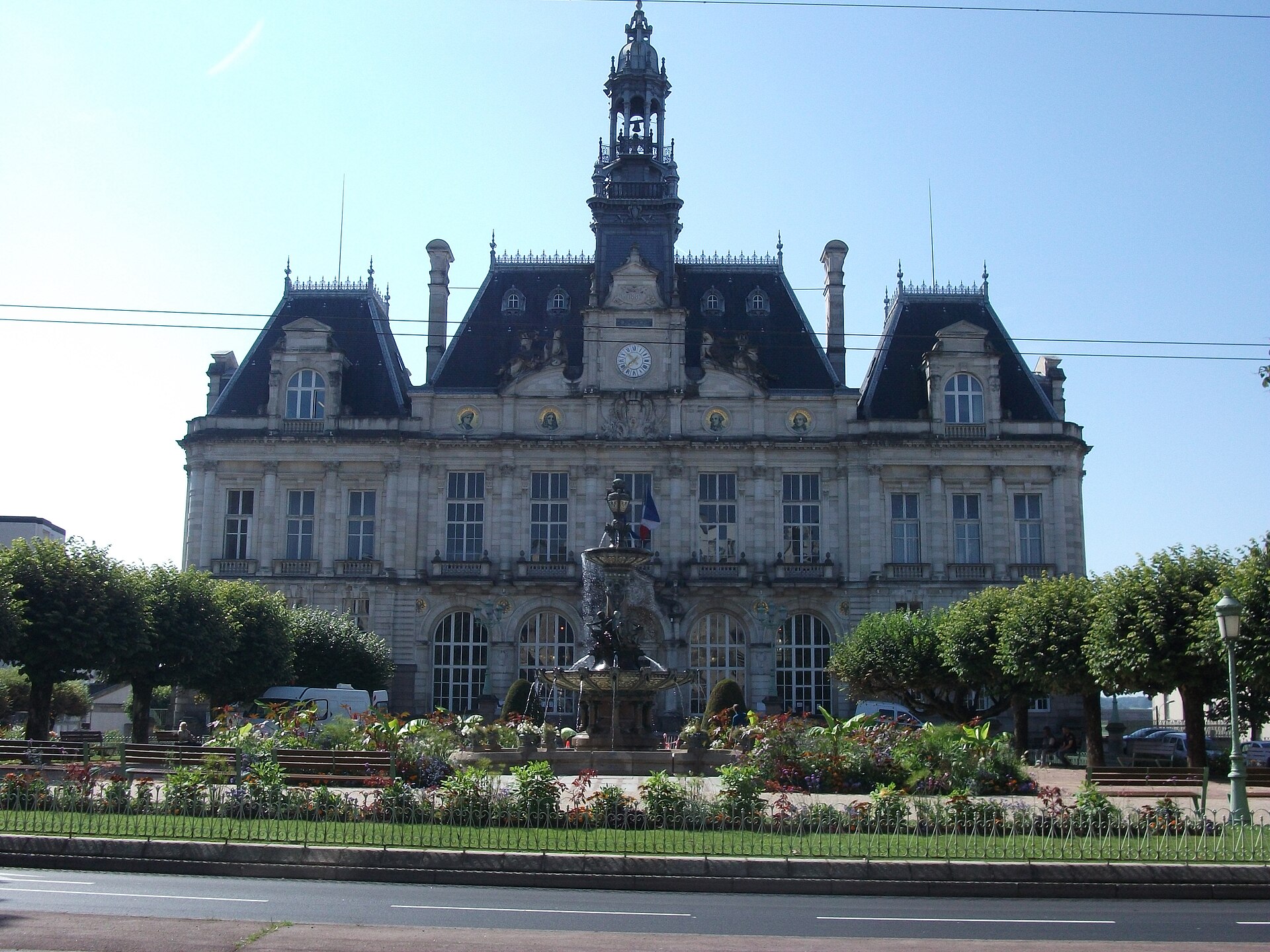
The gravest single loss was in Limoges, in central France, where the 143-year-old town hall — completed in 1883 and protected as a historic monument — was set ablaze on Saturday evening and partially destroyed, its spire collapsing in video that has become the defining image of the weekend. "It broke my heart. I saw Notre Dame all over again, except this time it was our town," one resident, Françoise Faurie, told Reuters — a comparison French officials have been careful not to make themselves but which captures why Limoges, rather than the larger Paris clashes, has dominated the national reaction.
Elsewhere, the damage was commercial as much as symbolic. Interior Minister Nuñez said several hundred shops had been damaged nationwide. In Bordeaux, Mayor Thomas Cazenave said up to 100 stores had been looted in his city alone, and a masked mob invaded the residence of the local prefect. In Marseille, black-clad protesters broke into city hall and defaced it; Mayor Benoit Payan announced emergency financial aid for businesses hit by the violence. In Lyon, protesters torched the city's tourist office. In Paris, the morning after showed smashed shop windows, burnt-out bicycles and spray-painted slogans around trouble spots such as Place de la République, where one visiting Dutch entrepreneur told Reuters it looked "like a war zone" after his hotel was evacuated. A clean-up operation ran on Sunday from Lille in the north to Marseille in the south and Strasbourg in the east.
Why this matters
The escalation curve is the story. When this site covered Saturday's marches as they happened, the official count stood at about 400 arrests and 60 injured officers, and no deaths had been reported. Within roughly a day, every one of those numbers has been revised sharply upward, and two people are dead. That pattern — a protest day whose official cost only becomes visible the following morning — is politically corrosive in a specific way: it makes the government's first account look like a minimisation, whether or not it was one, and it hands the narrative initiative to whoever speaks next. On Sunday evening, that speaker was Macron himself.
The address matters because of what surrounds it. France's borrowing costs have risen to their highest levels in more than two decades as investors sell French debt; the movement that produced Saturday began a month ago in high schools in Paris's poor northern suburbs, over teacher absences and shabby facilities, and has since fused students, trade unions, Yellow Vest veterans and farmers into a single cost-of-living coalition. Macron leaves office in 2027 after a decade in power, the far-right National Rally leads polling for next year's presidential election, and the hard-left France Unbowed — which the government blames for inflaming the protests, and which denies it — is the other pole of a fragmented landscape. A president in his final stretch, facing a debt market that is already nervous, does not get to treat a weekend like this as a policing story. It is a governability story.
How France got here
The immediate lineage is a month long. Protests began in September at lycées in the working-class suburbs north of Paris, where anger over teacher shortages and deteriorating school buildings morphed into a broader movement against inequality, weak public spending and falling living standards. Through October the school protests repeatedly escalated — hundreds of schools closed on peak days, a teenager lost a hand to a police grenade in Lens, and the police response itself became a grievance, with a fractured jaw suffered by a 14-year-old and a filmed headlock on a schoolgirl in Alençon adding to the movement's case, as CNN reported. Saturday's mobilisation was designed as the convergence point: students, unions and Yellow Vests marching on the same day, in scores of cities, under a cost-of-living banner broad enough for almost anyone's anger.
The deeper lineage is older. France's modern protest grammar — the nationwide day of action, the union count versus the ministry count, the peaceful majority and the violent fringe, the presidential address afterwards — was written across the 2018-19 Yellow Vest crisis, the 2023 pension protests and the riots that followed the police killing of Nahel Merzouk in 2023. Saturday fits that grammar almost exactly, which is precisely the government's problem: a repertoire this well rehearsed does not need organisers to repeat itself, and a movement with this many entry points — schools, fuel, rents, debt — does not need a single demand to sustain itself.
Who says what — and what each side leaves out
The government's account is consistent across its principals. Macron, posting on X as the unrest unfolded, said there is "no room for violence in our Republic" and promised that those who ransacked prefectures, businesses and town halls "will be prosecuted and punished." Lecornu said the government would not be "intimidated," blamed the violence on the ultra-left and on criminals, and accused opponents of treating the unrest as a "warm-up" before the presidential election. Nuñez stressed that the right to protest is fundamental while insisting that coordinated violence and looting cannot be justified, and Economy Minister Roland Lescure pledged support for business owners: "Those who break things will pay, repair the damage and be held accountable."
The movement's account starts from the opposite end. Protesters who spoke to CNN in Paris on Saturday talked about wealth and power "completely out of control," about billionaires who control the media, and about supporting the students who began the movement. Jean-Luc Mélenchon, the France Unbowed leader, emphasised that the majority demonstrated peacefully — "Two worlds, two realities," as CNN summarised his post. Union organisers put turnout at 800,000 against the ministry's 550,000, a gap that is itself part of the argument: each side's number is a claim about how much of France was in the street.
Both accounts can be true at once, and the honest summary requires holding them together: the vast majority of Saturday's marchers were peaceful, as authorities themselves acknowledged, and a violent minority — in some places several thousand people, by the interior minister's own description — did damage on a scale France has rarely seen in a single night. What neither account settles is the question Sunday's toll poses: whether a policing plan that ended with 600 injured officers, a record Paris arrest count and groups reaching the prefect's residence in Bordeaux was overwhelmed by the turnout, as Le Monde's reporting on undermanned units in Paris, Marseille, Lyon and Bordeaux suggests, or whether the violence was simply beyond what any deployment could have contained, as the government maintains. Mayors of Paris, Lyon and Marseille have demanded answers on exactly that point, and Lecornu was set to meet them on Sunday.
What happens next
Three clocks are now running. The first is political: Macron's Sunday-evening address (see the update below) has set the government's frame — prosecutions, a policing review and a promised roundtable — and the opposition's response is being measured against it; the president said he would meet the mayors of the hardest-hit cities on Monday, a day he is also due to travel to Kuwait. The second is judicial: more than 2,000 arrests have to become charges, custody decisions and trials at a pace the courts can actually sustain, and Paris prosecutors have already described their custody figures — more than 500 people, including a significant number of minors — as provisional. The third is the movement's own calendar: unions have already called further nationwide action in November, and the start of school holidays will test whether a movement born in lycées can hold its coalition together without its original engine.
The number to watch is not any single one of Sunday's figures. It is whether the next mobilisation draws closer to the ministry's 550,000 or the unions' 800,000 — and whether the night that follows it produces a count anywhere near this one. France has had protest weekends before that turned out to be peaks. It has also had ones that turned out to be first chapters. By Sunday night, with two families grieving and a president on television, nobody in Paris was pretending to know which kind this was.
Update: Macron addresses the nation
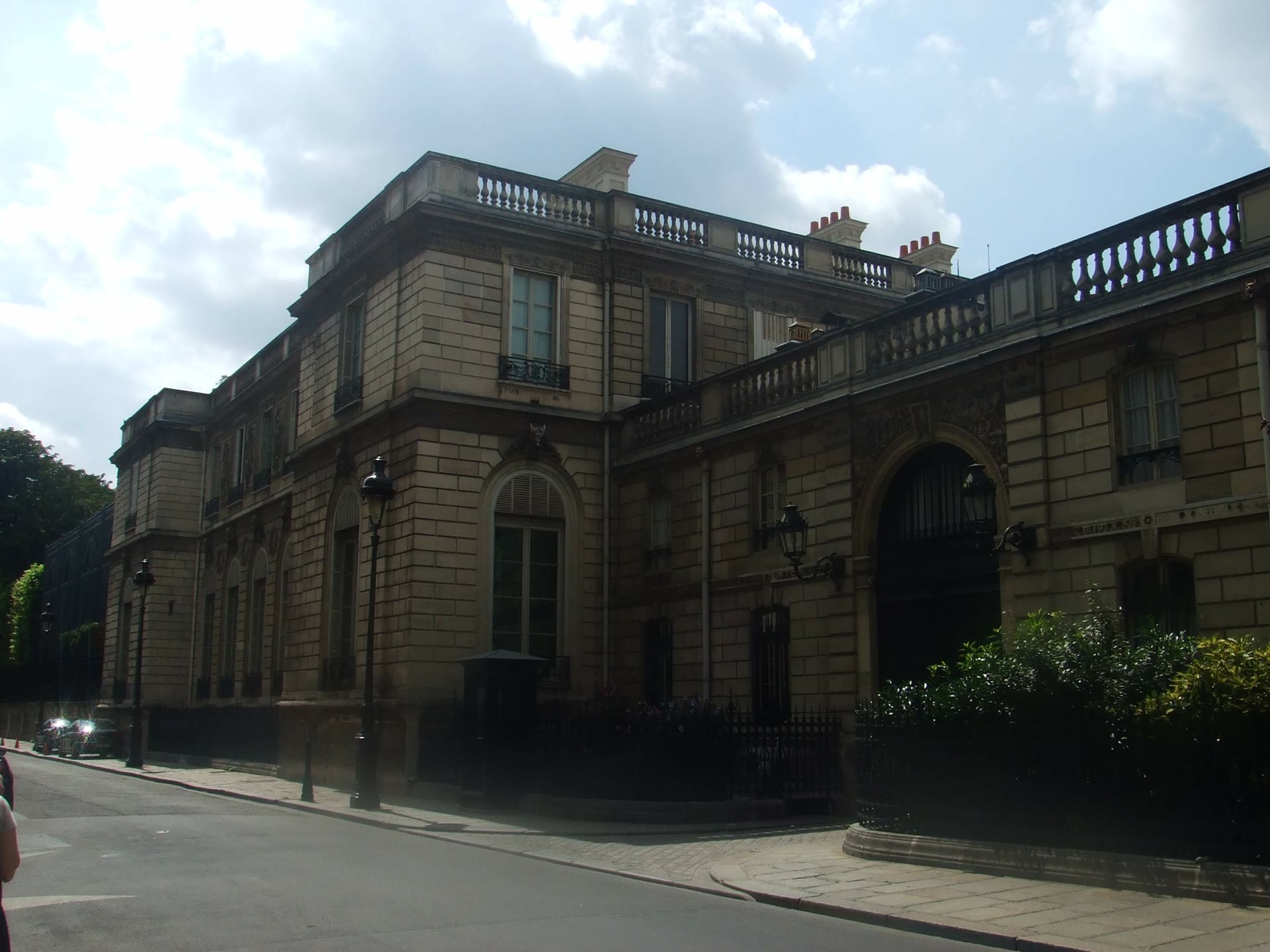
Speaking from the Élysée Palace on Sunday evening, Macron condemned the looting and vandalism in the strongest terms available to him. "Looking at these images, we have all asked ourselves: what was going through their minds? How can French people do this to France?" he said, in Reuters' account of the address. "Nothing justifies it, nothing explains it, nothing excuses it. Tonight, we all feel anger and shame." He blamed the violence on what CNN translated as "seditious elements from far-left factions, joined by numerous delinquents," and promised that the full force of the law would follow: "Those who destroyed must pay. Those who looted must pay back. Those who sought to bring down the Republic will be held accountable," he said, in the Associated Press' translation carried by CNN. "There is no impunity."
The president was careful, at the same time, to separate the marchers from the rioters. "Yesterday, hundreds of thousands of our compatriots demonstrated to state legitimate claims," he said. "Never must we confuse the latter with those who destroyed and vandalized." He acknowledged the fuel-price anger at the movement's root and tied it directly to the war in Iran — "There are people who rightfully feel that fuel prices are going too high. It's because of the Iran war" — in remarks reported by multiple outlets carrying the address, and he accepted that the government should listen to the grievances behind the protests, CNN reported.
Two institutional moves followed. Macron said he had ordered a review to determine whether there had been failings in intelligence gathering or police preparedness before the protests, Reuters reported — the closest the government has come to conceding the mayors' central complaint. And he said prefects and mayors would be empowered to ban certain gatherings where necessary. He stopped short of declaring a state of emergency, which some coverage had speculated about before the broadcast, and announced no new security measures, saying local authorities would work directly with police to protect cities, public buildings and stores.
His forward offer was a table, not a package: he said he had asked the government to bring together students, teachers, lawmakers, trade union representatives and business leaders this week to formulate what he called "concrete proposals" to address the crisis. "We must sit around the table and build solutions together," he said, according to Reuters. He also said he would hold an emergency meeting with French mayors on Monday to discuss public safety, CNN reported.
The blame lines now run in three directions, and each is contested. Macron and his ministers attribute the violence to ultra-left groups and criminals who joined them; the movement insists the marches were overwhelmingly peaceful and that the grievances — prices, schools, public services — are the story. From Washington, President Donald Trump blamed Macron's migration policies for the violence, according to reports of his remarks; French authorities and police have not linked immigration to the rioting. None of those accounts, on its own, explains a weekend that began with schoolchildren's complaints about their classrooms.
Nor did Sunday end quietly. Police fired tear gas at a smaller crowd gathered at Place de la République in Paris after messages circulated calling on people to "continue the movement," BFMTV reported via CNN, and the Carrefour supermarket group said around 1,500 stores across France had been affected by the violence. The count, in other words, is still moving — and the address, however solemn, is the beginning of the government's answer rather than the end of the crisis.
Read the Saturday marches as they unfolded in our earlier coverage: 550,000 march nationwide as town halls burn, and the movement's full arc in the France student protests timeline.
Sources
Reuters, October 18, 2026 — "France faces aftermath of worst unrest in years" (full text: one demonstrator dead after a cardiac arrest in Paris, a record 855 Paris arrests, nearly 1,800 arrests and more than 500 officers injured in the earlier Sunday tally, 550,000 marchers, Limoges town hall partially destroyed, Macron's X post, Lecornu and Lescure statements, Bordeaux and Marseille mayors) and Reuters' updated syndication of the same report (arrests above 2,000, more than 600 officers injured, Macron to address the nation at 2000 local time, per the Élysée). CNN, October 18, 2026 — "France wakes up to wreckage of a night of rioting after protests turned violent" (two dead: the protester north of Paris per BFMTV/Paris Police headquarters, and the 22-year-old officer in Nantes struck by a third-party vehicle, attributed to Interior Minister Laurent Nuñez; more than 2,000 detained; more than 600 officers injured per Nuñez's X post; Lecornu to meet the mayors of Paris, Lyon and Marseille; protester voices; police-response scrutiny). Associated Press figures as carried in syndicated Sunday coverage (550,000 official turnout, organisers' 800,000). Le Monde, October 18, 2026 — police overwhelmed in Paris, Marseille, Lyon and Bordeaux, Nuñez on dispersed groups. Interior Minister Laurent Nuñez's statements on X and the Élysée's announcement of the 8 p.m. address are the primary official sources for the toll and the broadcast. For the address itself (Update section): Reuters, October 18, 2026 — report of Macron's televised address to the nation (the "anger and shame" condemnation, the ordered review of intelligence gathering and police preparedness, gathering-ban powers for prefects and mayors, the stakeholder roundtable for "concrete proposals," "We must sit around the table and build solutions together"); CNN, October 18, 2026 — updated report after the address (the AP-translated accountability quotes, "seditious elements from far-left factions, joined by numerous delinquents," the legitimate-claims passage, the Monday mayors meeting, Sunday tear gas at Place de la République, Carrefour's 1,500 affected stores, and Nuñez's updated toll of more than 2,000 detained and more than 600 officers injured, with both deaths); accounts of the address carried by France 24 and other outlets for Macron's remarks linking fuel prices to the Iran war and for the "no impunity" line; AFP, October 18, 2026 — Nuñez's Sunday statement (about 1,800 arrested, more than 500 injured, provisional). One UK report put arrests as high as 2,300 with almost 1,000 officers injured; no wire service corroborated those figures, and they are not used in this article.