Le Pen Melenchon runoff poll
The far-right leader and the hard-left leader would meet in the second round under every scenario tested — the clearest sign yet that the collapse of France's center is the story of the post-Macron era.
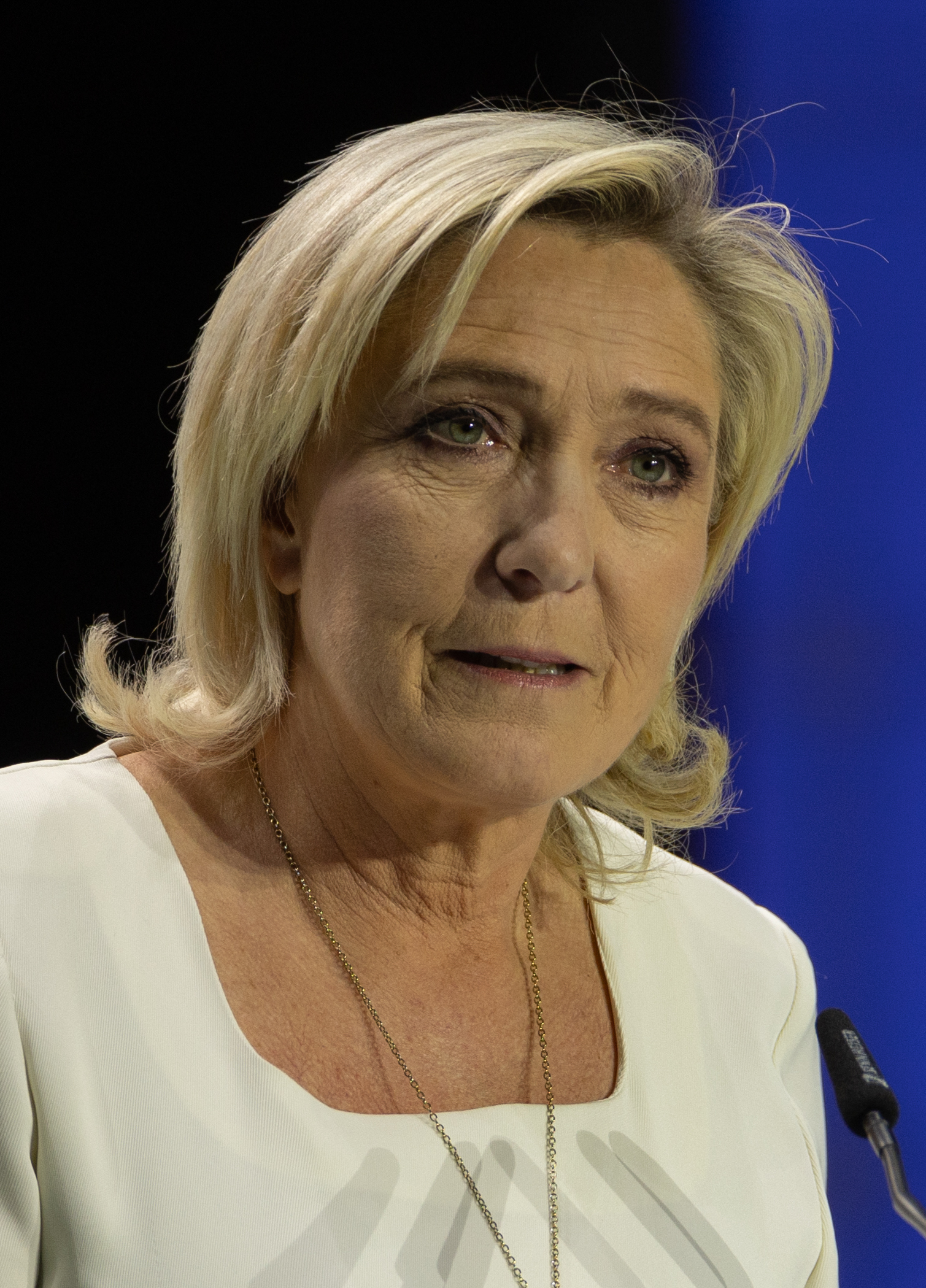
A Le Pen Melenchon runoff poll published Monday shows French politics hardening into its most polarized shape in the modern era: far-right leader Marine Le Pen and hard-left rival Jean-Luc Mélenchon have widened their lead over the rest of the field and would face each other in a presidential runoff in all five scenarios tested by pollster Toluna Harris Interactive in a survey carried out October 5-8. With President Emmanuel Macron's second and final term ending, the unpopular president leaves behind a hollowed-out political center and a weak economy — creating the opening both hardline camps are now walking through.
Why this matters
French presidential politics has been defined for a decade by the "republican front" — the pattern in which voters from left and center unite in the runoff to block the far right. The 2017 and 2022 elections both ended that way: Le Pen reached the second round, then lost to Macron. What this poll suggests is that the front may be running out of voters. If the runoff is Le Pen versus Mélenchon, there is no center-left or center-right candidate left to rally behind — the second round becomes a choice between two camps that each define themselves against the establishment, and the establishment itself has no candidate on the ballot.
That is a structural change, not a polling blip. In all five scenarios tested, Mélenchon reaches the runoff — last month, a similar poll had him finishing third in two of the five. In other words, his floor is rising: the range of conditions under which the hard left is shut out of the second round is shrinking. Le Pen, meanwhile, moved from 33-36 percent last month to 35-37 percent this month. Both trends point the same direction — toward the extremes and away from the middle — and they are doing it simultaneously, which is what makes the polarization reading of this poll hard to dismiss.
The poll in detail: the numbers behind the headline
Start with the first round. Le Pen would top the vote with between 35 and 37 percent depending on the scenario tested — up from 33-36 percent in the pollster's September survey. That is not just a lead; it is a lead of a kind rarely seen in French first rounds, where fragmentation has historically kept every candidate below 25 percent. A first-round score in the mid-30s would be the strongest far-right showing in the Fifth Republic's history, and it would give Le Pen the momentum narrative — winner of round one — that has eluded her in three previous campaigns.
Then the runoff mechanics. Mélenchon, the candidate of the hard-left France Unbowed (LFI) party, is seen reaching a runoff in all five scenarios polled — a marked improvement on last month, when he finished third in two of the five configurations. And the poll sees Le Pen beating Mélenchon easily in the runoff itself. That last finding is the pollster's quiet counterweight to the polarization alarm: the French electorate, in this survey's telling, is prepared to vote for either extreme in round one and still prefers Le Pen over Mélenchon head to head.
Caveats are in order, as with any poll this far out. The fieldwork ran October 5-8 — a snapshot of a moment, not a forecast of an election whose date is still to be set and whose candidate field is not final. Polls this early measure name recognition and mood as much as they measure voting intention. Both candidates have near-universal name recognition; their rivals mostly do not. Still, the direction of travel across two consecutive monthly polls from the same pollster — Le Pen up, Mélenchon up, the center absent — is data, and it is consistent.
Background: the end of the Macron era
To understand why the center has nowhere to stand, follow Macron's arc. He won in 2017 and 2022 by occupying the middle and presenting himself as the only barrier to the extremes — a strategy that worked twice and then consumed itself. A president who defines his movement as the alternative to everyone else eventually leaves his movement with no allies and no heirs: the center becomes a personal franchise rather than a political tradition, and when the founder leaves, the franchise folds.
Macron's second term compounded the problem. An unpopular president presiding over a weak economy, serial protest movements, and a parliament where his coalition lost its footing left the centrist brand associated with gridlock and decline. The historical parallel is the collapse of France's traditional parties of government — the Socialists and the Republicans — which Macron himself destroyed in 2017. The irony of the current moment is that Macronism is now suffering the same fate: a political force that once presented itself as the future has become the past, and the space it vacated is being filled from both ends.

Two veterans, one last chance
Both Le Pen and Mélenchon have run for president three times — in 2012, 2017, and 2022. Le Pen reached the runoff in 2017 and 2022 but lost to Macron both times. Mélenchon has never managed to reach the second round. Their symmetry is the election's subtext: two figures in their seventies, each the defining voice of their political family for a generation, each running what would likely be a final campaign, each finally facing the opponent their movement was built to oppose.
For Le Pen, the poll is the validation of a fifteen-year project to make the National Rally electable — softening the party's image, professionalizing its parliamentary operation, and building a local power base. Her camp will read 35-37 percent as proof that the "dediabolisation" strategy has worked: the far right is no longer a protest vote but a governing alternative. For Mélenchon, reaching the runoff in all five scenarios is something he has never achieved in three attempts; his camp will read it as proof that the left's fragmentation is finally resolving in LFI's favor and that the anti-establishment vote is consolidating behind him.
What each camp says — and what the center says
Each side has a story about why this poll is good news for them, and both stories cannot be fully true. The National Rally's telling: the numbers confirm that Le Pen is the only candidate who can beat the hard left, making a first-round vote for her the rational choice for anyone who fears an LFI presidency. The France Unbowed telling: Mélenchon's rise in every scenario proves the left is uniting behind its strongest standard-bearer, and that the runoff is now a genuinely open contest rather than a coronation.
The center's response — insofar as there is still a center to respond — is that polls this far out have a long record of overstating the extremes, that the French electorate has repeatedly surprised pollsters by rallying to the middle in the campaign's final weeks, and that the candidate field is not yet set. All of that is true as far as it goes. What it does not answer is the trend line: two months in a row, same pollster, both extremes up, nobody else in the frame. A rebuttal that relies on "it has always broken our way before" is thinner than it used to be.

Who benefits, who loses
The winners are the two camps themselves and the media-politics complex that thrives on a two-extreme narrative. Le Pen benefits from being the poll's dominant figure — 35-37 percent makes her the story of the first round. Mélenchon benefits from the scenario sweep — five out of five keeps his candidacy alive in every conversation about the second round. Both benefit from the other's strength: each is the other's best argument, the feared opponent that justifies a vote for the lesser evil.
The losers are the centrist and moderate candidates who cannot get into the conversation, the traditional parties of the right and left that have been reduced to spectators, and arguably the French voter who wants neither extreme — a large group that this poll suggests has no viable champion. The European Union is a quieter loser: whichever extreme wins, Brussels faces a French president skeptical of, or hostile to, the integrationist project. Markets, too, are on the losing side of uncertainty — a Le Pen-Mélenchon runoff is the one matchup guaranteed to produce a second round in which both finalists unsettle investors, one on sovereignty and immigration, the other on spending and economic intervention.
The numbers, in context
Compare this to history and the scale of the shift becomes clear. In 2022, Le Pen took about 23 percent in the first round; Macron took about 28 percent. A first-round score of 35-37 percent would be roughly 12-14 points above her 2022 result — a jump of more than 50 percent in relative terms. Mélenchon took about 22 percent in 2022 and finished third, just behind Le Pen. Moving from third place to a runoff berth in every scenario is a smaller numerical move but a larger symbolic one: it would be the first time the hard left has reached the second round of a Fifth Republic presidential election.
The comparative frame that matters most, though, is not 2022 but the polls' own trend: Le Pen 33-36 percent last month to 35-37 percent now; Mélenchon third in two of five scenarios last month to a runoff berth in all five now. Month-over-month movement in the same pollster's series is the most reliable signal in polling, and it is pointing unambiguously toward the poles.
What happens next: three scenarios
1. The extremes consolidate and the runoff happens as polled. Le Pen wins the first round decisively, Mélenchon edges into second, and France gets its first far-right-versus-hard-left runoff. The second round becomes a referendum on which rupture voters prefer — and the poll's current read (Le Pen beating Mélenchon easily) holds, giving France its first far-right president. Watch for: whether the center's voters abstain, spoil ballots, or hold their noses — the "republican front" either reconstitutes around an unlikely champion or dies.
2. The center finds a candidate and the scenarios break. A unifying centrist figure — a popular minister, a regional leader, a surprise outsider — enters the race and scrambles the five scenarios. French elections have a history of late-breaking candidacies reshaping the field (Macron himself was one in 2017). This is the establishment's hope and the poll's blind spot: surveys cannot measure candidates who do not yet exist. Watch for: announcements from the presidential majority's bench in the coming months.
3. Events intervene. The honest forecaster's caveat: between now and the election, the economy, a security crisis, or a scandal could reorder everything. Le Pen's 35-37 percent assumes the current mood persists; Mélenchon's sweep assumes the left stays united behind him. Both assumptions are fragile. A serious economic shock could send voters back to the perceived safety of experience; a scandal could sink either frontrunner. The base case is scenario one — but in French politics, the base case has a way of not surviving contact with the campaign.
What is not in doubt is the underlying condition the poll describes: the center that governed France for a decade is gone, and the country's politics is now a contest between its two most anti-establishment forces. Whether that contest ends with a Le Pen presidency, a Mélenchon breakthrough, or a last-minute centrist rescue, the era in which French elections were decided in the middle is over. The poll is just the first document to say so plainly.
Related coverage
Sources
- Reuters — Le Pen, Melenchon head for run-off as France's political divide deepens, poll shows (October 12, 2026; reporting by Inti Landauro, editing by Jacqueline Wong)